



Narrow Persian Hall Carpet
A narrow persian hall carpet brings floor warmth and geometric pattern to corridors, bridging centuries of weaving tradition.
Narrow Persian Hall Carpet
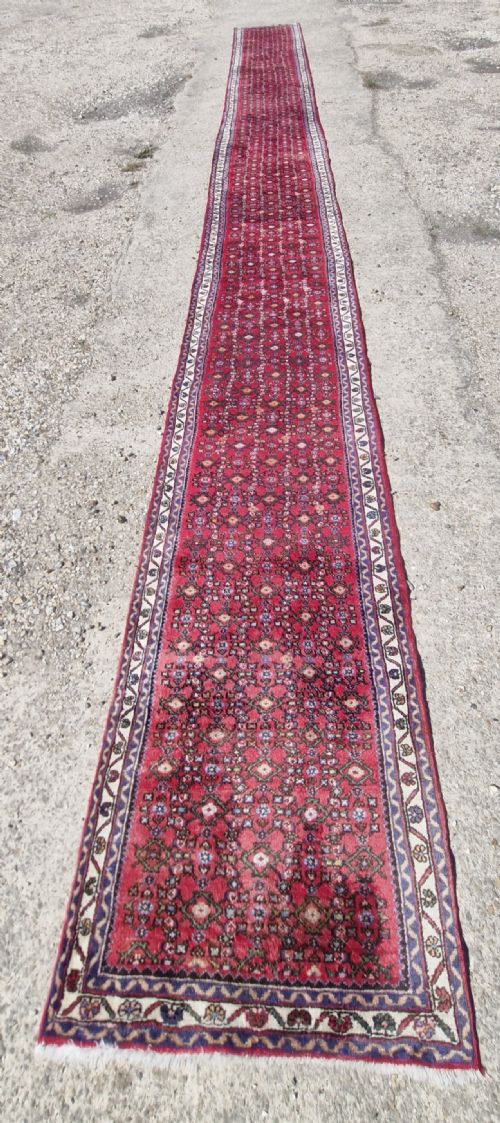
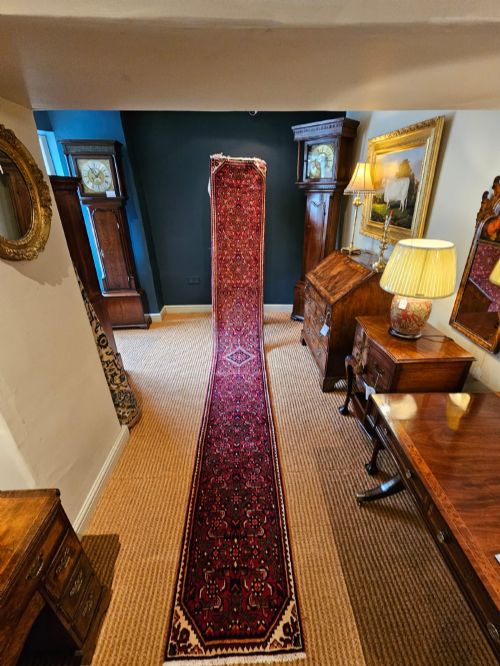
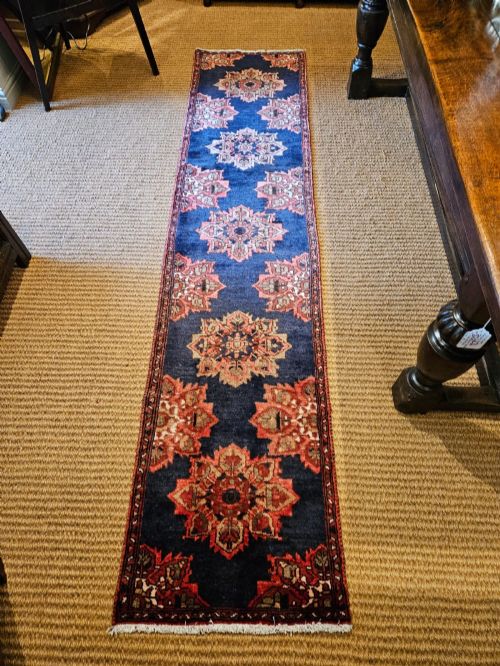
A narrow persian hall carpet provides a practical floor covering tailored for long corridors, landings, and narrow spaces in a home. These elongated runners span lengths from compact proportions up to grand dimensions exceeding thirty feet.
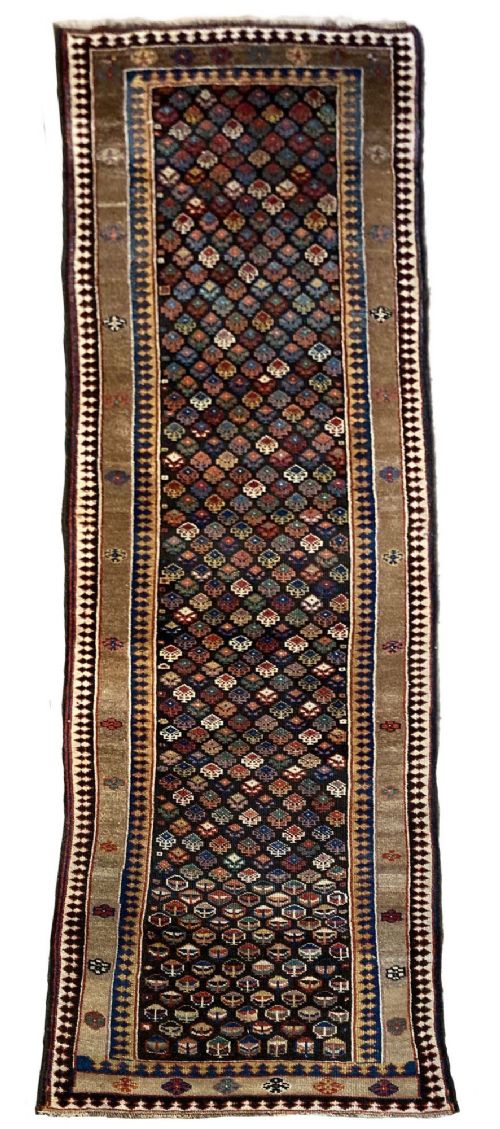
The selections on this page draw from diverse regional traditions such as Kurdish, Hamadan, Heriz Karaja, Bidjar, Sarouk, Serab, and Varamin styles. Such pieces arrive from dating periods stretching from the late nineteenth century through to the mid twentieth century.
Buyers frequently encounter traditional tribal aesthetics alongside formal village and town designs executed in wool and cotton foundations. Each format prioritises length and narrow widths to fit architectural passageways effectively.
Materials and construction
These floor coverings utilise natural wool pile knotted firmly onto robust cotton or wool foundations to withstand heavy corridor footfall. Selected pieces incorporate camel hair alongside standard wool fibres for natural colour variation and texture.
Weavers constructed each narrow persian hall carpet by hand, employing dense knotting techniques handed down through generations in tribal and village workshops. Natural dye stuffs provided the deep navy blue, red, and multi-coloured hues visible across the pieces.
Narrow Persian Hall Carpet Retail Price Guide 2026
Typical asking prices for narrow persian hall carpet among the pieces listed under this phrase on Sellingantiques today, from the lower quarter to the upper quarter. They describe what is for sale here now, not the wider market.
One extraordinary runner stretches an astonishing thirty-two feet in length, demanding a very long hallway indeed.
Distinguishing quality factors
The excellence of a runner rests upon the tightness of the weave and the precision of the tribal or traditional patterns rendered along its extended length. Finer knots and stable foundations ensure the rug lies flat and endures decades of daily use.
Proportions also dictate distinction, particularly when encountering exceptionally long narrow formats or well-balanced pairs designed for grand hallways. The integrity of the wool pile and the clarity of regional motifs separate standard examples from superior ones.
The Narrow Persian Hall Carpet Glossary
- Runner
- A long, narrow carpet specifically proportioned for corridors, hallways, and staircases. These rectangular textiles maximise floor coverage in confined spaces.
- Pile
- The upright yarn loop or cut fibre forming the soft surface of a carpet. It is created by knotting wool or camel hair onto the foundation warps.
- Warp
- The vertical threads stretched tightly on a loom that form the structural skeleton of the carpet. Cotton and wool are typical warp materials.
- Kurdish
- Pertaining to weavers from Kurdish tribal groups in western regions. Their rugs often display robust geometric motifs and rich colours.
- Serab
- A village and weaving centre known for camel hair use and distinct geometric runners. Pieces from this origin often feature neutral tones and medallion layouts.
Narrow Persian Hall Carpet: Frequently Asked Questions
Where should I place a narrow runner?
These carpets suit corridors, long hallways, entryways, and narrow landing spaces where standard rectangular rugs fail to fit. Their elongated proportions guide movement down a passage while protecting wooden or tiled flooring.
Ensure you measure the clear floor space between skirting boards carefully before selecting a length. Leaving a uniform border of exposed floor on either side enhances the visual balance of the hallway.
How do I care for an old wool runner?
Regular gentle vacuuming without a rotating brush roll prevents dust accumulation within the wool pile. Professional cleaning suited for antique textiles preserves the natural lanolin and dyes.
Using an appropriate underlay beneath the carpet prevents slipping on hard floors and reduces friction against the foundation yarns. Rotating the placement periodically evens out foot traffic wear across the length.
What materials make up these carpets?
The surface pile consists primarily of sheep wool, occasionally supplemented with camel hair for natural tonal variation. Foundation warps and wefts are generally formed from sturdy cotton or wool threads.
Natural dyes derived from plants and minerals provide the stable red, blue, and earthy palettes. These traditional materials contribute to the longevity and structural resilience of the runners.
How do I identify different regional styles?
Regional types often reveal themselves through distinct palette choices, border arrangements, and repeating geometric or floral motifs. Kurdish and Hamadan pieces frequently display robust tribal patterns, whereas Sarouk runners show finer village artistry.
Comparing the knot density, stiffness of the foundation, and structural proportions aids in distinguishing between various origins. Each workshop tradition utilised specific design vocabularies passed down through local weavers.