
Antique Floor Length Mirror
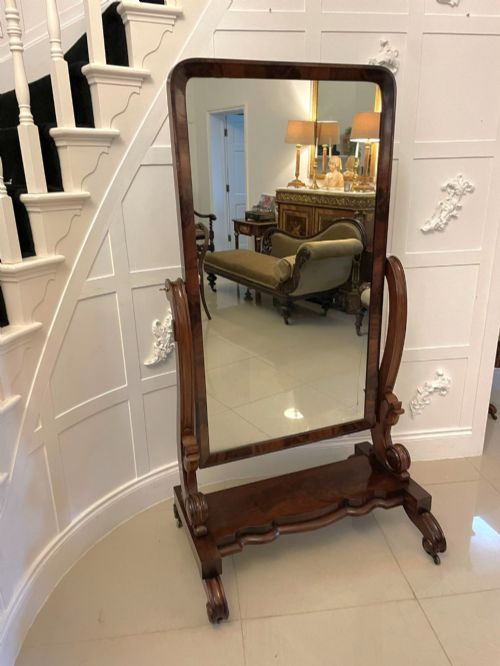
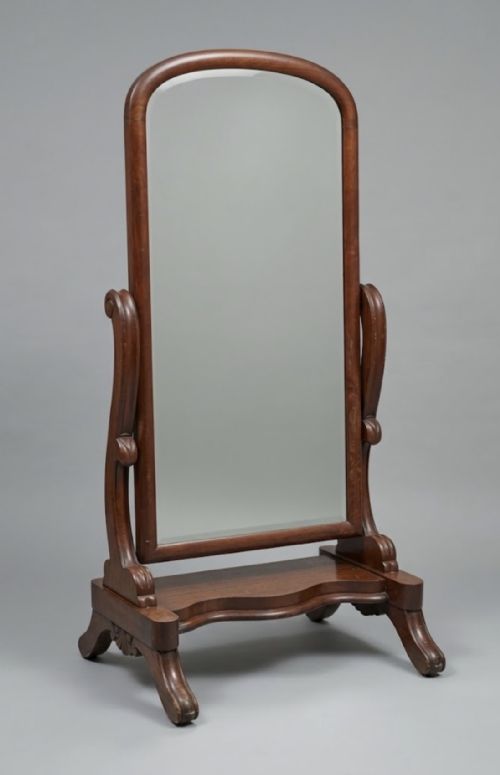
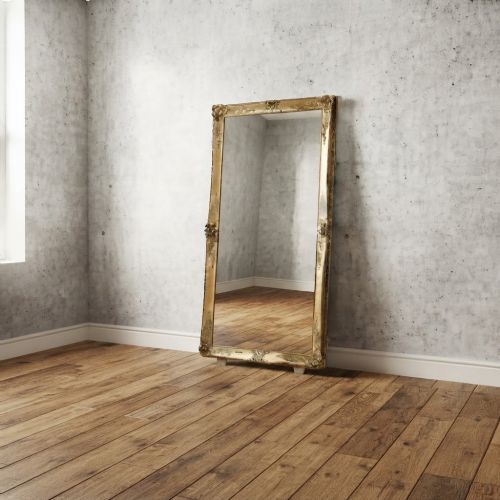
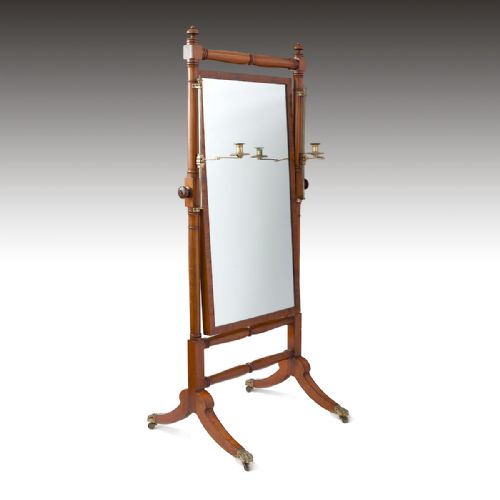
An antique floor length mirror brings scale and reflected light to a room, most commonly appearing as a freestanding cheval frame in mahogany or a tall giltwood leaner.
Antique Floor Length Mirror
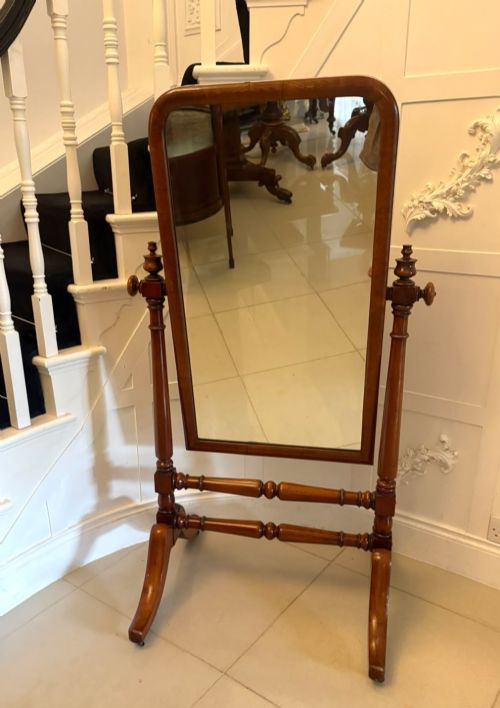
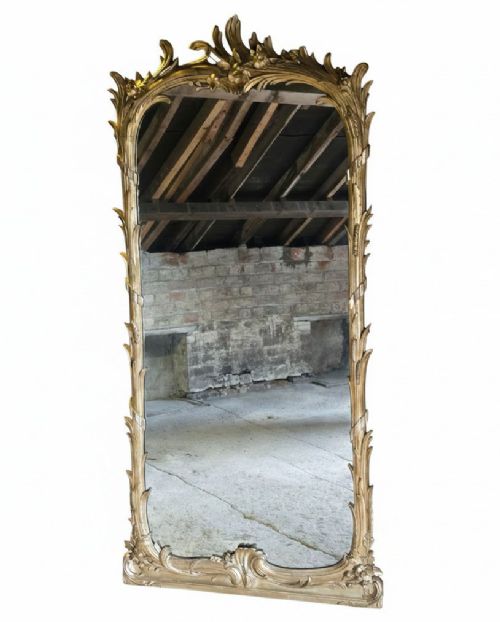
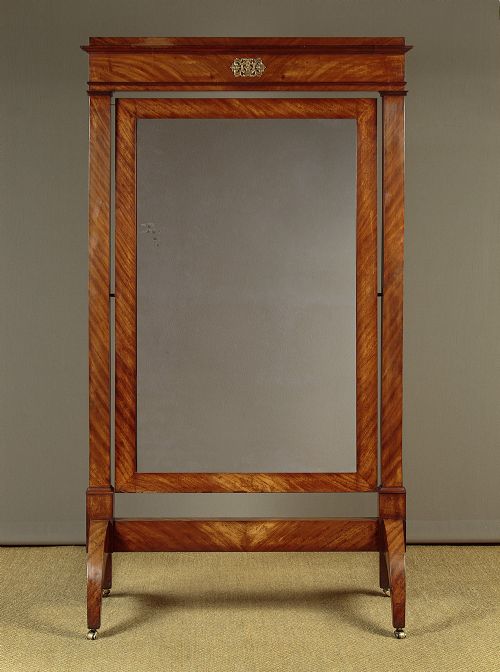
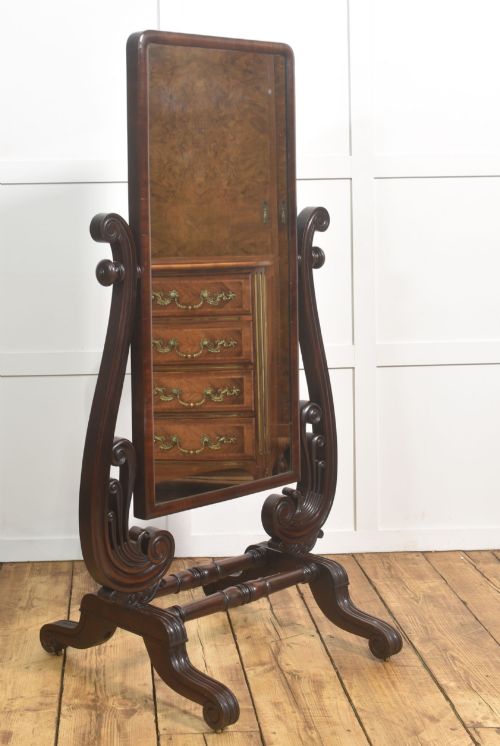
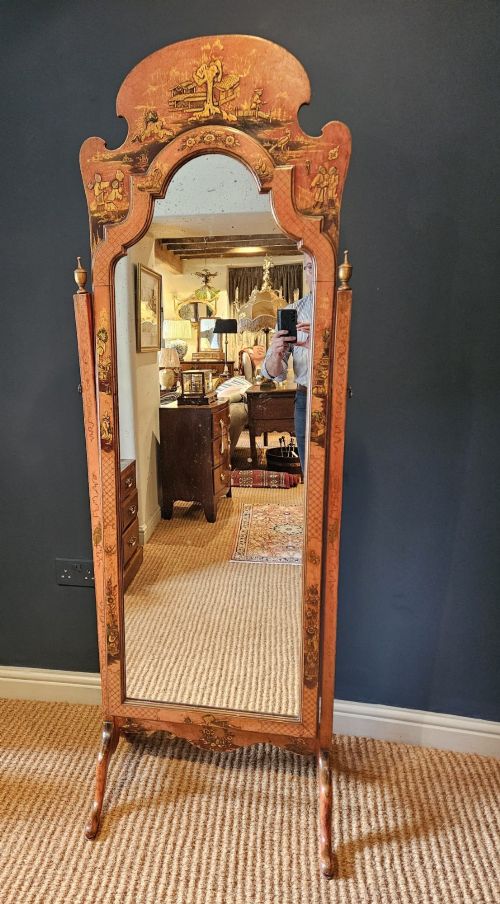
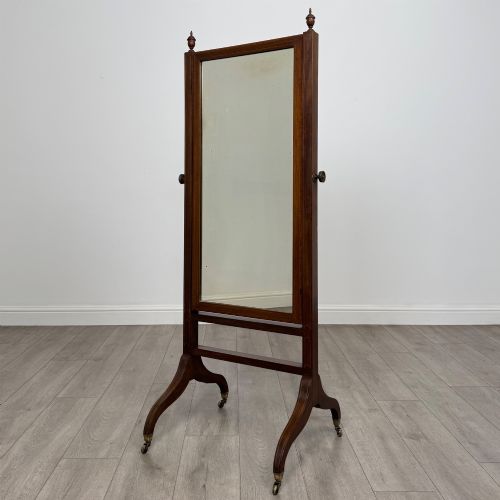
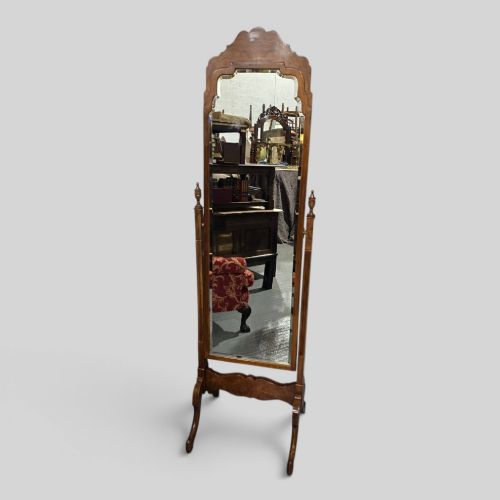
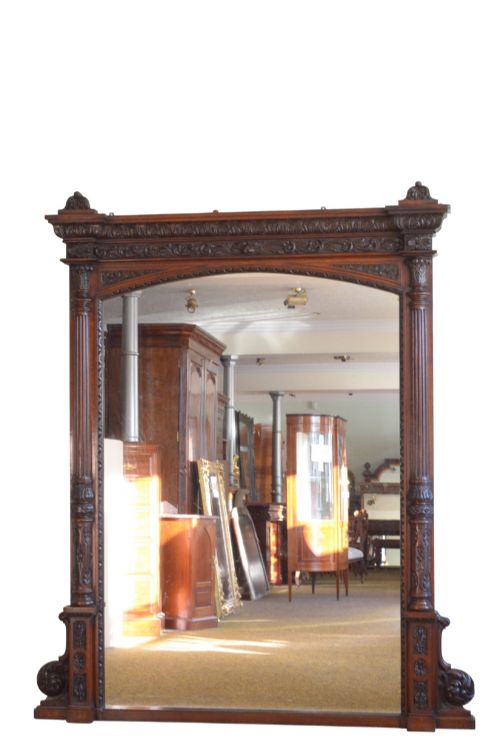
When seeking an antique floor length mirror, buyers typically encounter two main formats: freestanding cheval mirrors on pivoting stands and tall wall mirrors designed to lean against a partition. The selection spans the nineteenth century through the early twentieth century, drawing on Victorian, Regency, Edwardian, and French stylistic influences.
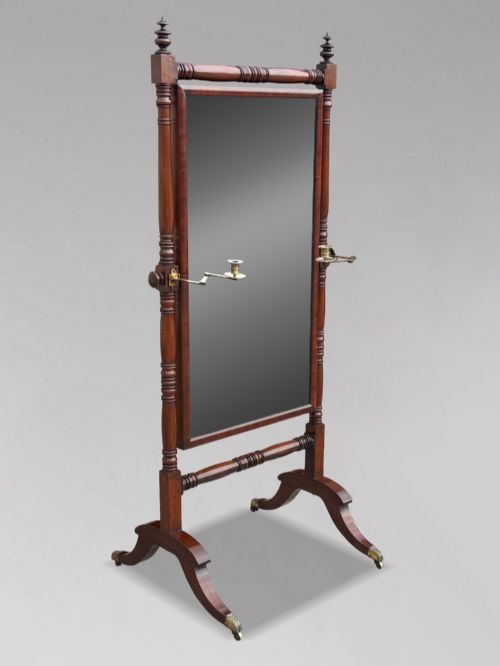
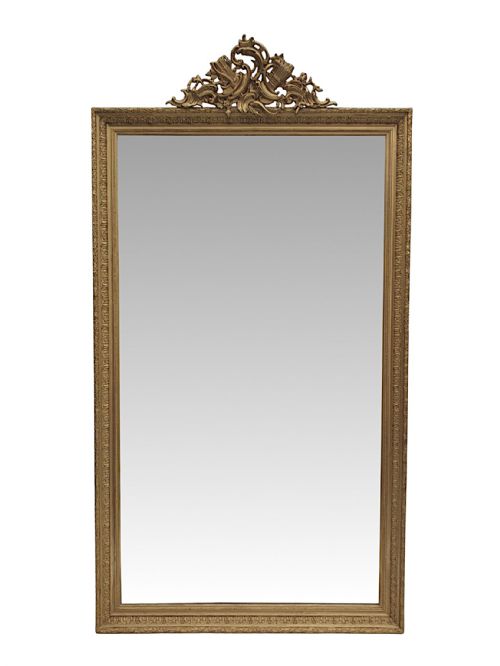
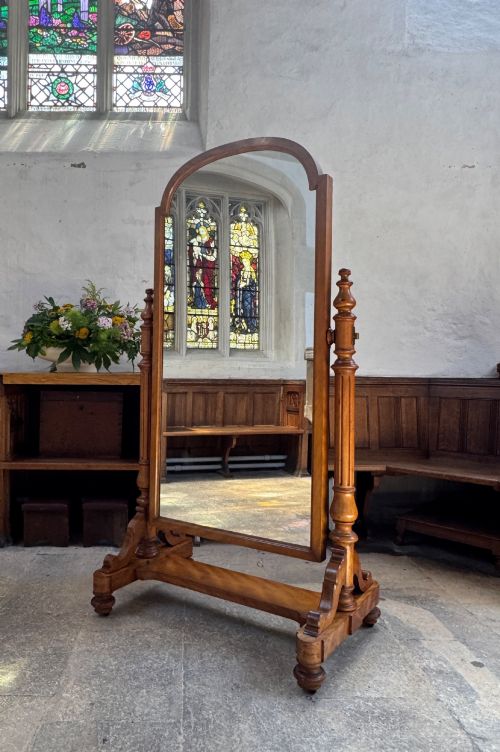
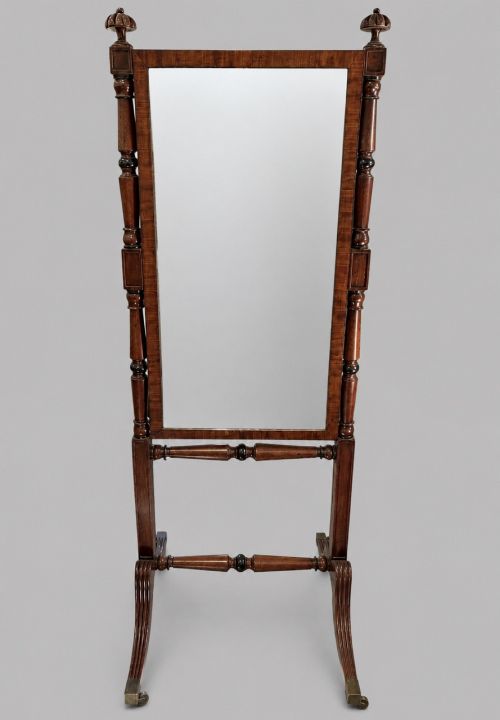
Freestanding cheval mirrors dominate the inventory in rich timbers like mahogany and walnut, often featuring swing frames supported by upright pillars and sturdy feet. Alternatively, taller leaner mirrors present heavy giltwood, gesso, or carved wooden frames intended to anchor a room from the floor upward.
Origins range from English country house workshops to continental European makers, incorporating regional traits such as Italian carved gilt decoration or French Louis Philippe profiles. These pieces served practical dressing functions in bedrooms and grand ornamental roles in reception rooms.
Materials and Construction Techniques
Cabinetmakers relied heavily on dense timbers, principally solid and veneered mahogany, walnut, and satin birch, joined with traditional framing methods to support the considerable weight of heavy glass plates. Freestanding cheval frames required robust turning for upright supports, such as barley twist columns, alongside secure brass pivot pins that allowed the mirror plate to tilt.
Giltwood and leaner mirrors utilised carved wood or moulded gesso applied over a wooden base, finished with layers of gold leaf or metallic paint to achieve reflective splendour. Silvered mirror glass of the period often exhibited bevelled edges and slight natural foxing, housed securely within rebated frame backs.
Materials documented across the inventory include brass hardware, silvered mirror glass, gesso, and solid woods such as oak and satin birch.
Distinctions in Quality and Craftsmanship
Quality rests in the architectural proportion of the frame and the depth of its carving, distinguishing mass-produced items from pieces executed by skilled cabinetmakers. Crisp hand-carving on wooden mouldings and refined chasing on brass hardware indicate superior workshop output.
The integrity of the pivoting mechanism on cheval models and the heaviness of the timber chassis dictate structural longevity. Superior examples maintain balance and stability without leaning or straining at the joints when adjusted.
The Antique Floor Length Mirror Glossary
- Cheval mirror
- A freestanding mirror suspended on a vertical frame with pivots that allow it to swing back and forth. The term derives from the French word for horse, referencing the four-legged support trestle.
- Leaner mirror
- A tall wall mirror designed to stand upright against a vertical surface without permanent wall fixings. These pieces rely on their substantial weight and base proportions for stability.
- Giltwood
- Timber coated with a thin layer of gold leaf or powder over a prepared gesso ground. This finish provides a bright, reflective surface characteristic of formal period frames.
- Gesso
- A plaster-like mixture applied to wood frames to create a smooth surface for subsequent gilding and intricate relief carving. It allows crisp detail work on ornate Victorian and continental pieces.
- Pier glass
- A tall mirror traditionally hung on the pier, the solid wall section between two windows. In later usage, the term often describes large floor-standing dressing mirrors placed against similar wall spaces.
Antique Floor Length Mirror: Frequently Asked Questions
How do I secure a heavy leaner mirror?
Large leaner mirrors possess considerable weight and require secure anchoring to prevent tipping forward. Manufacturers often include discreet wall brackets or safety chains attached to the upper rear frame.
Position the base firmly against the skirting board on a level floor, ensuring the weight transfers safely downward while the top is tethered securely to the wall studs.
Can a cheval mirror be adjusted safely?
Cheval mirrors rely on brass pivot screws or threaded bolt assemblies set into the upright supports. Adjusting these requires supporting the frame centrally so the glass does not swing uncontrollably.
Lubricate stiff pivot hardware sparingly with appropriate oil if movement feels restricted, taking care not to strain the wooden side pillars.
How do I identify a Victorian mahogany cheval mirror?
Victorian examples typically feature deep reddish-brown mahogany timber, often displaying rich grain patterns and robust structural proportions. Look for turned upright supports, sometimes incorporating barley twist detailing, mounted on splayed legs with castors.
Construction details such as hand-cut joinery and heavy backboards further point toward mid-nineteenth-century British cabinetmaking standards.
What is the difference between a pier glass and a cheval mirror?
A pier glass is a wall-mounted or leaner mirror historically designed for the architectural space between windows, remaining stationary against the wall. A cheval mirror is an independent freestanding piece supported by its own pivoting floor frame.
While both serve full-length dressing purposes, the cheval can tilt on its axis, whereas the pier glass remains fixed in a vertical plane.