
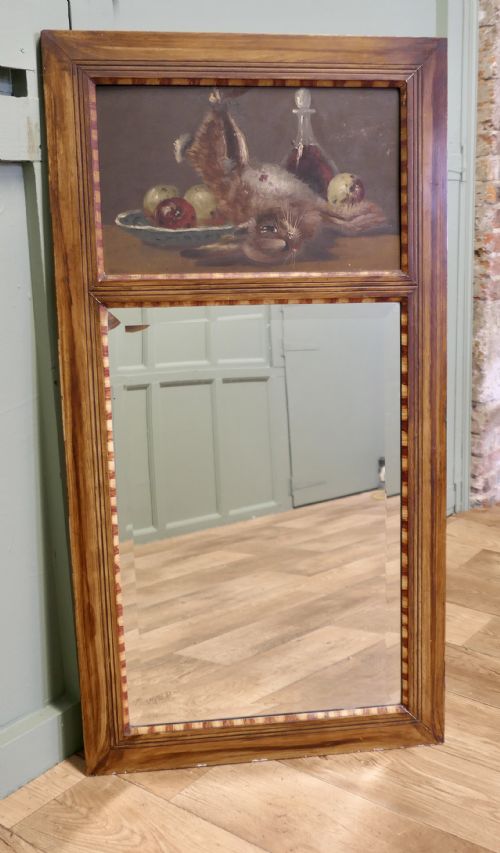
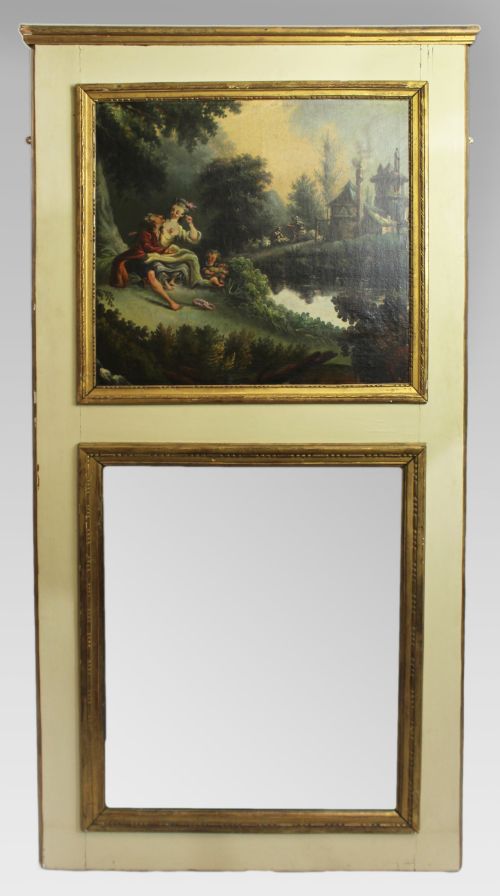
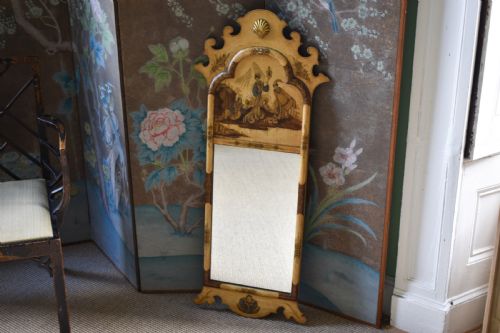
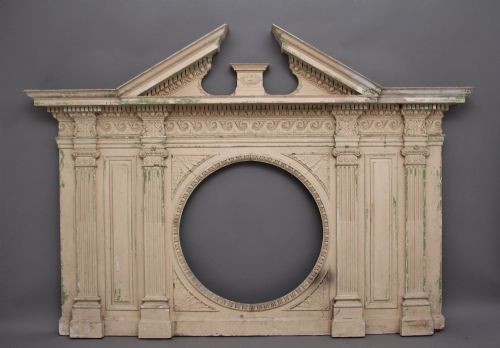

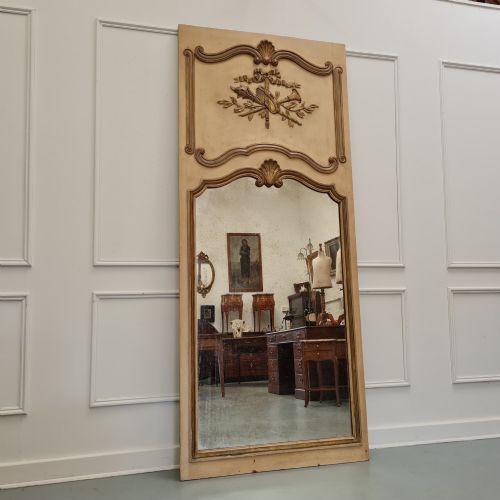


Painted Wood Trumeau Mirror
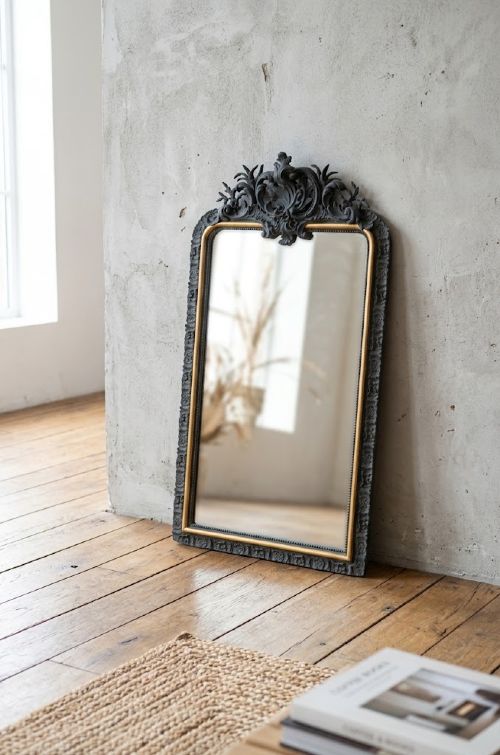
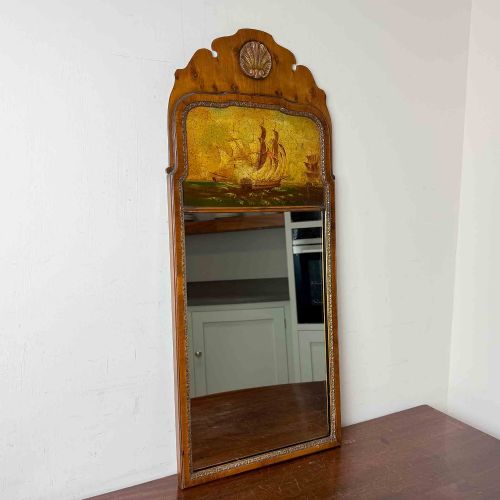
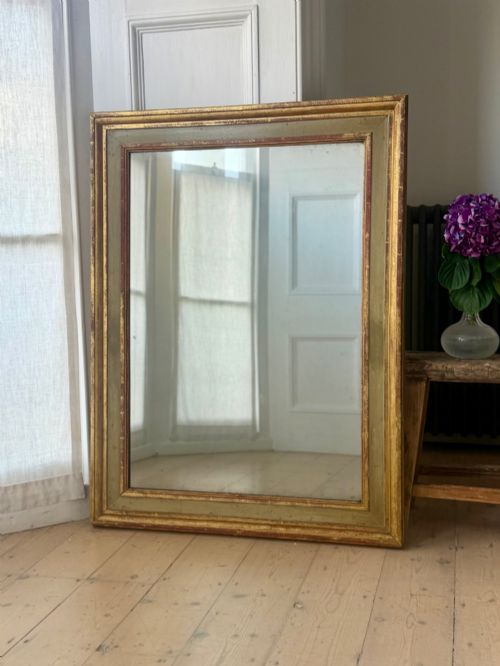
A painted wood trumeau mirror combines architectural wood panels with an integrated oil painting or print above a glass plate, bringing height and proportion to a room.
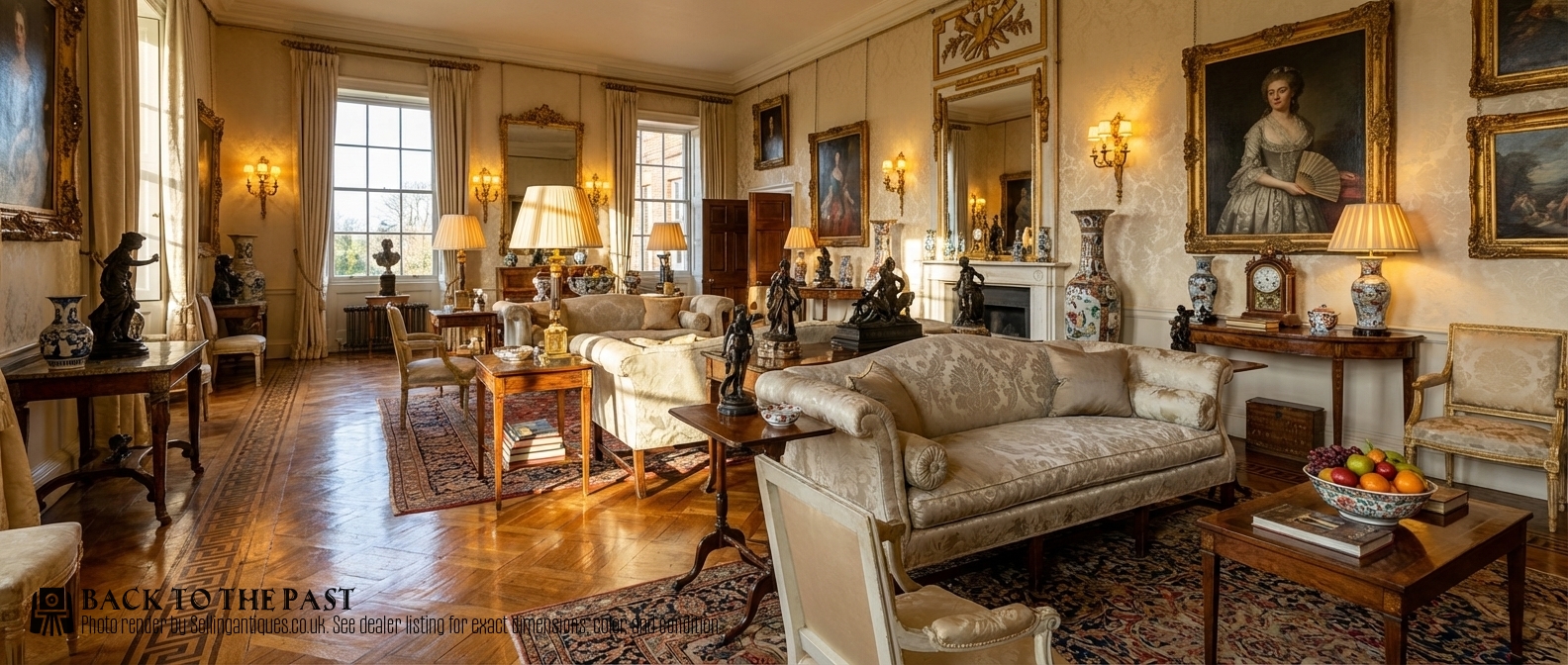
Painted Wood Trumeau Mirror
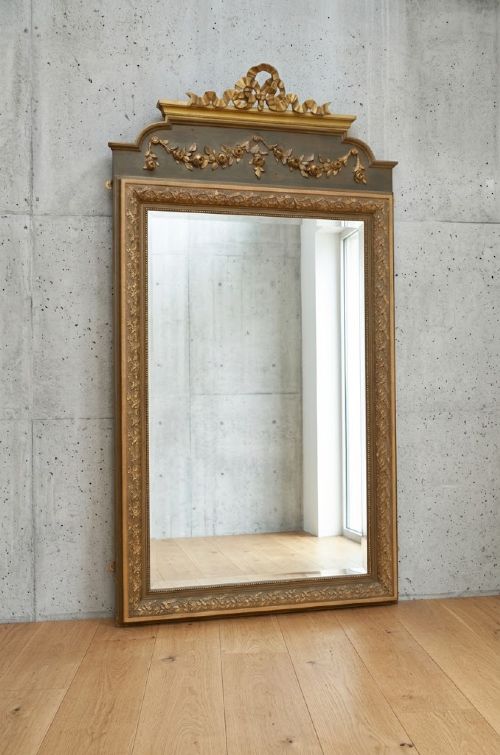
A painted wood trumeau mirror combines a vertical wall-hanging plate with an upper decorative panel, often housing an oil painting or foliate design. These wall-mounted furnishings originate predominantly from French interiors, drawing on neoclassical and empire design principles.
The most common examples encountered on this page date from the nineteenth century, ranging from country house interpretations to grander pier mirrors. They function to reflect light and anchor wall space above mantelpieces or between windows.
Materials and construction methods
Carved pine and hardwood provide the structural framework, frequently layered with gesso to build up relief ornamentation and architectural mouldings. Surface decoration relies on traditional paint finishes, often combined with parcel-gilt highlights or gold leaf.
Older examples incorporate original mercury glass plates, held within frames shaped by hand with carved floral garlands, columns, or ribbon crests.
Materials recorded across the inventory include pine, walnut, yew wood, gesso, gold leaf, and original mercury glass plates.
Distinguishing quality across examples
Quality rests in the depth of the wood carving and the crispness of the gesso mouldings applied to the frame. Superior pieces retain their original painted surfaces and integrated oil paintings rather than later replacements.
The architectural proportions, the weight of the timber, and the clarity of the mercury glass plate further separate standard decorative items from finer period examples.
The Painted Wood Trumeau Mirror Glossary
- Trumeau
- An architectural wall panel designed to fit the space between windows or above a fireplace. It frequently incorporates a mirror plate alongside a decorative painting.
- Pier Mirror
- A tall mirror specifically proportioned to hang on the narrow pier of wall between two windows. These often sit above console tables.
- Gesso
- A plaster-like mixture applied to wood frames to create a smooth surface for gilding and relief carving. It allows for crisp decorative details.
- Mercury Glass
- An early form of silvered glass created by pouring a liquid mercury amalgam between double-walled blown glass. This produces a distinctive mottled reflection.
- Parcel-Gilt
- A surface finish where selected details of a painted or stained wooden object receive partial gilding with gold leaf.
Painted Wood Trumeau Mirror: Frequently Asked Questions
Where should I hang a trumeau mirror?
These mirrors suit placement above a mantelpiece as an overmantel or on a prominent wall between large windows. Their vertical height helps to draw the eye upward and brighten the room.
Ensure the wall construction can support the weight of the carved wood and glass structure, using appropriate fixings for heavy antique wall hangings.
What is the difference between a pier mirror and a trumeau?
A pier mirror is specifically built to occupy the narrow wall space between windows, often accompanied by a matching console table. A trumeau is an architectural panel that may contain a mirror plate, a wooden panel, or an integrated oil painting.
Many trumeau mirrors function as pier mirrors, combining both definitions through tall proportions and integrated decorative artwork.
Are the oil paintings original?
Many nineteenth-century trumeau mirrors retain their original pastoral or floral oil paintings inset above the glass plate. Some pieces feature later decorative panels added during subsequent restoration work.
Examining the craquelure and pigment helps determine whether the upper canvas matches the age of the surrounding carved wood frame.