



Gilded Hall Mirror Console
These gilded hall mirror console pieces combine a reflective glass surface with a matching table to anchor an entrance space with traditional decorative presence.
Gilded Hall Mirror Console
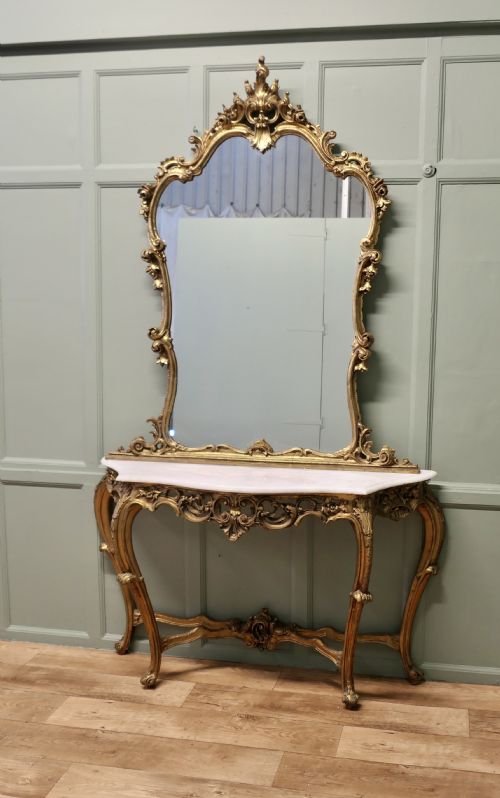
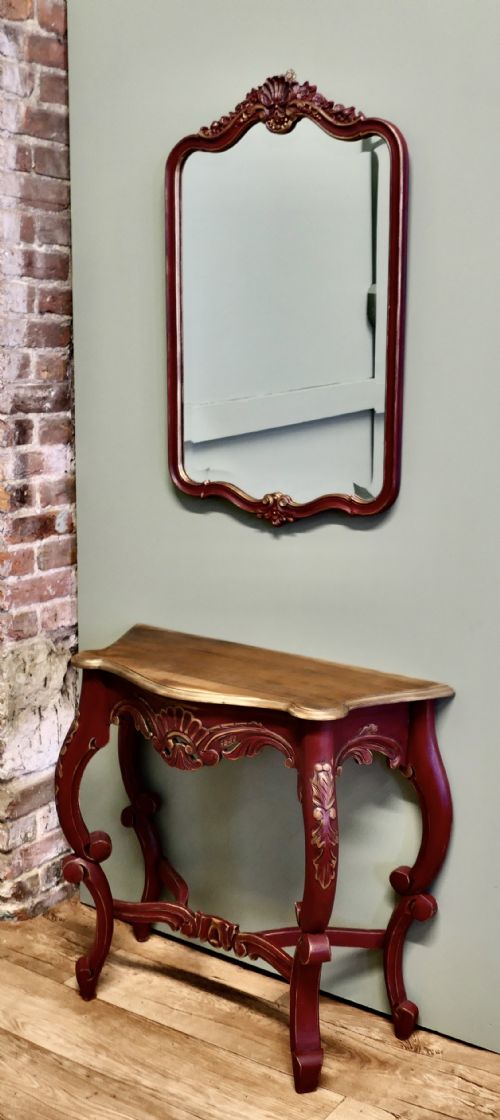
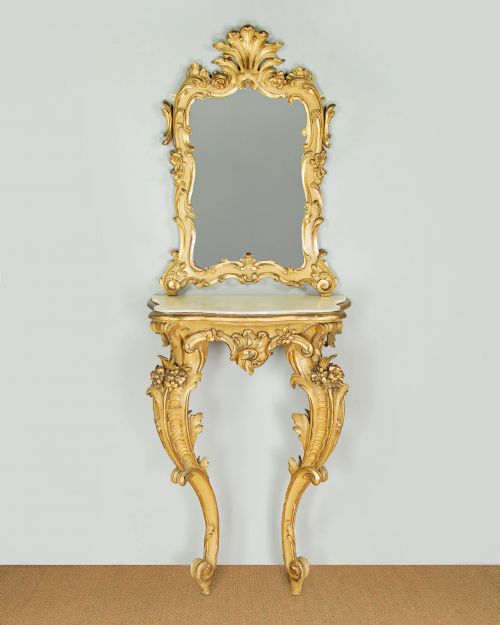
A gilded hall mirror console brings together a carved wall mirror and a matching table designed to sit beneath it in an entranceway. Pieces matching this search span from the nineteenth century into the early twentieth century, showing periods like the Victorian era alongside specific years such as nineteen hundred and nineteen twenty.
Forms on this page include combined console table and mirror sets, pier mirrors, wall mirrors, and standalone console tables. Styles draw heavily on historical revivals, featuring Rococo Revival, Italian Rococo Revival, Venetian Rococo, Neoclassical, and Chinoiserie aesthetics.
Materials and construction
Construction relies primarily on carved wood and gesso finished with gold leaf or paint to create the bright surface characteristic of giltwood. Many tables incorporate heavy marble tops, while others feature painted or carved wooden surfaces paired with traditional mirror glass.
Craftsmen shaped these forms by hand, applying intricate carved details associated with French, Italian, and Victorian design traditions. The glass components are set within these ornate frames, frequently designed as matching pairs to function together in a hallway or reception room.
Gilded Hall Mirror Console Retail Price Guide 2026
Typical asking prices for gilded hall mirror console among the pieces listed under this phrase on Sellingantiques today, from the lower quarter to the upper quarter. They describe what is for sale here now, not the wider market.
Even narrow hallways gain an immediate sense of grand proportion the moment a tall gilded pier mirror finds its proper console table.
Assessing the work
Quality rests on the depth and crispness of the hand-carved details within the wood and gesso frame. Finer examples display fluid lines and precise ornamentation across both the mirror and the table base.
The integration between the table and mirror influences the cohesion of the set, particularly where marble tops meet ornate gilded wooden bases. Surface preservation also matters, distinguishing pieces with original gilding and paint from later alterations.
The Gilded Hall Mirror Console Glossary
- Giltwood
- Wood coated with gold leaf or a metallic substitute. This material defines the bright, reflective appearance of traditional frames.
- Console table
- A table designed to be fixed against a wall, frequently supported by ornate legs or brackets. These tables often stand beneath a matching wall mirror.
- Pier mirror
- A tall mirror designed to hang on the wall between windows or above a low piece of furniture. It is a common format in nineteenth-century interiors.
- Rococo revival
- A nineteenth-century design style emulating the asymmetrical curves and scrollwork of the eighteenth century. It appears frequently in these mirror and table sets.
- Gesso
- A plaster-like mixture applied to wood surfaces to create a smooth base for gilding. It allows for intricate relief carving and detailing.
Gilded Hall Mirror Console: Frequently Asked Questions
What is a gilded hall mirror console?
A gilded hall mirror console is a matched combination of a wall mirror and a narrow table designed for an entryway. These pieces are finished with gold leaf, gesso, or paint and date across the nineteenth and early twentieth centuries.
They serve both a practical and decorative purpose in traditional interiors, reflecting light while providing a surface for small objects near an entrance.
How do I match these pieces to my interior?
These items range from compact tables and mirrors from nineteen hundred to larger Victorian sets featuring heavy marble tops. Consider the scale of your hallway and the existing decor style, whether that leans towards Venetian Rococo or Neoclassical design.
Matching the gilded finish with other metallic or framed elements in the room helps create a cohesive arrangement.
What styles are common in these sets?
The selections draw heavily on revival aesthetics, including French Rococo, Italian Rococo Revival, and Victorian Neoclassical styles. Chinoiserie and shabby chic finishes also appear among the listed items.
Each style dictates the complexity of the carved woodwork and the specific contours of the mirror frame and table legs.
Are the tables and mirrors always sold together?
Many listings present the console table and mirror as a unified set designed to complement each other in style and period. Other examples feature individual wall mirrors or standalone tables that can be paired independently.
Checking the specific title of each listing clarifies whether the piece includes both components.