




French Console Table Mirror
A french console table mirror combines a wall-mounted glass with a narrow surface, designed to sit flush against a drawing room or hallway wall.
French Console Table Mirror
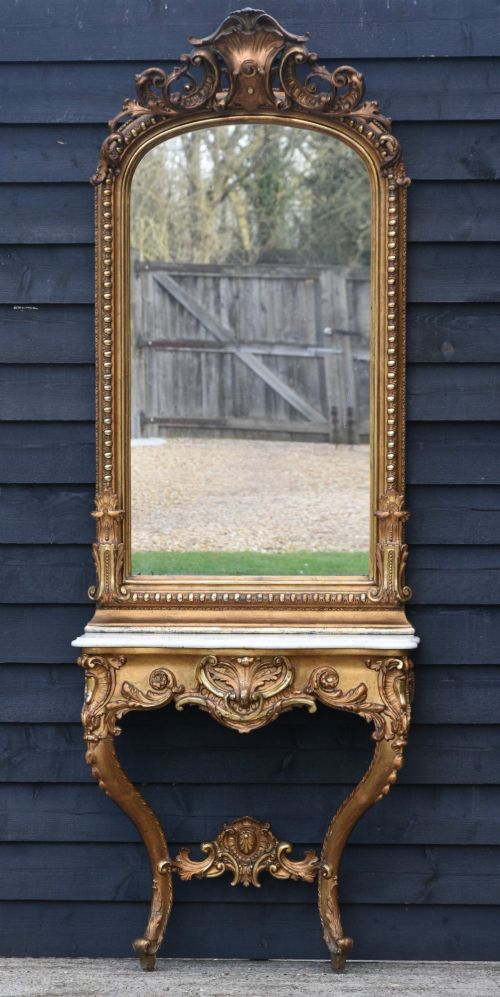
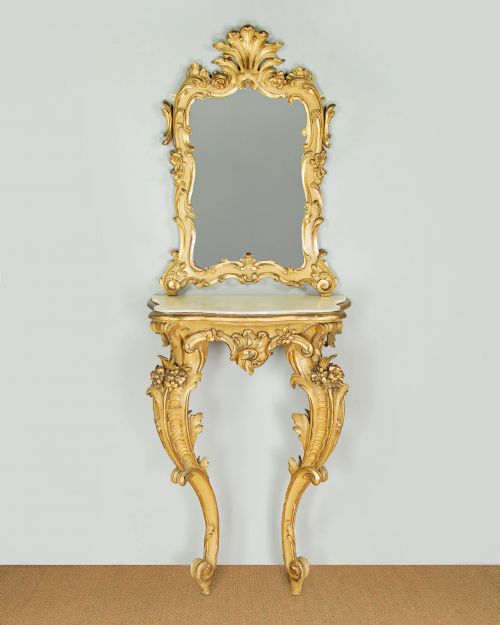
When searching for a french console table mirror, buyers look at paired furnishings designed to function together in reception rooms and hallways. The most common format met here is a marble-topped timber table paired with a matching wall-hung pier glass or trumeau mirror from the nineteenth century.
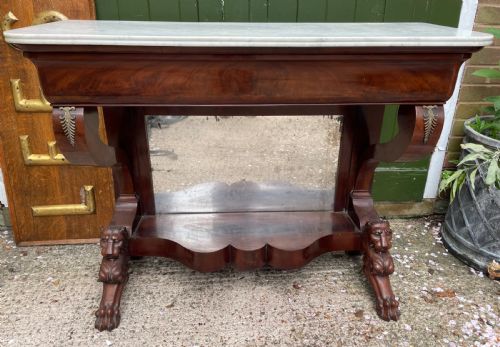
These matched sets range from restrained mahogany designs of the French Empire and Charles X periods to heavily carved giltwood examples in the Rococo and Louis styles. Many pieces combine the table and mirror into an integrated en suite arrangement, while others pair a separate console with a coordinating glass.
How They Were Made
Cabinetmakers constructed these tables from solid timbers such as mahogany and walnut, frequently applying rich veneers like burr walnut or kingwood over secondary woods. Surfaces often received heavy layers of hand-applied gilding over gesso and carved wood, or were painted and parcel-gilt.
Heavy slabs of carrara and coloured marble were fitted to the tops of the console bases to provide a durable and cool surface. Mirror glass was silvered and set into tall wooden frames, sometimes designed as trumeau panels to fit wall spaces between windows.
Early mirrors often retain their original mercury backing, casting a slightly moody reflection that modern glass simply cannot replicate.
What Varies in Quality
The standard of a french console table mirror rests largely on the crispness and depth of the hand-carving on the wooden and gesso frames. Finer examples display meticulous undercutting and fluid scrollwork, whereas simpler pieces rely on basic mouldings.
The choice of materials dictates the upper tier of the range, seen in thick slabs of figured marble, original mercury glass with natural foxing, and heavy, untarnished gilding. The harmony between the table base and its corresponding mirror also determines the overall integrity of the set.
Donald Ross
The French Console Table Mirror Glossary
- Console table
- A table designed to be fixed against a wall, traditionally supported by two front legs or brackets with the rear secured to the wall structure.
- Pier mirror
- A tall vertical mirror specifically designed to hang on the wall space between two windows, frequently placed directly above a console table.
- Trumeau
- A decorative wall panel incorporating a painted scene or mirror glass within carved wooden framing, often matching an associated console table.
- Giltwood
- Timber that has been coated with a thin layer of gold leaf applied over a prepared gesso and bole ground.
- Carrara marble
- A type of white or blue-grey marble quarried in Italy, commonly utilised for the solid tops of nineteenth-century console tables.
French Console Table Mirror: Frequently Asked Questions
How were these tables used originally?
These console tables served as decorative side furniture in grand reception rooms, often positioned beneath tall windows to reflect light back into the space.
The matching mirror amplified this effect while providing a convenient surface for decorative objects, porcelain, or candlesticks.
Are the table and mirror always original to each other?
Many surviving sets were manufactured as matched pairs en suite, sharing identical carved motifs, gilding styles, and wood types from the same workshop.
Over the decades, some tables and mirrors have been paired together later in life if their proportions and decorative schemes complement one another.
How do I identify a nineteenth-century piece?
Nineteenth-century examples frequently display characteristic timber framing techniques, hand-carved gesso details, and heavy marble tops supported by classical or revival styles.
Examining the reverse of the mirror glass and the construction joints of the table base often reveals the age of the materials used.
Where should I place a console table mirror?
These pieces suit narrow circulation spaces, hallways, or living rooms where a shallow table footprint is required.
Hung securely to the wall, the mirror anchors the arrangement vertically while the console provides a stable surface for display.