
Floor Length Mirror
A floor length mirror stands as a commanding presence in a room, offering both practical reflection and architectural scale through centuries of design.
Floor Length Mirror
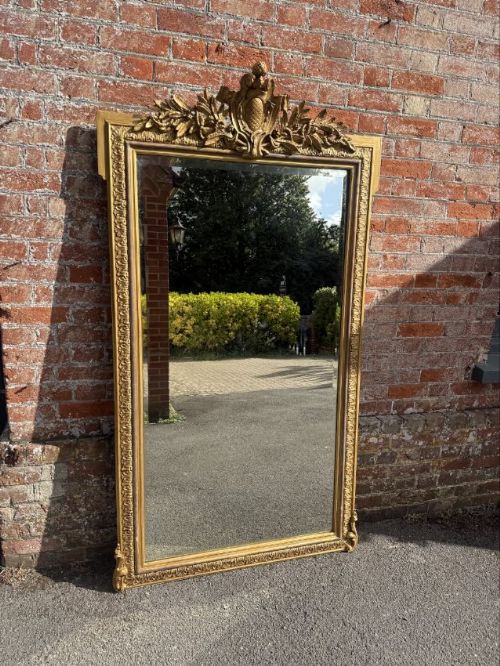
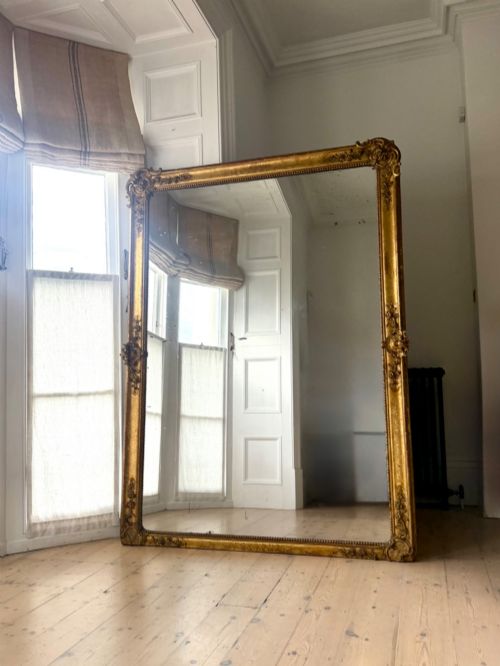
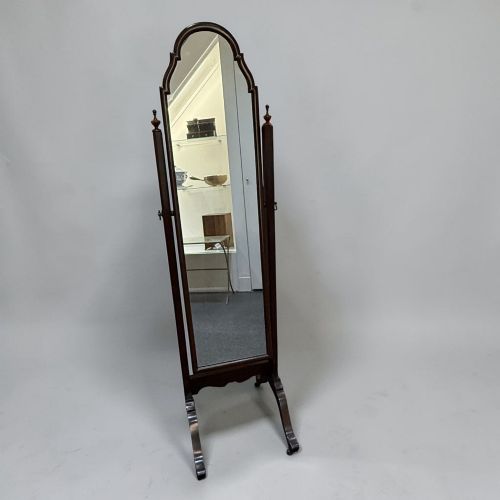
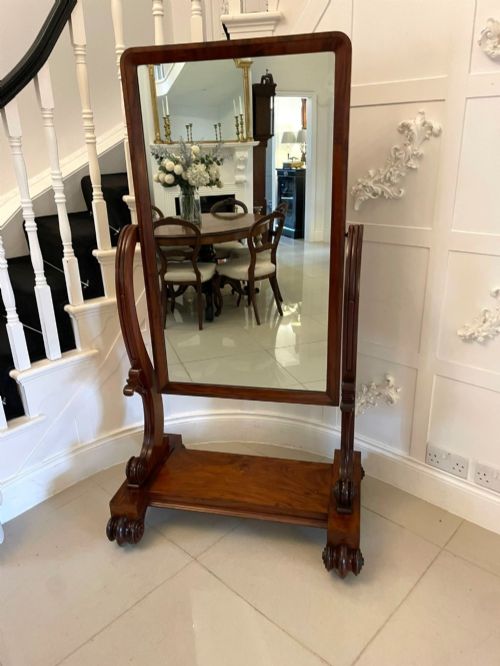
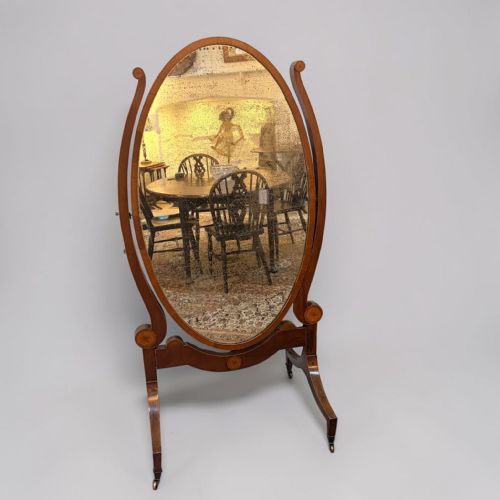
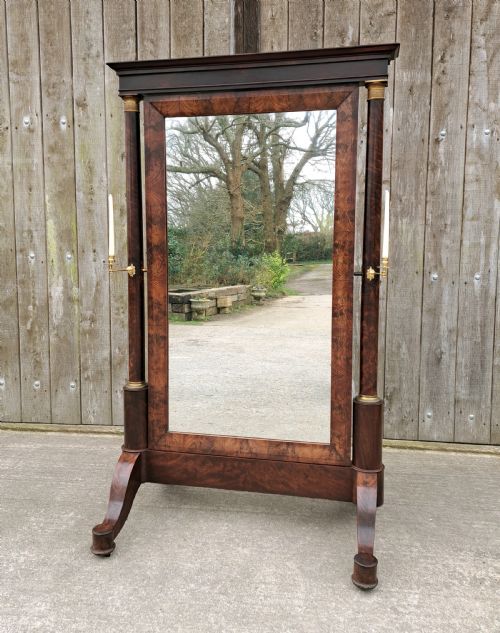
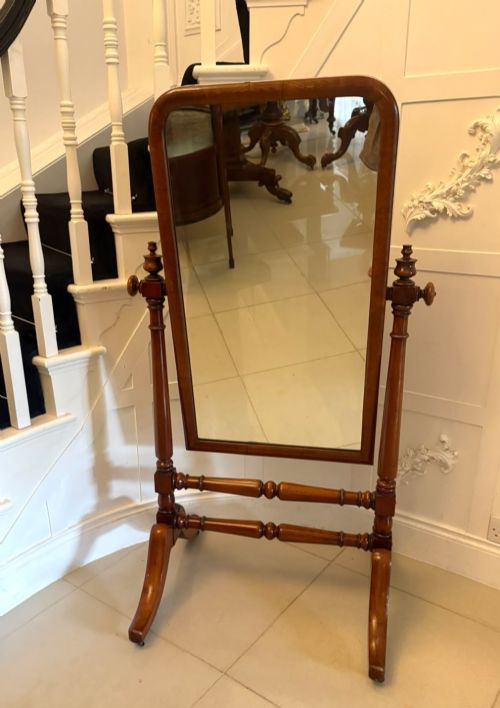
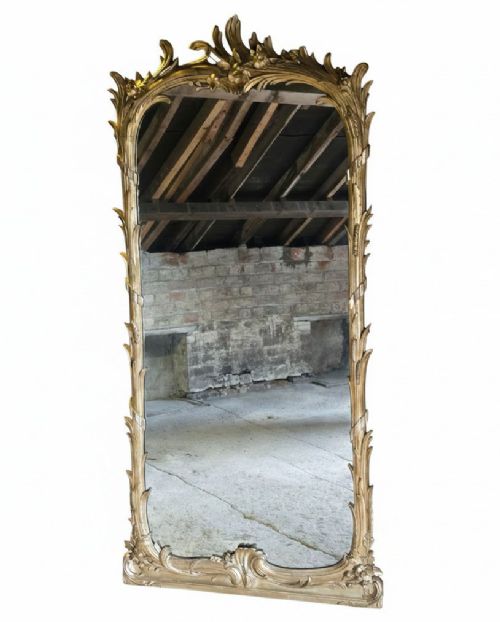
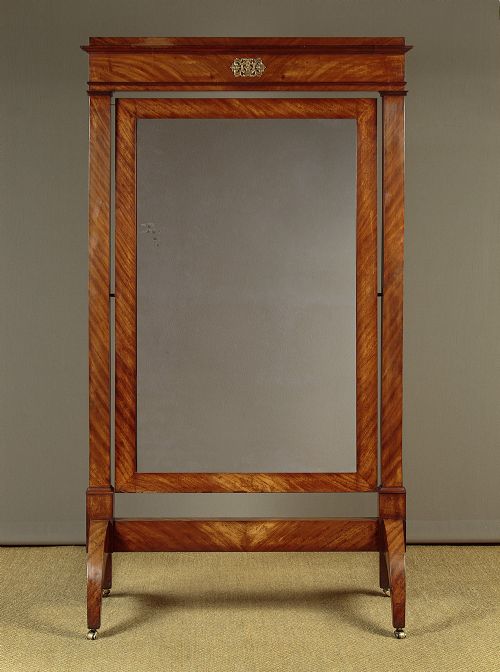
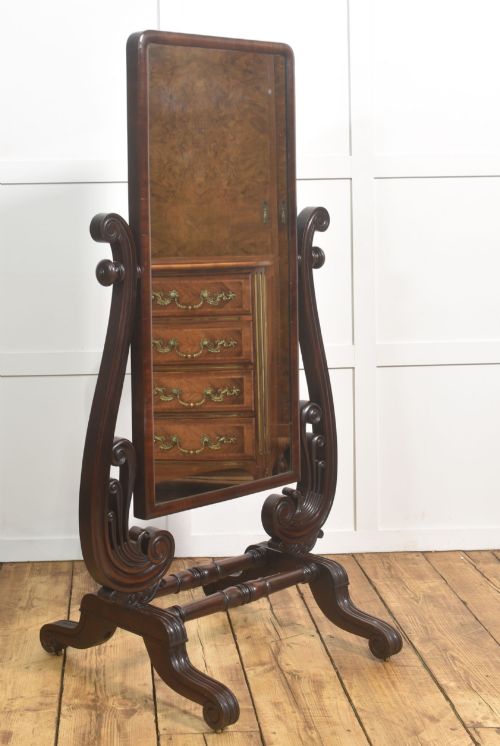
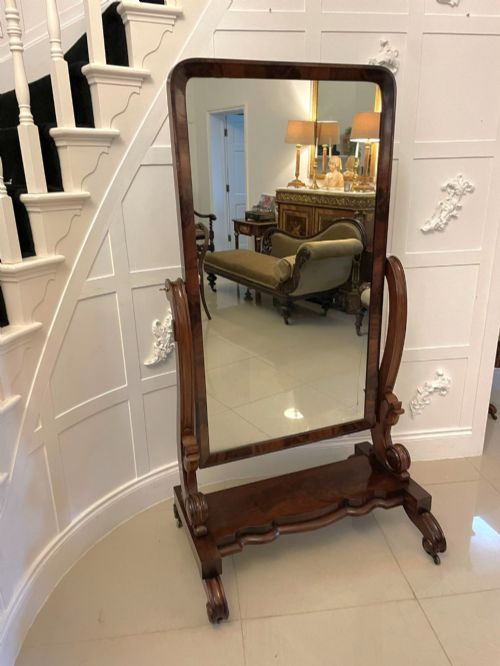
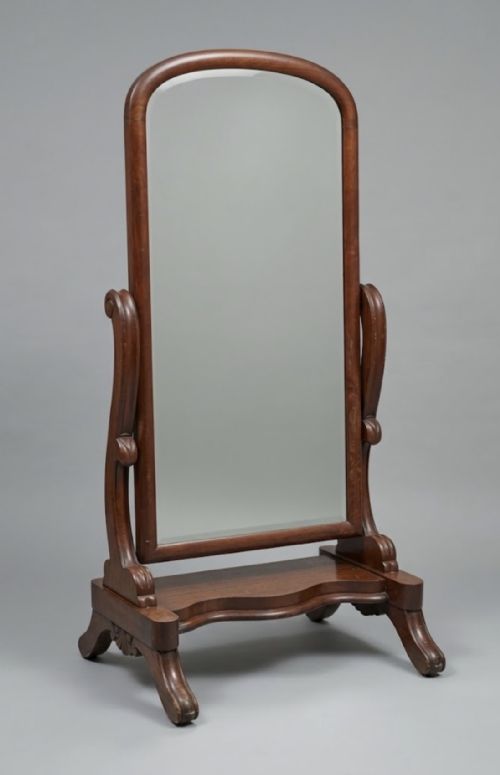
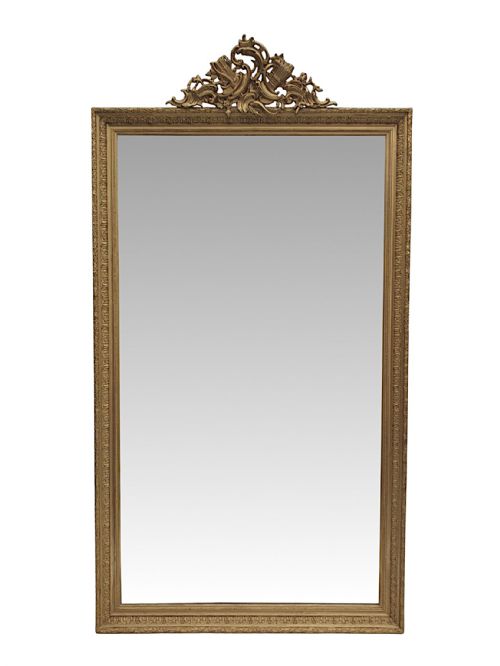
A floor length mirror most commonly appears in the form of a freestanding cheval mirror or a tall leaner mirror designed to rest against a wall. These pieces stretch upwards to capture the full figure, bringing height and reflected light deep into a room.
The materials and frames reflect the prevailing tastes of the nineteenth century and the early twentieth century, spanning English and French ateliers. Buyers frequently encounter solid mahogany frames with swinging glass plates, alongside heavily giltwood and gesso surfaces built for formal interiors.
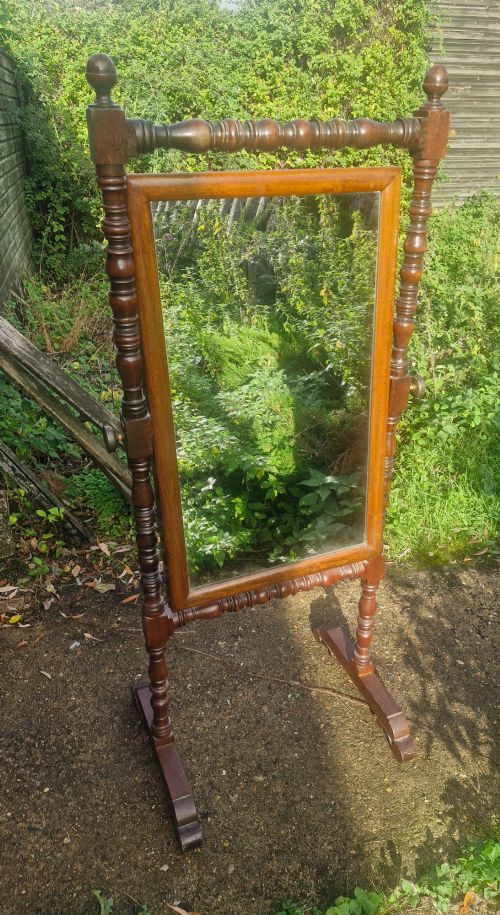
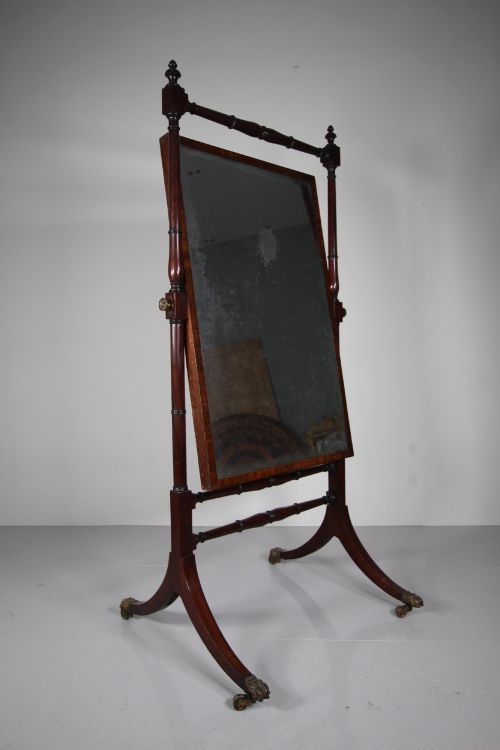
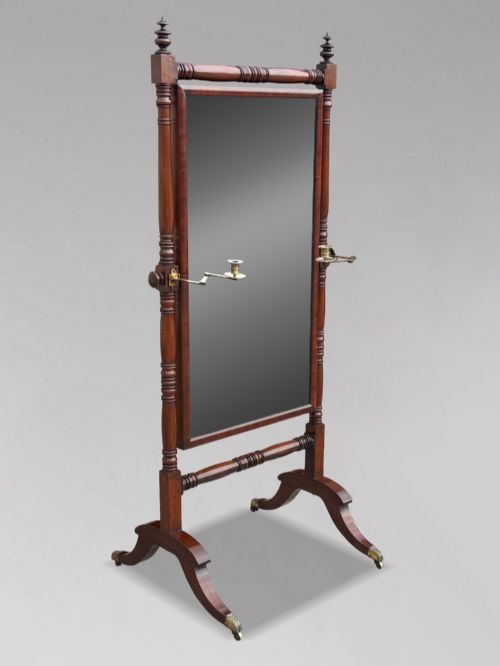
Cheval mirrors dominate the freestanding selection, utilising pivoting brass pins or barley twist supports to adjust the angle of the glass. Leaner mirrors take a simpler path, standing directly against the plaster with large proportions and mercury glass or modern plate silvering.
Materials and construction
Makers built the structural frames of these mirrors using dense hardwoods like mahogany, walnut, and oak, often shaping them with turned uprights or carved decorative details. Giltwood and gesso examples required carved softwood bases covered in layers of plaster and gold leaf to create deeply reflective, ornate borders.
The glass itself varies from early mercury silvering with its characteristic mottled depth to clearer plate glass used in later Victorian and Edwardian iterations. Brass fittings, castors, and pivoting hardware supported the heavy swinging frames of dressing mirrors, allowing them to tilt smoothly on sturdy floor bases.
Listings for a floor length mirror feature solid mahogany, giltwood, and gesso across Victorian, Edwardian, and Regency periods.
Judging the work
Quality rests in the crispness of the timber carving and the architectural proportions of the frame relative to the glass. Superior pieces display finely turned supports, tight joinery, and substantial weight that anchors the pivoting mirror plate without wobble.
The treatment of the gilt and the depth of the wood grain separate standard utilitarian items from grand country house commissions. Original mercury glass and intact brass castors indicate a higher degree of preservation.
The Floor Length Mirror Glossary
- Cheval mirror
- A freestanding mirror suspended in a frame on pivots, allowing the glass to swing. It typically stands on four legs with brass castors.
- Leaner mirror
- A tall mirror designed to stand upright against a wall without wall fixings. These pieces often feature substantial frames to support their own height.
- Giltwood
- Wood carved and coated with gold leaf or a gold-coloured metallic preparation. This finish provides a bright, reflective border to catch ambient light.
- Gesso
- A plaster-like mixture applied to wood and carved before gilding. It allows for intricate, raised ornamentation along the frame edge.
Floor Length Mirror: Frequently Asked Questions
How do I anchor a heavy leaner mirror safely?
Large leaner mirrors rely on their substantial weight and slight backward tilt against the wall for stability. Many makers included discreet attachment brackets behind the top frame to secure the piece to the wall studs.
Placing the mirror on a flat floor away from high traffic areas ensures it remains secure without requiring extensive modern wall modifications.
What is the difference between a cheval mirror and a leaner mirror?
A cheval mirror is a freestanding unit supported by a dedicated wooden frame with legs, often featuring pivoting pins so the glass tilts. A leaner mirror lacks a base and simply rests its vertical length directly against a wall surface.
Cheval mirrors function well in dressing rooms where angle adjustment matters, while leaner mirrors suit living spaces to amplify natural light.
How do I identify a Victorian mahogany mirror?
Victorian mahogany floor mirrors typically feature rich, dark timber grain, sturdy turned or barley twist uprights, and solid brass fittings. The construction prioritises heavy structural integrity to support large swinging glass plates.
Cabinetmakers of this era frequently combined mahogany with satin birch or inlaid details, reflecting the changing tastes of the mid to late nineteenth century.
Does original mercury glass affect the reflection?
Original mercury glass produces a softer, slightly darker reflection with charming mottled spots and foxing behind the glass plate. This historical ageing process gives the mirror surface a distinctive visual depth rather than a clinical modern reflection.
Many collectors prize this authentic patina as a marker of nineteenth-century French and English manufacture.