
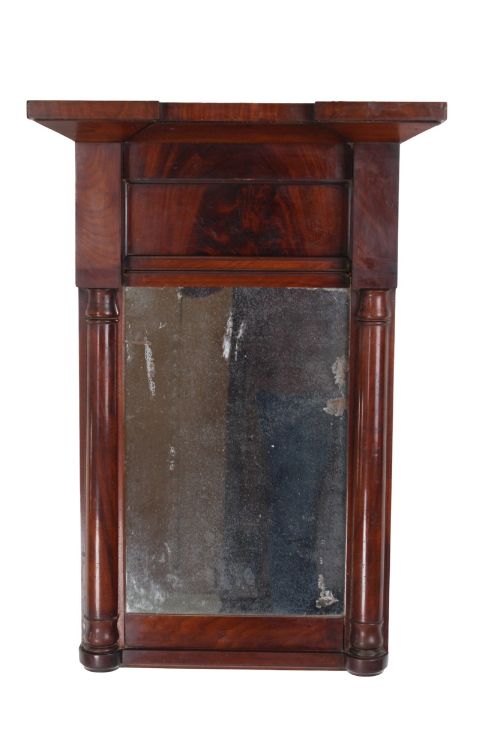
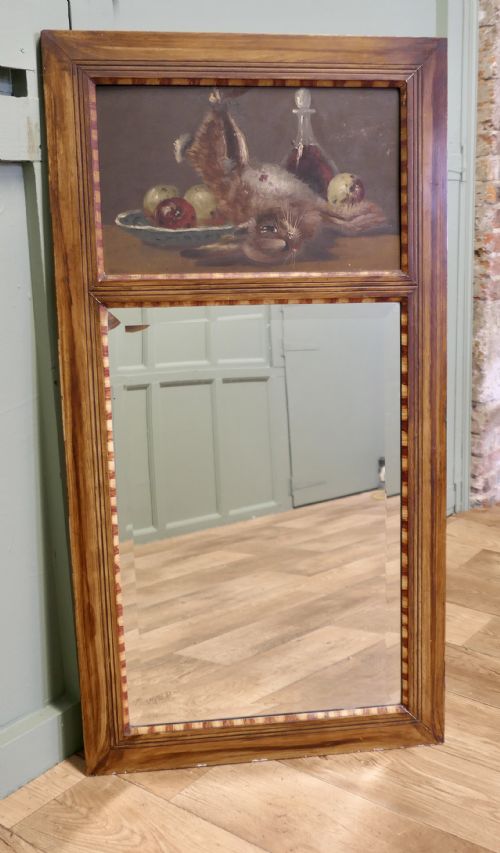
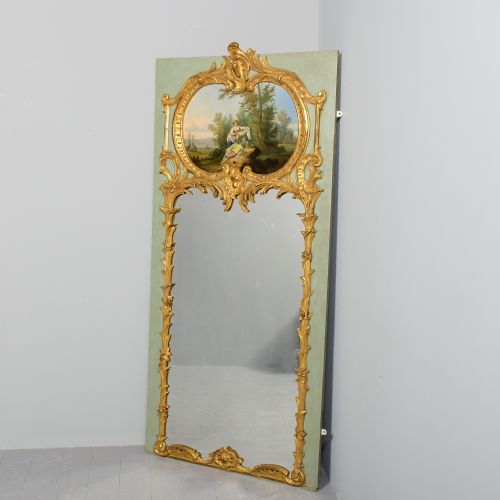


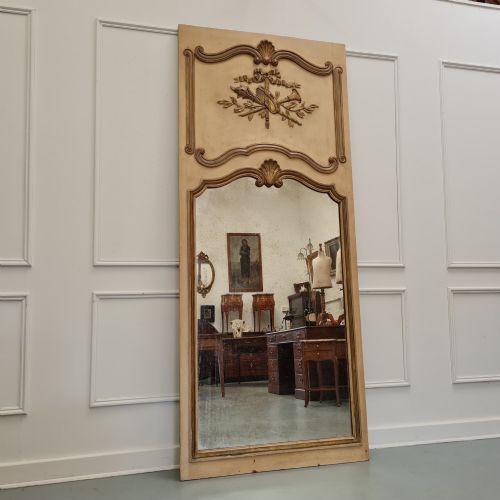

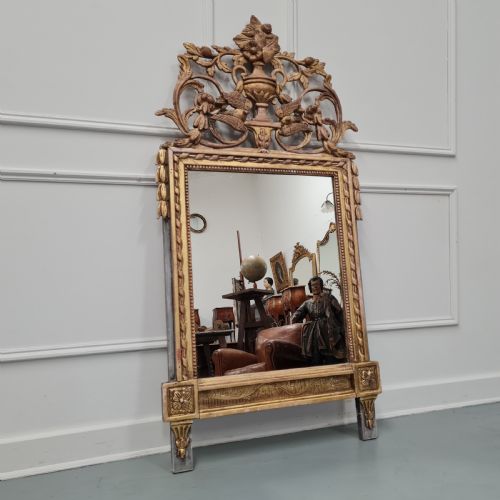


Vintage Trumeau Mirror
A vintage trumeau mirror brings architectural presence and classical French character to an interior through its combined glass plate and upper panel.
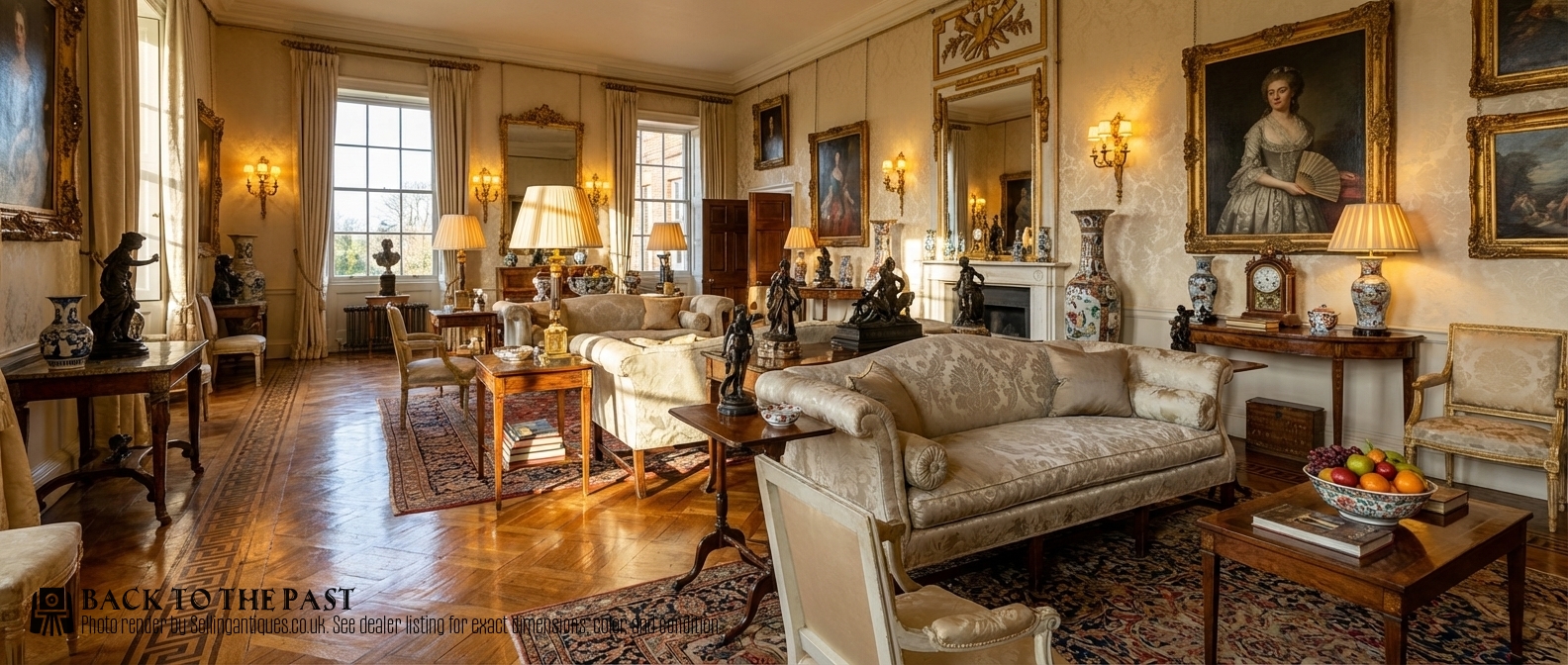
Vintage Trumeau Mirror
A vintage trumeau mirror combines a lower looking glass with an upper decorative panel, often integrated into wall panelling or hung independently. The form draws heavily on French design traditions, spanning provincial country styles to formal Empire aesthetics.
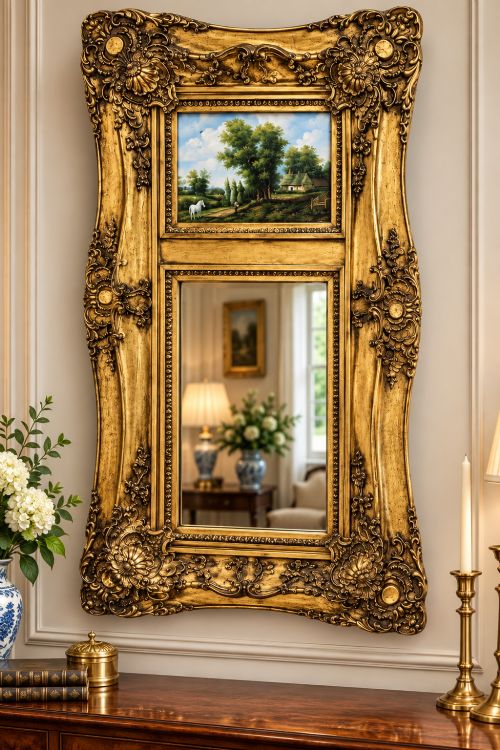
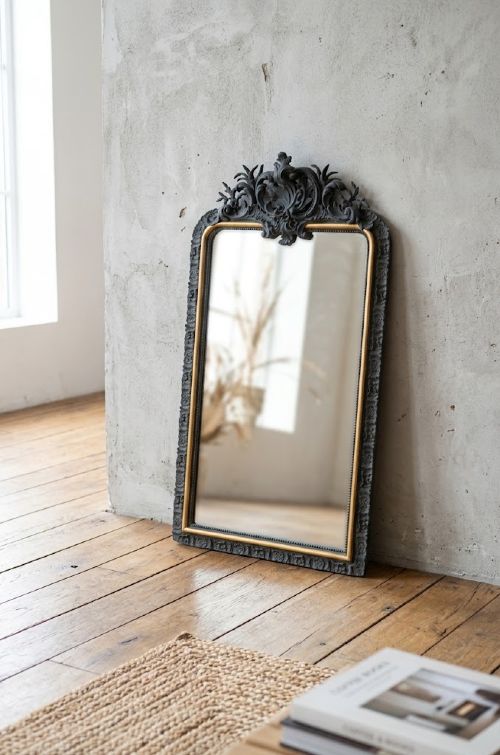
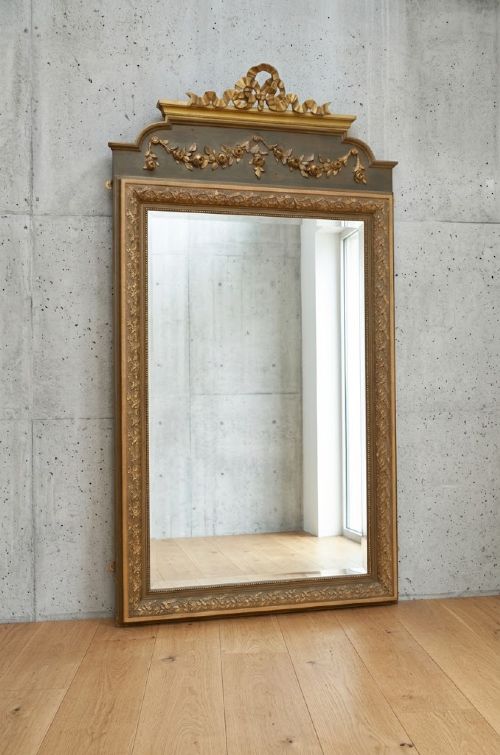
Most pieces seen here originate from the nineteenth century and the early twentieth century, taking the form of tall pier mirrors designed to sit between windows. Painted wooden surfaces, giltwood accents, and carved gesso details define the visual language of these examples.
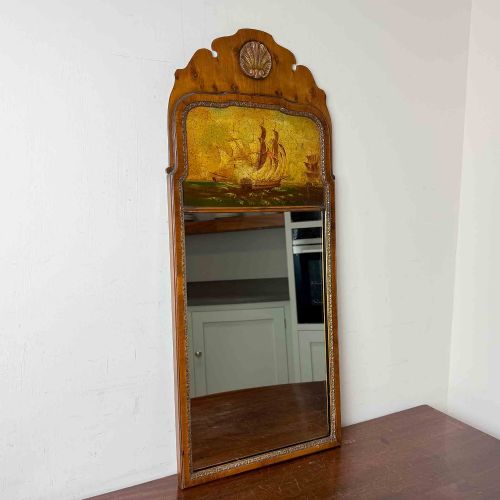
Makers frequently incorporated pastoral scenes, oil paintings, or reverse glass prints into the upper section above the mirror plate. These variations produce distinct regional versions, from restrained Dutch walnut designs to ornate French provincial pieces.
Materials and construction
Makers built the foundational frames using timber such as walnut, mahogany, maple, and general painted wood. Carved gesso applied over the wooden substrate provided the base for intricate surface ornamentation and gilding.
Surfaces received layers of paint, parcel gilding, or genuine giltwood finish to catch the light within a room. Upper panels often incorporated canvas paintings, oil on panel works, or printed glass scenes secured within the framing structure.
Common regional styles include French Provincial, French Empire, Dutch, and Queen Anne Revival forms.
Judging the work
The sophistication of the carved wood and gesso ornamentation separates standard decorative items from finer examples. Crisp detailing in the moulding and proportioned integration of the upper panel demonstrate superior workshop skill.
Original painted surfaces and untouched gilding hold more integrity than later re-decoration. The quality of the incorporated canvas painting or reverse glass print dictates the overall visual merit of the piece.
The Vintage Trumeau Mirror Glossary
- Trumeau
- An architectural mirror featuring a decorative panel situated directly above the glass plate. This form originated to fill the wall space between two windows.
- Pier glass
- A tall mirror specifically designed to hang on the narrow pier of wall between windows. These pieces often match the height of adjacent doorways or windows.
- Gesso
- A plaster-like mixture applied to wood frames to create a smooth surface for carving and gilding. Skilled artisans shaped this material before applying gold leaf or paint.
- Parcel gilt
- A finishing technique where only specific raised portions of a frame receive gilding while the rest remains painted or stained wood.
- Reverse glass print
- An image applied directly to the back of a glass panel so that it is viewed through the transparent front. These frequently appear in the upper sections of older mirrors.
Vintage Trumeau Mirror: Frequently Asked Questions
Where should I hang a trumeau mirror?
These mirrors suit locations with high ceilings, such as above a fireplace mantel or on a principal living room wall. Their vertical proportions create a sense of height and reflect substantial amounts of natural light.
Avoid damp environments like unventilated bathrooms, as moisture damages the historic wood, gesso, and silvered glass over time.
How do I clean the mirror plate safely?
Use a soft, dry microfibre cloth to remove dust from the glass and the surrounding carved frame. If moisture is necessary, apply a mild glass cleaner to the cloth rather than spraying the mirror directly.
Keep liquids away from unsealed wood, painted surfaces, and antique gesso to prevent softening or lifting of the historical finish.
Are the upper panels always painted?
Upper panels vary considerably, featuring oil paintings, canvas artwork, reverse glass prints, or simple carved wooden panels. Some examples incorporate pastoral landscapes or maritime scenes rather than plain painted surfaces.
The specific artwork often reflects the period of manufacture, ranging from floral motifs in provincial pieces to naval engagements in earlier nineteenth-century designs.
How can I tell the age of the mirror?
Dating relies on examining the timber types, the construction methods of the backboards, and the characteristics of the glass plate. Hand-beveled edges, oxidation patterns in the silvering, and original paint layers offer strong chronological indicators.
Stylistic cues such as Empire motifs or Queen Anne Revival proportions also help place the piece within the nineteenth or early twentieth century.