


Gilt Wood Dressing Mirror
A gilt wood dressing mirror brings warmth and reflective depth to a room, ranging from grand floor-standing chevals to compact table pieces.
Gilt Wood Dressing Mirror
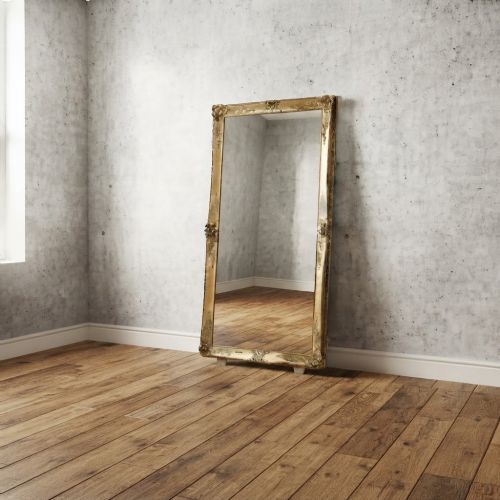
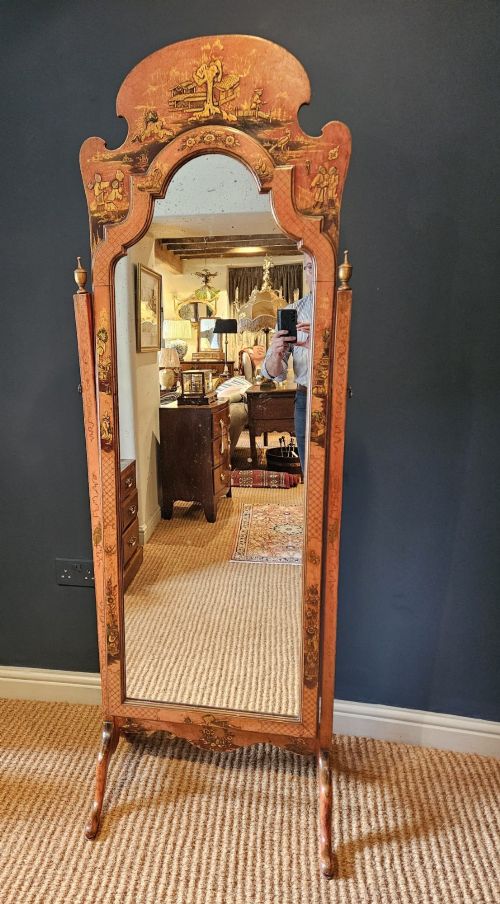
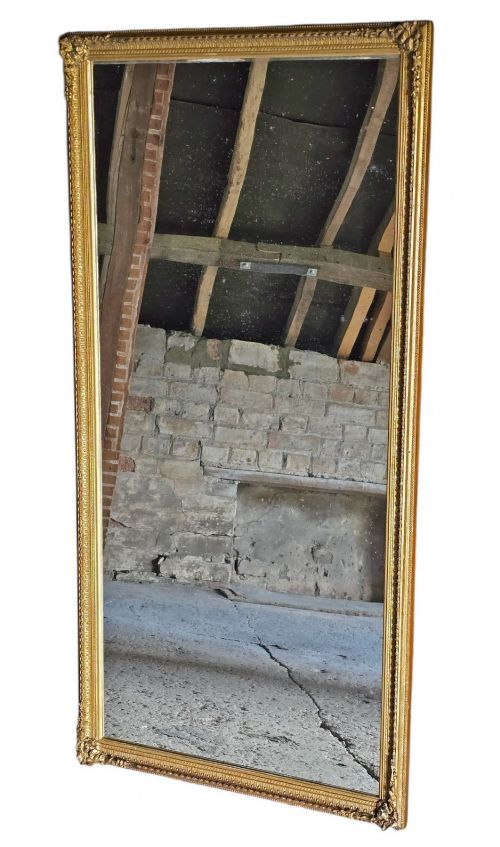
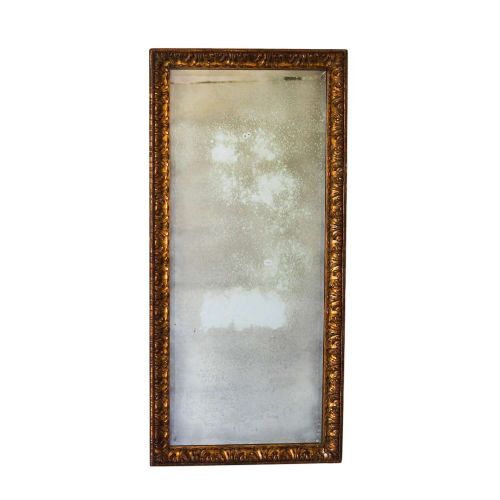
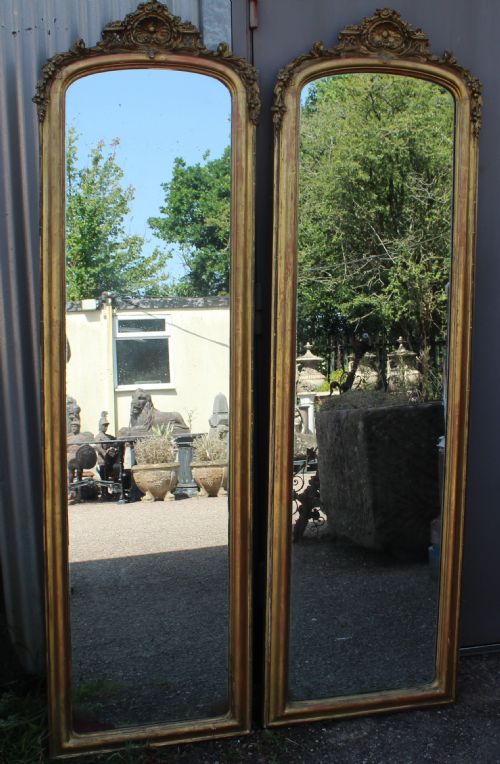
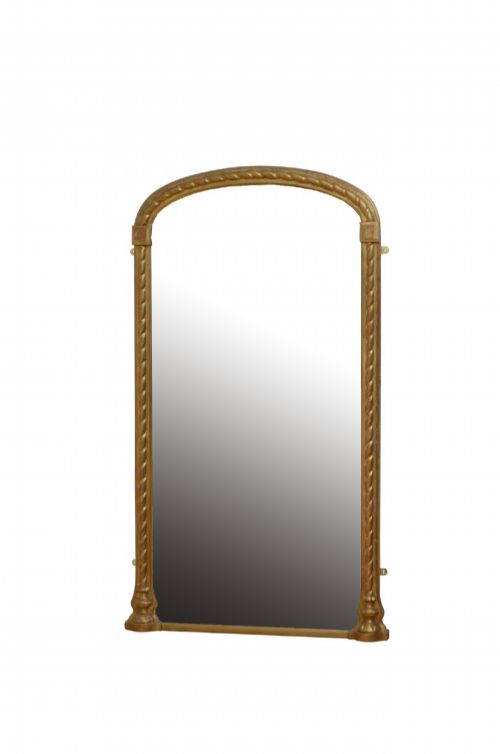
A gilt wood dressing mirror forms a functional and decorative focus, frequently appearing in forms such as tall leaner mirrors, cheval mirrors, and smaller table or toilet glasses. The selection spans the eighteenth, nineteenth, and early twentieth centuries, drawing heavily on French Chateau, Victorian, Neoclassical, and Edwardian aesthetic traditions.
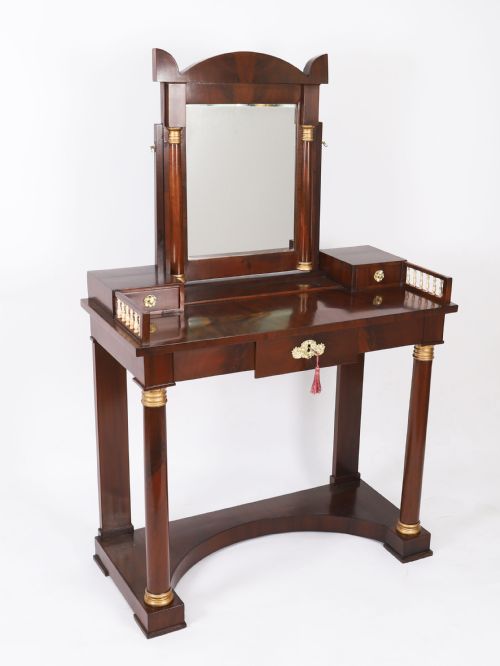
Buyers encounter everything from large Italian carved giltwood wall pieces to freestanding French Empire mahogany dressing tables with integrated mirrors. Smaller examples include table-top vanity mirrors and folding designs intended for bedrooms and dressing rooms.
The materials recorded across these items combine traditional timber frames with reflective glass, finished in metallic leaf or gesso. Pieces range from simple arched top frames to highly ornate decorative designs featuring elaborate carving and original silver or gold surfaces.
How they were made
Frames rely primarily on solid woods such as mahogany, walnut, and kingwood, often built with carved wood elements that provide structural integrity. Artisans applied layers of gesso over the timber base to create a smooth, prepared ground for subsequent gilding.
Gold leaf and metallic gilt finishes were meticulously laid over the gesso ground, sometimes paired with painted highlights or original silvering. Makers utilised traditional joinery and carving techniques to shape arched tops, rope patterns, and ornate decorative motifs.
Materials recorded across the inventory include gesso, gold leaf, mahogany, kingwood, and walnut.
What varies in quality
The standard of carving defines the visual impact of the frame, distinguishing deeply hand-carved Italian and French giltwood from simpler moulded decoration. Crispness in the execution of gesso work and the retention of original gold leaf surfaces contribute significantly to a piece's integrity.
The condition and clarity of the mirror glass itself matter greatly, particularly where original mercury or early silvered glass survives with authentic patination. Robust construction in the supporting stands of cheval mirrors and dressing tables ensures long-term stability.
John Franklin London
The Gilt Wood Dressing Mirror Glossary
- Giltwood
- Wood that has been coated with gold leaf or a metallic substitute. This finish provides a bright, reflective surface characteristic of formal period mirrors.
- Gesso
- A plaster-like mixture applied to wooden frames as a base for gilding. It allows craftsmen to carve intricate relief details before applying gold leaf.
- Cheval mirror
- A full-length mirror hung in a frame that allows it to swing or tilt. These freestanding pieces became popular for bedroom dressing.
- Pier glass
- A tall mirror designed to hang on the wall between windows, often placed above a console table. They maximise light in period interiors.
- Toilet mirror
- A smaller mirror mounted on a small frame or drawer base, historically placed on a dressing chest or table. They were essential for close grooming.
Gilt Wood Dressing Mirror: Frequently Asked Questions
How do I date a gilt wood dressing mirror?
Dating relies on observing the timber species, the style of carving, and the construction methods used in the frame. Eighteenth-century pieces often feature simpler mahogany or walnut frames with distinct joinery, whereas nineteenth-century examples frequently show heavier gesso ornamentation and French revival influences.
The backing boards, screws, and the composition of the glass plate also offer clues. Older mirror plates may display slight distortion, bevel edges characteristic of specific periods, or signs of hand-silvering.
Where should I place a cheval mirror?
A cheval mirror requires adequate floor space and good ambient light to function effectively as a dressing aid. Placing it perpendicular to a window allows natural light to bounce across the room without creating harsh glares.
Because these freestanding mirrors are mobile, they suit bedrooms, dressing rooms, and spacious hallways. Ensure the floor is level so the swinging frame operates smoothly on its pivots.
What is the difference between a pier glass and a dressing mirror?
A pier glass is a tall, narrow mirror historically designed to hang on the wall between two windows above a pier table. Its primary purpose was to reflect light and complement the architectural symmetry of a formal room.
A dressing mirror, by contrast, is specifically built for personal grooming and is usually found attached to a dressing table or constructed as a tabletop or freestanding cheval piece. While both utilise gilt wood frames, their proportions and original room functions differ.