





Antique Firearm Collectable
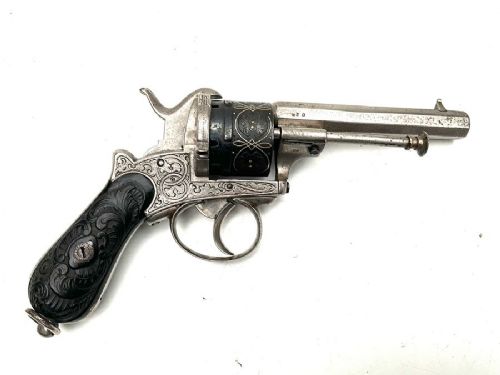
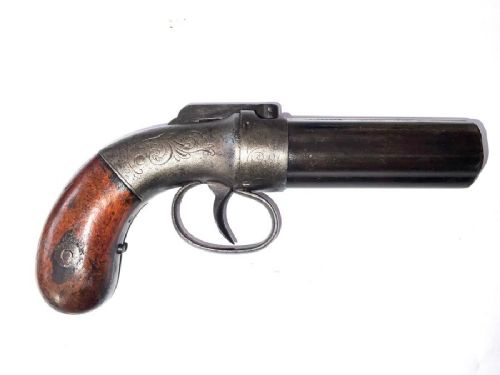
These pieces of antique firearm collectable range from flintlock pocket pistols to revolving barrel mechanisms spanning several centuries.
Antique Firearm Collectable
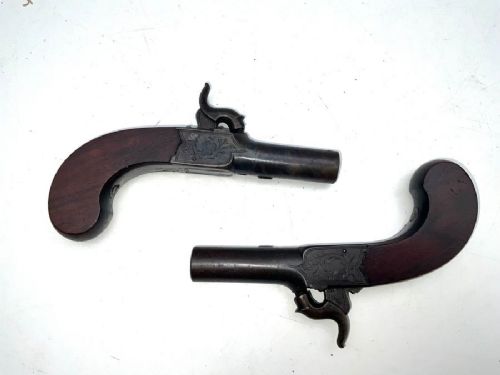
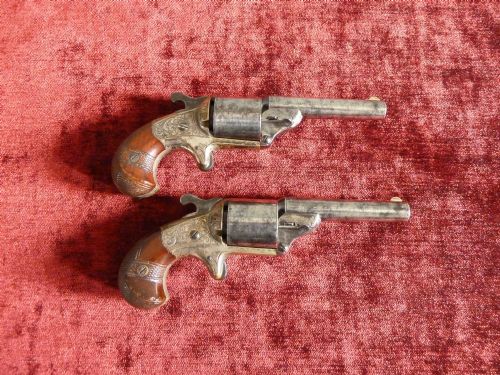
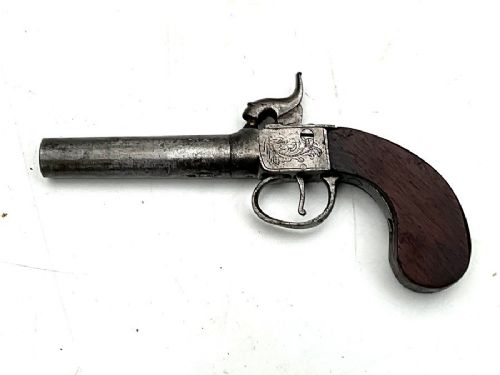
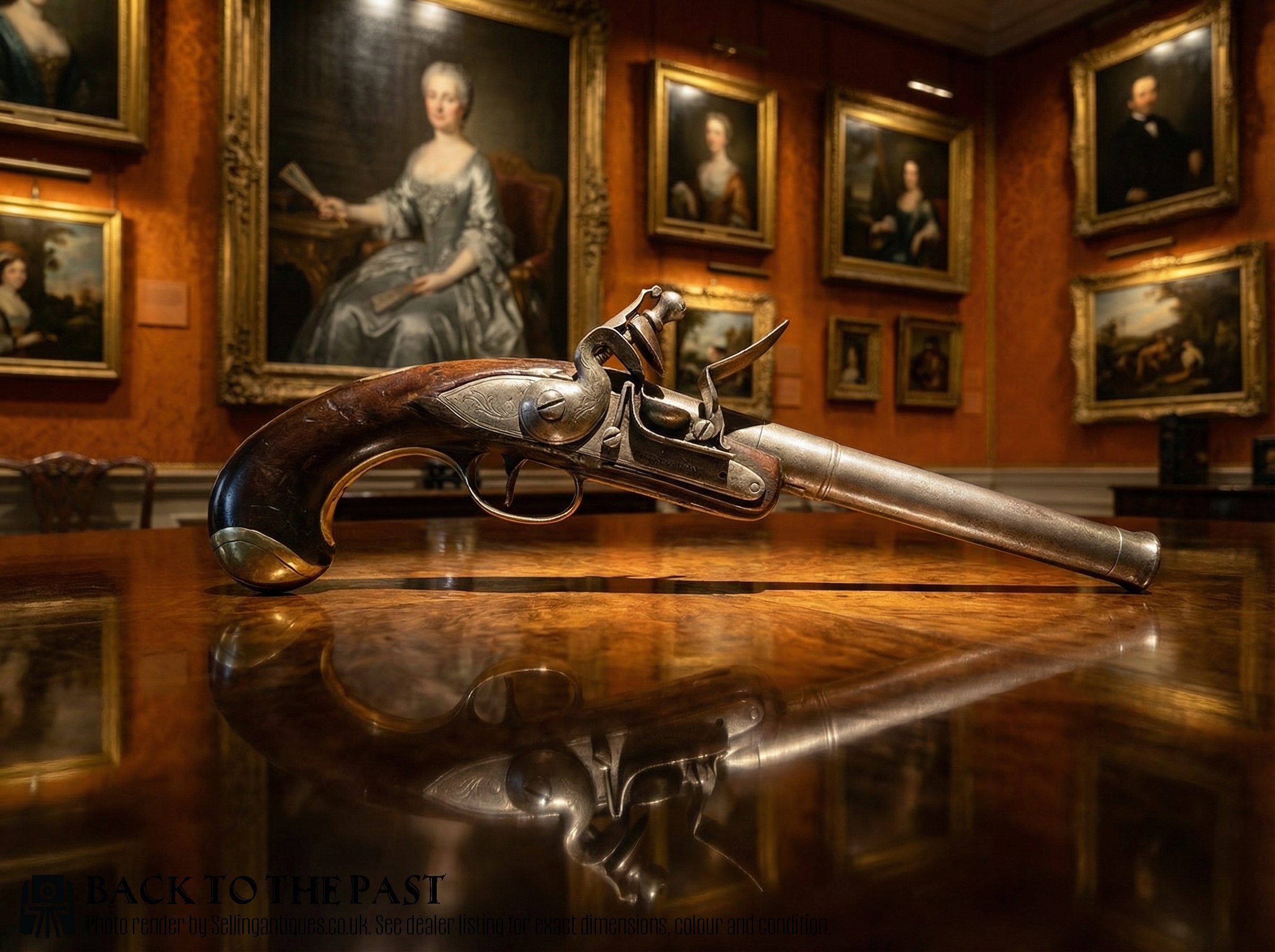
An antique firearm collectable encompasses historical weaponry such as flintlock pistols, percussion pocket pistols, and revolvers spanning the 18th and 19th centuries. Buyers frequently encounter nineteenth-century percussion systems alongside eighteenth-century flintlock mechanisms originating from British, European, and American makers.
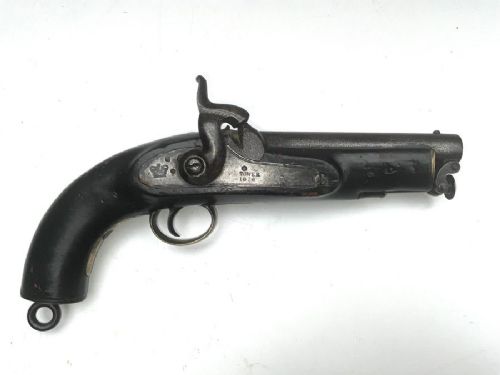
The selection includes military service arms, officers' duelling pistols, and compact pocket weapons designed for personal defence. Styles range from Georgian and Regency designs to Victorian military and Ottoman pieces, incorporating accessories such as horn powder flasks.
Makers utilised distinct forms like the Queen Anne turn-off barrel, boxlock actions, and pepperbox revolving mechanisms. These items reflect the technological shifts from flintlock ignition to percussion caps and pinfire cartridges during the industrial era.
How They Were Made
Gunsmiths combined forged steel and iron for barrels and lock mechanisms, pairing them with stocks shaped from dense hardwoods like walnut, oak, and ebony. Metal components often received intricate hand-chasing, cast decoration, or gilt inlay.
Stocks were frequently embellished with silver wire inlays, silver mounts, or carved details suited to the prevailing Georgian or Victorian aesthetic. Precision machining grew more prevalent by the mid-nineteenth century with the introduction of interchangeable parts in revolving pistols.
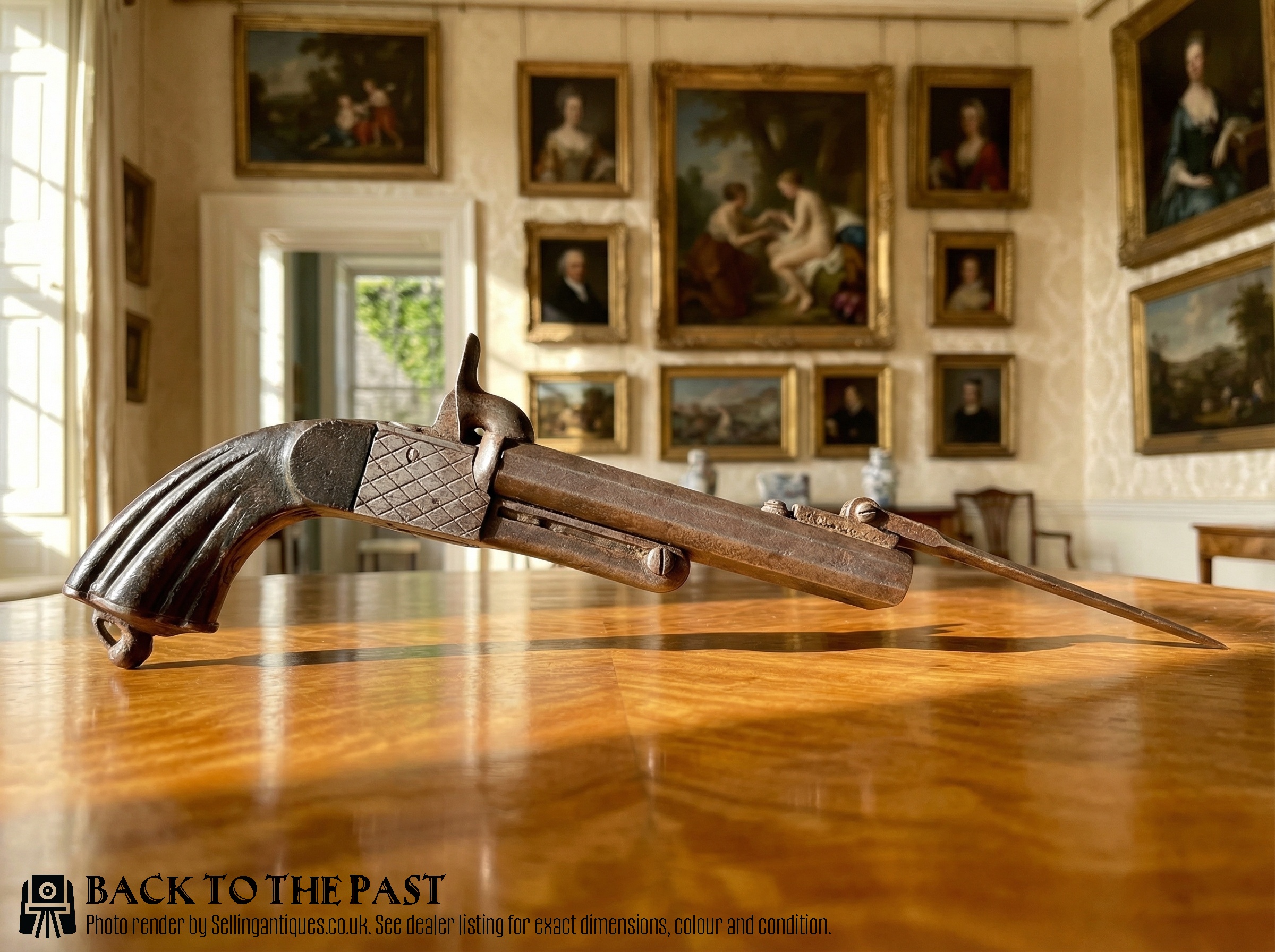
Several pocket pistols hide foldaway bayonets beneath their barrels, ready for unexpected social calls.
What Varies In Quality
Quality rests upon the crispness of the lock mechanism's action, the legibility of maker signatures, and the integrity of the wood and metal integration. Superior examples retain original finishes, clear London or regional proof marks, and matching serial numbers.
Master craftsmanship is evident in the delicacy of silver wire inlay, the precision of cast barrel decoration, and the smoothness of folding bayonet or revolving actions. Untouched condition and original accessories like boxed sets elevate the standing of a piece.
James Barber·Thomas Henshaw·Timothy Hughes·Auguste Francotte·John Rimes·John Manton·Meyer And Mortimer·Barber Of Newark·Dutton·Allen And Thurber
The Antique Firearm Collectable Glossary
- Flintlock
- An ignition mechanism utilising a piece of flint held in a cock to strike a steel frizzen, creating sparks to ignite the priming powder. This system dominated European and British armaments through the eighteenth and early nineteenth centuries.
- Percussion cap
- A small metal cup containing fulminate of mercury placed on a nipple, which explodes when struck by the hammer to ignite the main charge. This innovation superseded the flintlock system around the middle of the nineteenth century.
- Turn-off barrel
- A barrel unscrewed from the breech for loading from the front, commonly found on Queen Anne style pistols. This design eliminated the need for a separate ramrod.
- Pepperbox revolver
- A multi-barrelled handgun where the entire cylinder cluster revolves around a central axis when cocked or triggered. It offered multiple shots before reloading during the early percussion era.
- Frizzen
- The vertical steel plate struck by the flint in a flintlock mechanism to produce sparks. Its hardened surface and geometry determined ignition reliability.
Antique Firearm Collectable: Frequently Asked Questions
What is an antique firearm collectable?
An antique firearm collectable refers to historical handguns and long arms manufactured primarily in the eighteenth and nineteenth centuries. These items include flintlock pistols, percussion revolvers, and powder flasks used for military, duelling, and personal defence purposes.
Collectors prize these objects for their mechanical ingenuity, historical association, and traditional craftsmanship. The category spans diverse styles from Georgian elegance to Victorian military utility.
How do I identify a flintlock pistol?
A flintlock pistol uses an external hammer holding a piece of flint that strikes a steel frizzen to generate sparks. This action ignites a powder charge in the pan to fire the weapon.
Unlike later percussion arms, flintlocks lack an internal hammer striking a percussion cap. They frequently feature characteristic sideplates, wooden stocks, and brass or steel barrels dating from the seventeenth to early nineteenth centuries.
What is the difference between flintlock and percussion?
Flintlock mechanisms rely on a flint striking steel to create a spark that ignites loose gunpowder in an external flash pan. This technology was standard throughout the eighteenth century.
Percussion systems, introduced in the nineteenth century, use an enclosed cap struck by a hammer to ignite the powder internally. Percussion arms proved more reliable in wet weather and enabled the development of multi-shot revolvers.
How should I display my antique firearm collectable?
Antique arms are best displayed in stable environments away from direct sunlight and excessive humidity. Wall mounting in secured cabinets or placing them on fitted stands protects the wood and metal from handling wear.
Maintaining moderate indoor temperatures prevents the cracking of walnut or ebony stocks and preserves steel finishes. Proper display balances aesthetic appreciation with the preservation of historical integrity.