


Turn Off Pistol
These turn off pistol examples are historic firearms built for personal defence, offering collectors a tangible piece of 18th century and 19th century engineering.
Turn Off Pistol
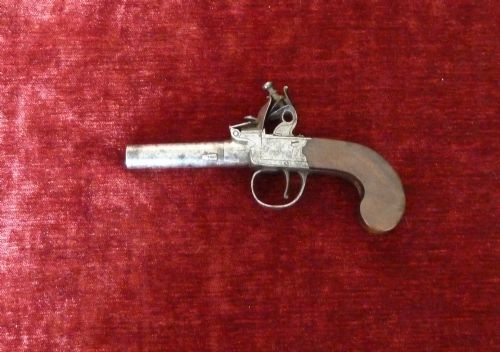
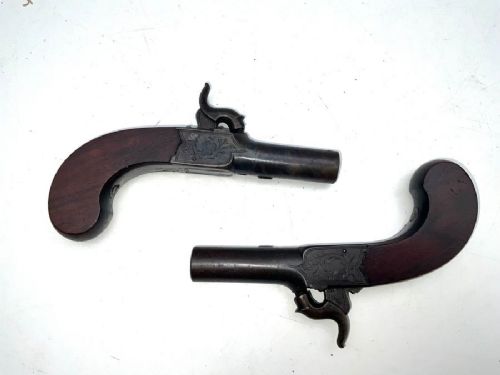
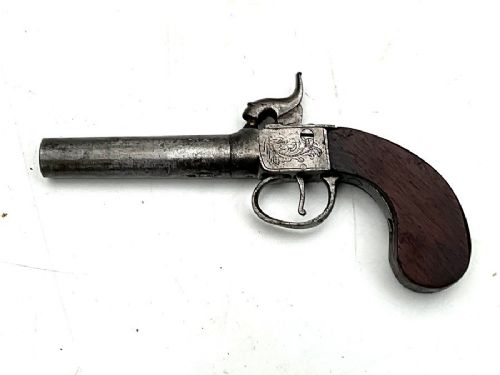
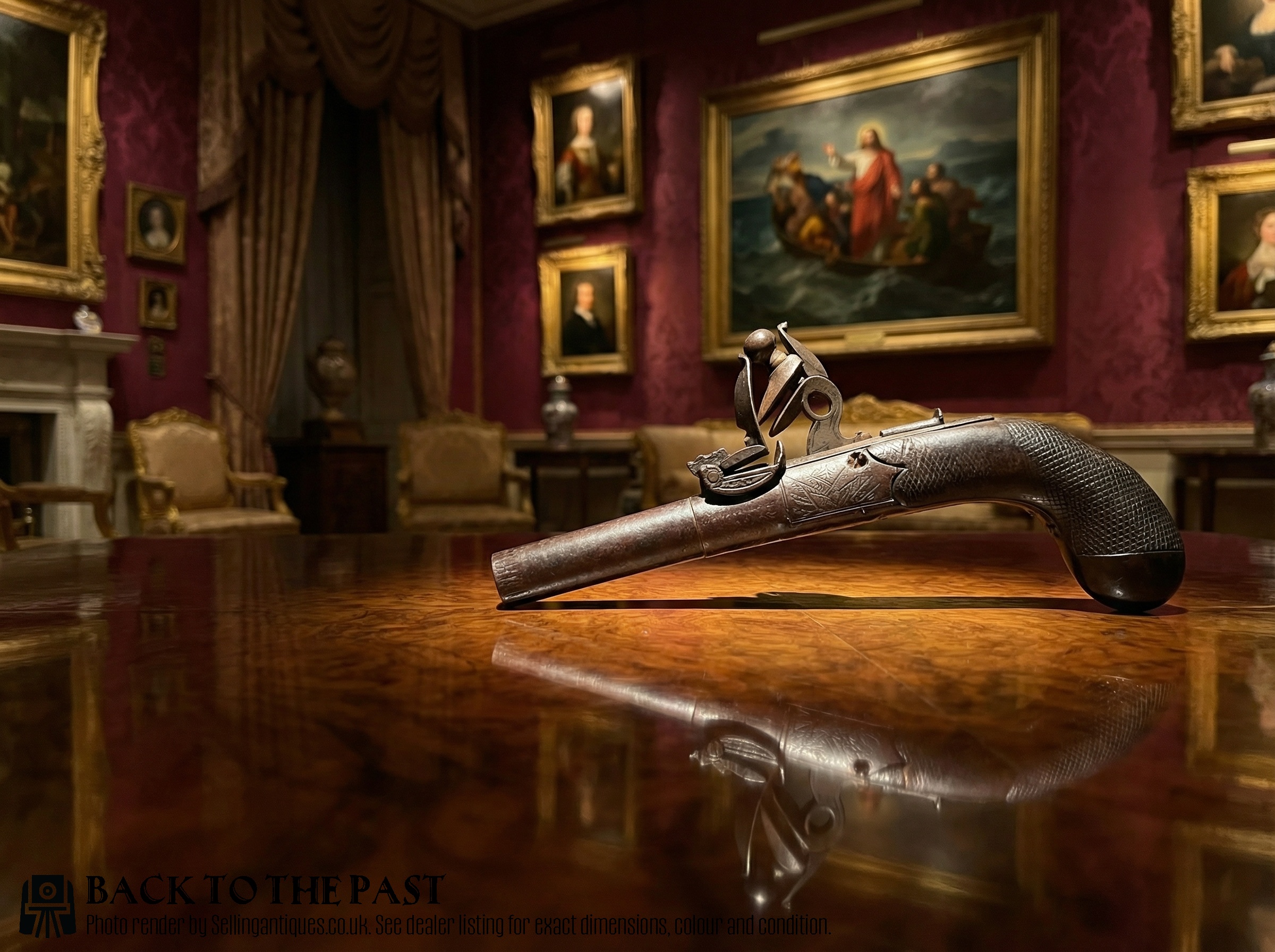
A turn off pistol represents a specific mechanism where the barrel unscrews from the breech to facilitate loading. This design appears frequently among antique firearms and militaria listed from the 18th century and 19th century.
Makers such as Twigg, James Barber, Thomas Henshaw, R. Willoughby, John Rimes, and J. Robinson produced these arms in London, Birmingham, Liverpool, and Bootle. Buyers encounter forms including pocket pistols, boxlock pistols, overcoat pistols, and holster pistols.
The style spans Georgian and Victorian periods, with several examples reflecting the earlier Queen Anne aesthetic. Surviving pieces often include pairs, matching sets, or individual arms housed in original cases.
Materials and construction
Gunsmiths utilised steel, iron, and brass to form the barrels and lock mechanisms of each turn off pistol. Barrels frequently feature a cannon shape or over and under configuration.
Stocks incorporate walnut, mahogany, and other hardwoods shaped to form the grip. Makers enhanced these wooden components using silver wire inlay and cast silver grotesque butt caps.
The documented periods span the 18th century, early 18th-century, 1750, 1800, 1850, and the 19th century.
Assessing quality and execution
Quality separates standard production arms from those carrying signatures of prominent London or provincial makers. Engraving depth and the precision of the breech-threading demonstrate the maker's skill.
Twigg London·James Barber London·Thomas Henshaw London·R Willoughby Birmingham·John Rimes London·J Robinson Bootle Liverpool
The Turn Off Pistol Glossary
- Turn-off barrel
- A barrel designed to unscrew from the breech end for muzzle loading without a ramrod. This configuration eliminates the need for separate shot and powder placement tools.
- Boxlock
- A firearm action where the lock mechanism is enclosed within a solid metal frame rather than a sideplate. This design provides a compact profile suited for pocket carriage.
- Flintlock
- An ignition system that uses a piece of flint struck against a steel frizzen to generate sparks. The resulting spark ignites priming powder in the pan.
- Percussion
- A later ignition method relying on a hammer striking a percussion cap placed on a nipple. This system replaced the earlier flintlock mechanism during the 19th century.
- Cartouche
- An ornamental panel or plaque, often engraved with initials or crests, embedded into the stock. These elements frequently appear in silver on better quality grips.
Turn Off Pistol: Frequently Asked Questions
How do you load a turn off pistol?
The shooter unscrews the barrel from the frame, drops the lead ball directly into the breech, and pours powder behind it before screwing the barrel back into place.
This method allows the projectile to seat tightly against the rifling or bore without requiring a separate ramrod during the loading sequence.
What is a Queen Anne style pistol?
The term describes a distinctive form featuring a breech and frame forged as a single piece of metal, paired with a distinct bag-shaped butt cap.
Gunsmiths continued producing this popular profile long after the reign of Queen Anne concluded.
Were these pistols used for duelling?
Pocket and overcoat pistols served primarily for personal protection during travel rather than formal duels. Their compact dimensions allowed owners to conceal them within pockets or coats.
Larger holster variations served mounted travellers and military officers who required dependable close-range defence.
How can I date an 18th century pistol?
Makers often signed the metal lock plates and incorporated city proof marks that correspond to specific operational decades. Birmingham and London marks provide reliable chronological benchmarks.
Stylistic shifts in wood carving, silver mounts, and lock architecture further narrow the manufacturing window.