
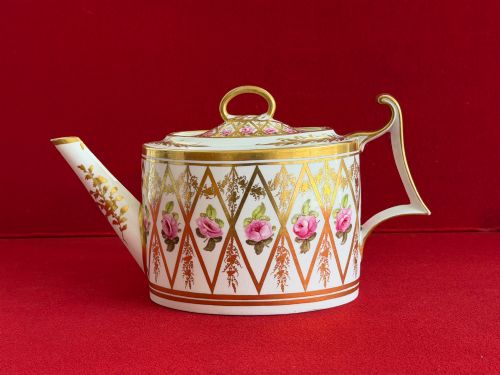
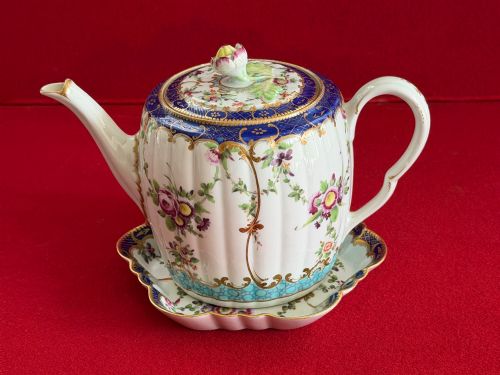
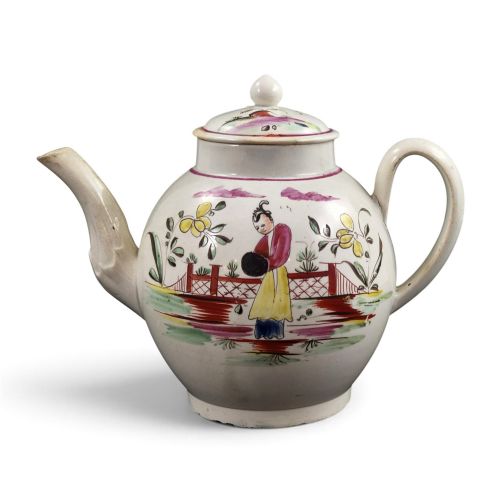
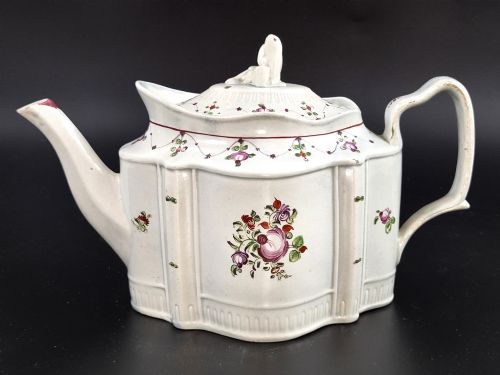


Antique English Teapot
When you search for an antique English teapot, you encounter a remarkable span of ceramic bodies and precious metals shaped by centuries of domestic daily ritual.
Antique English Teapot
An antique English teapot represents domestic utility transformed through material and form across the Georgian, Victorian, and later periods. These vessels vary from porcelain service pieces to sturdy earthenware and metallic kettles designed for the tea table.
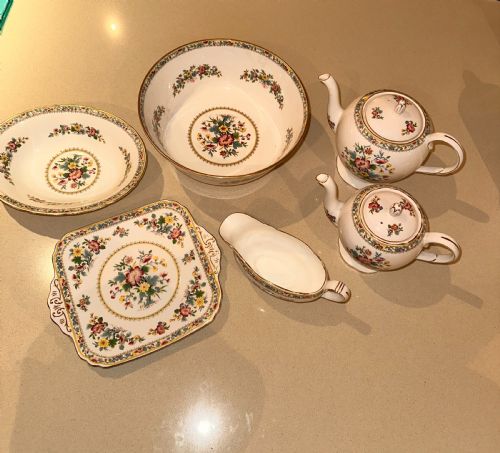
The pieces on this page lean heavily toward eighteenth-century soft-paste porcelains from factories like Worcester, alongside nineteenth-century ironstone, creamware, and silver service components. Collectors encounter both single vessels and assembled tea sets spanning diverse decorative traditions.
Forms shift from barrel-shaped and commode-styled bodies to elaborate rococo and neoclassical silhouettes. Each item reflects the prevalent taste and ceramic technology of its specific decade of manufacture.
How They Were Made
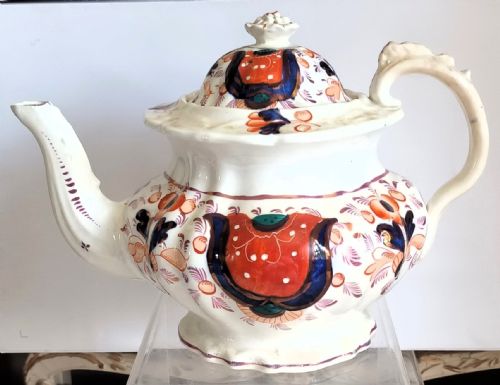
Makers utilised porcelain, creamware, earthenware, and stoneware, frequently decorating the surfaces with hand-painted enamel flowers, blue and white transfer printing, or gold leaf. Soft-paste bodies required careful kiln management, resulting in the characteristic warmth and glaze pooling seen on early examples.
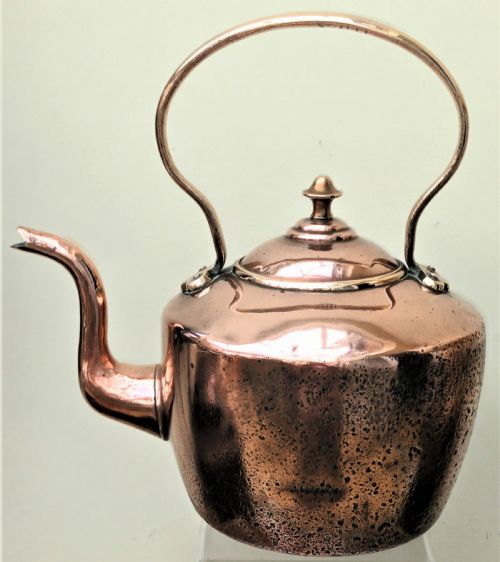
Metal vessels combine brass, copper, silver, and silver plate, shaped through spinning, casting, and soldering. Spirit kettles and tea urns incorporate hinged handles, wooden insulators, and detailed spouts to manage boiling water safely.
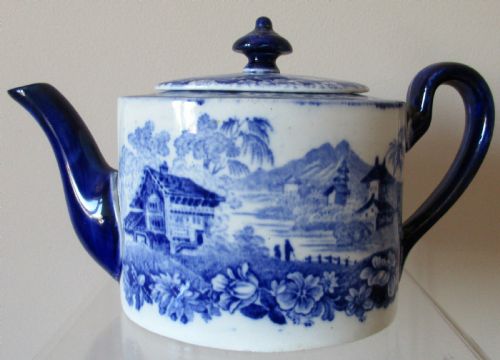
Transfer printing allowed potteries to apply intricate scenic patterns like 'Genevese' onto ceramic bodies with precision. Moulded details such as widow finials, lion finials, and bamboo-effect spouts added sculptural dimension to utilitarian forms.
Bargeware teapots arrive adorned with multitudes of tiny modelled clay flowers, displaying wonderfully eccentric folk art exuberance.
What Varies in Quality
Quality rests in the crispness of the moulding, the precision of the hand-painting, and the survival of original components like lids and stands. Pieces decorated by named factories or prominent artists display superior glaze depth and pigment control.
The thickness of silver plating and the weight of silver or base metals dictate the durability of metallic kettles and tea sets. Well-balanced spouts and comfortable handles distinguish superior functional design from purely decorative items.
Wedgwood·Mintons·Mason·Royal Worcester·Spode·Clarice Cliff·Paul Storr·New Hall
The Antique English Teapot Glossary
- Soft-paste porcelain
- An artificial ceramic composition fired at lower temperatures than hard-paste, common in eighteenth-century English factories. It yields a creamy translucence and distinct glaze pooling.
- Creamware
- A refined earthenware developed in Yorkshire and Staffordshire, characterised by a pale yellowish-buff earthenware body under a clear lead glaze. It became the dominant domestic ware of the Georgian era.
- Transfer printing
- A decoration technique using an engraved copper plate to pull a design on tissue paper, which is then transferred onto the ceramic body before glazing. This permitted intricate repeating scenes like blue and white landscapes.
- Basalt
- A fine-grained, unglazed black stoneware developed by Josiah Wedgwood. It mimics the appearance of antique carved stone and takes its name from natural volcanic rock.
- Ironstone
- A heavy, durable type of feldspathic stoneware patented in the early nineteenth century. It resists chipping and provided a robust surface for colourful transfer prints and enamel painting.
Antique English Teapot: Frequently Asked Questions
How do I date an old teapot?
Dating relies on identifying ceramic bodies, glaze characteristics, and factory marks stamped or painted on the base. Stylistic cues like neoclassical shapes or transfer-printed scenes narrow the period of manufacture.
Material shifts, such as the transition from eighteenth-century soft-paste porcelain to nineteenth-century ironstone, further clarify the timeline. Comparing handle construction and finial styles provides additional chronological context.
Can I use an antique teapot?
While many ceramic and metal vessels remain structurally sound, thermal shock from boiling water can crack fragile eighteenth-century soft-paste bodies. Precious metal tea sets and plated kettles require careful hand washing rather than daily practical use.
Most collectors prefer display or gentle occasional service to preserve delicate enamels, gilding, and historical repairs. Inspecting the interior for old hairline cracks ensures safe handling.
What is a bachelor tea set?
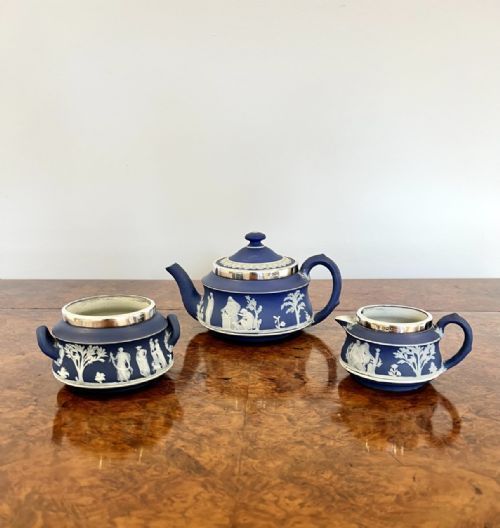
A bachelor tea set is a compact, matched service designed for a single person, typically comprising a small teapot, sugar bowl, and cream jug mounted together. These diminutive sets were popular during the nineteenth century for private morning or bedroom use.
They condense standard tea service elements into a portable scale while retaining the decorative quality of larger dinnerware. Surviving complete sets remain sought-after collector pieces.