
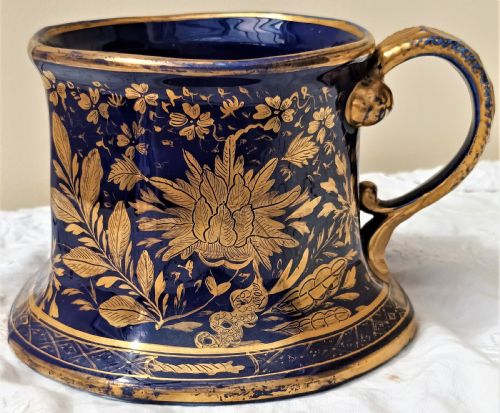

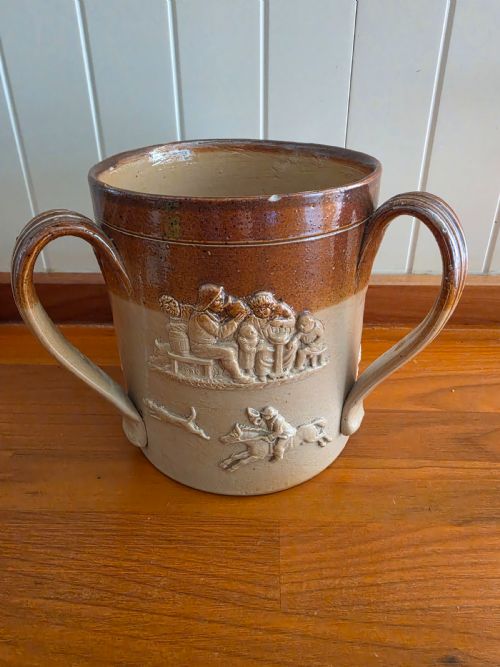


Antique English Pottery Mug
These antique English pottery mugs are tactile vessels of historical drinking culture, prized for their traditional forms and decorative glazes.
Antique English Pottery Mug
When searching for an antique English pottery mug, collectors encounter a diverse range of utilitarian drinking vessels spanning the eighteenth and nineteenth centuries. These pieces encompass everything from everyday tavern vessels to decorative commemorative items produced across English potteries.
The selections on this page are dominated by nineteenth-century examples, frequently reflecting Victorian and Georgian aesthetics. Common material manifestations include sturdy stoneware, pearlware, and Staffordshire earthenware, often adorned with transfer printing, hand-painting, or distinctive moulded details.
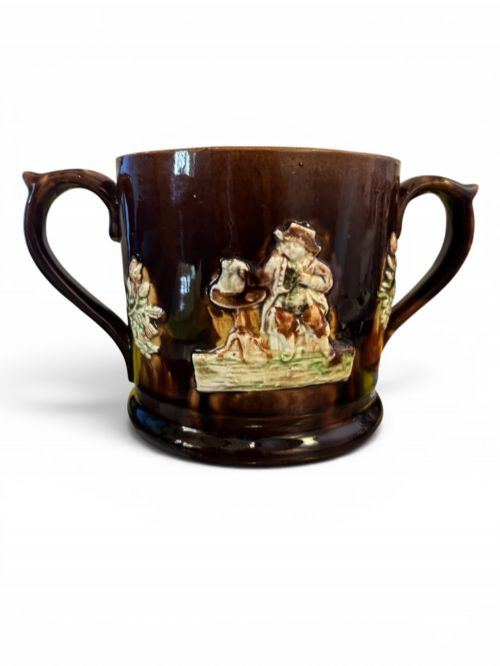
Specialised drinking forms frequently appear alongside standard mugs, including multi-handled tygs and whimsical frog mugs designed to surprise drinkers. These variations demonstrate the breadth of historic ceramic production, ranging from utilitarian country wares to sophisticated ironstone vessels.
How They Were Made
Potters utilised robust earthenware, pearlware, and heavy stoneware bodies to form these functional drinking vessels on the wheel or in moulds. The resulting shapes were then enhanced with durable glazes to ensure the ceramic could hold liquids effectively.
Decoration was applied through various historic techniques, including underglaze blue and white transfer printing, sponging, and hand-painted polychrome pigments. Certain pieces also incorporate applied relief work, gilt accents, and detailed stoneware incisions by notable studios.
Victorian drinkers faced sudden ceramic amphibians peering up from the bottom of their ale.
What Varies In Quality
Quality in these ceramics rests upon the crispness of the moulded details and the precision of the hand-painted or transfer-printed decoration. Superior examples display careful alignment in multi-coloured glazing and well-defined figural or botanical motifs.
The artistic merit of individual pieces is heavily influenced by the skill involved in specialised decorative elements, such as intricate slipwork or hand-carved stoneware details. Substantial weight, balanced proportions, and well-executed handles further distinguish finer historical vessels from utilitarian kitchenware.
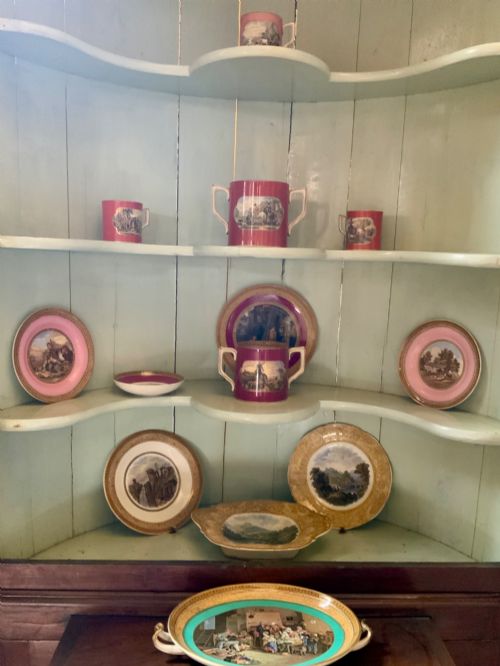
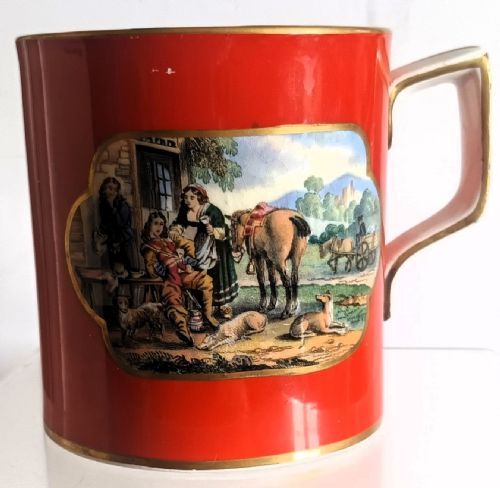
Mason's Ironstone·Doulton Lambeth·Staffordshire Prattware
The Antique English Pottery Mug Glossary
- Pearlware
- A refined earthenware body developed in the late eighteenth century featuring a subtle bluish glaze that pooled in recesses. It provided a smoother, whiter surface for painted and transfer-printed designs than earlier creamware.
- Stoneware
- A dense, impermeable ceramic fired at high temperatures until the clay vitrified and became completely non-porous. It is exceptionally durable and frequently salt-glazed.
- Tyg
- A large drinking vessel typically featuring three or more vertical handles designed to be passed around a group of people. They date back to the medieval period and remained popular in traditional pottery forms.
- Prattware
- A type of English earthenware popular in the late eighteenth and early nineteenth centuries known for its underglaze coloured decoration in oxide hues like ochre, blue, and brown. The colours were applied beneath a transparent lead glaze.
- Ironstone
- A patented ceramic material developed in the nineteenth century that combined earthenware clay with Cornwall stone and slag. It produced a heavy, highly durable body resembling porcelain.
Antique English Pottery Mug: Frequently Asked Questions
What is a frog mug?
A frog mug is a traditional drinking vessel featuring a small ceramic frog modelled inside the base or clinging to the rim. As the drinker finished their beverage, the hidden amphibian would suddenly appear as a surprise.
These novelty mugs were popular in taverns during the Georgian and Victorian eras. They often served as humorous drinking games or social icebreakers among patrons.
How are tygs different from mugs?
Tygs are distinguished by having multiple handles, typically three or more, arranged evenly around the body. This multi-handled design allowed the heavy vessel to be passed securely between guests at a table.
Standard mugs feature a single handle intended for individual use. Tygs often served communal ale during celebrations or feasts.
What is a Winchester Measure mug?
A Winchester Measure is a historic capacity standard used in England to regulate liquid volumes. Mugs bearing this designation indicate an official capacity verified for trade or public house use.
These vessels ensure that patrons received a precise, legally regulated amount of ale. They reflect the strict standardisation of tavern measurements in the nineteenth century.
How do I date an antique pottery mug?
Dating involves examining the ceramic body, glaze characteristics, and decorative motifs. Pearlware typically points to the late eighteenth or early nineteenth century, while heavy ironstone and certain transfer-print styles usually indicate the Victorian era.
Inscribed dates, historical commemorative subjects, and specific maker marks provide additional chronological evidence. Comparing the potting technique with known period styles helps narrow the origin window.