




Masons Cobalt Blue Gilding
These masons cobalt blue gilding pieces bring rich ceramic colour and heavy gilding straight into a room.
Masons Cobalt Blue Gilding
When you search for masons cobalt blue gilding, you are looking at nineteenth-century ironstone ceramics marked by deep blue grounds and applied gold leaf. These wares span domestic and decorative forms including vases, jugs, mugs, tureens, and tea service pieces.
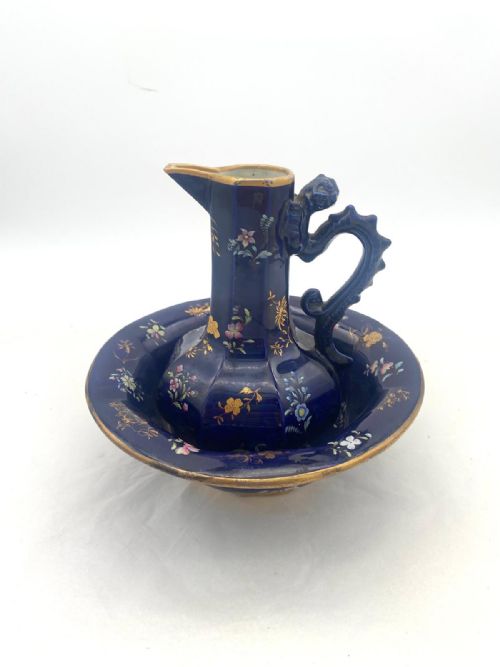
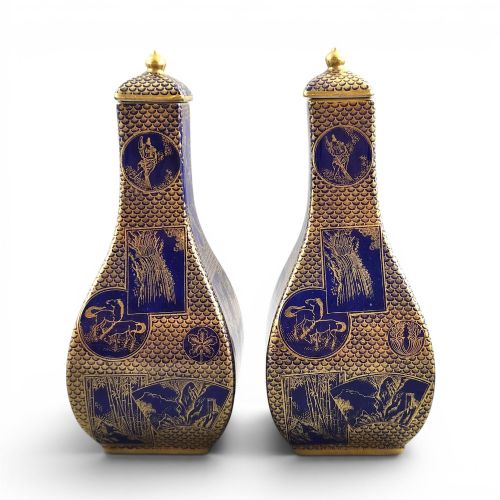
The pieces you are most likely to meet on this page date from the Georgian and Victorian eras, often bearing Regency or Chinoiserie stylistic influences. Forms range from octagonal jugs and potpourri vases to dessert shapes and plates in patterns like Fence and Doves.
Makers produced these robust earthenware objects to handle daily use while maintaining a high decorative finish through enamelling and gilding. The blue and gold contrast remains the defining visual characteristic across all recorded listings.
What varies in quality
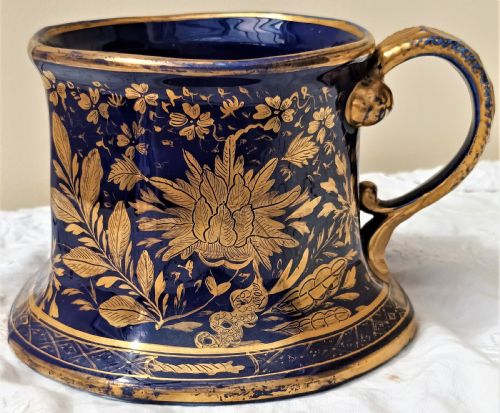
The precision of the hand-painted enamel work and the crispness of the cobalt blue ground determine the visual standing of a piece. Finer examples display carefully controlled brushwork and rich, unrubbed gold gilding across complex moulded forms.
Moulding quality also separates standard production wares from ambitious shapes like elephant's foot patterns, grotesque handles, or octagonal jugs. The weight and definition of the ironstone body under the glaze show the level of care taken in the workshop.
Materials recorded across the inventory include ironstone, gold leaf, enamel, gilt, and ceramic glaze.
Mason's Patent Ironstone
The Masons Cobalt Blue Gilding Glossary
- Ironstone
- A dense, durable type of earthenware patented to resist chipping while offering a smooth surface for painting. It formed the heavy structural base for nineteenth-century tableware and decorative vessels.
- Cobalt blue
- A deep, stable metallic oxide pigment used to produce rich blue backgrounds under the glaze. This colour stands up to high kiln temperatures without losing its intensity.
- Gilding
- The application of gold leaf or gold gilt onto the ceramic surface to highlight moulded details and borders. It provides the metallic contrast characteristic of these wares.
- Chinoiserie
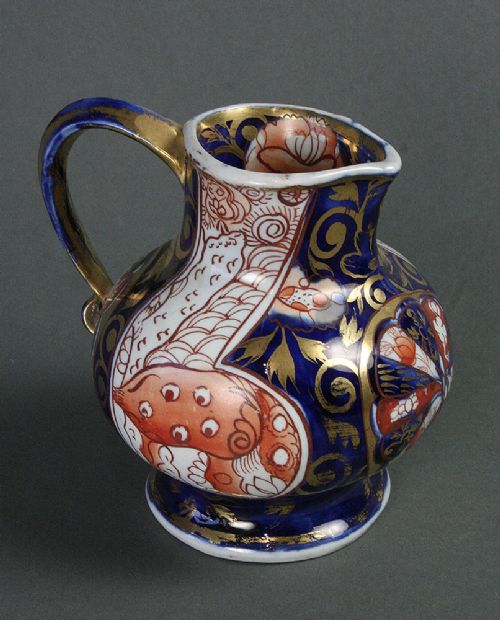
- A European artistic style reflecting Chinese aesthetic traditions through painted motifs like fences, birds, and exotic landscapes. It frequently appears alongside cobalt blue grounds on nineteenth-century pieces.
- Tureen
- A large, deep serving vessel with a lid, designed for holding soup, sauce, or potpourri. These often included matching ladles and stands within tableware services.
Masons Cobalt Blue Gilding: Frequently Asked Questions
What is masons cobalt blue gilding?
These pieces are nineteenth-century ironstone ceramics decorated with deep blue cobalt grounds and applied gold leaf. They include vessels like vases, jugs, and tureens made in England.
Potters combined durable earthenware bodies with rich enamel colours and gilt highlights. The style draws heavily on Georgian and Victorian design traditions.
How do I date these ceramics?
Most listings on this page originate from the nineteenth century, spanning the Georgian and Victorian periods. Specific pieces often date between eighteen-ten and eighteen-fifty.
Stylistic cues like Regency Chinoiserie or Victorian Imari patterns help narrow down the production era. Maker marks and patent stamps on the base also assist with dating.
How were these items used originally?
Many pieces served practical functions in the dining room and parlour, such as jugs, mugs, tea services, and sauce tureens. Others, like potpourri vases and decorative plates, were purely ornamental.
The robust ironstone body meant tableware could withstand everyday dining while the rich gilding provided a grand display.
How do I care for ironstone and gilding?
Keep these ceramics out of direct sunlight and wash them gently by hand using mild soap and lukewarm water. Avoid harsh scrubbing or dishwashers, which can damage the delicate gold leaf and enamel overglaze.
Handle heavier items like ewers and tureens by the body rather than protruding handles to prevent accidental stress fractures.