




Antique Ceramic Surprise Mug
An antique ceramic surprise mug hides a small toad or newt inside to catch the drinker unawares.
Antique Ceramic Surprise Mug
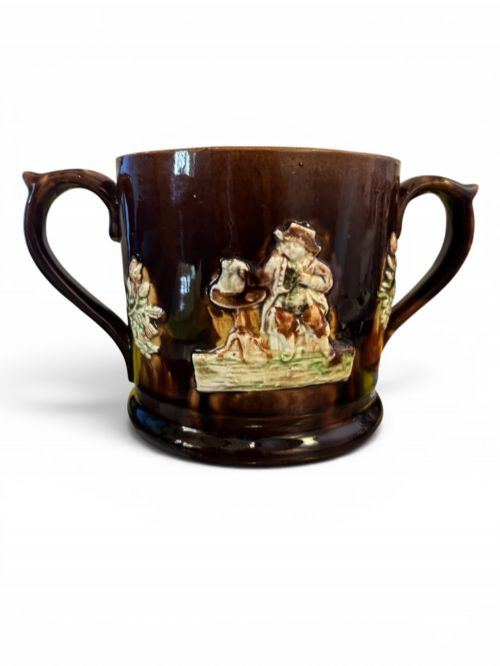
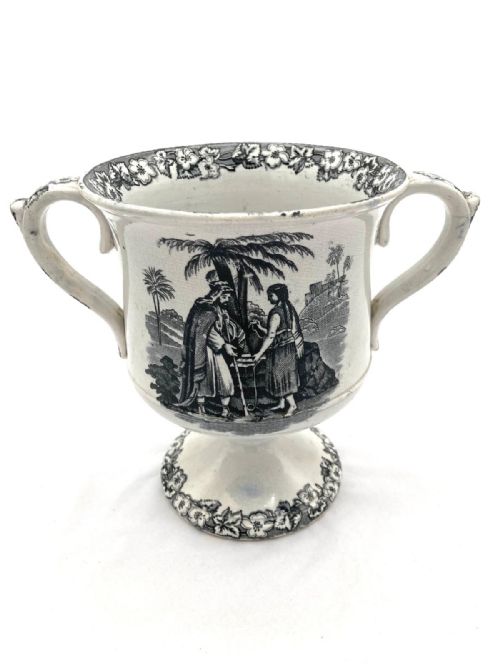
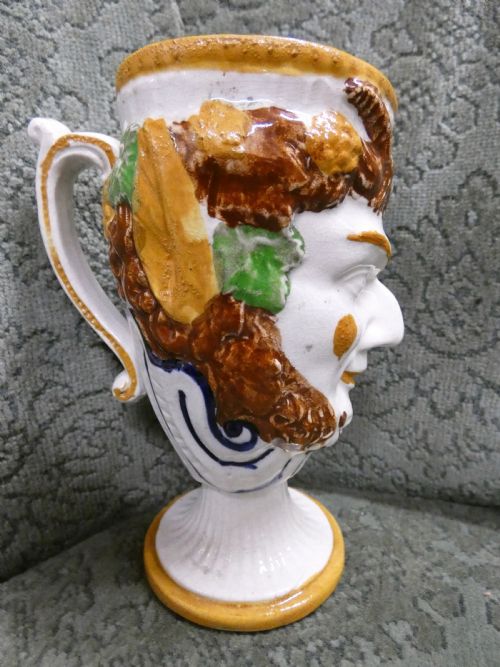
An antique ceramic surprise mug is a drinking vessel designed with a small creature moulded inside the base to startle the drinker as the liquid empties. These pieces span the eighteenth and nineteenth centuries, taking the form of two-handled ale tankards and loving cups.
The versions most commonly found here are English country pottery, pearlware, and Staffordshire wares decorated with hand-painted or transfer-printed scenes. They include hunting motifs, names, dates, and sometimes poems inscribed across the ceramic body.
Makers produced both single and double-handled vessels, ranging from simple earthenware mugs to larger pedestal loving cups and Winchester measure containers. The hidden creatures typically include frogs and newts glazed in contrasting colours.
How they were made
Potters shaped these vessels from earthenware and pearlware, applying a smooth ceramic or pearlware glaze over the body before firing. Many examples feature detailed hand-painting or transfer-printing in blue, black, or multicoloured enamels.
Moulded figures of frogs and newts were fixed to the interior base of the mug prior to glazing and firing. Some superior vessels also incorporate highlights of gold leaf on the rim or handle details.
Listings feature earthenware and pearlware bodies decorated with transfer-printed hunting scenes, hand-painted details, and inscriptions from the eighteenth and nineteenth centuries.
What varies in quality
Quality rests upon the crispness of the transfer printing or the delicacy of the hand-painted details, particularly around the interior frog and exterior hunting scenes. Finer pieces display careful polychrome enamelling and clear glaze without excessive clouding.
The complexity of the form dictates distinction, separating simple single-handled mugs from substantial two-handled loving cups and pedestal vessels with inscribed poems or specific naming and dating.
The Antique Ceramic Surprise Mug Glossary
- Pearlware
- A refined earthenware developed in the late eighteenth century featuring a subtle bluish glaze that pooled in crevices. This material provided a whiter surface than standard creamware.
- Transfer printing
- A method of decorating ceramics by applying an engraved copperplate impression onto tissue paper and transferring the ink onto the fired clay. It allowed for intricate repeating patterns like hunting scenes.
- Loving cup
- A large drinking vessel equipped with two or more handles, intended to be passed among guests at celebrations. These often feature commemorative inscriptions or poetry.
- Winchester measure
- A standardised volumetric capacity used for measuring ale and grain in historical England. Vessels bearing this designation served official or tavern functions.
Antique Ceramic Surprise Mug: Frequently Asked Questions
What is a surprise mug?
A surprise mug is a traditional drinking vessel featuring a moulded ceramic animal, usually a frog or a newt, hidden near the bottom.
As the drinker finishes the beverage, the creature appears unexpectedly at the rim, designed to startle or amuse tavern companions.
Why do these mugs have frogs inside?
The inclusion of a frog served as a drinking joke or a test of sobriety in eighteenth and nineteenth-century taverns.
Drinkers had to navigate past the amphibian, or sometimes drink through small holes arranged in the interior wall near the creature.
How old are these ceramic mugs?
The examples available here date primarily from the eighteenth and nineteenth centuries, spanning the Georgian, Regency, and Victorian periods.
Stylistic shifts move from early pearlware bodies to later transfer-printed earthenware and Staffordshire figures.
How should I display a surprise mug?
These vessels suit open shelving or glazed cabinets where the interior can be viewed easily by guests.
Positioning the mug to reveal the hidden frog or newt adds an engaging conversational element to a room.