


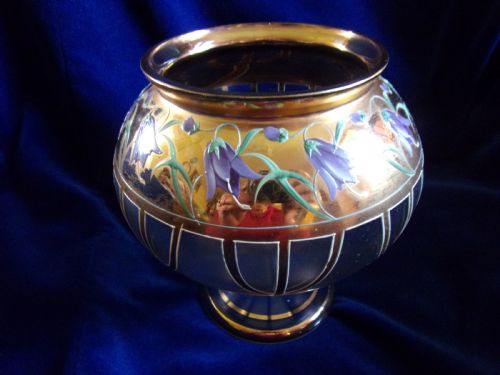


Antique Enamel Flower Vase
An antique enamel flower vase brings vibrant colour and meticulous detail to a room, ranging from delicate Victorian glass to precise Japanese cloisonné.
Antique Enamel Flower Vase
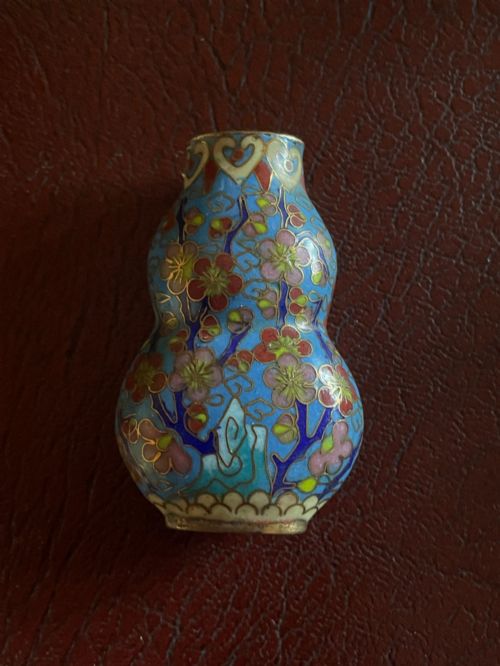
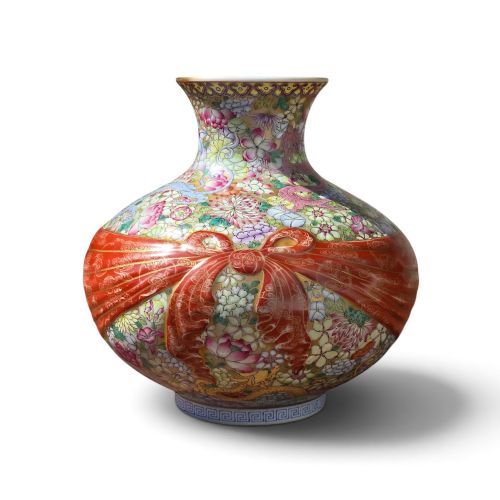
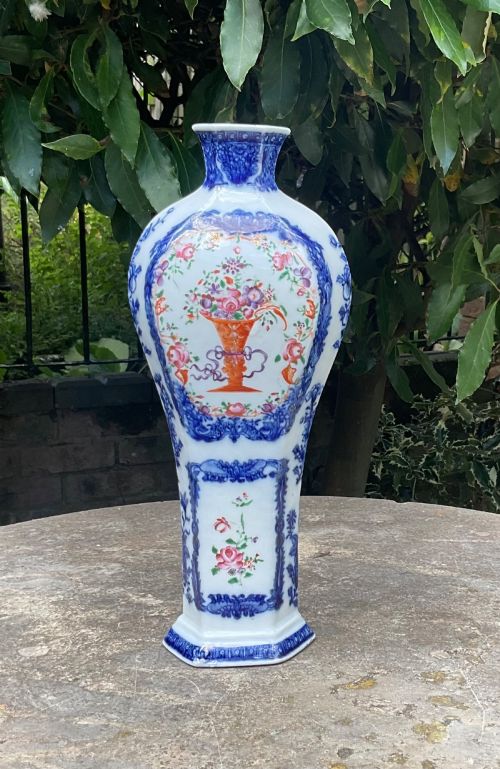
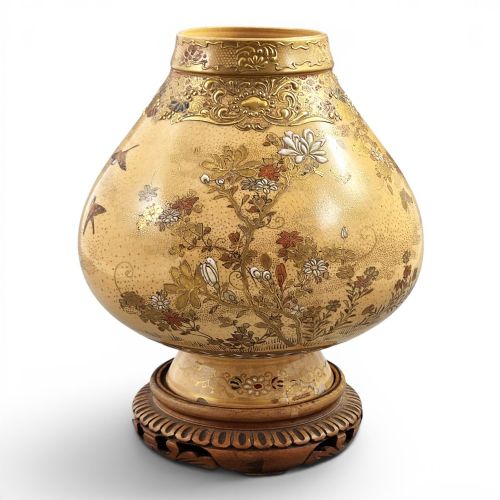
An antique enamel flower vase encompasses a diverse selection of vessels designed for display, spanning Asian export wares, European glassworks and Victorian decorative pieces. The selection includes Chinese cloisonné and famille rose works, alongside Japanese Meiji period metalwork and ceramics.
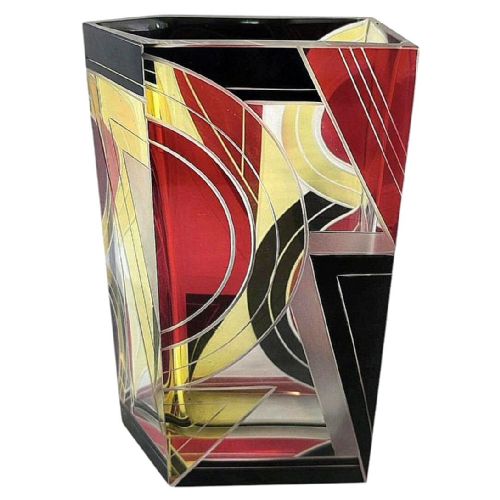
Buyers frequently encounter Victorian glass bulb vases painted with floral motifs, alongside continental Art Nouveau crystal and Art Deco geometric glassware. Japanese silver wire cloisonné and Satsuma earthenware also feature prominently across the available origins.
Forms extend from miniature vessels to large oviform jars, candelabra and jardiniere planters. These pieces reflect stylistic shifts from mid-nineteenth century botanical realism to twentieth-century abstraction.
How they were made
Glass vessels utilise applied enamel paints, often enhanced with gilding or gold leaf and fired to bond the pigment to the surface. Etching and cutting techniques provide texture beneath or around the coloured enamel decoration.
Cloisonné works employ metal wires soldered onto copper, bronze or brass bases to form individual cells, which are then filled with vitreous enamel paste and fired. Basse-taille and ginbari techniques introduce translucent enamels over textured or foil-backed grounds.
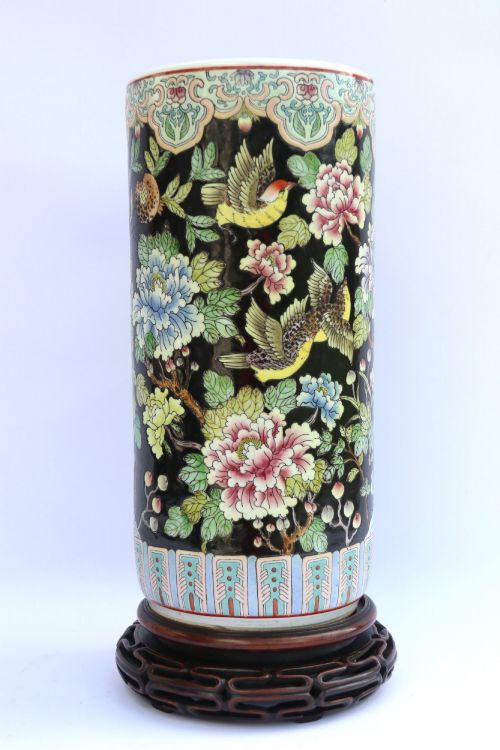
Ceramic pieces combine hand-painted porcelain or stoneware bodies with iron-red and polychrome enamel pigments, sometimes finished with raised white enamel work. Bronze and gilt metal mounts complete the construction of composite decorative objects.
Victorian bulb vases let homes grow hyacinths indoors while winter winds howled outside.
What varies in quality
The standard of execution in the enamel work determines the visual depth of a piece, separating precise hand-painted botanical or avian details from simpler repetitive motifs. Crisp outlines in cloisonné wiring and smooth, even surfaces without pitting indicate superior workshop production.
The weight and clarity of the underlying material, whether crystal glass, fine porcelain or heavy bronze, dictate the structural integrity of the vessel. Maker attribution through signatures, factory marks or documented workshop origins further distinguishes notable pieces from standard commercial production.
Kinkōzan Workshop·Ando Jubei·Makuzu Kozan II·Tamura Yukio·Karl Palda·Legras·George Tye·Samson·Royal Doulton Lambeth
The Antique Enamel Flower Vase Glossary
- Cloisonné
- A metalwork technique where thin wires create compartments filled with enamel paste and fired. This method produces intricate geometric or pictorial patterns across vases and jars.
- Famille Rose
- A Chinese porcelain palette dominated by opaque pink enamel, introduced during the Qing dynasty. The style depicts elaborate floral and narrative scenes.
- Basse-Taille
- An enamel technique where the metal ground is engraved or chased so that translucent enamel allows light to reflect through the pattern. It creates rich depth on Japanese and European pieces.
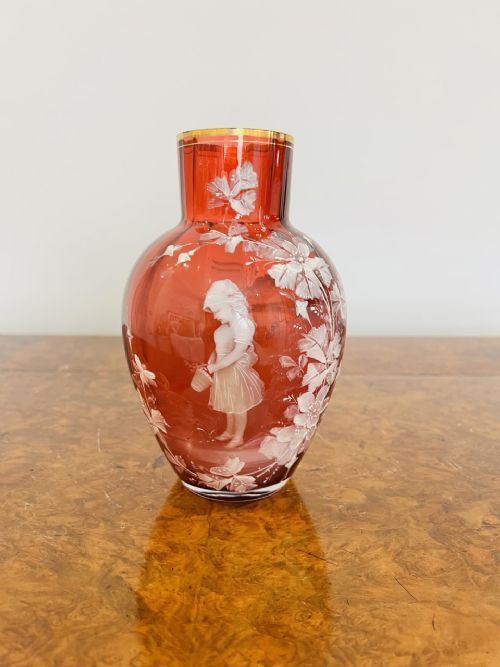
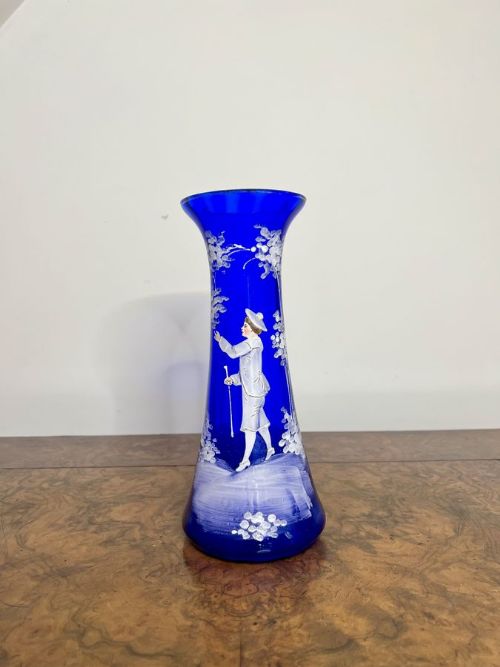
- Mary Gregory
- A style of Victorian glass decorated with white enamel silhouettes depicting children or birds amidst foliage. The glass itself typically appears in cranberry, blue or green tones.
- Ginbari
- A Japanese enamelling method featuring a textured metallic foil background beneath translucent coloured enamel. It adds a shimmering patterned effect to cloisonné vessels.
Antique Enamel Flower Vase: Frequently Asked Questions
How do I clean an antique enamel flower vase?
Wipe the glass or metal surface gently with a soft, dry cloth to remove dust. Avoid harsh chemical cleaners or submerging pieces with delicate enamel or gilt decoration in water.
Enamelled metal and glass require gentle handling to preserve the integrity of the pigments. Professional restoration is recommended if structural or surface damage occurs.
Were these vases used for real flowers?
Many glass and ceramic vessels served functional roles for displaying blooms in nineteenth-century interiors. Bulb vases specifically accommodated forcing hyacinths and other bulbs indoors during winter.
Other decorative forms, particularly heavy cloisonné or gilt bronze pieces, functioned purely as ornamental display objects. Assessing the interior for water staining helps determine past usage.
How can I tell Japanese and Chinese cloisonne apart?
Japanese cloisonné from the Meiji period often employs exceptionally fine silver wires and translucent red or blue enamels over foiled grounds. Chinese pieces frequently utilise heavier brass or copper wire frames with opaque turquoise or blue enamel backgrounds.
Examining the base and interior finish provides further clues regarding workshop origins and dating. Japanese pieces from makers like Ando Jubei frequently feature engraved signatures.
What is Mary Gregory glass?
Mary Gregory glass refers to Victorian glassware hand-painted with distinctive white enamel figures, usually children playing outdoors. The style appears primarily on contrasting glass colours such as deep cranberry, cobalt blue and green.
While traditionally attributed to a specific decorator, the term now encompasses a broad range of nineteenth-century English and Bohemian decorative glassware. The raised white enamel creates a distinct tactile finish.
How do I date an art deco enamel vase?
Art Deco pieces typically display geometric motifs, stylized floral patterns and acid-etched surfaces characteristic of the interwar period. Makers like Karl Palda in the Czech Republic utilised uranium glass and stark linear enamel designs during this era.
Signatures or country of origin marks stamped on the base help narrow down the manufacturing decade. The combination of modernist forms and vibrant enamel colours defines the style.