


Oriental Enamel Decorative Pair
These oriental enamel decorative pair items bring symmetrical balance and vibrant colour into a room, spanning Japanese and Chinese workshops from the nineteenth and twentieth centuries.
Oriental Enamel Decorative Pair
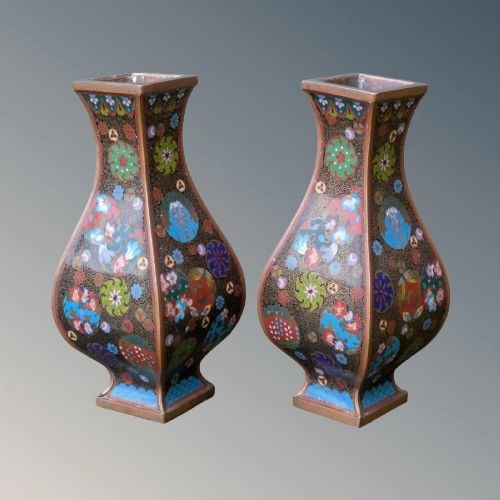
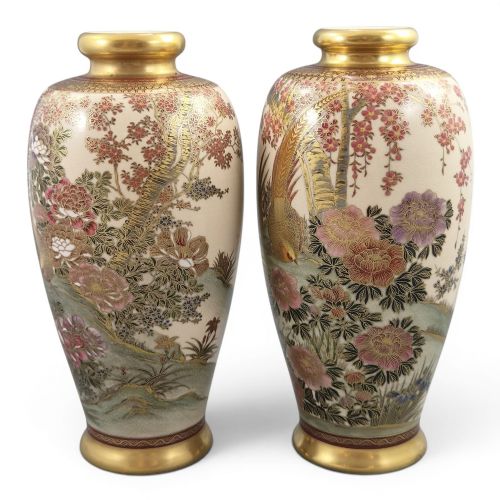
An oriental enamel decorative pair comprises matched vessels and figures created in East Asian workshops for display, most commonly seen here as vases, chargers, and lidded pots. These matching sets range from modest miniature jars to large palace vases and grand wall plates designed for visual symmetry.
The objects stem from distinct eras including the Meiji and Showa periods in Japan alongside Qing and Republican periods in China, often displaying Imperial styles or traditional motifs such as cranes, dragons, and phoenixes.
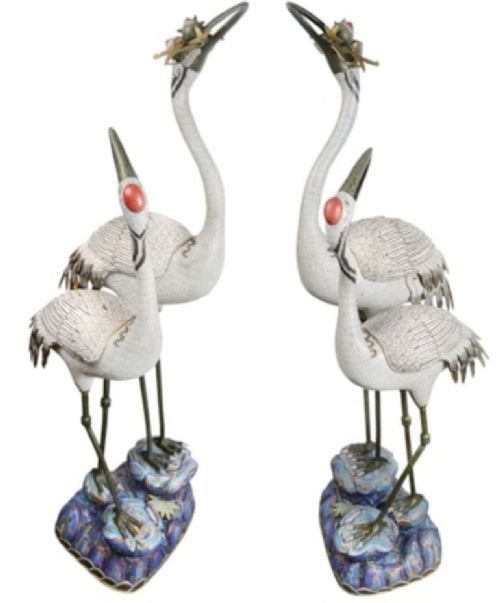
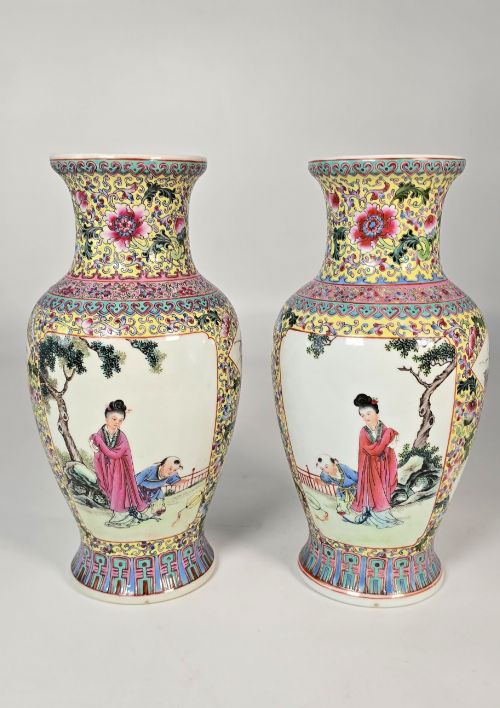
Vessels are frequently encountered as matched pairs of baluster vases, gourd pots, and moon flasks, alongside sculptural pairs of animals like cranes and quails.
Materials and Construction
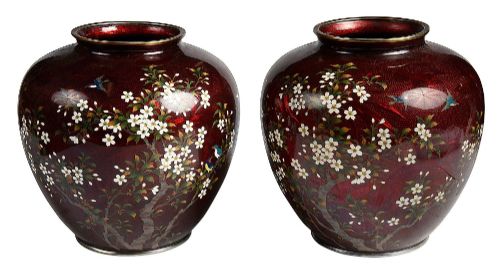
Many of these pieces rely on cloisonne enamel, a technique where thin metal wires of copper or brass form compartments on a metal base, which are then filled with coloured enamel pastes and fired.
Other examples utilise porcelain and earthenware foundations finished with hand-painted ceramic pigments, heavy gilt, and moriage relief work to build up textured surface detail.
Listings span the nineteenth and twentieth centuries, featuring Meiji, Showa, Qing, and Republican period items in enamel, copper, brass, and porcelain.
Standards of Execution
Quality rests in the precision of the metalwork cells and the smoothness of the polished enamel surface, where superior examples display tight, even wirework without gaps or pitting.
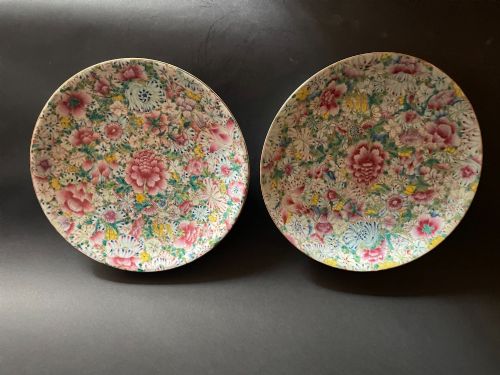
Painted ceramic pairs separate themselves through the fineness of the brushwork, the richness of the palette, and the generous application of gold leaf and raised enamel detailing.
Manpei Kobe·Hakusan·Hododa
The Oriental Enamel Decorative Pair Glossary
- Cloisonne Enamel
- A metalwork decoration technique using soldered wires to create cells for coloured paste. These wires trap the vitreous enamel during firing.
- Moriage
- A Japanese ceramic decorating technique using clay applied in raised dots or lines. This creates a tactile, textured surface beneath the glaze.
- Famille Rose
- A palette of opaque enamels dominated by pink or rose colours. Introduced in Chinese ceramics during the Qing dynasty.
- Mon
- A Japanese emblem or crest used to identify families or clans. These symbols frequently appear on Satsuma wares.
- Baluster
- A vase shape with a rounded body that tapers toward the neck and base. This form provides a stable display silhouette.
Oriental Enamel Decorative Pair: Frequently Asked Questions
How do I display a pair safely?
Place matched vessels on stable surfaces away from direct sunlight to protect the pigments and metal finishes.
Ensure heavy palace vases or chargers utilise secure stands or wall mountings designed to bear substantial weight.
What is Satsuma ware?
Satsuma ware is a type of Japanese pottery featuring a crackled creamy earthenware glaze decorated with polychrome enamels and gold.
These pieces were produced primarily in Kyoto and Satsuma province for export and domestic display during the Meiji era.
How are Chinese and Japanese styles told apart?
Chinese pieces often draw on Imperial workshop traditions with dense floral fields, dragons, and bronze or cloisonne foundations.
Japanese items from the Meiji period frequently showcase specific signatures, mon crests, and narrative pictorial panels depicting gardens or mythology.
How should enamel surfaces be cleaned?
Dust enamel and ceramic surfaces gently with a dry, soft cloth to prevent abrasive particles from scratching the glaze.
Avoid using water, chemical cleaners, or polishes which can damage vulnerable wirework and aged metal bases.