



Pair Meiji Cloisonne Vases
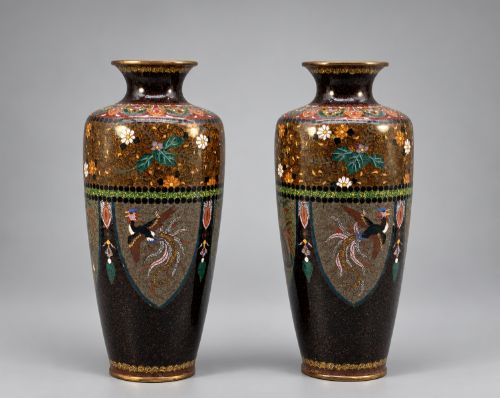
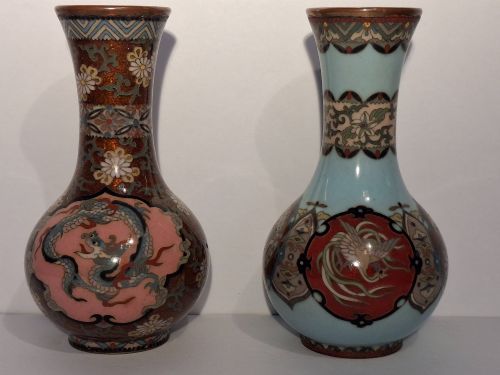
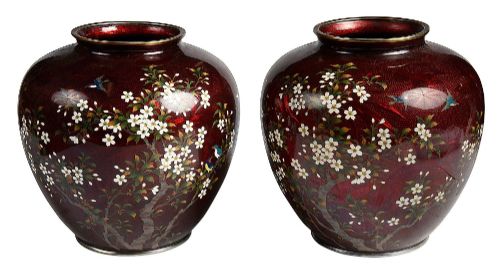
These pair meiji cloisonne vases bring intricate metalwork and vibrant enamel into a room, offering the disciplined symmetry collectors look for.
Pair Meiji Cloisonne Vases
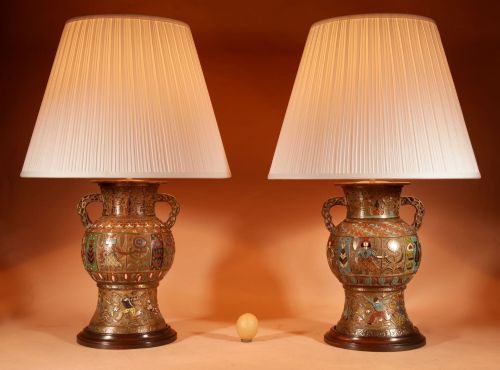
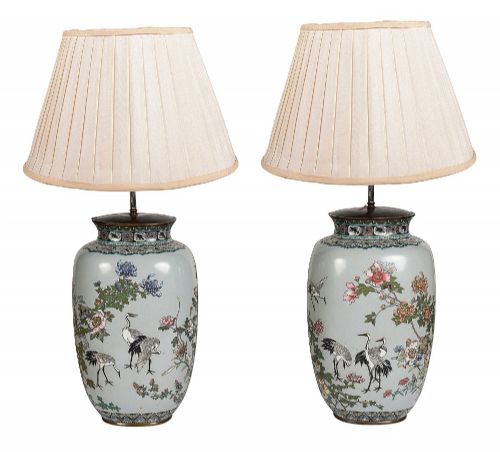
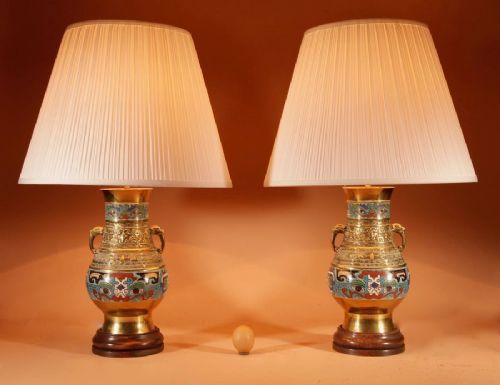
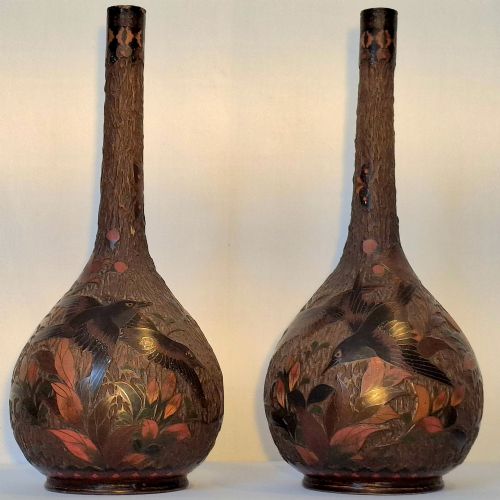
When you search for pair meiji cloisonne vases, you encounter symmetrical groups of vessels created during the Meiji period, alongside related ginger jars and table lamps adapted from these forms. The pieces available here span the nineteenth century and the early twentieth century, taking the shape of baluster vases, decorative jars with lids, and miniature urns.
The majority of these objects originate from Japan, though the record also includes Chinese export examples and pieces catalogued under Victorian and Edwardian periods. They appear both as pure decorative vessels and as mounted lamps involving brass, bronze, and fabric elements.
How they were made
The foundation of these pieces relies on a metal body formed from copper or brass, upon which thin metal wires are soldered to create outlined cells. These wires form complex decorative patterns of flowers and foliage.
Coloured enamel paste is packed into the individual compartments before the vessel undergoes firing and polishing to achieve a smooth surface. Certain variations incorporate silver foil beneath translucent enamel layers to create depth.
Pair Meiji Cloisonne Vases Retail Price Guide 2026
Typical asking prices for pair meiji cloisonne vases among the pieces listed under this phrase on Sellingantiques today, from the lower quarter to the upper quarter. They describe what is for sale here now, not the wider market.
Several Victorian households happily wired their prized Japanese flower urns for electricity, creating the sturdiest lamps in the parish.
What varies in quality
The standard of execution depends heavily on the precision of the wirework and the uniformity of the enamel filling. Finer examples display immaculate symmetry and intricate detail without visible pitting in the coloured surfaces.
Substantial scale and heavier metal gauge distinguish more ambitious productions from miniature or standard domestic wares. The crispness of the polishing stage also dictates how sharply the wire outlines stand out against the background.
The Pair Meiji Cloisonne Vases Glossary
- Cloisonne enamel
- A technique where metal wires form cells on a copper or brass base to hold coloured pastes before firing. This method creates the characteristic segmented patterns seen across the vessels.
- Meiji period
- The era in Japanese history spanning from 1868 to 1912, noted for a surge in decorative arts exported internationally. Pieces from this time often exhibit refined wirework and floral motifs.
- Ginbari
- A specialised cloisonne method involving embossed silver foil placed beneath translucent enamel. It produces a textured, reflective background behind the primary design.
- Champleve
- An enamelling process where troughs or cavities are carved directly into a bronze or brass surface to hold the enamel. This differs from soldered wire cells.
- Baluster
- A vertical vase form characterised by a rounded body that tapers toward the base and flares slightly at the neck. It remains a standard shape for matched pairs.
Pair Meiji Cloisonne Vases: Frequently Asked Questions
What is cloisonne?
Cloisonne is an ancient decorative metalwork technique adapted extensively in Japan during the late nineteenth century. Artisans solder flat metal wires onto a copper or brass body to create partitioned designs.
These compartments are then filled with coloured enamel pastes and fired multiple times. The finished surface is ground down and polished until the metal wires and hardened enamel sit flush.
How are these vases displayed?
Pairs are typically placed symmetrically on mantelpieces, sideboards, or dedicated display tables. Their matching proportions make them effective as focal points in traditional rooms.
Some examples have been converted into table lamps using brass or bronze mountings. These require careful placement near a power source while maintaining their decorative presence.
How do I identify Meiji pieces?
Meiji period vessels generally date between the late nineteenth and early twentieth centuries. They are characterised by meticulous attention to floral detail and refined wirework.
Reference to the Victorian or Edwardian periods in Western cataloguing often coincides with these Japanese dates due to contemporary import trends. Look for consistent use of copper bodies and dense enamel coverage.