


Antique Elephant Sculpture
An antique elephant sculpture brings powerful presence into a room, spanning bronze castings, carved hardwoods and delicate porcelains from diverse global traditions.
Antique Elephant Sculpture
An antique elephant sculpture encompasses a wide variety of figures, vessels and decorative objects originating from international workshops during the nineteenth and early twentieth centuries. When exploring this selection, buyers most frequently encounter Japanese Meiji period bronzes, Indian Raj period carvings in hardwood and ebony, and European porcelain figures.
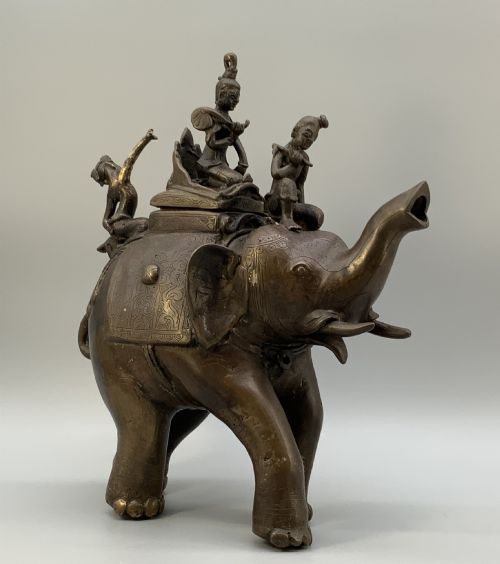
The forms range from realistic studies of animals in motion to ceremonial figures adorned with riders, attendants or architectural trappings. Functional objects such as inkwells, doorstops, clock sets, perfume lamps and vases also incorporate the motif into their design.
Geographic origins span Japan, China, India, Burma and Europe, reflecting distinct regional materials and artistic styles. Pieces extend across multiple decades, capturing the aesthetic movements of the Victorian era, Arts and Crafts, and Art Deco.
How they were made
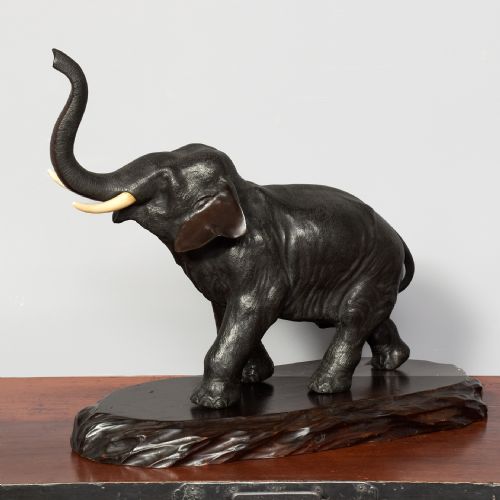
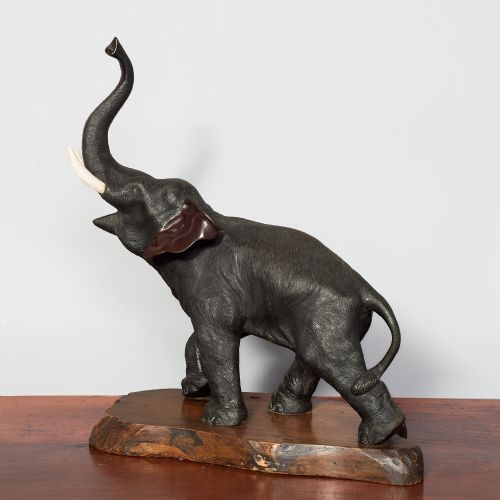
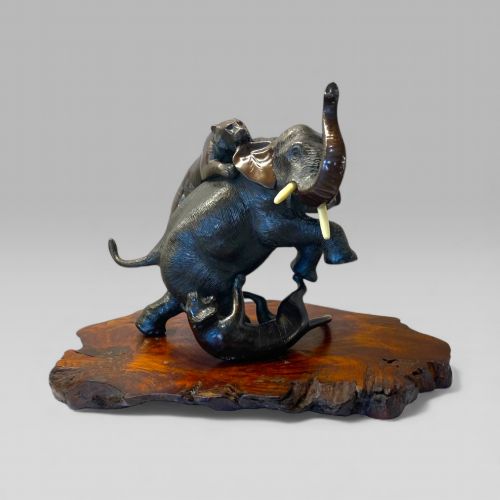
Bronze sculptures utilise traditional lost-wax casting techniques, often finished with fine surface chasing, engraving and patination to articulate skin texture and harness details. Japanese bronzes frequently incorporate contrasting materials such as ivory tusks or diamond eyes.
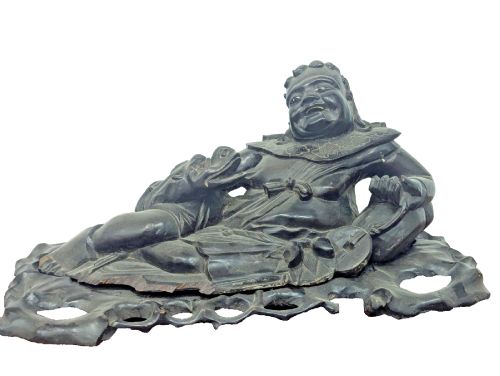
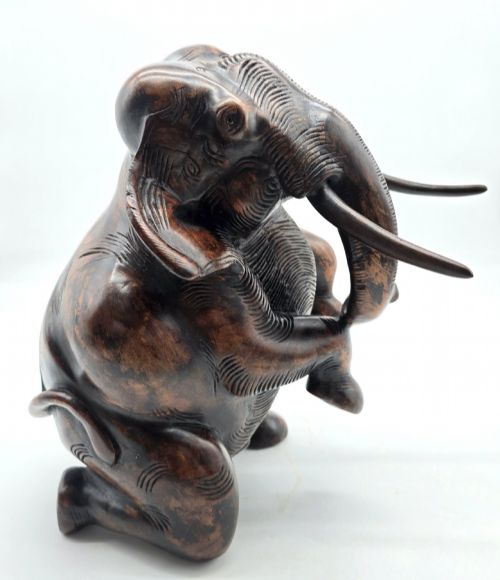
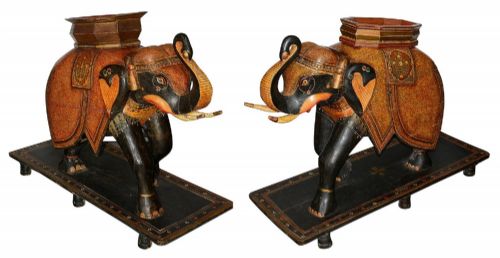
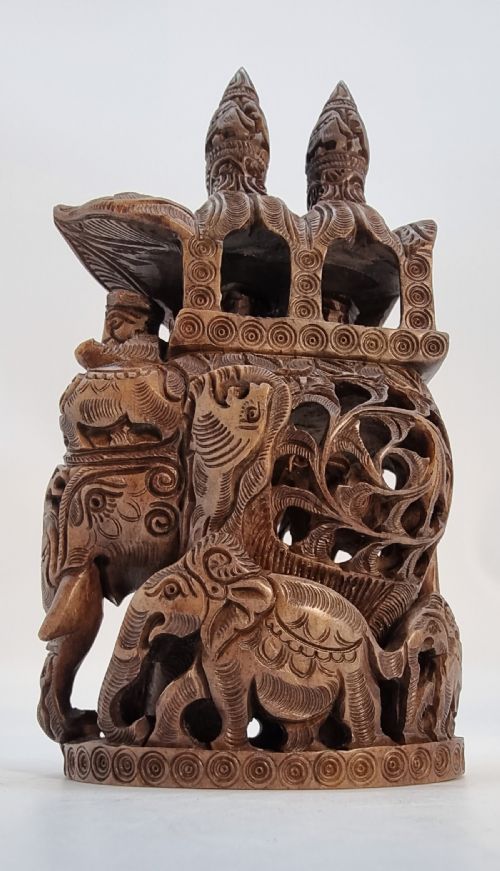
Carved sculptures rely on dense timbers including teak, ebony, and general hardwoods, shaped with hand chisels and sometimes enhanced with lacquer, polychrome pigments, or gold leaf. Soapstone and bone provide alternative carving mediums for smaller studies.
Ceramic examples employ moulded porcelain or earthenware bodies finished with enamel glazes, cloisonne wirework, or Satsuma crackle-glaze decoration. Leather models utilise stretched hides shaped over internal armatures to create firm, tactile figures.
Materials span bronze, bone, hardwood, wood, ivory, enamel, gold leaf, and porcelain across the listed periods.
What varies in quality
Anatomy and movement separate standard castings and carvings from exceptional works, with superior pieces capturing muscle tension, weight, and realistic interaction between figures such as tigers and elephants. The crispness of hand-chased skin folds and facial expressions indicates the skill of the original maker.
Materials and embellishments define the upper tiers of craftsmanship, where integrated precious components, intricate lacquer work, or multi-part bronze assemblies demonstrate elevated technical ambition. Proportion and balance in large-scale works ensure the heavy mass is supported gracefully upon its base.
Tsunemitsu·Genryusai Seiya·Kizan·Ernest Louis Adnin·Carl Thieme
The Antique Elephant Sculpture Glossary
- Meiji Period
- A Japanese historical era spanning from 1868 to 1912 noted for exceptional metalwork and ivory carving destined for export. Works from this time often display meticulous attention to naturalistic detail.
- Raj Period
- The period of British rule in the Indian subcontinent from 1858 to 1947 which produced distinctive colonial-era furniture and decorative carvings in dense local timbers. These objects frequently depict ceremonial processions and traditional attire.
- Okimono
- A Japanese ornamental figurine designed for display on a tokonoma alcove or shelf. These freestanding sculptures celebrate flora and fauna with great precision.
- Cloisonne
- A decorative metalwork technique where enamel paste is applied within compartments created by soldered flat wires. The piece is subsequently fired and polished to a smooth finish.
- Budai
- A representation of a stout, laughing monk associated with contentment and good fortune in East Asian art. Figures often appear alongside animals or children.
Antique Elephant Sculpture: Frequently Asked Questions
What materials were used?
Makers utilised bronze, carved hardwoods like ebony and teak, bone, ivory, and various ceramics including porcelain, Satsuma ware, and cloisonne enamel. Leather and soapstone also appear among the records.
Different geographic regions favoured specific mediums, such as bronze in Japan, dense timbers in India, and porcelain in European kilns.
How do I date a piece?
Dating relies on stylistic markers associated with specific periods like the Japanese Meiji era, the Indian Raj period, or European Art Deco design movements. Signatures, foundry marks, and material choices further narrow the chronology.
Comparative study of manufacturing techniques helps distinguish nineteenth-century works from later twentieth-century interpretations.
Were these purely decorative?
While many examples exist as standalone sculptures or okimono, numerous pieces served practical functions within period interiors. Artisans integrated the elephant motif into inkwells, doorstops, clock sets, perfume lamps, and vases.
Functional objects combined utility with sculptural artistry, reflecting Victorian and Edwardian domestic tastes.
How should I clean wood?
Carved hardwood and ebony pieces require gentle dusting with a soft, dry cloth to protect the surface finish and natural grain. Avoid harsh chemical cleaners, synthetic polishes, or excessive moisture.
Maintaining a stable indoor humidity level prevents timber from drying out or splitting over time.