

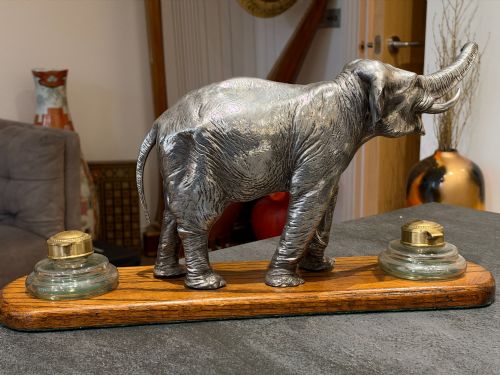
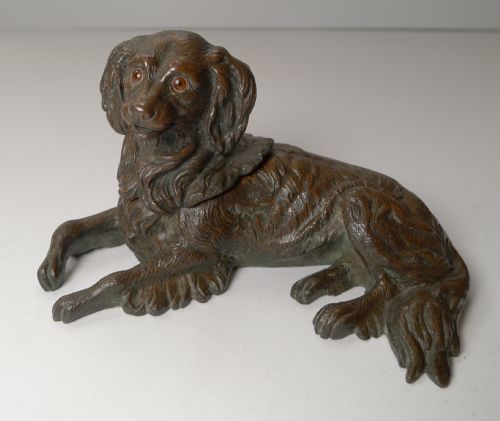


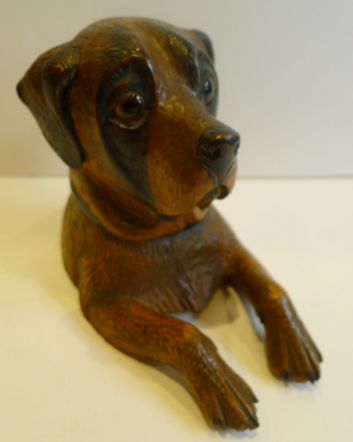

Novelty Animal Inkstand
A novelty animal inkstand is a witty desk accessory shaped as an owl, cat, or hound that brings Victorian character straight to your writing table.
Novelty Animal Inkstand
A novelty animal inkstand is a functional desk accessory modelled as a living creature, bringing a distinct sense of theatre to the Victorian study. These pieces combine practical ink storage with sculptural presence, taking the form of owls, cats, dogs, and stags.
You are most likely to meet Black Forest carved wood examples or English brass and bronze pieces on this page. They span the Victorian era, the Edwardian period, and into the Art Deco years, reflecting a long-held fascination with zoomorphic design.
Materials and Construction
These pieces rely on natural materials such as linden wood and carved wood, shaped with deep relief by skilled hands. Glass inserts hold the ink safely within the animal forms, often paired with inset glass eyes that lend a lifelike gaze.
Metalwork utilises cast brass, bronze, and gilded bronze, sometimes finished with cold-painted decoration. English and Austrian workshops employed these casting and carving techniques to capture realistic fur, feathers, and anatomical detail.
Novelty Animal Inkstand Retail Price Guide 2026
Typical asking prices for novelty animal inkstand among the pieces listed under this phrase on Sellingantiques today, from the lower quarter to the upper quarter. They describe what is for sale here now, not the wider market.
Listings feature pieces spanning the Victorian period, eighteen-eighty, eighteen-ninety, nineteen-hundred, nineteen-ten, and nineteen-twenty.
Assessing Quality and Execution
Quality rests entirely in the anatomical accuracy of the carving or casting and the expressiveness of the animal form. Superior pieces capture character and texture with conviction, whereas lesser examples lose definition in the fur or plumage.
The integration of original glass eyes and matching glass ink inserts elevates a piece significantly. Finer makers paid careful attention to the balance between the sculptural animal subject and the functional inkwell base.
The Novelty Animal Inkstand Glossary
- Black Forest
- A regional style of wood carving originating from the mountainous region of Central Europe, known for realistic animals and foliage. It utilises linden wood and deep, dark staining.
- Cold Painted Bronze
- A method where bronze figures receive paint layers that are not fired in a kiln. Austrian workshops frequently utilised this technique for brightly coloured animal subjects.
- Inkstand
- A complete desk set that holds one or more inkwells along with space for pens and sealing wax. These stands anchor the writing accessories in a unified composition.
- Animalier
- A nineteenth-century artistic movement dedicated to the realistic portrayal of animals. Sculptors in this tradition focused on the natural movement and musculature of beasts.
Novelty Animal Inkstand: Frequently Asked Questions
How were these inkstands used?
Owners used them for dipping pens into liquid ink held within glass inserts concealed inside the animal figures. The hinged heads or bodies lifted to grant access to the ink reservoir.
They sat upon writing desks in libraries and studies, holding the tools required for daily correspondence before the invention of the fountain pen.
How do I date a Victorian inkstand?
Dating relies on stylistic clues, manufacturing techniques, and the materials used in the construction. Victorian examples from around eighteen-eighty often feature heavy cast brass or detailed wooden carving.
Later pieces move into Edwardian styles and Art Deco forms, utilising cut crystal bases and gilded bronze casts from nineteen-twenty.
Where were these pieces made?
Many pieces originate from English workshops using brass and bronze, while carved wooden examples frequently come from the Black Forest region. Austrian foundries also produced notable cold-painted bronze animals.
Makers across Europe catered to a strong demand for whimsical desk wares during the late nineteenth century.
How do I care for antique wood and bronze?
Keep carved wooden pieces away from direct sunlight and sudden temperature shifts to prevent the timber from drying out. Dust gently with a soft brush.
Bronze and brass surfaces require minimal intervention beyond occasional dusting to preserve the patination built up over decades of age.