
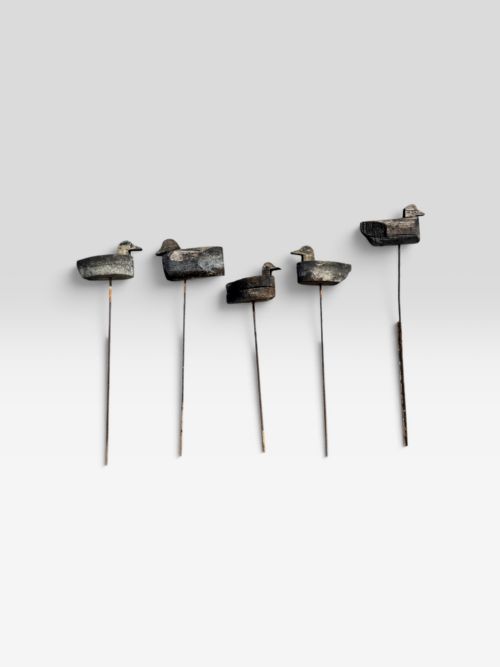
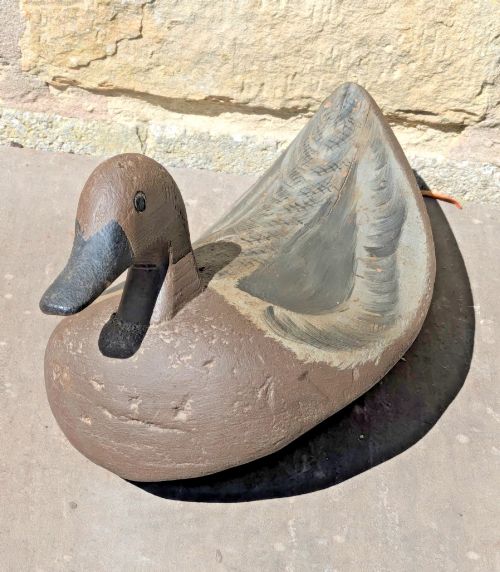
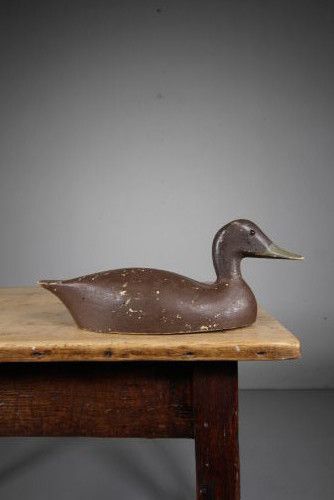
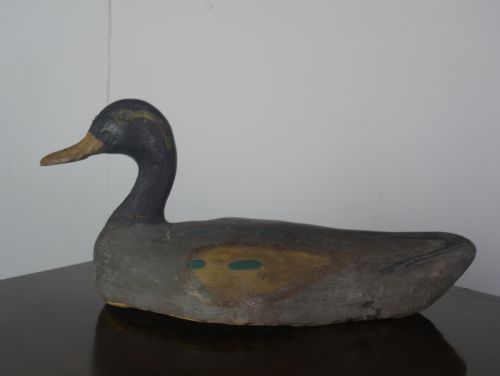


Antique Duck Sculpture
These antique duck sculpture pieces bring character and hand-carved charm into a room, spanning decoy work, cold-painted bronze, and carved hardwood.
Antique Duck Sculpture
An antique duck sculpture encompasses working working decoy ducks alongside ornamental studies in bronze, wood, and papier mâché. Buyers hunting this phrase encounter working decoys most often, particularly those originating from English, French, and American traditions.
The selection extends to decorative sculptures, figurines, and okimono pieces created across the nineteenth and early twentieth centuries. Forms range from solitary mallards and loons with chicks to pairs of auspicious Mandarin ducks.
Pieces emerge from periods including the Edwardian era, the nineteen-twenties, and the nineteen-thirties, alongside nineteenth-century examples. Folk art and rustic decorative water birds dominate the aesthetic vernacular found within the listings.
Carving and painting methods
Makers shaped these sculptures primarily from timber and carved wood, utilising hand-carving techniques to establish the naturalistic contours of the birds. Paint finishes were then applied by hand, giving each decoy or ornamental figure its distinct plumage and colour.
Alternative materials appear in the form of cast bronze, iron, glass, and moulded papier mâché combined with straw. Some bronze examples feature cold-painted surfaces mounted upon onyx plinths, while others utilise carved hardwood.
Materials across these listings span carved wood, timber, bronze, iron, glass, papier mâché, and paint.
Materials and execution
The distinction between standard and superior pieces rests upon the crispness of the carving and the preservation of the original hand-applied paint. Sculptures possessing retained surface pigmentation and articulate anatomical modelling command greater visual weight.
Material choice also dictates standing, with cold-painted bronzes and finely detailed hardwood carvings representing a different tier of craftsmanship compared to rustic folk art decoys.
Makuzu Kozan II·Antoine Bofill
The Antique Duck Sculpture Glossary
- Decoy duck
- A carved and painted water bird traditionally placed on water by hunters to attract real ducks. These working items now serve as decorative objects.
- Cold-painted bronze
- Bronze sculpture finished with paint applied without heat, a technique popular in Austrian workshops during the early twentieth century.
- Okimono
- A Japanese decorative figurine designed for display on a shelf or in a tokonoma alcove rather than for ritual use.
- Folk art
- Art produced from an indigenous culture or peasant society, characterised by a naive style and practical utility.
- Qing Dynasty
- The final imperial dynasty of China, spanning from sixteen-forty-four to nineteen-twelve, known for sophisticated hardwood carving.
Antique Duck Sculpture: Frequently Asked Questions
What is an antique duck decoy?
A working decoy is a carved wooden bird that hunters floated on water to lure wild fowl within range. Makers shaped these objects by hand before applying working paint schemes.
Over time, these utilitarian objects transitioned from working tools to decorative folk art collected for their rustic aesthetic and regional variations.
How old are these duck sculptures?
The pieces span the nineteenth century through the Edwardian period and into the nineteen-twenties and thirties. Stylistic cues and material choices help indicate the specific manufacturing era.
Folk art decoys often show the weathering of working life, while bronze and hardwood sculptures reflect the refined techniques of their respective periods.
Where were these sculptures made?
Origin points include English, French, and American workshops, alongside Austrian bronze foundries and Japanese or Chinese studios. Each region imparted local woodworking traditions and stylistic preferences.
Decoys tend to reflect Western shooting traditions, whereas oriental pieces focus on decorative symbolism such as Mandarin ducks for auspicious harmony.
How do I display a duck sculpture?
These sculptures suit placement on sideboards, bookshelves, or mantels where their carved forms and painted surfaces remain visible. Bronze studies often include integral plinths for stable tabletop placement.
Perect as standalone focal points or grouped alongside other rustic wooden objects to create a collected interior display.