

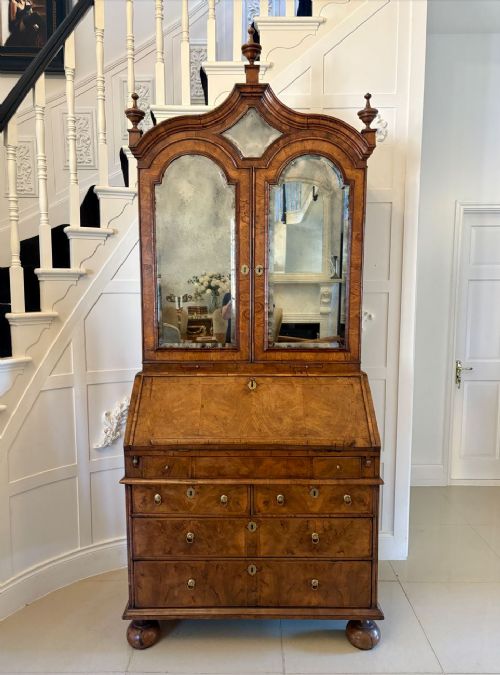
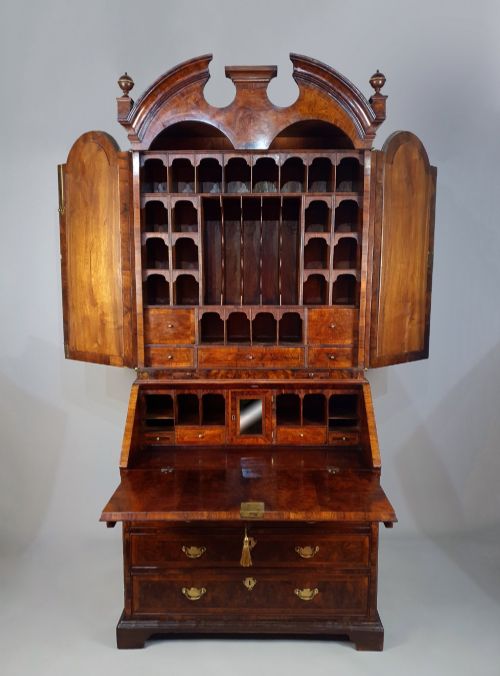
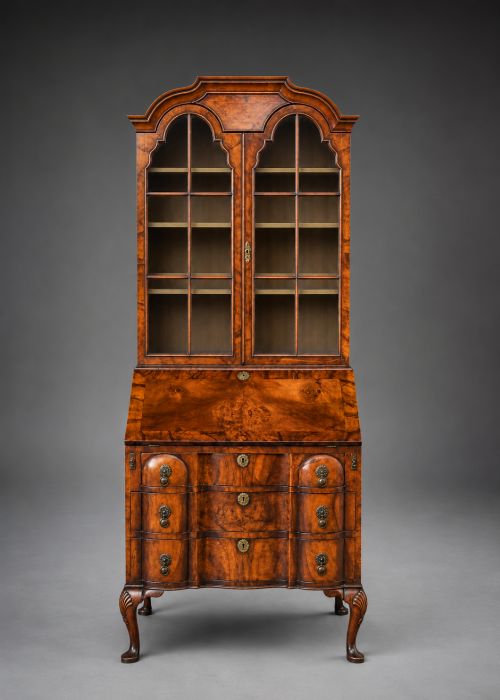


Antique Double Bureau Bookcase
An antique double bureau bookcase is a monumental workspace and display cabinet combining fitted writing compartments with glazed shelving, prized for its imposing architectural presence.
Antique Double Bureau Bookcase
When you search for an antique double bureau bookcase, you encounter grand architectural storage furniture designed to house libraries and conceal correspondence behind panelled or mirrored doors. These large pieces combine a lower writing desk section containing a fall front or cylinder fall with an upper bookcase cabinet.
The examples recorded here span from the late seventeenth century through the Georgian era, with later revivals appearing in Edwardian and Victorian times. Walnut, burr walnut, mahogany, and fruitwood marquetry dominate the selection, often taking form as double dome or bureau cabinet variants.
Queen Anne, George I, and William and Mary periods supply the earliest walnut and marquetry examples, whilst later nineteenth-century interpretations adopt Georgian styles and satinwood or mahogany timbers.
Materials and construction
Cabinet makers constructed these large pieces using sturdy carcases of oak or pine, veneered with highly figured walnut, burr walnut, or mahogany. Marquetry panels incorporate fruitwoods and specialised inlay techniques, creating intricate floral or geometric patterns across the surfaces.
Glass is set into the upper cabinet doors, sometimes behind original mirrored plates or wooden astragals, while brass handles, escutcheons, and hinges secure the drawers and doors. Leather inserts frequently line the writing surfaces of the fold-down desks.
Several pieces arrive in black japanned finishes, proving past owners desired oriental flair on their English workspace.
Distinctions in quality
The finest examples display exceptional grain selection in burr walnut veneers, meticulous featherbanding, and sophisticated marquetry layout across double dome carcases. Early pieces with original mirrored doors and undisturbed brass hardware achieve a higher level of historical integrity.
Proportion and architectural detail separate standard items from superior works, particularly in the handling of cornices, pigeonhole interiors, and the alignment of cabinet doors.
The Antique Double Bureau Bookcase Glossary
- Bureau bookcase
- A dual-purpose article of furniture uniting a sloping writing desk with a shelved upper cabinet for books. The lower section typically opens to reveal small drawers and pigeonholes.
- Double dome
- An upper cabinet roofline shaped into two parallel arched or domed curves. This architectural feature appears on elite late seventeenth and early eighteenth-century examples.
- Burr walnut
- A prized timber veneer sliced from walnut tree growths, producing swirling, highly decorative grain patterns. It forms the primary visual surface on many Queen Anne and George I pieces.
- Marquetry
- The art of applying small pieces of veneer to form decorative patterns and pictures. Fruitwoods and contrasting timbers are cut and fitted into a background veneer.
- Featherbanding
- A type of decorative inlay utilising narrow strips of veneer arranged in a herringbone or chevron pattern around drawer edges and panel borders.
Antique Double Bureau Bookcase: Frequently Asked Questions
What is a double bureau bookcase?
A double bureau bookcase is a tall, two-part piece of furniture featuring a lower writing bureau with a sloping fall front and an upper shelved cabinet with two doors.
These large cabinets serve as both a private writing desk and a prominent display case for an extensive book collection.
How do I date an antique bureau bookcase?
Dating relies on identifying timber choices like walnut, mahogany, or satinwood, alongside stylistic indicators such as double dome cornices and bracket feet.
Earlier pieces from the seventeenth and early eighteenth centuries utilise walnut and marquetry, whereas later Georgian and Victorian examples favour mahogany or Edwardian revival styling.
Are the mirrors original?
Many early eighteenth-century examples feature bevelled mirrored glass set into the upper cabinet doors. Surviving original mirror plates show slight oxidation and silvering wear consistent with age.
Replacements are common in pieces subjected to centuries of domestic use.
How should I care for walnut veneer?
Walnut veneer requires stable indoor humidity levels away from direct sunlight and heat sources to prevent timber shrinkage and lifting. Regular dusting with a soft, dry cloth preserves the polished surface.
Avoid commercial silicone polishes that can penetrate old finishes.