






Antique Domed Casket
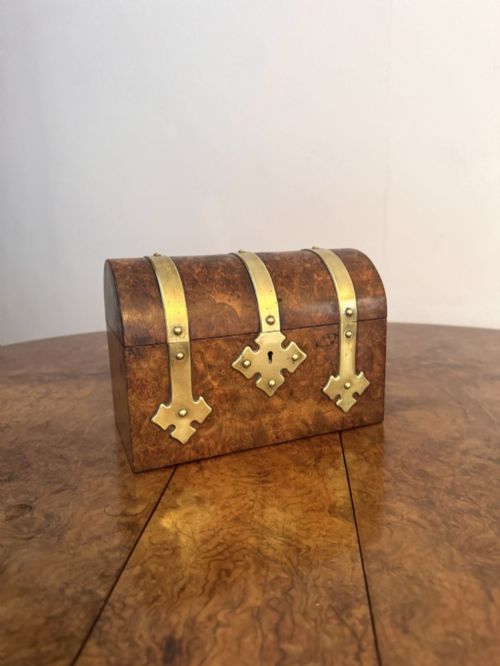
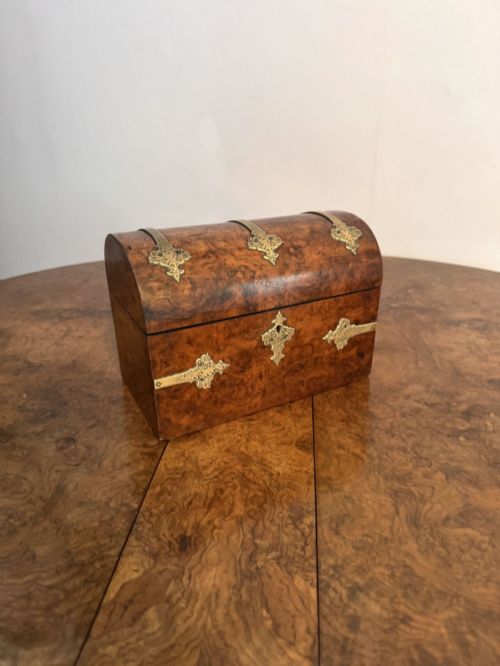
An antique domed casket offers a secure and decorative tabletop repository, most often found in Victorian burr walnut or mahogany.
Antique Domed Casket
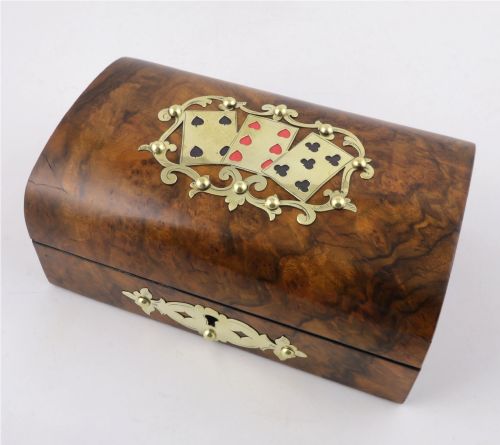
An antique domed casket is a portable container designed with a curved lid, serving various purposes from holding stationery and writing equipment to storing gloves, games, or scent bottles. These pieces appear across the Georgian, Regency, and Victorian periods, reflecting the domestic habits of past centuries when personal valuables required dedicated storage.
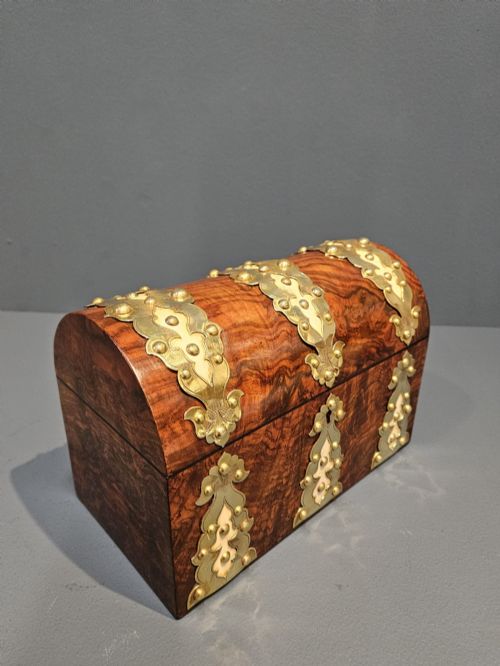
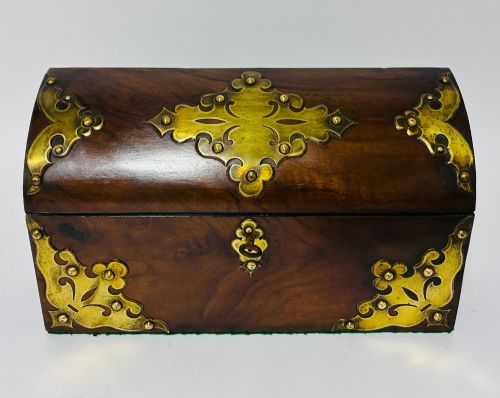
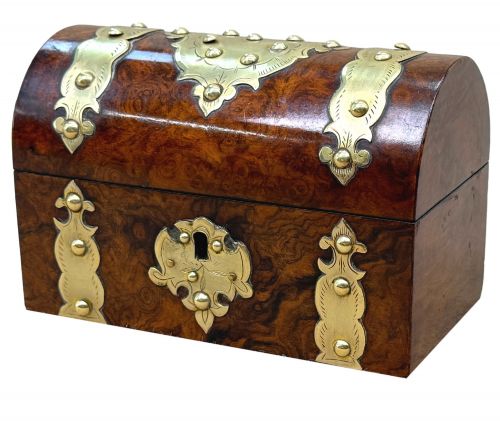
The version most commonly met on this page is the Victorian walnut or burr walnut box, frequently mounted with brass straps and corners, and shaped with a distinctive dome top. Alongside these English examples, buyers encounter painted Scandinavian folk art boxes, robust pine strong boxes, and occasional Continental pieces in coromandel or mahogany.
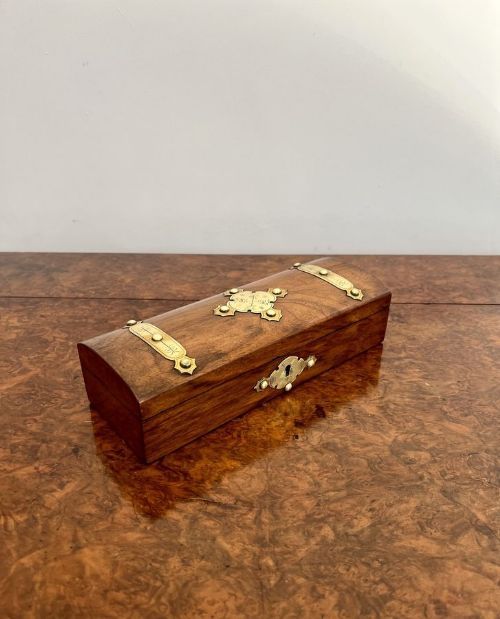
Forms vary according to their intended contents, ranging from compact glove boxes and jewellery caskets to larger desk accessories like stationery boxes and games caskets. The presence of a curved lid distinguishes these pieces from standard flat-topped boxes, adding architectural presence to a desk or table.
Materials and construction
Cabinet makers utilised dense domestic and exotic hardwoods, building carcasses in pine or mahogany before applying decorative veneers such as burr walnut, pollard oak, amboyna, or coromandel. These figured woods were chosen for their swirling grain patterns, which were then polished to a deep lustre.
Metalwork played a structural and decorative role, with heavy brass banding, corner mounts, strapwork, and escutcheons secured by small brass screws. Alternative finishes include original paintwork found on Scandinavian and folk pieces, pokerwork ornamentation, marquetry inlay, and embossed leather.
Antique Domed Casket Retail Price Guide 2026
Typical asking prices for domed casket among the pieces listed under this phrase on Sellingantiques today, from the lower quarter to the upper quarter. They describe what is for sale here now, not the wider market.
Materials recorded across the selection include brass, burr walnut, coromandel, mahogany, yew, tin, and painted pine.
Assessing quality and craftsmanship
Quality in an antique domed casket rests upon the selection of the timber veneer and the precision of its application across the curved lid. Superior examples display symmetrical, highly figured burr walnut or exotic grain that flows seamlessly over the arch of the dome.
The standard of metal mounts and internal fittings marks the distinction between standard production and finer cabinet work. Better pieces integrate heavy, well-cast brass hardware, fitted velvet or silk interiors, and robust locking mechanisms that have survived decades of daily use.
Trussell Brighton
The Antique Domed Casket Glossary
- Burr walnut
- A prized timber taken from the growth growths of the walnut tree, yielding complex, swirling grain patterns. It was extensively used for high-status Victorian boxes.
- Stationery box
- A desk accessory designed with internal divisions to hold writing paper, envelopes, and correspondence upright. Many feature domed lids to accommodate tiered compartments.
- Coromandel
- A heavy, dense exotic hardwood from Asia featuring dark brown colouring with dramatic black stripes. It was reserved for luxury boxes during the nineteenth century.
- Escutcheon
- A decorative metal plate surrounding the keyhole of a box, designed to protect the surrounding wood from wear. On better pieces, these are cast in brass and heavily detailed.
- Pokerwork
- A method of decorating wood by burning designs into the surface with heated tools. This technique creates contrasting dark motifs on natural timber.
Antique Domed Casket: Frequently Asked Questions
What were domed caskets originally used for?
These caskets served as secure tabletop containers for valuable personal items, writing materials, or social accessories. Specific interiors accommodated stationery, playing cards, poker dice, gloves, or scent bottles.
Their sturdy construction and lockable lids kept private correspondence and small treasures safe in period drawing rooms and studies.
How do I date an antique domed casket?
Dating relies upon timber choices, construction techniques, and hardware styles. Georgian and Regency pieces often feature simpler mahogany or satinwood carcasses, whereas Victorian examples frequently showcase burr walnut veneer with heavy brass binding.
Interior paper linings, lock stamps, and hinge types also provide clues to the exact decade of manufacture.
Where should I place a domed casket at home?
These boxes suit placement on desks, side tables, chests of drawers, or bookshelves where their decorative woodgrains and brass mounts can be appreciated. Their curved lids provide a strong visual contrast against flat surfaces.
They continue to function practically for storing modern stationery, photographs, keys, or jewellery while adding period character to a room.
Are keys usually included with these boxes?
Original working keys are uncommon because locks were frequently misplaced over generations of use. Many boxes retain their original locks and escutcheons even when the key itself has been lost to time.
Specialist antique locksmiths can sometimes supply replacement keys if required for the mechanism.