



Antique Dog Paperweight
An antique dog paperweight brings solid bronze character to a desk, holding down correspondence with the weight of nineteenth or twentieth-century foundry work.
Antique Dog Paperweight
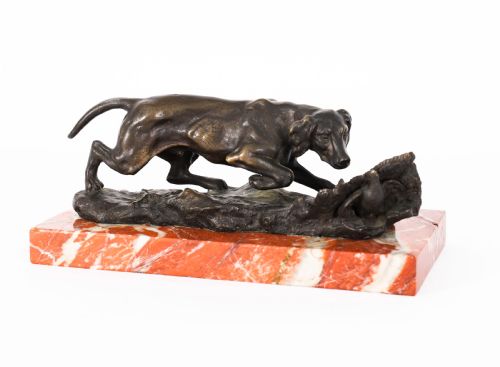
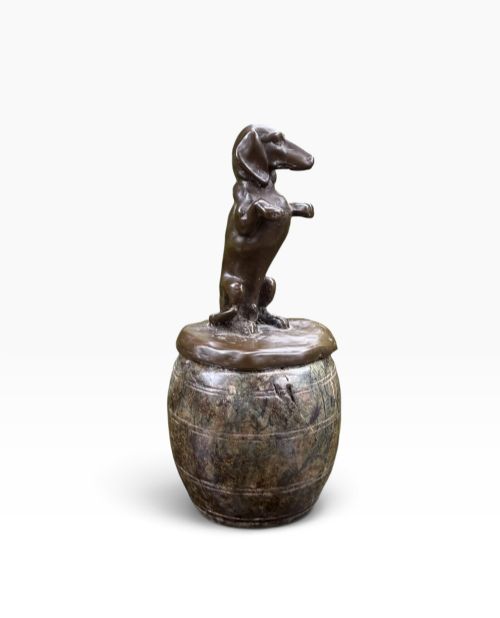
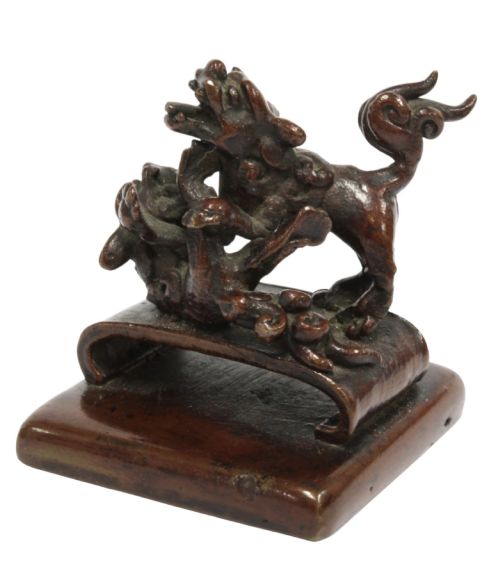
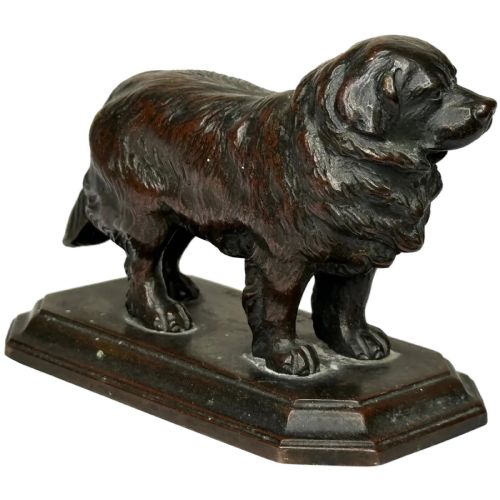
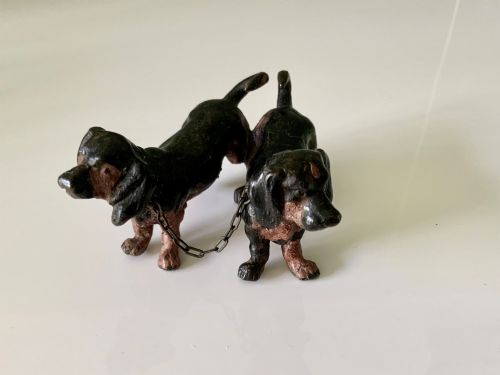
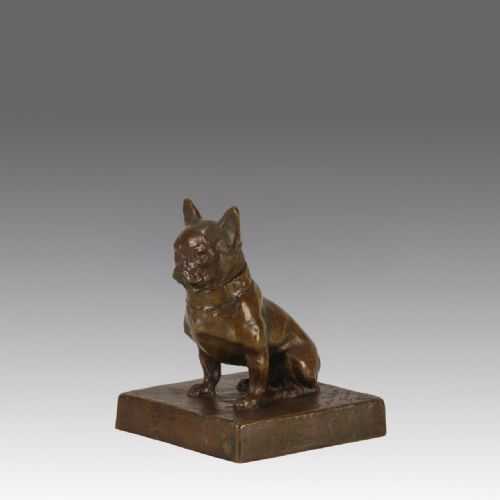
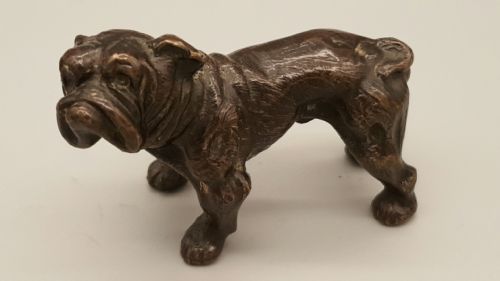
An antique dog paperweight is encountered in forms ranging from naturalistic desk sculptures and inkwells to car mascots and scholar's seals. The hunting hound, the terrier, the dachshund and the pug appear most frequently, cast as heavy figures designed to sit upon a timber base, a marble plinth or directly on the surface of a desk.
These pieces cross several distinct stylistic traditions, including nineteenth-century French Animalier school studies, Austrian cold-painted Vienna bronzes, and Art Deco depictions of borzois and greyhounds. Buyers select these subjects for their specific canine breed representation and their tactile presence in a workspace.
Foundry methods and surface finishes
The primary material across the selection is bronze, supplemented by patinated bronze, chrome, cast iron and spelter, often mounted on marble or timber bases. Metal is poured using traditional foundry methods to capture muscular detail and texture in each hound or terrier.
Surface finish is achieved through cold painting or applied patination, giving the metal surfaces polychrome pigment or deep tonal variation. Many items are solid metal castings designed to possess enough heft to function practically as weights.
Current listings feature bronze, marble, paint, patinated bronze, chrome, metal, timber bases, and cast iron.
Distinctions in casting and surface finish
Quality depends upon the crispness of the bronze casting and the preservation of fine anatomical details in the fur, muscle and expression. A superior piece retains sharp definition without loss of form during the chasing and finishing stages after the metal has cooled.
In cold-painted examples, the survival of the original applied paint surface without extensive overpainting dictates desirability. The integration of the figure with its marble base or inkwell mechanism also separates standard production items from signed workshop pieces.
Carl Kauba·Dora Heber·Pierre Jules Mene·Antoine Louis Barye·P.de Soete·Louis Lejeune·Franze Bergman
The Antique Dog Paperweight Glossary
- Animalier
- A nineteenth-century artistic movement focused on the realistic depiction of animals, particularly predators and hounds. Sculptors in this tradition worked primarily in bronze.
- Cold-painted bronze
- A technique where bronze figures are painted with oil or enamel paints after casting, rather than being fired in a kiln. This method was widely used by Austrian foundries.
- Spelter
- An alloy of zinc and lead or copper used as a cheaper alternative to bronze. It yields a lighter casting often found in decorative ornaments.
- Patinated bronze
- Metal that has been treated with chemical solutions to produce a coloured oxide surface layer. This finish protects the bronze while enhancing its visual depth.
Antique Dog Paperweight: Frequently Asked Questions
How do I identify a cold-painted bronze?
Cold-painted items display polychrome paint layers applied directly to the metal surface after casting rather than fired ceramic glazes. They are characteristic of Austrian workshops from the early twentieth century.
Examination under magnification reveals the interaction between the metal ground and the historic pigment.
Are these figures purely decorative?
While many serve as desk paperweights or shelf ornaments, several pieces incorporate functional elements such as inkwells, seals or car mascots. Their substantial metal mass allows them to hold down loose papers effectively.
Historical examples were often produced to double as practical accessories for the desk or the motoring enthusiast.
How do I distinguish nineteenth-century pieces?
Nineteenth-century examples often emerge from the French Animalier school or early Austrian foundries, showing naturalistic musculature and heavy bronze casting. Signatures or foundry marks on the base provide direct attribution.
Stylistic cues link them to Victorian sensibilities or specific sculptor output from the period.