
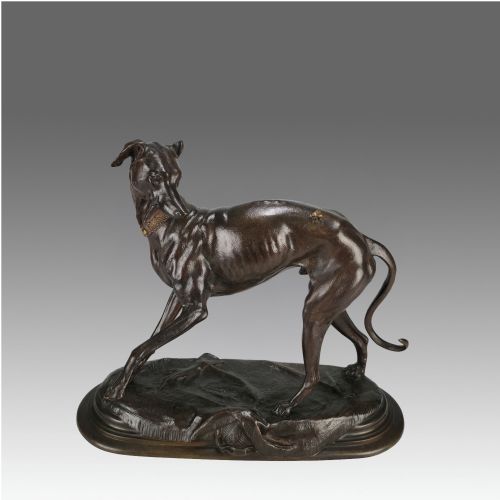


Antique Bronze Hound Ornament
These antique bronze hound ornament examples bring nineteenth-century animalier realism into the room, cast by masters and scaled for the mantel or fireside.
Antique Bronze Hound Ornament
An antique bronze hound ornament brings nineteenth-century animalier sculpture into a room, capturing sporting dogs and hunting hounds with anatomical precision. When you search for this phrase, you encounter figures of greyhounds, sighthounds, setters, and basset hounds caught in moments of repose or pursuit. Most examples hail from nineteenth-century French workshops, portraying hunting dogs alongside birds, balls, or companion animals.
The objects span the Victorian era into the Art Deco period, moving from naturalistic nineteenth-century bronze compositions to stylised figural groups mounted on marble or onyx bases. Some pieces serve as fireside statues or tabletop sculptures, bearing signatures and foundry marks from prominent animalier artists. The selection highlights both signed cabinet bronzes and cast metal alternatives that reflect the period's obsession with canine form.
Materials and casting methods
Foundries produced these sculptures primarily in bronze, alongside patinated bronze and occasional spelter or cast iron alternatives. Metal components were hot-cast and hand-finished, developing rich patinas over decades of handling and exposure. Sculptors modelled musculature and fur meticulously before sending the works to professional foundries for casting.
Many sculptures incorporate heavy natural stone bases, utilising marble and onyx to anchor the metal figures securely. Bases often complement the subject matter, providing stability and a formal platform for nineteenth-century animalier groups and single hound figures alike.
Several hounds share the room with unexpected companions, pausing from the hunt to investigate a fly, a ball, or a startled bird.
Distinguishing finer works
The presence of a recognised foundry mark or artist signature elevates a piece, as does the integration of a substantial marble or onyx plinth. Superior patination shows subtle tonal variations rather than a flat, uniform painted finish, revealing the underlying metal quality.
Alfred Barye·Pierre Jules Mene·Auguste Nicholas Cain·Arthur Waagen·Joseph Francois Victor Chemin·Alfred Barye·Barbedienne·Dubucand·L Bureau
The Antique Bronze Hound Ornament Glossary
- Animalier
- A nineteenth-century artistic movement focused on the realistic depiction of animals, particularly dogs, horses, and wild beasts. Practitioners studied anatomy closely to capture creatures in motion or repose.
- Patinated bronze
- Bronze treated with chemical solutions to produce a specific surface colour and sheen. This finish protects the metal and accentuates sculptural details.
- Spelter
- A zinc-based alloy frequently used as a cheaper alternative to bronze in nineteenth-century decorative metalwork. It takes detail well but is softer and lighter than genuine bronze.
- Foundry mark
- A stamp or signature cast into the metal by the workshop that poured the piece. These marks identify the commercial enterprise responsible for the casting.
Antique Bronze Hound Ornament: Frequently Asked Questions
What is an animalier bronze?
An animalier bronze is a nineteenth-century sculpture focused on realistic animal subjects, particularly hunting hounds, game birds, and horses. These pieces were modelled by specialised sculptors and cast in bronze.
French workshops dominated this genre, producing detailed figures that captured the distinct anatomy and energy of each canine breed.
How do I spot a spelter copy?
Spelter is significantly lighter than bronze and has a softer composition that shows wear more readily around high points. It was often painted to mimic a genuine bronze patina.
Examining the underside or areas of minor friction often reveals the greyish metal beneath the surface finish.
Where were these dog sculptures placed?
Nineteenth-century homes displayed these hound figures on library desks, mantelpieces, and dedicated sculpture tables. Larger examples served as fireside ornaments in studies and entrance halls.
Their heavy marble or onyx bases allowed them to stand securely on furniture without tipping.
What periods do these figures cover?
The pieces span the nineteenth century, encompassing the Victorian era and extending into the Art Deco period of the 1930s. Most documented works date from the height of the animalier movement between eighteen-seventy and nineteen-hundred.
Styles evolved from naturalistic hunting scenes to more stylised geometric groupings on stone plinths.