

Antique Demilune Console
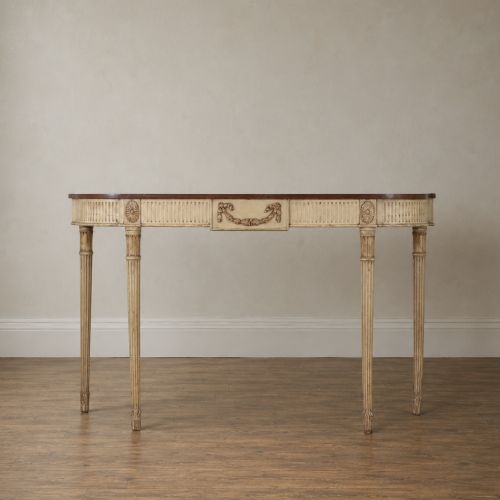
An antique demilune console is a semicircular table designed to sit flush against a wall, offering elegant surface space and sculptural presence.
What they are
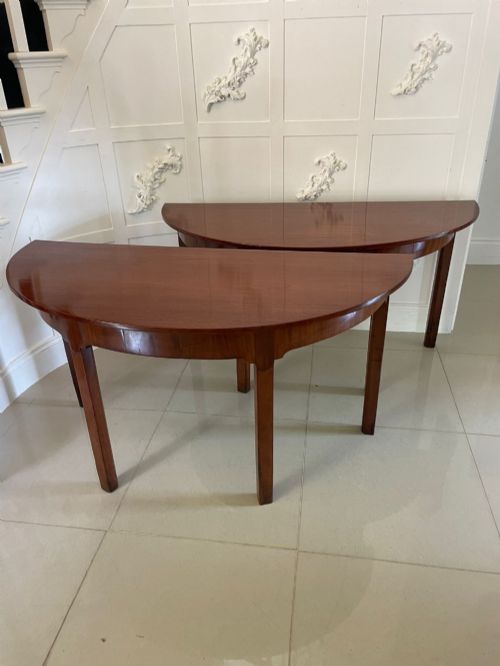
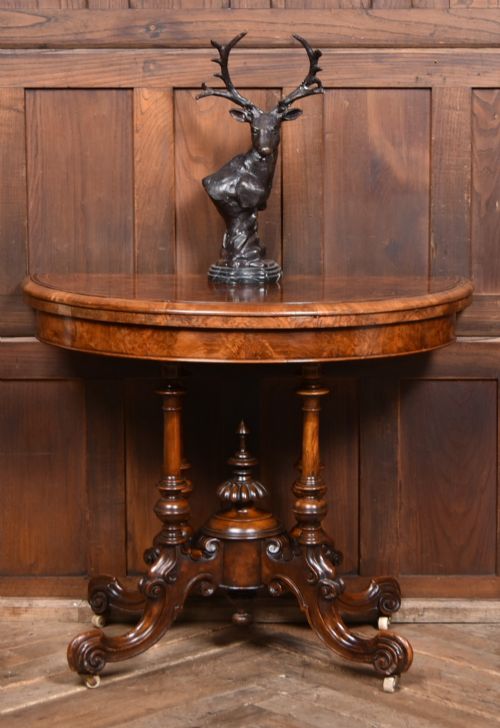
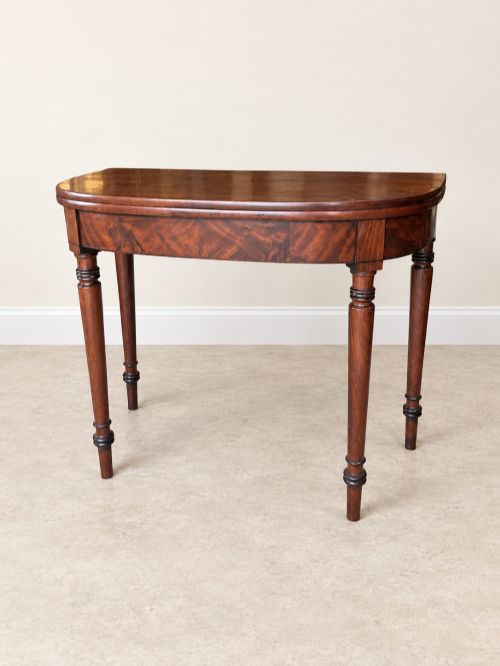
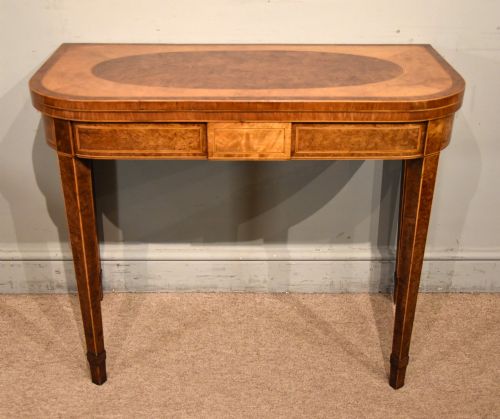
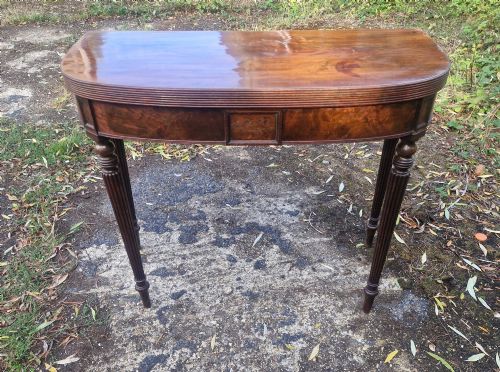
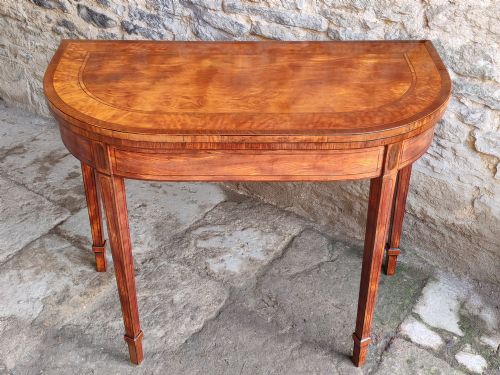
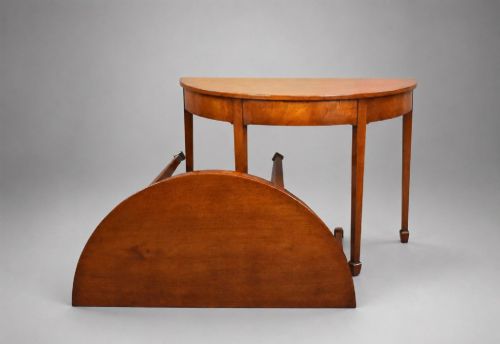
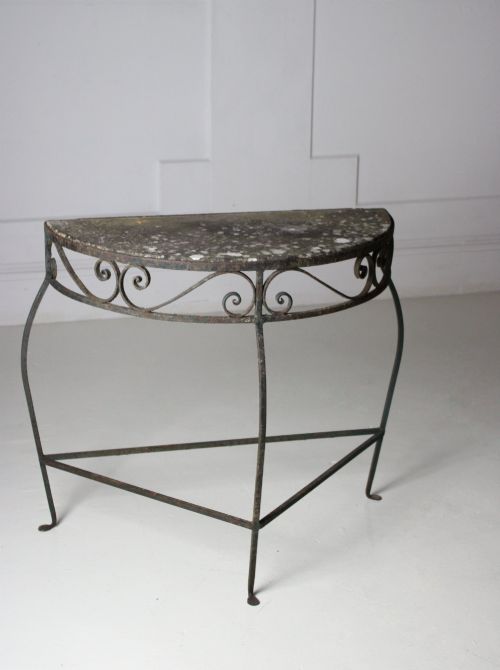
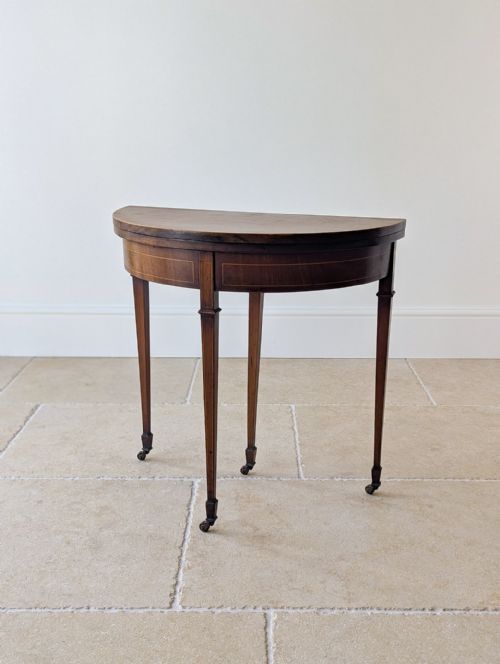
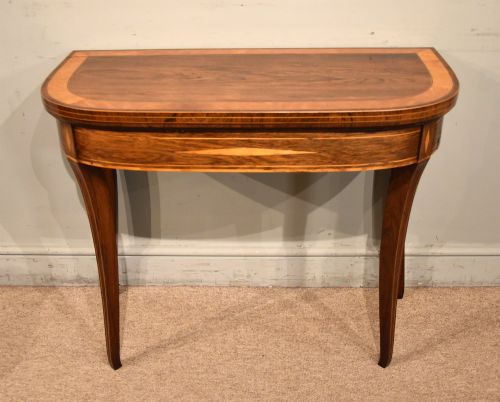
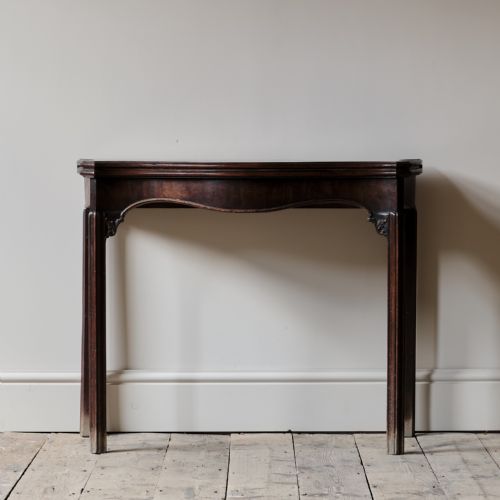
When you search for an antique demilune console, you are looking at semicircular furniture designed to stand against a wall in hallways, reception rooms, and dining spaces. The pieces seen here include console tables, sideboards, card tables, tea tables, and occasional D-shaped end tables.
The versions you are most likely to meet span Georgian periods, the year 1800, the 18th century, and 1920. Makers worked within these periods to produce folding variants such as card tables, campaign tables, and tea tables alongside standard fixed consoles.
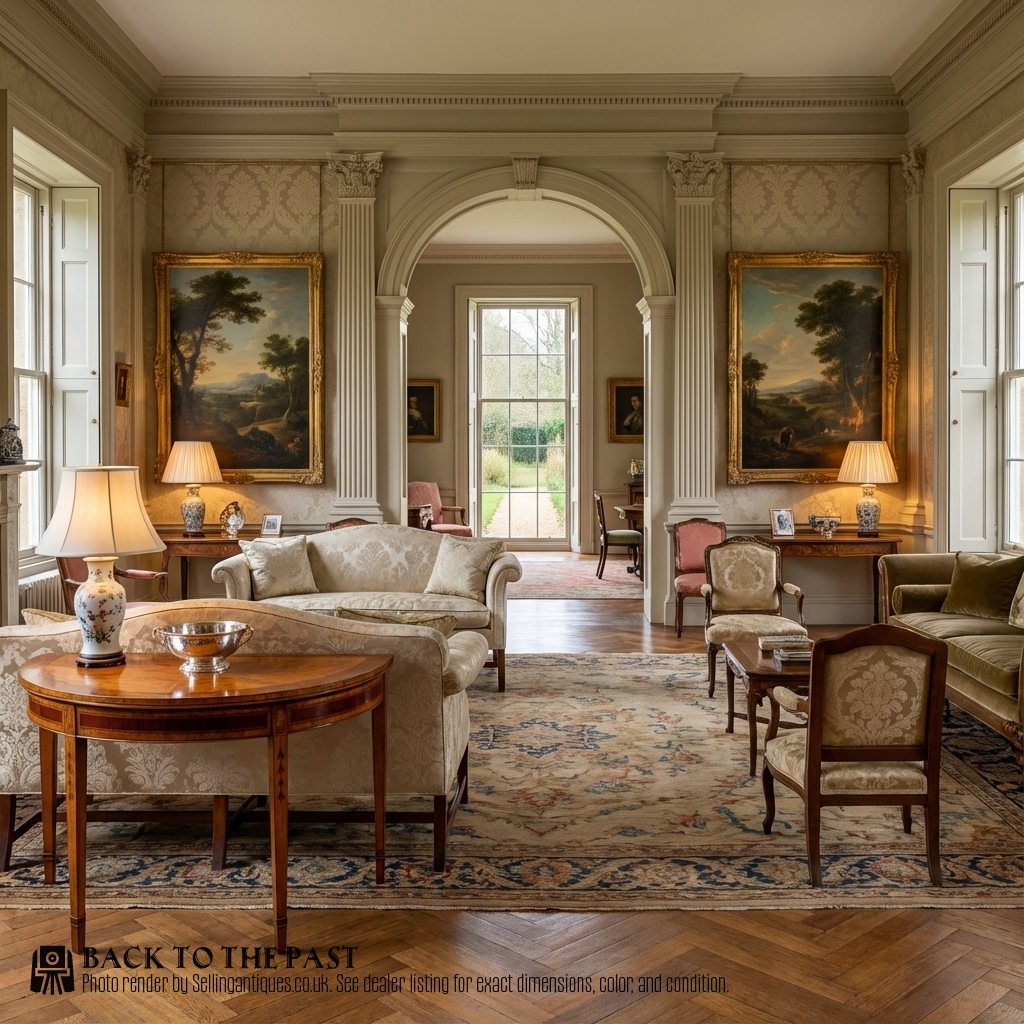
How they were made
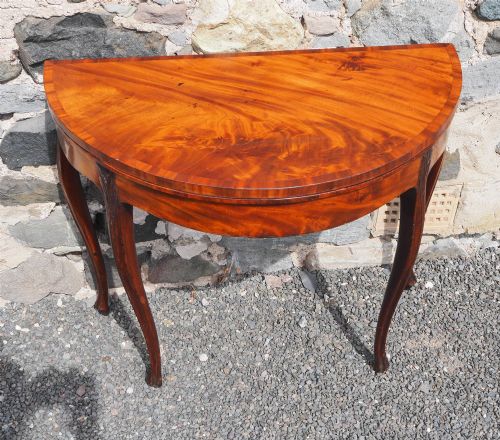
Cabinetmakers constructed these semicircular tables using hardwoods such as mahogany, rosewood, and satinwood, occasionally incorporating brass details. Surfaces frequently highlight the natural grain of the timber through careful polishing and veneering techniques.
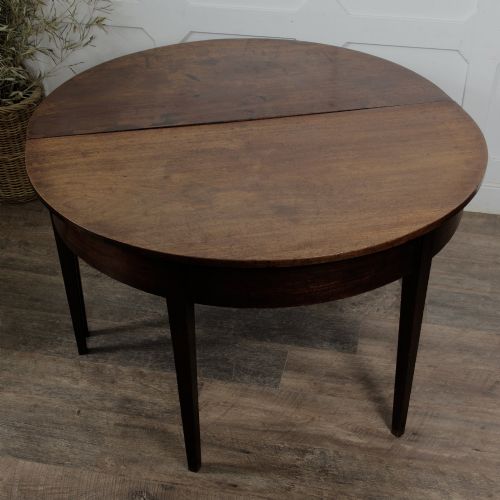
Folding mechanisms for card and tea tables required precise hinge work and stable pivoting legs to support the top leaf when opened. D-end forms allowed individual tables to join together or stand separately as console pairs.
Retail Price Guide 2026
Typical UK retail prices for demilune console, calculated from the Sellingantiques database of over a million retail prices indexed since 2003. This retail price guide relies exclusively on Sellingantiques data; no external sources or auction records are used, so the figures do not describe the wider market.
Listings show these semicircular tables spanning Georgian, 18th-century, and 1920 periods, executed in mahogany, satinwood, and rosewood.
What varies in quality
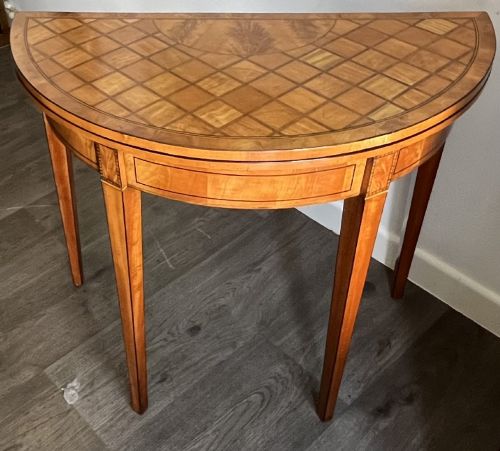
Quality reveals itself in the selection of timber veneers, particularly where satinwood or figured mahogany is matched symmetrically across the semicircular top. Superior examples demonstrate crisp cabinetwork in the joints and uncompromised stability in folding leaves.
Finer tables maintain proportion between the curved top and the supporting legs, whether straight, tapered, or formed as part of a D-end pair. The handling of brass fittings and the integration of secondary timbers further distinguish the construction.
The Antique Demilune Console Glossary
- Demilune
- Semicircular in shape. This half-moon profile allows the furniture to fit snugly against a flat wall.
- Card table
- A folding table designed for playing games. These pieces typically feature a hinged top that opens to reveal a baize-lined surface.
- Satinwood
- A light-coloured, hard timber imported from tropical regions. It is prized for its golden sheen and smooth finish.
- D-end table
- A table with one straight side and one curved end shaped like the letter D. Pairs of these can often be joined together.
- Campaign table
- Portable furniture designed to be easily folded and transported. These pieces reflect utilitarian ingenuity combined with domestic refinement.
Frequently Asked Questions
What is a demilune console?
A demilune console is a semicircular table designed to fit flat against a wall. The shape provides surface space without projecting deeply into a room.
These pieces function effectively in narrow hallways, living rooms, and dining areas as decorative or serving surfaces.
How were card tables used?
Card tables were used for social games such as whist, bridge, and hazard during the evening. The hinged top folded closed when not in use to save space.
Many examples feature interior wells for storing counters, cards, and small gaming accessories.
Can D-end tables separate?
D-end tables often functioned as modular dining furniture or individual console tables. Pairs could stand against opposite walls or join together to form a larger surface.
This adaptability made them practical for homes that required furniture to shift between different room layouts.
What woods were used?
Cabinetmakers primarily used mahogany, satinwood, and rosewood for these tables. Each timber offered distinct colouration and grain patterns.
Exotic woods were often selected for visible top surfaces, while sturdier structural timbers supported the legs and framework.