
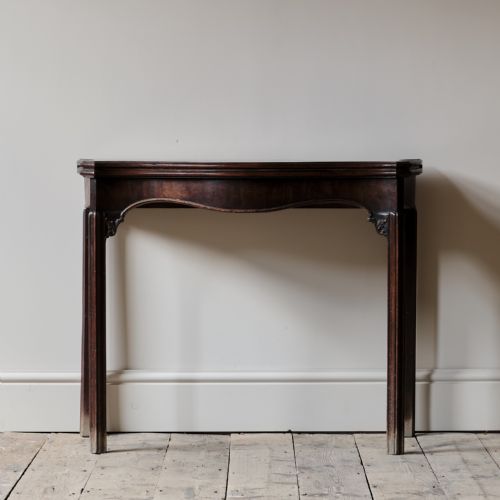
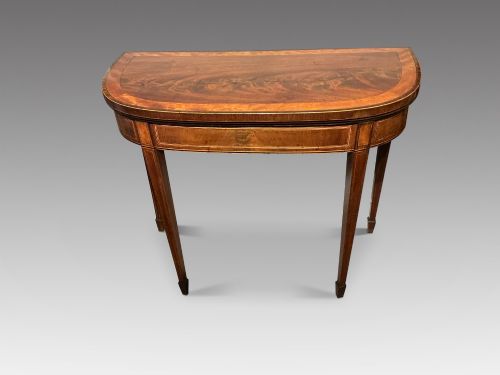
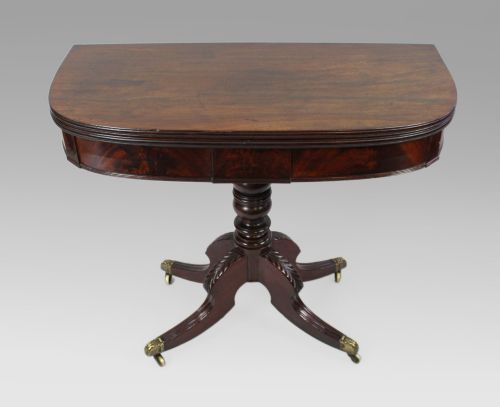

Georgian Demilune Console Table
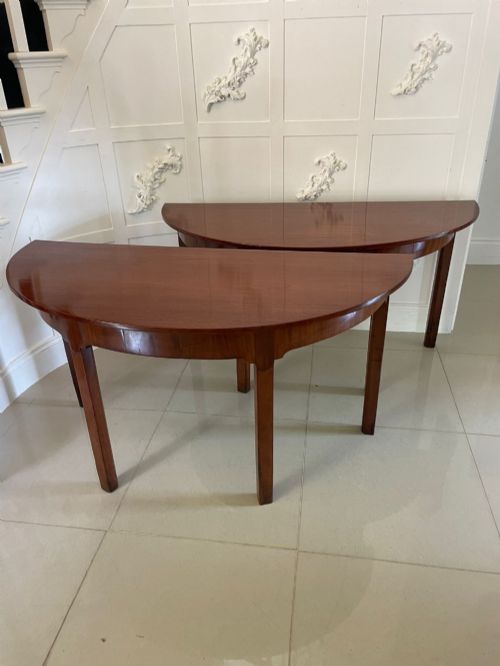
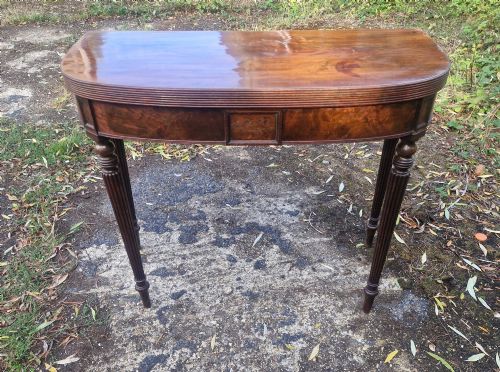
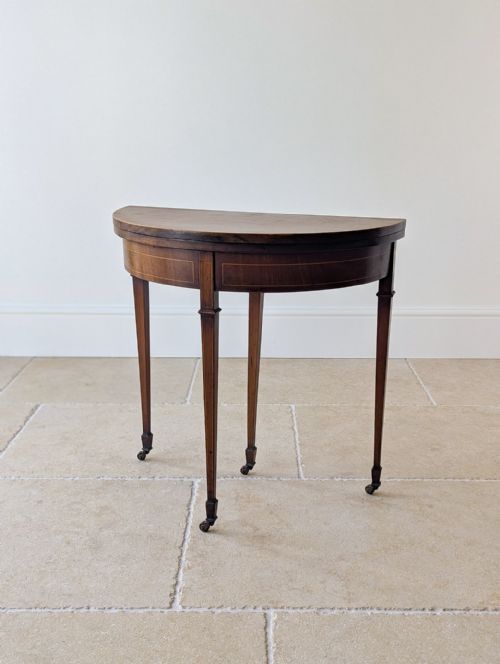
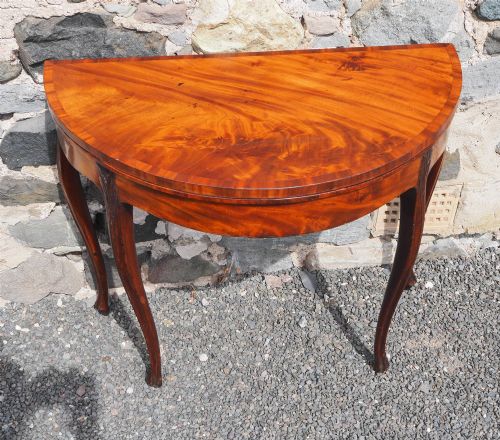
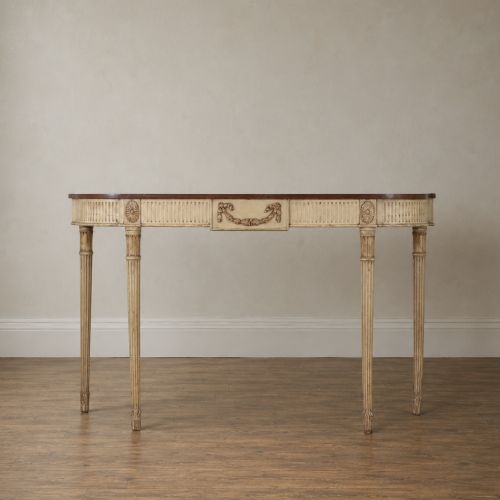
A georgian demilune console table brings architectural grace to a hallway with its semicircular top and compact wall-abutting form.
Georgian Demilune Console Table
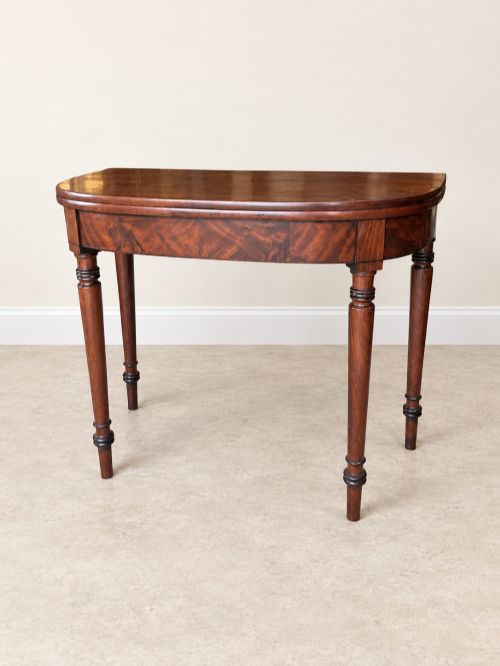
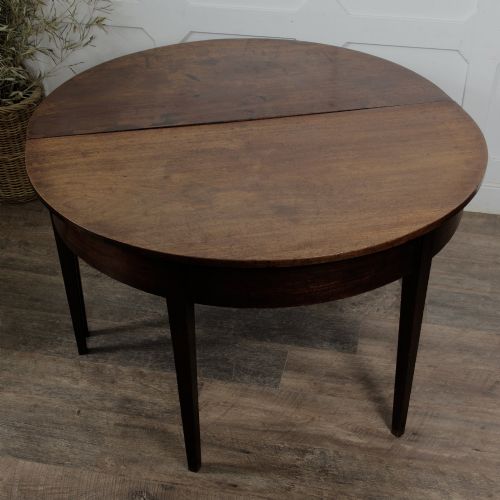
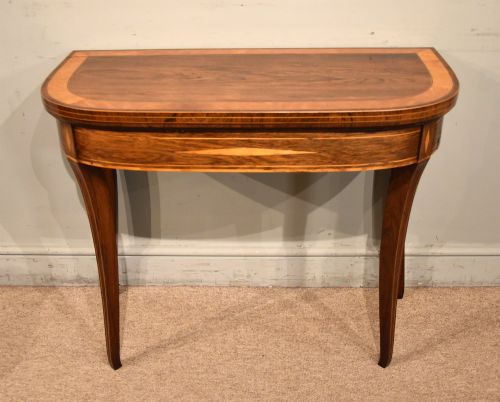
A georgian demilune console table is a semicircular piece designed to stand flat against a wall, frequently appearing in forms that adapt to domestic social rituals. The listings here encompass dedicated console tables alongside versatile fold-over card tables, games tables, and tea tables that share the characteristic half-round footprint.
Most examples emerge from the eighteenth and early nineteenth centuries, spanning the Georgian, Regency, and George IV periods, though later revivals from the Edwardian era and the twentieth century also appear. These tables serve as decorative and functional furniture in halls and living spaces, often found as matched pairs or single statement pieces.
Materials and construction
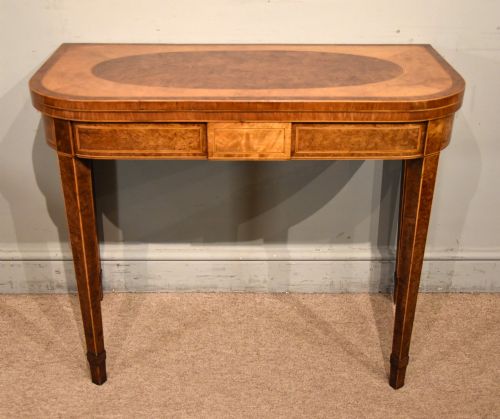
Cabinetmakers constructed these tables using a solid timber frame of mahogany, walnut, or oak, selected for structural stability and strength. Surfaces received fine veneers of figured mahogany, satinwood, burr yew wood, or rosewood to create striking visual patterns on the semicircular top.
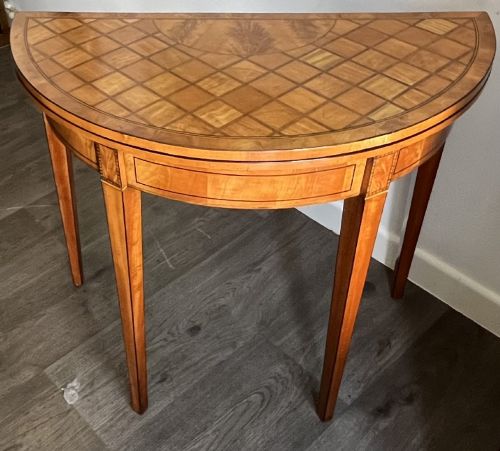
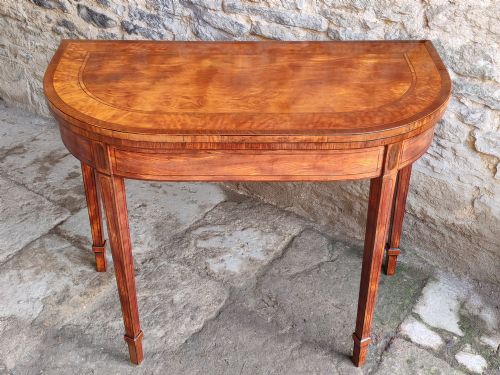
Craftsmen enriched the designs through intricate boxwood inlay, brass mounts, and crossbanding. Legs range from tapered spade feet to carved neoclassical supports, occasionally reflecting specific regional styles such as those associated with Gillows.
Mahogany, satinwood, and rosewood dominate the timber selections across these listings, paired with boxwood inlay.
Distinctions in craftsmanship
Quality rests primarily in the selection of timber and the precision of the veneering on the demilune top. Superior pieces display carefully matched grain patterns and subtle stringing or crossbanding in contrasting woods like boxwood.
Structural integrity of the folding mechanisms on card and tea tables separates standard production from finer workshop output. The crispness of carved details on the legs and apron further distinguishes high-tier examples.
Bruce & Burns of Edinburgh
The Georgian Demilune Console Table Glossary
- Demilune
- Semicircular in shape, describing furniture designed to stand flat against a wall. This half-round geometry defines the surface profile of the console tables found in this category.
- Crossbanding
- A strip of veneer applied to the border of a table top with the grain running perpendicular to the centre panel. This decorative technique frames the primary wood of the demilune surface.
- Card table
- A folding table designed for gaming and social card play, often featuring a hinged top that doubles the surface area when opened. Many demilune tables serve this dual function.
- Satinwood
- A yellowish hardwood prized for its reflective sheen and smooth texture, frequently utilised for veneers and inlay work on fine late-eighteenth-century pieces.
- Stringing
- Thin lines of contrasting wood inlay used to outline geometric shapes and panels. This linear detail enhances the borders of tabletops and drawer fronts.
Georgian Demilune Console Table: Frequently Asked Questions
How do I use a demilune console table?
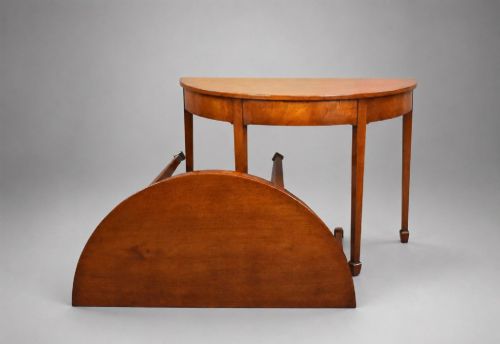
These semicircular tables fit neatly against hallway or living room walls without projecting too far into the floor space. Many feature fold-over tops that open to function as card or tea tables when hosting guests.
Their shallow depth makes them suitable for narrow circulation areas while still providing a surface for lamps, mirrors, or decorative objects.
What is the difference between a console and a card table?
A console table stands permanently against a wall as a static display or side piece. A card table includes a hinged top supported by a swing leg, allowing the surface to fold open.
In this category, many demilune tables combine both forms by offering a folding top within a console-sized footprint.
How do I identify a Regency period table?
Regency pieces often incorporate darker timbers like rosewood alongside brass inlay and bolder neoclassical motifs. The legs frequently show heavier reeding or concave curves reflecting early nineteenth-century design trends.
Construction methods also shift subtly from eighteenth-century Georgian joinery towards heavier framing and distinct veneering practices.
Are these tables usually found as pairs?
Many listings include pairs originally intended to flank a fireplace or architectural doorway in a formal room. Single tables are equally common for smaller hallways or compact interior layouts.
Matched pairs demand closer attention to timber grain continuity and matching dimensions between the two pieces.