


Antique Delftware Jars
These antique delftware jars bring tin-glazed earthenware into the interior, prized for their painted cobalt pigment and distinct form.
Antique Delftware Jars
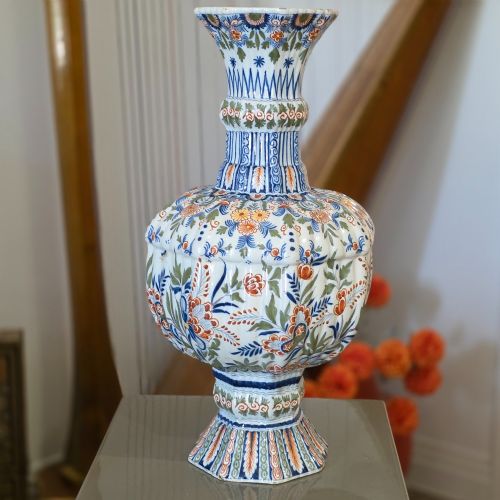
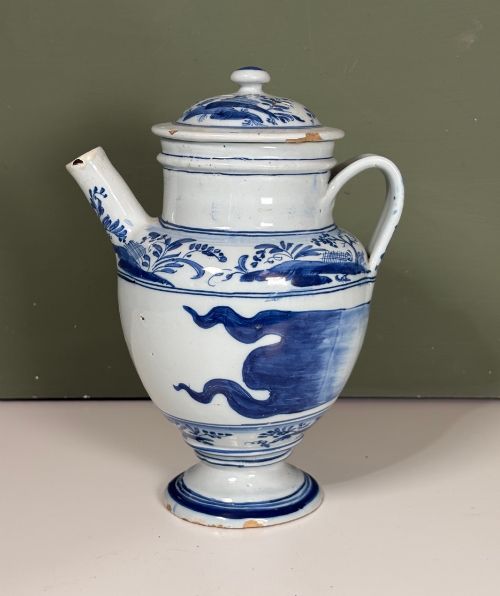
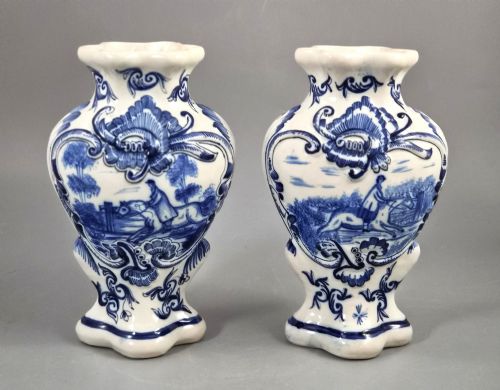
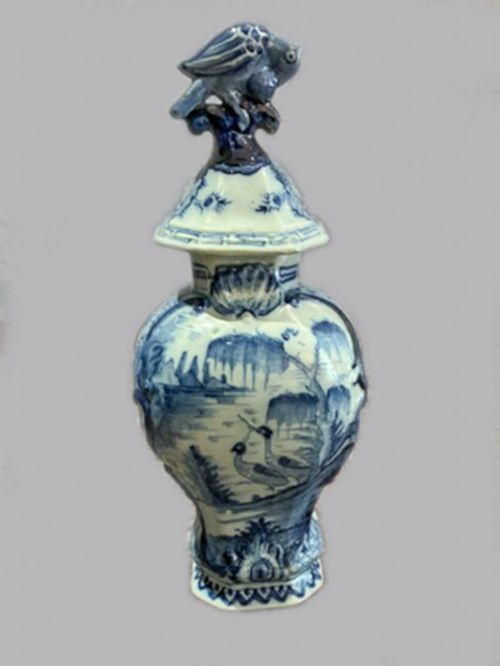
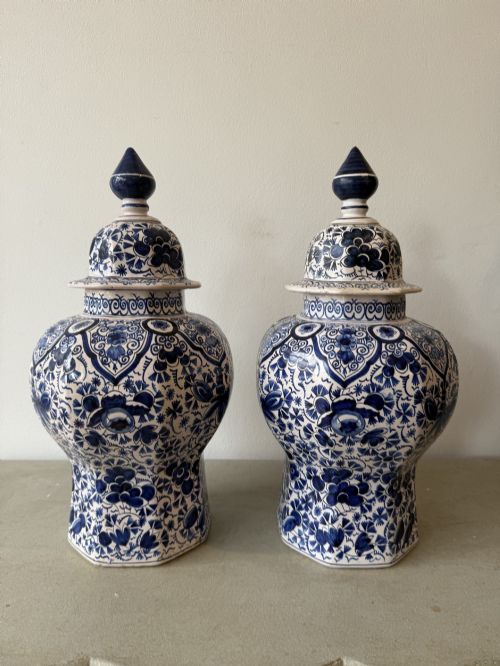
When you search for antique delftware jars, you encounter vessels produced across several centuries, with the eighteenth century providing the largest share of examples on this page. These pieces span utility and ornament, encompassing drug jars, tobacco jars, apothecary vessels, and lidded vases.
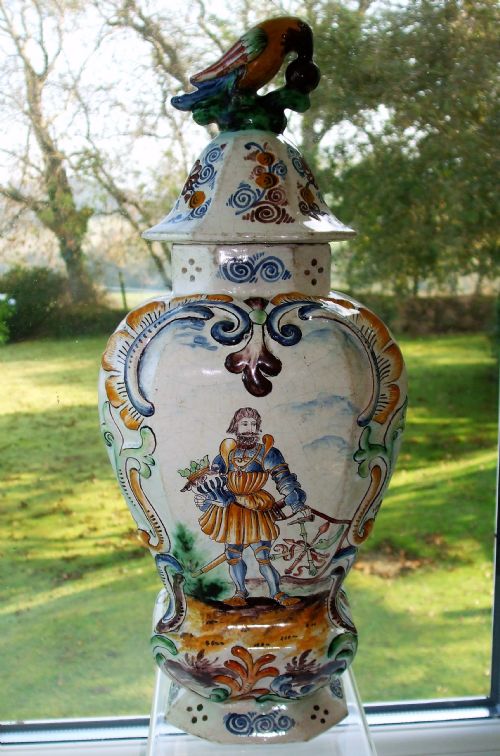
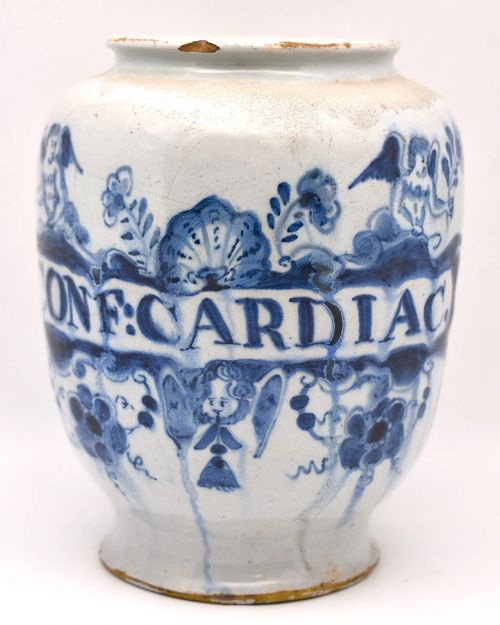
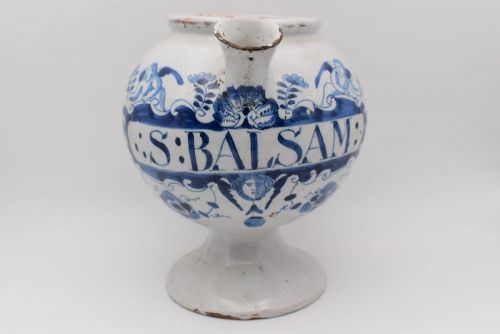
The forms originate primarily from Dutch and English kilns, alongside French faience and Italian majolica variants. Apothecary jars often feature Latin inscriptions or painted labels denoting contents, while decorative vases display botanical or avian motifs.
Vessels range from baluster profiles to handled urns and cylindrical albarelos. Surviving examples frequently show the wear of centuries, marking their transition from utilitarian dispensary items to cabinet pieces.
How they were made
Potters shaped earthenware bodies and coated them in a tin glaze to produce an opaque white surface suitable for painting. Artisans applied cobalt pigment directly onto this porous background before the final firing.
Decoration often drew on Dutch Baroque and Chinoiserie styles, rendering birds, flowers, and figures in blue and white or polychrome palettes. Some later iterations incorporate brass mounts or adapt older bodies into table lamps.
Listings feature tin-glazed earthenware jars spanning the seventeenth, eighteenth, and nineteenth centuries, including Dutch, English, French, and Italian origins.
What varies in quality
Quality rests in the crispness of the painted cobalt pigment and the stability of the tin glaze across the earthenware body. Superior examples exhibit confident brushwork in motifs like birds and flowers, rather than stiff or hasty execution.
The survival of original lids on baluster vases and apothecary jars alters the integrity of a piece. The clarity of inscribed apothecary lettering and the neatness of the tin glaze application further distinguish finer workshops.
Fourmaintraux-Courquin
The Antique Delftware Jars Glossary
- Tin-Glazed Earthenware
- Earthenware pottery covered with a glaze containing tin oxide to yield a white, opaque finish. This technique serves as the foundation for delftware, faience, and majolica.
- Albarello
- A cylindrical earthenware jar used in pharmacies for storing ointments and drugs. The pinched waist allowed dispensers to grip the vessel securely with wet hands.
- Cobalt Pigment
- A metallic colorant used to achieve deep blue tones on ceramics. It reacts with the tin glaze during firing to produce the characteristic palette of traditional delftware.
- Polychrome
- Decoration employing multiple colours rather than a single pigment. In delftware, this typically combines blue with manganese purple, iron red, and yellow.
- Chinoiserie
- European interpretations of Chinese artistic traditions, popular in seventeenth and eighteenth-century design. These motifs frequently appear on delft vases depicting imaginary landscapes and figures.
Antique Delftware Jars: Frequently Asked Questions
How do I identify an apothecary jar?
Apothecary jars usually feature painted labels, abbreviations, or Latin inscriptions designating medical contents such as syrups or dried drugs. They often take a straight-sided or waisted albarello shape designed for dispensary storage.
Many examples date to the eighteenth century and display single-word pharmaceutical titles flanked by decorative cartouches, cherubs, or shell motifs.
Were these jars used for medicine or display?
Many jars originated in European apothecaries and dispensaries to hold medicines, dry drugs, and tobacco. Over time, their decorative blue and white patterns led to their adoption as ornamental cabinet pieces.
By the nineteenth and twentieth centuries, similar vessels were manufactured primarily for decorative display rather than pharmaceutical utility.
How do I clean tin-glazed earthenware?
Tin-glazed earthenware requires gentle handling due to the porous nature of the underlying body and the potential brittleness of the old glaze. Dusting with a dry, soft cloth remains the safest method for maintenance.
Avoid submerging these vessels in water or using harsh detergents, as moisture can penetrate old glaze fractures and destabilise the ceramic structure.
What is the difference between delft and faience?
Delft specifically refers to tin-glazed earthenware produced in the Netherlands, particularly around Delft, though the term also embraces English equivalents. Faience is the broader French and European term for the same tin-glazed technique.
Both employ an opaque white glaze painted with cobalt pigment, but regional variations in clay bodies and decorative styles help distinguish their origin.