



Antique Delft Display Dish
An antique delft display dish brings tin-glazed earthenware into the home, offering painted floral and Chinoiserie decoration.

Antique Delft Display Dish
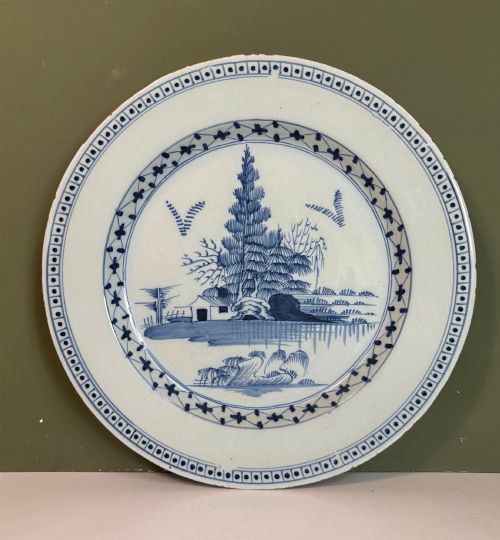
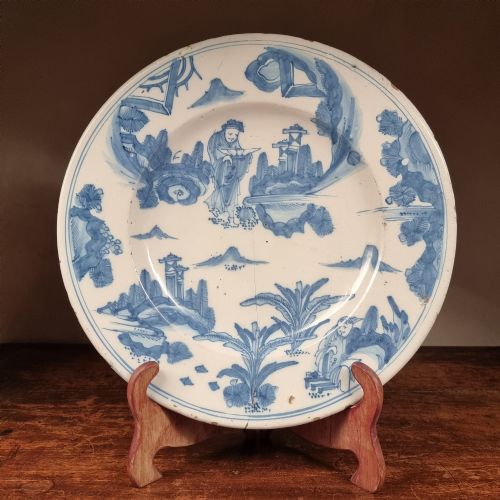
When you search for an antique delft display dish, you encounter chargers, decorative plates, and larger dishes designed for wall hanging or dresser display. These items span the seventeenth, eighteenth, and nineteenth centuries, originating from English, Dutch, and French potteries.
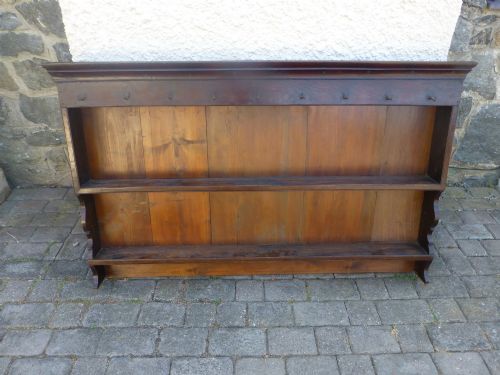
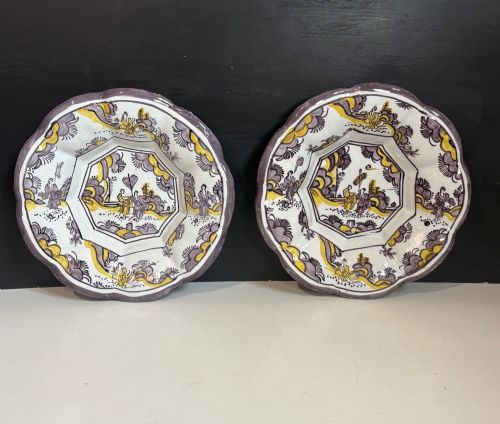
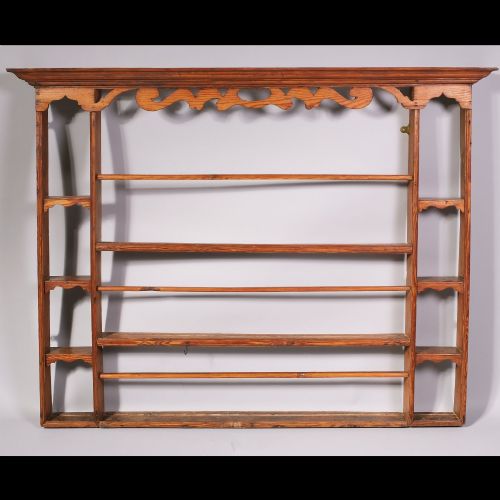
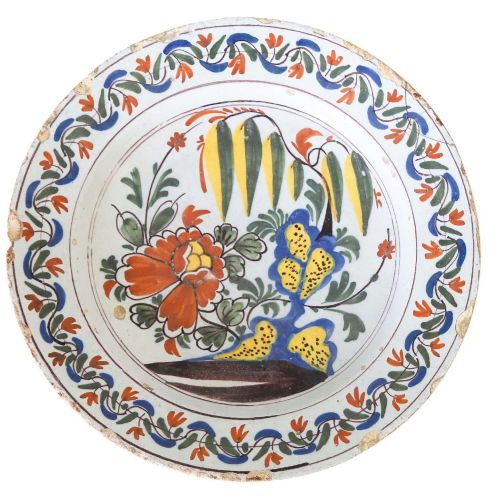
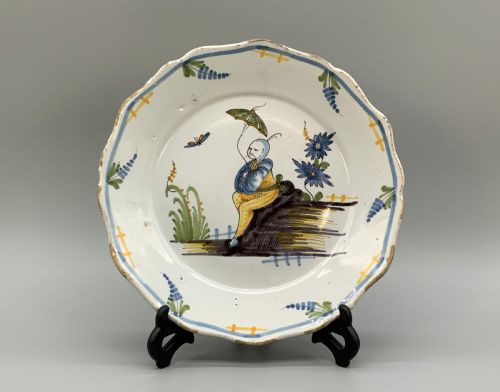
The domestic forms you meet most often on this page are circular chargers and plates featuring cobalt blue, manganese, yellow, or polychrome palettes. Alongside the dishes, you occasionally find oak or pine plate racks intended to hold them.
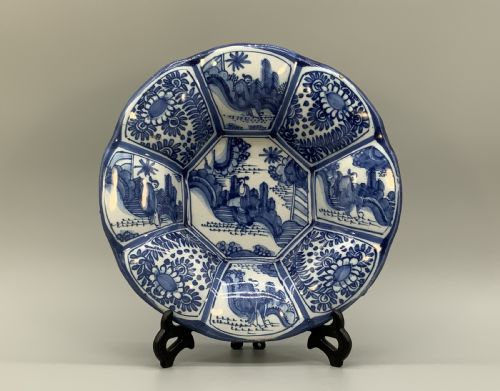
Makers drew inspiration from Chinese porcelain, resulting in Kraak styles and floral motifs painted directly onto the porous clay body. Each piece reflects the hand-painted traditions of European earthenware production before industrial transfer printing took over.
Distinctions in Quality
Condition plays a role in how a dish presents, though minor glaze flakes around the rim remain common on tin-glazed earthenware due to the soft nature of the material. The stability of the glaze and the vibrancy of the cobalt pigment dictate visual appeal.
Storage options on this page include eighteenth-century oak and pine plate racks designed to hold ceramic chargers.
Lambeth Delft
The Antique Delft Display Dish Glossary
- Tin-Glazed Earthenware
- Pottery covered in an opaque white glaze containing tin oxide, providing a smooth white background for painting. This surface defines the technical foundation of all delftware.
- Charger
- A large decorative plate, typically exceeding thirty centimetres in diameter, made for display on walls or sideboards rather than dining use. These large surfaces accommodated expansive floral and figural scenes.
- Chinoiserie
- European artistic styles that reflected Chinese decorative motifs, popular on seventeenth and eighteenth-century ceramics. Painters imitated oriental landscapes and figures using blue and white pigments.
- Polychrome
- Decoration employing multiple colours, such as blues, yellows, greens, and manganese, rather than a single pigment. These varied palettes appeared on English and Dutch delftware.
- Kraak Style
- A decorative layout originating from Chinese export porcelain, featuring segmented panel borders around a central subject. Dutch and English delft potteries adopted this aesthetic for plates and chargers.
Antique Delft Display Dish: Frequently Asked Questions
What is a delft charger?
A delft charger is a large decorative earthenware plate finished with an opaque tin glaze and hand-painted ornament. These items were produced primarily in England, France, and the Netherlands during the seventeenth and eighteenth centuries.
Craftsmen created them for visual impact rather than heavy dining use, often displaying them on oak dressers or hanging them on walls. Their broad surfaces allowed painters to execute detailed floral, geometric, and Chinoiserie designs.
How do I hang a delft dish?
Hanging an antique dish requires specialised wire spring hangers that grip the rim without applying excessive pressure to the earthenware body. Alternatively, many collectors place them upright in wooden plate racks made of oak or pine.
Ensure that any wall mounting is secured to a solid stud or uses appropriate wall anchors to support the weight of the ceramic. Avoid adhesives or clamps that could chip the soft tin glaze along the outer edge.
How do I date an antique delft dish?
Dating tin-glazed earthenware involves examining the thickness of the body, the tone of the tin glaze, and the style of the painted decoration. Seventeenth-century pieces often exhibit heavier construction and distinct cobalt hues, while eighteenth-century examples lean toward refined polychrome or Chinoiserie palettes.
Foot rims and glaze characteristics on the reverse also offer clues, as kiln support marks and manufacturing techniques evolved over the centuries. Comparing the motif to documented regional patterns helps narrow the period of origin.
Are delft dishes made of porcelain?
Delft dishes are not porcelain, but rather refined earthenware covered in a white tin glaze. Porcelain uses hard-paste or soft-paste clay fired at high temperatures until vitrified, whereas delftware remains a porous ceramic.
The opaque tin glaze hides the buff or pinkish clay body underneath, giving the visual impression of Chinese porcelain which European potteries sought to replicate.