


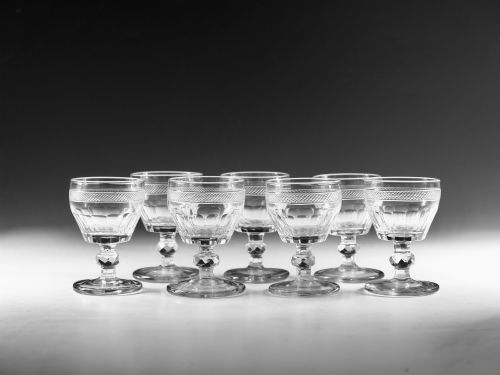
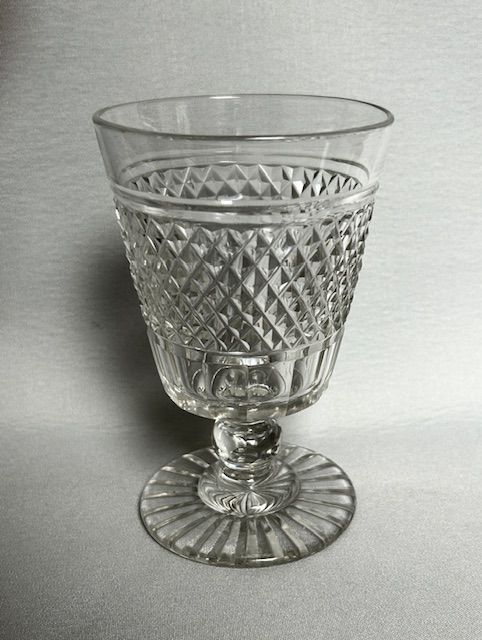


Antique Cut Glass Stemware
Antique cut glass stemware brings brilliant sparkle to the table, and these pieces offer tactile weight and historical craftsmanship.
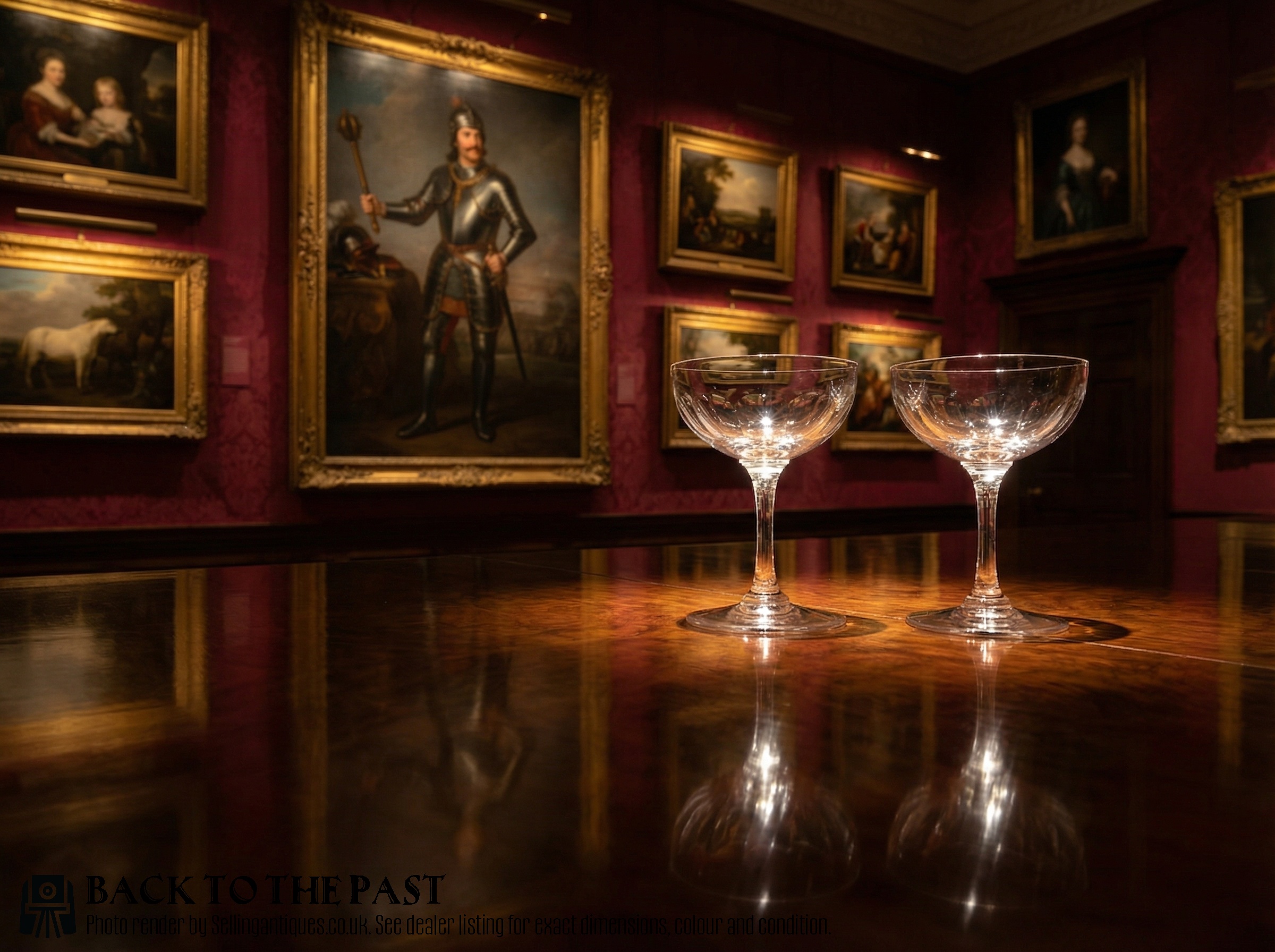
What antique cut glass stemware is
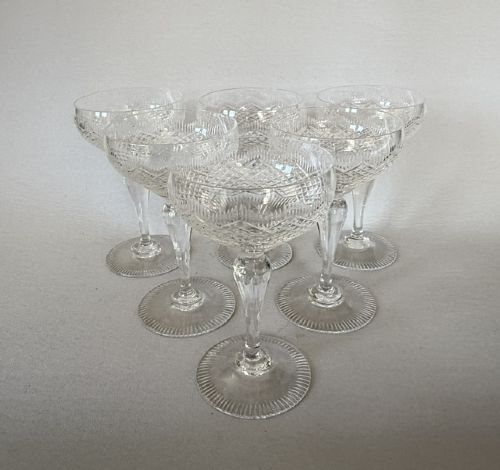
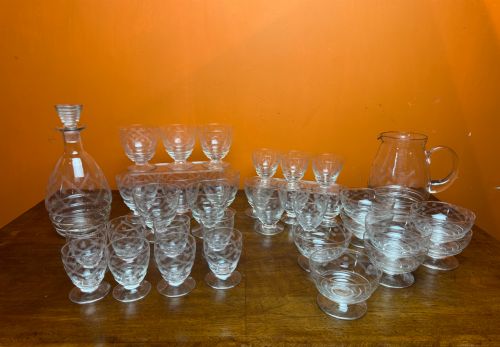
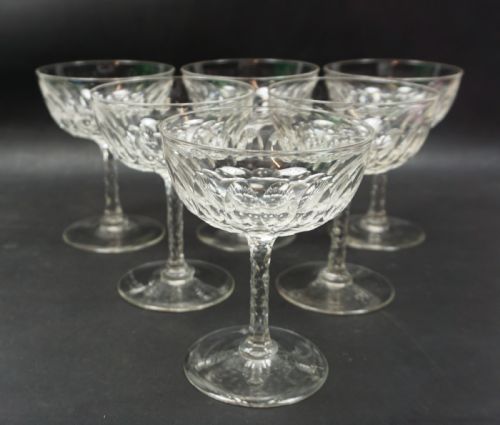
When you search for antique cut glass stemware, you encounter vessels shaped for drinking, including wine glasses, champagne bowls, and stemmed goblets. These objects combine historical utility with decorative surface faceting that catches candlelight.
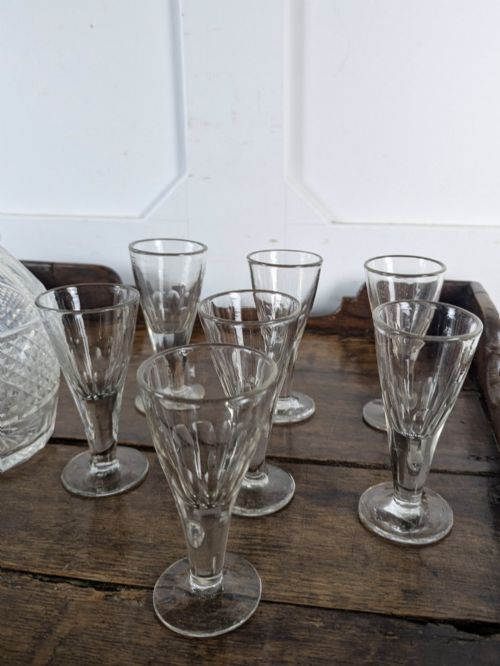
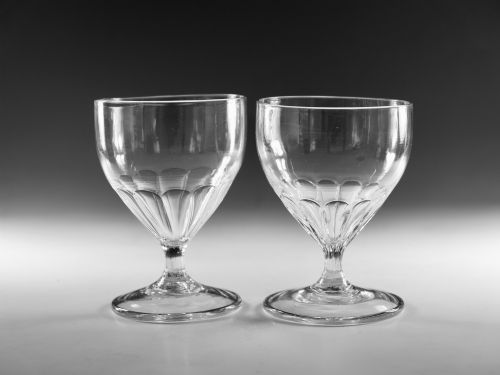
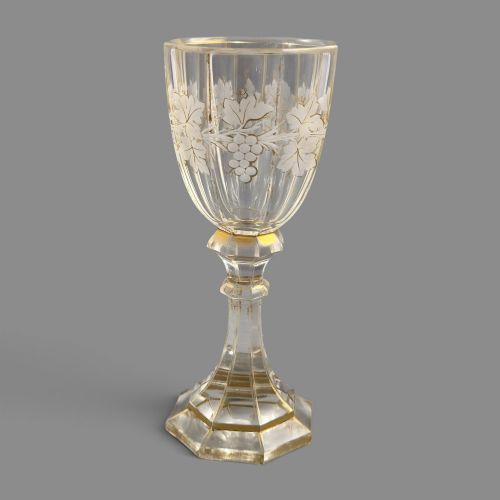
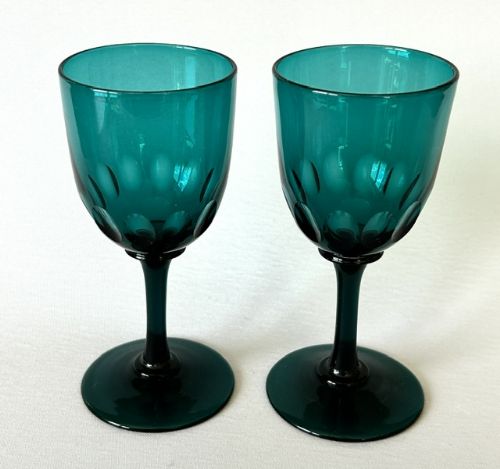
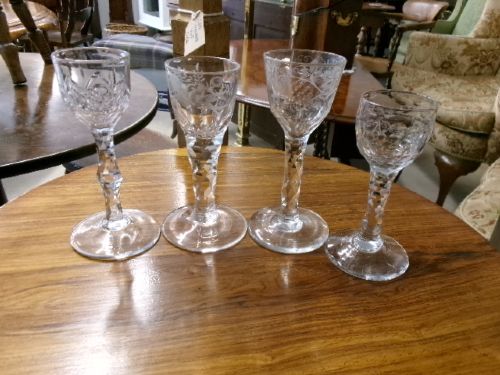
The pieces on this page span the Georgian and Victorian eras, alongside the year eighteen eighty and the Biedermeier style. You meet green cut wine glasses, intaglio engraved goblets, and thumb-cut deception or toasting glasses among the selections.
How they were made
The listings record materials such as lead crystal, glass, clear glass, and cut glass. These compositions allow deep facets and sharp geometric cuts to be ground and polished onto the bowl and stem.
Makers utilised wheel-cutting techniques to remove material and create patterns, ranging from linear facets to intaglio engravings. Coloured glass variants, such as the green Biedermeier examples, required layered metal oxides in the molten batch before cutting.
What varies in quality
Quality rests in the crispness of the wheel-cut edges and the clarity of the material itself. Superior lead crystal displays a heavy, resonant feel and a high refractive index that inferior glass lacks.
The refinement of the engraving and the balance of the stem relative to the bowl distinguish finer examples. Smooth polishing within the cut depressions indicates greater labour and higher workshop standards.
The Antique Cut Glass Stemware Glossary
- Lead Crystal
- Glass containing lead oxide, which increases weight, brilliance, and softness for cutting. This material defines the finer pieces in the category.
- Intaglio
- A design engraved into the surface rather than carved in relief. It creates a sunken, detailed picture on the glass wall.
- Thumb-Cut
- A broad, concave impression ground into the side of a glass to provide a secure grip. This tactile feature appears on traditional toasting vessels.
- Biedermeier
- A Central European style spanning the nineteenth century known for clean lines and rich green coloured glass. It brings a distinct continental aesthetic to stemware.
Frequently Asked Questions
What is cut glass stemware?
Cut glass stemware comprises drinking vessels raised on stems featuring decorative wheel-cut patterns. These pieces include goblets, wine glasses, and champagne bowls.
They combine functional drinking forms with intricate surface faceting designed to refract light.
How do I date antique stemware?
Dating relies on stylistic clues, silhouette, and the nature of the glass material. Victorian and Georgian pieces exhibit distinct manufacturing traits and cutting styles.
Examining the pontil mark on the base also helps establish the production period.
How were coloured glasses made?
Coloured glass was produced by adding specific metallic oxides to the molten batch before blowing. This created solid colours or layered cased glass.
Cutters then ground through the outer coloured layer to reveal clear glass underneath.
Can I use antique stemware?
Many collectors use their antique stemware for special occasions, treating them with gentle handwashing. Lead crystal requires care to avoid thermal shock and harsh detergents.
Storing them securely prevents chipping on the delicate cut rims and stems.