







19th Century Engraved Goblet
A 19th century engraved goblet brings substantial weight and detailed wheel-cutting to a table, offering a tangible link to Georgian and Victorian social rituals.
19th Century Engraved Goblet
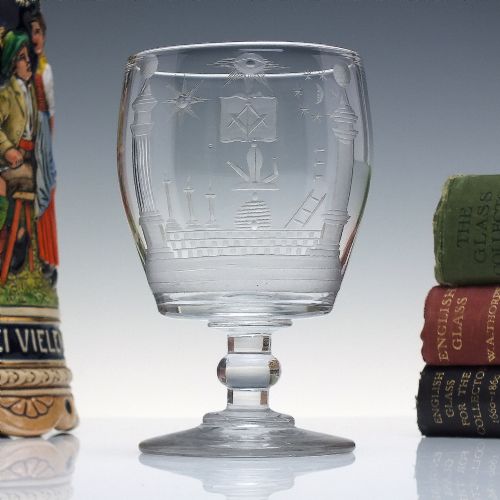
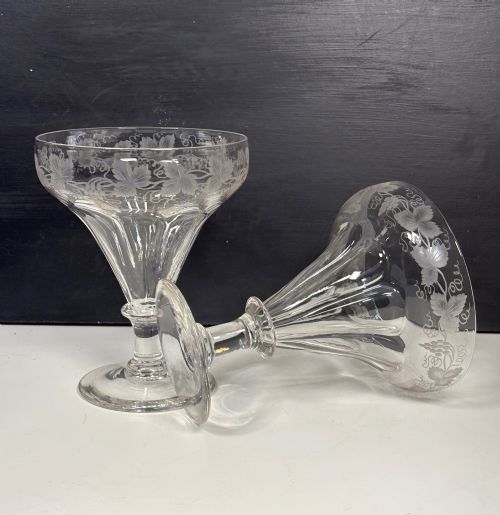
A 19th century engraved goblet encompasses heavy rummers, communion chalices, loving cups, and commemorative vessels originating from Georgian and Victorian workshops. The pieces encountered most frequently on this page are large glass rummers and wine glasses dating between 1810 and 1880, often featuring botanical motifs.
Makers utilised clear lead glass, flint glass, and occasionally cranberry glass, alongside silver plate and sterling silver for metal iterations. Forms range from heavy lemon squeezer bases to slender stemmed table glasses, reflecting the diverse drinking customs of the era.
Origins span English regional glasshouses, Scottish makers, and Anglo-Indian workshops producing specialised trophy cups. Certain vessels carry specific iconography such as Masonic symbols, armorial crests, bridges, or agricultural motifs like hops and barley.
Materials and construction
Glass vessels were mouth-blown into moulds or free-blown before artisans applied wheel-engraving, intaglio, etching, and cutting techniques to decorate the surface. Lead glass and flint glass provided the optical clarity and heft necessary to withstand deep wheel cuts without compromising structural integrity.
Metal alternatives utilised copper, sterling silver, and silver plate over metals like Old Sheffield Plate, shaped by hammering, embossing, and parcel gilding. Silver-plated communion chalices and loving cups combined durable base metals with precious surface layers to achieve both resilience and ceremony.
19th Century Engraved Goblet Retail Price Guide 2026
Typical asking prices for 19th century engraved goblet among the pieces listed under this phrase on Sellingantiques today, from the lower quarter to the upper quarter. They describe what is for sale here now, not the wider market.
Listings feature lead glass, flint glass, and crystal alongside silver plate and copper, documenting manufacturing methods from the Georgian period onward.
Distinctions in execution
Depth and precision of the wheel engraving separate standard decorative glass from superior examples, where intaglio cuts show crisp detail and careful shading. The clarity of the lead crystal or flint glass, combined with the absence of bubbles or cloudiness in the material, dictates the level of craftsmanship.
Proportion and weight define the physical presence of each piece, particularly in rummers with heavy lemon squeezer bases or large ceremonial chalices. Metal examples derive distinction from the crispness of embossed relief work and the preservation of original silver plating or parcel gilding.
Richardson·George Unite
The 19th Century Engraved Goblet Glossary
- Rummer
- A heavy, large-bowled drinking glass popular during the Georgian and Victorian periods, typically used for ale or wine. These vessels usually feature sturdy stems and substantial foot bases.
- Intaglio
- A gem engraving technique where the design is carved into the surface rather than raised, creating a sunken relief. On glass, this method produces sharp, detailed motifs.
- Lemon squeezer base
- A square, moulded glass foot base with stepped corners resembling a citrus juicer, common on early 19th century rummers and table glass. This shape added stability to heavy drinking vessels.
- Old Sheffield Plate
- A composite material made by fusing a thin sheet of silver to a thicker copper base, utilised for holloware and chalices before electroplating. Items made this way display a rich warmth where the base metal occasionally shows through.
- Armorial
- A decorative design displaying a family coat of arms or heraldic crest. These engravings often denote commissioned glassware for specific households or societies.
19th Century Engraved Goblet: Frequently Asked Questions
What were 19th century engraved goblets used for?
These vessels served various functions ranging from daily domestic ale and wine consumption to formal toasts, Masonic lodge gatherings, and church communion services. Larger loving cups and chalices were also created as presentation pieces or commemorative trophies for events.
Over the course of the century, heavy glass rummers sat on dining tables for heavier table wines and ales, while delicate etched wine glasses appeared during formal evening meals. Metal counterparts functioned primarily within ecclesiastical settings or communal club ceremonies.
How do I distinguish Georgian from Victorian pieces?
Georgian examples, typically dating from the early decades of the century, often exhibit heavy lead-glass construction with simple, sturdy stems, thick feet, and naturalistic motifs like hops and barley. They prioritize utilitarian heft and clear optical brilliance.
Victorian pieces tend to introduce more diverse colour palettes, such as cranberry glass or amber tones, alongside finer, denser wheel-engraving and varied decorative styles like Gothic revivalism. Metal-plated variations also become more prevalent and ornate as manufacturing techniques evolved past the mid-century mark.
What do hop and barley engravings signify?
Engravings of hops and barley directly reference the primary agricultural ingredients used in brewing beer and ale. These motifs were especially popular on Georgian and Victorian drinking rummers used in taverns and homes.
Such decoration celebrated the agricultural economy and social drinking customs associated with British ale production during the period.