




Antique Cupid Sculpture
An antique cupid sculpture brings classical mythology into a room through figures cast in bronze or carved from marble.
Antique Cupid Sculpture
When you search for an antique cupid sculpture, you encounter figures cast in bronze, carved in marble, modelled in terracotta, or formed in porcelain. These pieces range from small bookends and cabinet figurines to large decorative statues.
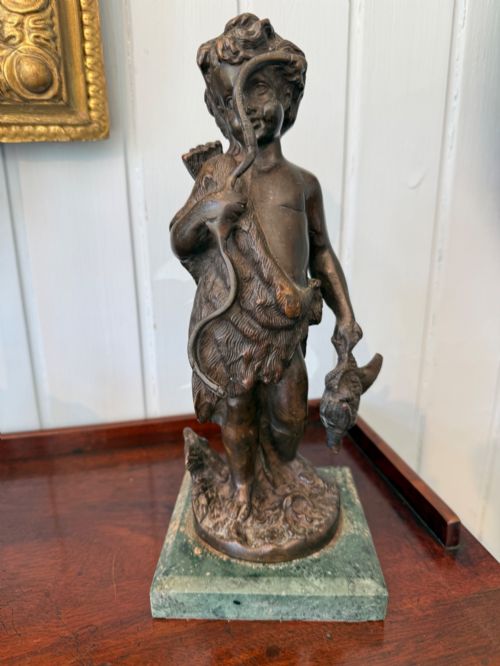
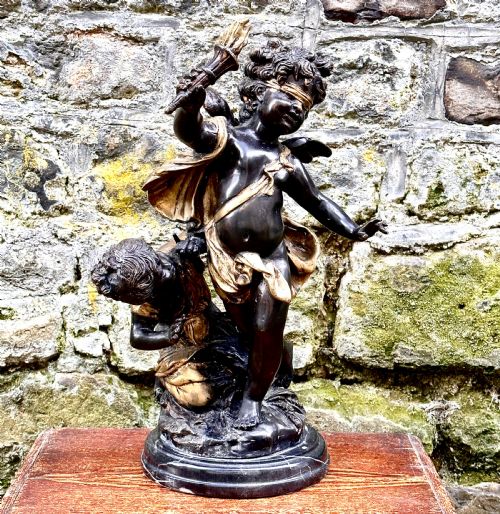
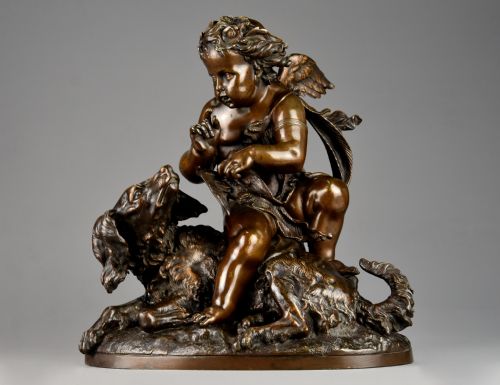
The version you are most likely to meet on this page is a nineteenth-century French bronze figure of a winged putto, often associated with classical themes or paired as bookends. French workshops produced these extensively during the Victorian period.
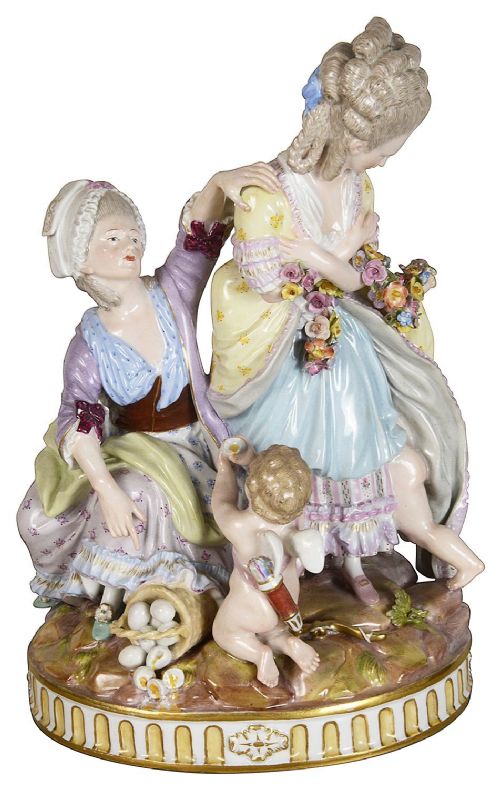
Other common forms include porcelain figure groups from factories such as Meissen and Derby, depicting mythological scenes involving love and time. These works draw directly on eighteenth-century Rococo and Neoclassical traditions.
How they were made
Metal sculptures rely on traditional foundry methods, using either patinated or gilt bronze to achieve varied surface finishes and tonal depth. Marble and alabaster carvings involve careful hand-chiselling to capture soft flesh and draped fabric.
Porcelain figures utilise hard-paste or biscuit clay bodies, fired at high temperatures and frequently left unglazed to mimic the texture of carved marble. Terracotta pieces employ fired clay that is shaped by hand before being finished with a surface patina.
Father Time is occasionally caught clipping cupid's wings, proving that even mythological deities had to submit to a haircut.
What varies in quality
The standard of a bronze casting depends on the crispness of the chasing and the nuance of the patination, which together define the musculature and facial expression of the figure. Finer bronzes retain sharp details in the wings, hair, and surrounding attributes without softening from repeated mould usage.
In porcelain and marble, quality rests on the precision of the modelling and the smoothness of the final polish. Pieces attributed to named sculptors or established factories generally demonstrate superior anatomical accuracy and compositional balance.
Antonio Canova·Paul Scheurich·Richard Avrilli·Louis Auguste Moreau·Aug Moreau·Ferrand·Denise Delavigne·Clodion·B Rezl·Etienne Maurice Falconet·Paul Ponsard
The Antique Cupid Sculpture Glossary
- Putto
- A plump, winged child figure frequently depicted in Renaissance and later art. These figures often represent mythological cupids or cherubs in sculptural works.
- Patinated bronze
- Bronze that has been treated with chemical solutions to produce a specific surface colour and tone. This finish protects the metal and highlights sculptural contours.
- Biscuit porcelain
- Unglazed porcelain that has been fired once, yielding a matte white surface resembling carved marble. Eighteenth-century factories used this technique extensively for figurative groups.
- Grand Tour
- The traditional journey through Europe undertaken by upper-class scholars and collectors to acquire antiquities and classical art. Many small bronzes date from this period of travel.
Antique Cupid Sculpture: Frequently Asked Questions
How do I identify a nineteenth-century bronze cupid?
Nineteenth-century bronzes typically exhibit a deep patination, fine hand-chiselling on the feathers and hair, and heavy metal casting. Many bear signatures or foundry stamps on the base.
They often reflect Neoclassical or Rococo revival styles popular in French and European workshops of that era.
What is the difference between cupid and a putto?
Cupid specifically represents the Roman god of erotic love, often shown with a bow, quiver, or arrows. A putto is a generic winged infant figure used in decorative art.
In many nineteenth-century sculptures, the two terms overlap as artists depicted winged children in various mythological scenarios.
How should I clean a marble sculpture?
Marble requires gentle dusting with a soft, dry cloth to prevent surface abrasion. Avoid using water, household cleaners, or oils, which can penetrate the porous stone and cause staining.
Professional conservation is recommended for removing ingrained dirt or restoring damaged sections.
Where were these porcelain figures made?
Porcelain cupid figures from this era frequently originate from European factories such as Meissen in Germany and Derby in England. These manufactories produced both glazed figures and unglazed biscuit porcelain groups.
Factory marks on the underside often indicate the specific production period.