


Decorative Bronze Statuette
A decorative bronze statuette brings cabinet-scale presence to a room, offering cast detail and patination developed over decades.
Decorative Bronze Statuette
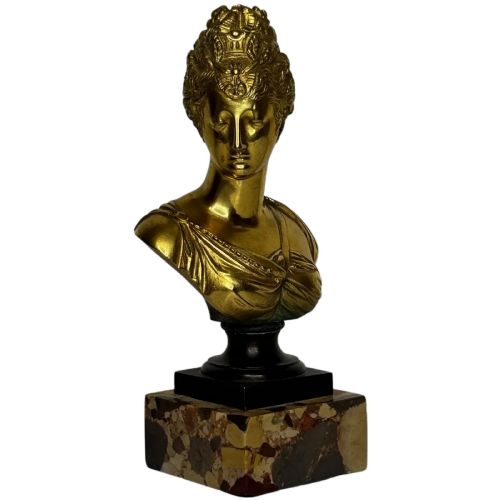
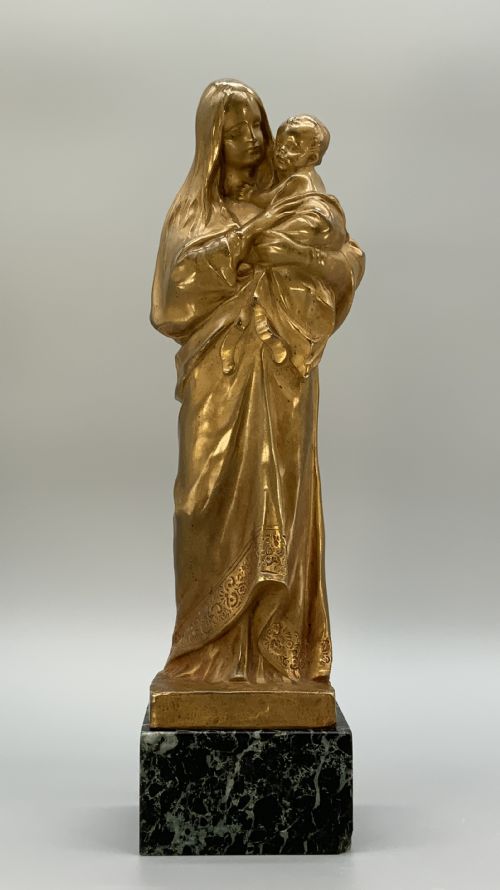
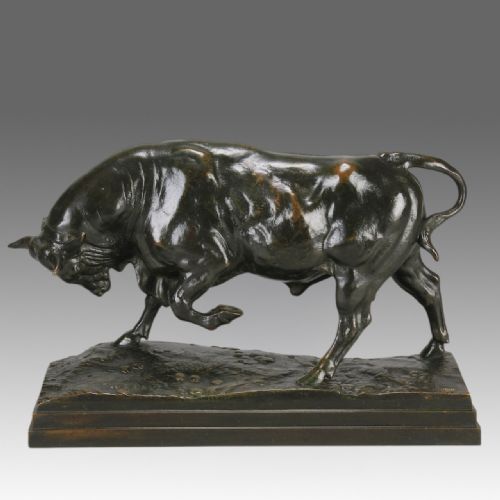
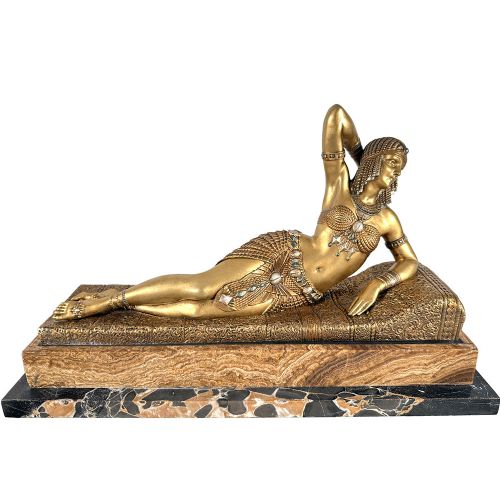
A decorative bronze statuette encompasses small-scale figural sculpture, ranging from classical busts and animal studies to modernist dancers and mythological subjects. These pieces span the eighteenth, nineteenth, and early twentieth centuries, reflecting changing aesthetic movements from Neoclassical and French Animalier to Art Deco.
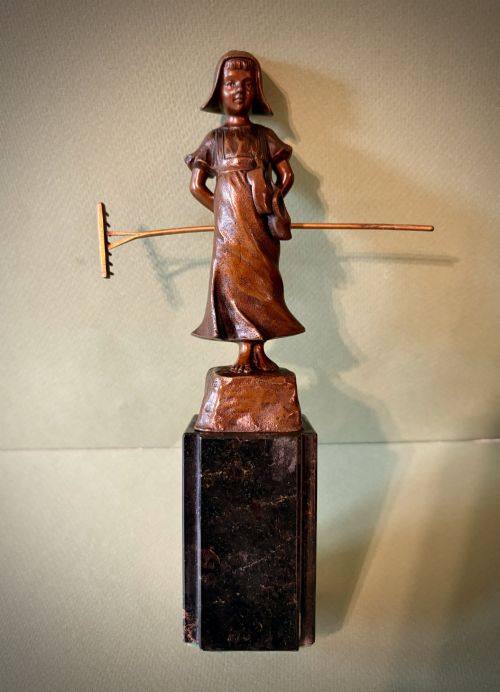
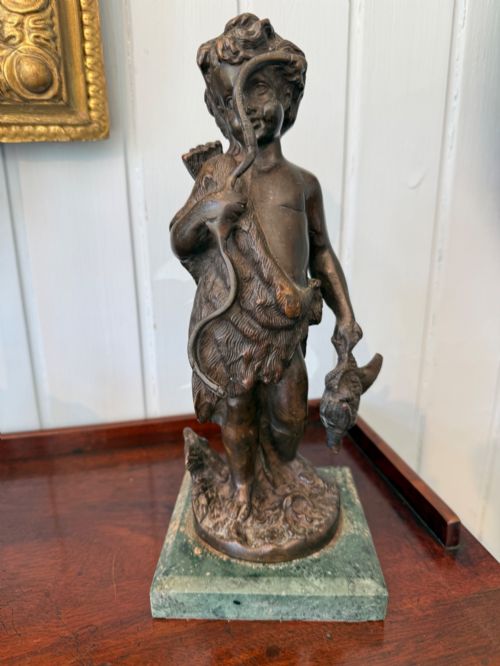
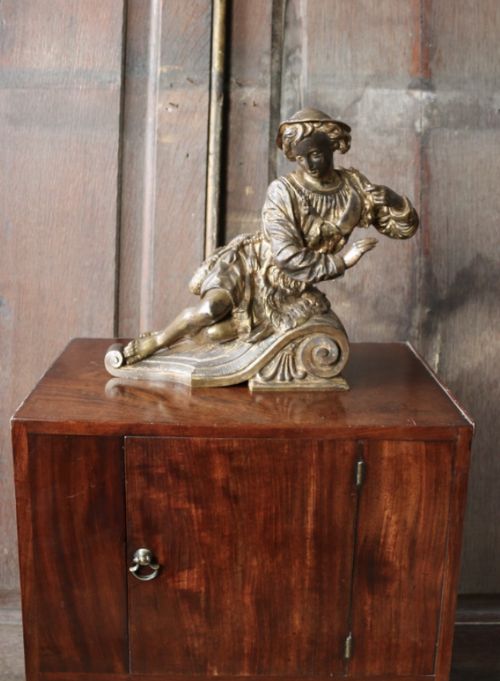
On this page, a buyer encounters works cast in bronze, gilt bronze, silvered bronze, and spelter, often mounted on bases of marble, onyx, or olive wood. Subjects vary widely from historical figures and cherubs to dancers and farm workers, representing French, Austrian, Italian, and Asian workshops.
How they were made
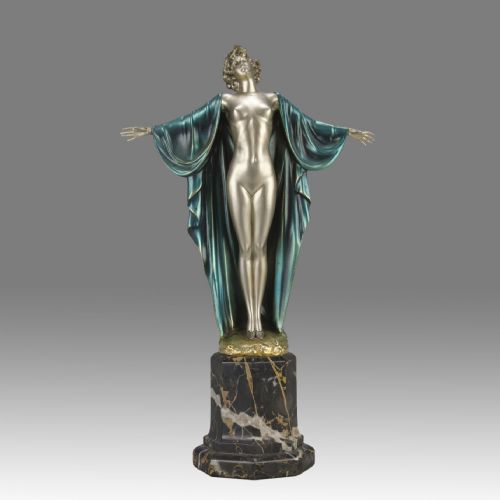
Foundries produced these pieces using metal casting techniques, subsequently finishing the surfaces through cold-painting, gilding, silvering, or chemical patination to achieve depth of colour. Many nineteenth-century French and Austrian pieces rely on precise chasing and hand-applied cold paint over the metal substrate.
Base materials frequently extend beyond metal itself, incorporating carved marble, polished onyx, or turned wood to support the figures. Spelter appears as an alternative base metal in certain twentieth-century pieces, offering a lighter alloy finished with patinated coatings.
Listings feature periods from the eighteenth century through the Art Deco era of nineteen-thirty, spanning marble, onyx, and silvered bronze.
What varies in quality
The sophistication of the casting and the crispness of the surface chasing separate standard commercial foundry output from masterworks signed by noted sculptors. Finer examples retain delicate facial expressions, intact cold-painted surfaces, and integrated signatures or foundry marks.
The choice and integration of the base material also influence the overall character of the piece. High-quality mountings use solid veined marble or fitted hardwood bases that complement the proportions of the metal figure above.
Ferdinand Preiss·Hans Müller·Antoine Louis Barye·Demetre Chiparus·Josef Lorenzl·Pierre le Faguays·Albert Ernest Carrier-Belleuse
The Decorative Bronze Statuette Glossary
- Patinated bronze
- Bronze treated with chemical solutions to produce a controlled surface coloration, ranging from rich brown to deep green. This treatment protects the metal while enhancing the sculptural contours.
- Cold-painted bronze
- A technique where paint is applied to metal without high-temperature firing, common in Austrian cabinet bronzes. The pigments sit directly on the cold surface.
- Spelter
- A zinc alloy used as a less expensive alternative to bronze, frequently patinated to imitate true bronze. It appears often in decorative figures from the early twentieth century.
- Animalier
- A nineteenth-century artistic style focusing on realistic depictions of animals, particularly in motion. French sculptors specialised in capturing the precise musculature of beasts.
Decorative Bronze Statuette: Frequently Asked Questions
What is a cold-painted bronze?
A cold-painted bronze is a metal sculpture finished with oil or enamel paints applied directly to the unheated surface. This method allows for intricate polychrome detailing, particularly on small-scale Austrian figures.
Such pieces require careful handling to preserve the delicate pigment layers, which can flake if exposed to moisture or rough cleaning.
How do I distinguish bronze from spelter?
Bronze is a dense copper alloy that feels heavy for its size and develops a warm metallic tone beneath its patina over time. Spelter is a softer, lighter zinc-based metal that often shows a greyish interior if the surface coating chips.
Testing with a magnet is inconclusive since neither metal is magnetic, so weight and surface texture remain the primary indicators.
Where were most antique statuettes made?
Nineteenth-century and early twentieth-century production centred largely in France, Austria, and Italy, where specialised foundries employed skilled chasers and patinators. Vienna and Paris became renowned for distinct schools of cabinet sculpture.
Other pieces originate from Asian workshops, reflecting international trade and stylistic exchange during the late Qing period.
How should I display a statuette on a marble base?
Place the statuette on a stable, level surface away from direct sunlight and sudden temperature shifts that might stress the junction between metal and stone. Avoid abrasive polishes on the marble or patinated metal.
Dusting gently with a dry, soft brush maintains the surface finish without disturbing the original patination.