

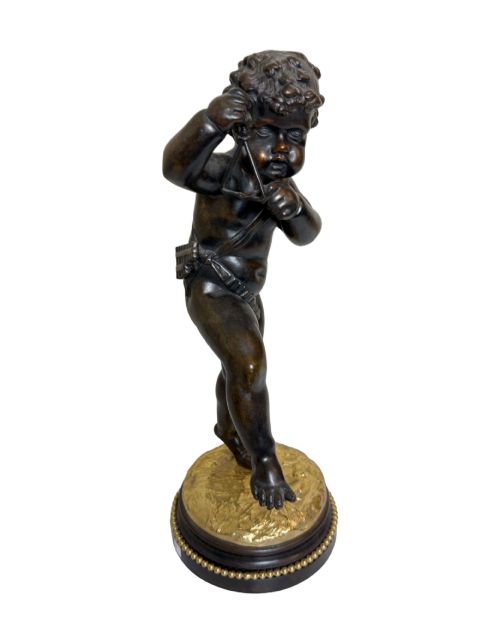
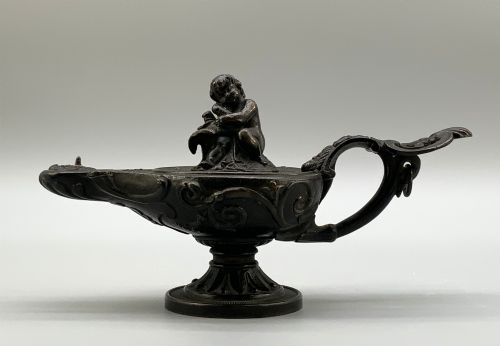
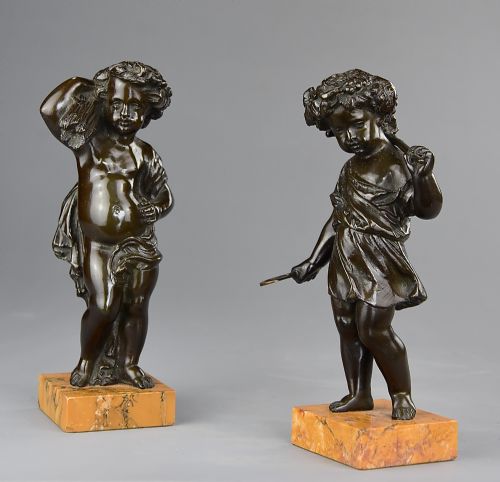
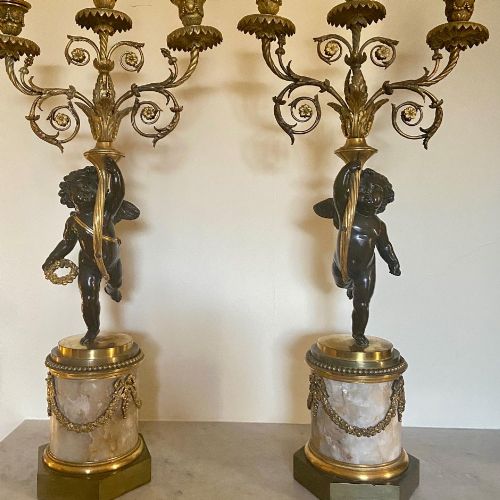
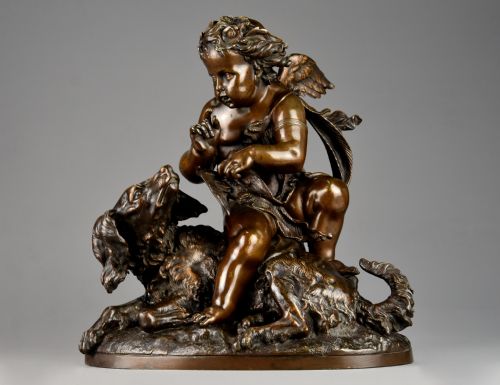


Dark Bronze Putto
A dark bronze putto brings winged classical charm to a desk or mantelpiece, cast in solid metal through centuries of French and Italian workshops.
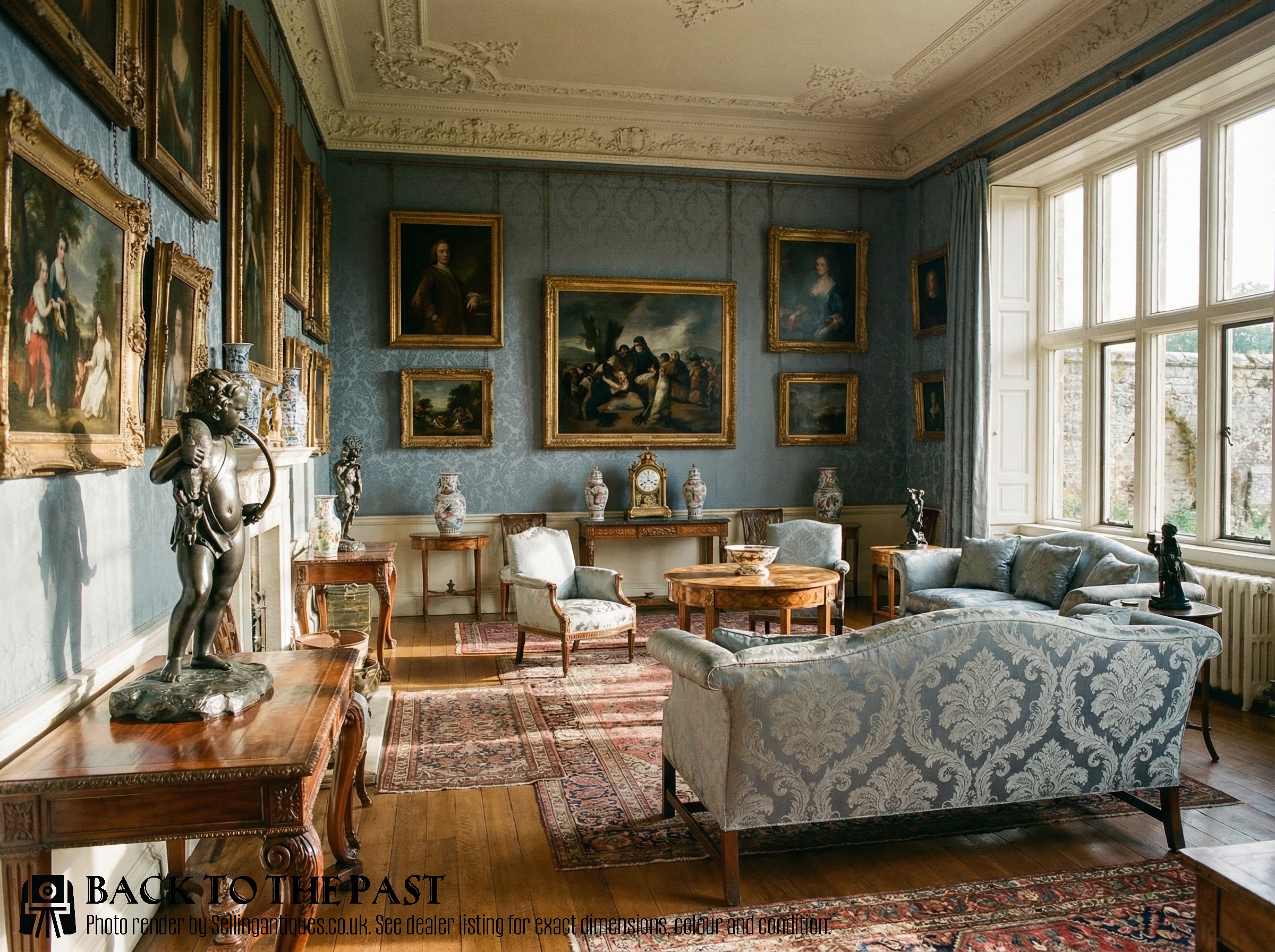
Dark Bronze Putto
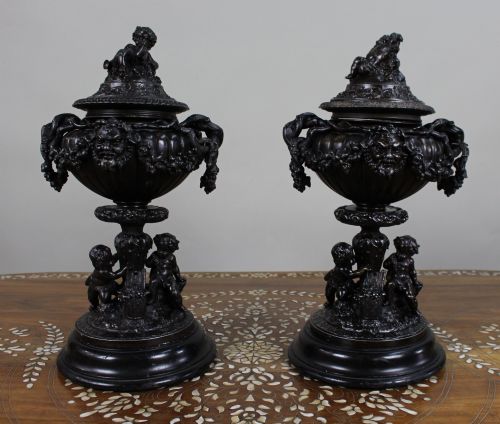
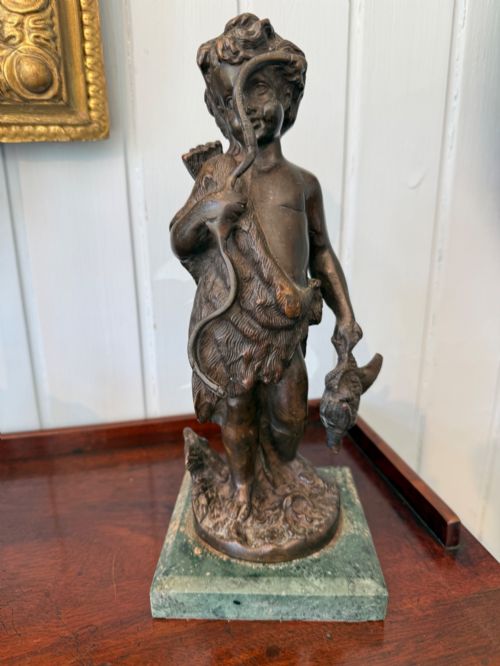
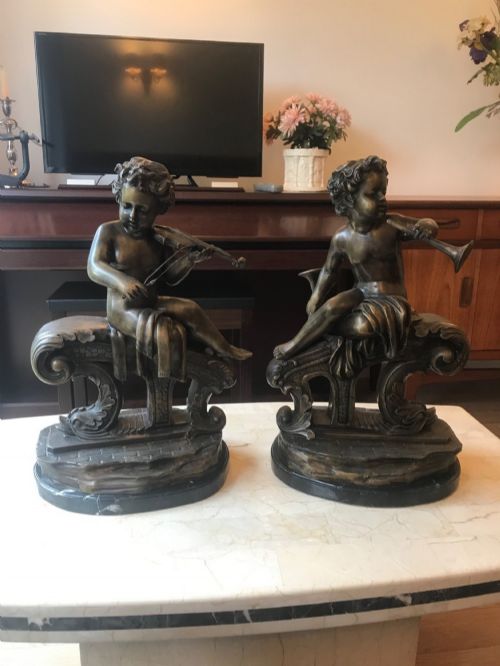
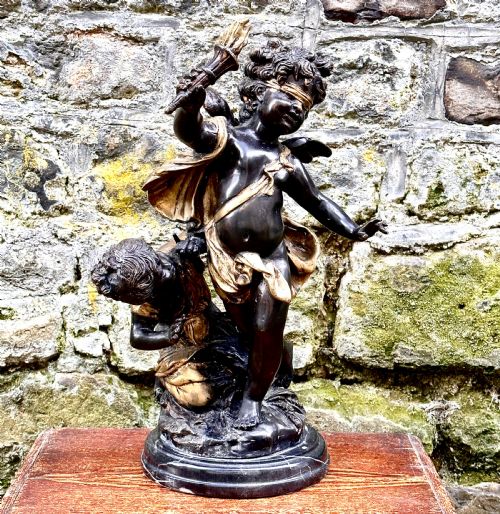
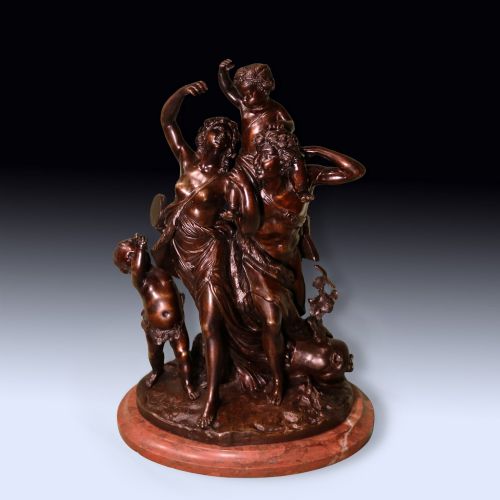
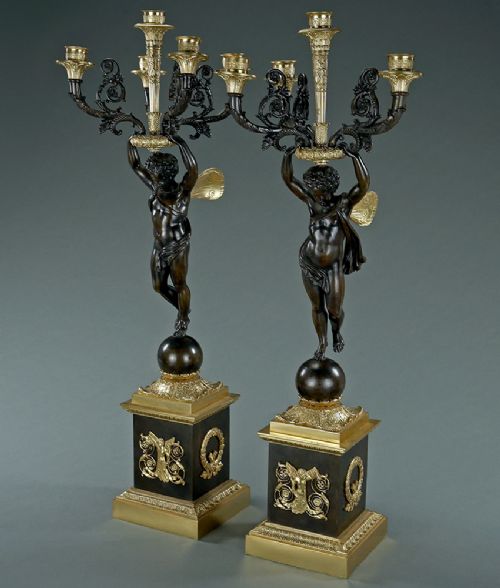
When you search for dark bronze putto, you encounter sculptural figures, lighting, and decorative metalwork featuring winged children and cherubs. These pieces appear mostly as nineteenth-century French and Italian works executed in patinated bronze, often mounted on marble bases or paired as candelabra.
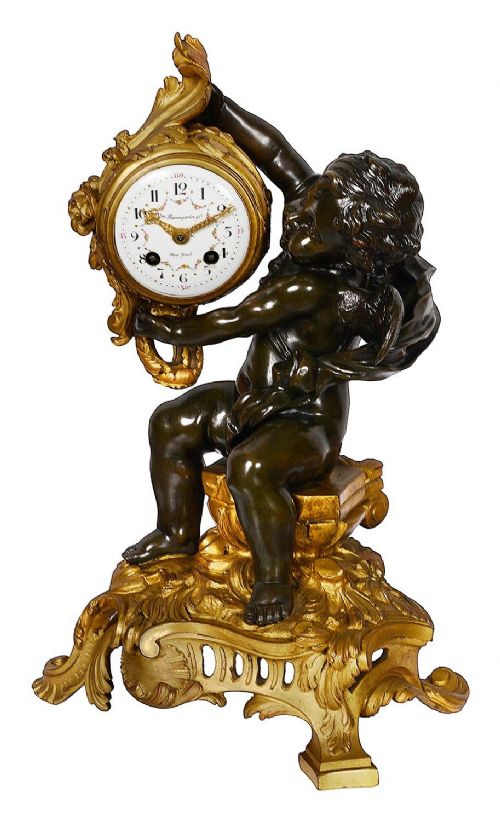
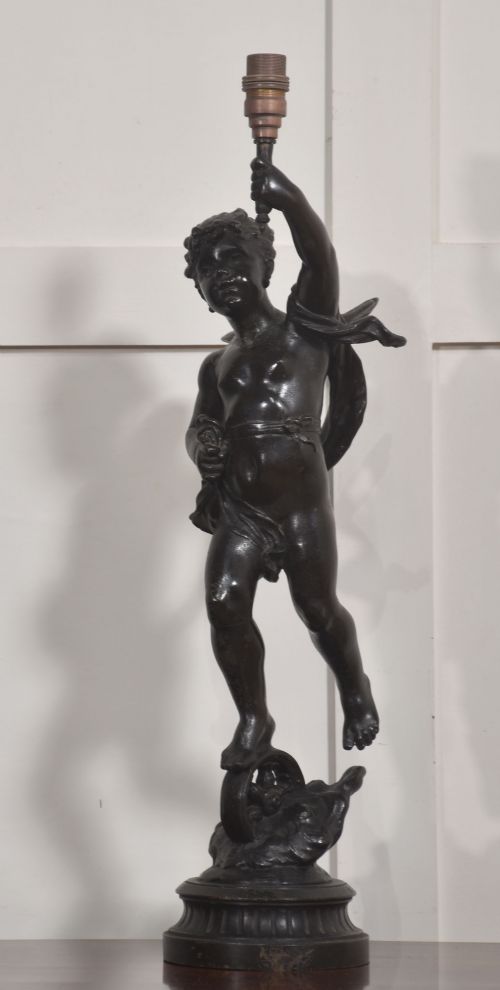
The objects take many functional forms beyond standalone sculptures, including table lamps, mantel clocks, and architectural andirons. Makers modelled these figures on classical themes such as harvest scenes, musical instruments, and mythological motifs in the manner of Clodion and French Empire design.
How they were made
Foundries produced these pieces using traditional metal casting techniques, employing bronze, ormolu, and patinated bronze surfaces. Many figures incorporate carved marble bases or combine with materials like brass, wood, and enamel to create decorative decorative items.
Detailing relied on skilled chattering and patination applied after casting to achieve deep brown and dark metallic tones. Mounts and secondary elements frequently utilise gilt bronze or ormolu to contrast against the dark body of the putto.
What varies in quality
The integration of secondary materials such as layered marble plinths and gilt ormolu mounts determines the overall execution standard. Finer pieces maintain balanced proportions and secure physical weight, reflecting the skill of the original foundry and model maker.
Claude Michael Clodion·Francois Redmond·K and O·Louis Auguste Moreau·Dumond·Aug Moreau
The Dark Bronze Putto Glossary
- Putto
- A chubby, naked male child figure found in classical art, often winged and synonymous with cherubs or amorini. They frequently appear in Renaissance and neoclassical decorative works.
- Patinated bronze
- Bronze that has been chemically or naturally treated to produce a darkened surface colour. This finish protects the metal and defines sculptural contours.
- Ormolu
- Finely ground high-carat gold applied to a bronze base using a mercury amalgam technique. This decorative treatment creates bright golden highlights against dark bronze.
- Grand Tour
- A cultural journey of Europe undertaken by wealthy young men in the eighteenth and nineteenth centuries. Souvenirs from these trips included small bronzes and classical replicas.
- Neoclassical
- An artistic style inspired by the classical art and culture of ancient Greece and Rome. It prioritises symmetry, proportion, and mythological subject matter.
Dark Bronze Putto: Frequently Asked Questions
What is a putto?
A putto is a small winged infant figure derived from classical mythology, commonly representing cherubs or cupids in art. They appear frequently in bronze sculptures, candelabra, and decorative clocks.
These figures often hold attributes like grapes, musical instruments, or bows. Their presence indicates neoclassical or Renaissance revival influences in nineteenth-century decorative arts.
How do I identify French bronze?
French bronze pieces from the nineteenth century typically display deep patination, precise chasing, and heavy cast construction. Many incorporate distinct style markers from Empire, Rococo Revival, or Grand Tour periods.
Foundry marks, signatures on the base, and association with known sculptors like Clodion or Moreau often confirm French origin. The quality of the underlying metalwork and surface finishing provides further evidence.
Where should I place a bronze putto?
Bronze putto figures suit mantelpieces, desks, and console tables where their detailed patination can be appreciated up close. Paired figures work well flanking clocks or supporting candelabra.
Ensure the piece rests on a stable, flat surface away from direct moisture. Marble bases help anchor heavier sculptures safely on wooden furniture.
What is a Grand Tour bronze?
Grand Tour bronzes are small-scale reproductions of classical sculptures purchased by travellers touring Italy during the eighteenth and nineteenth centuries. These items served as portable reminders of classical art and antiquity.
They usually feature dark patinated bronze and occasionally rest on marble plinths. The subjects range from human forms to mythical putti and architectural fragments.