


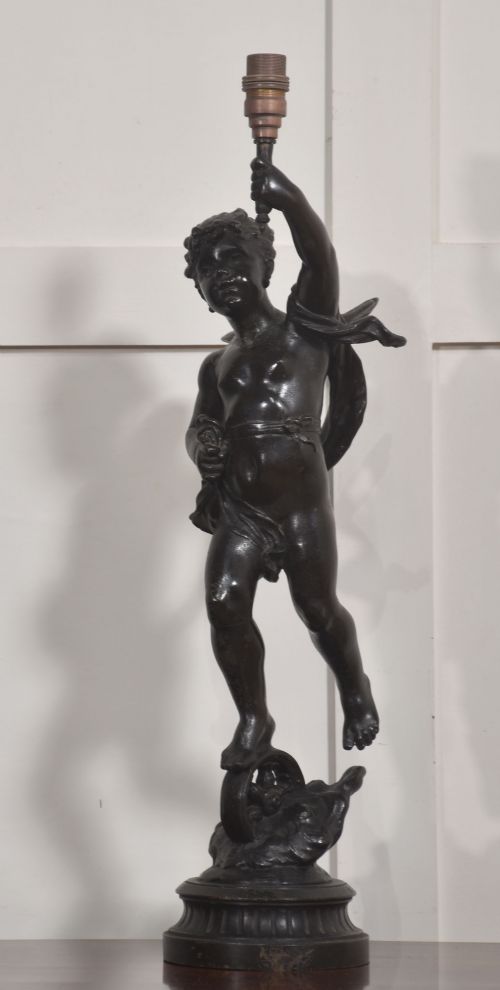
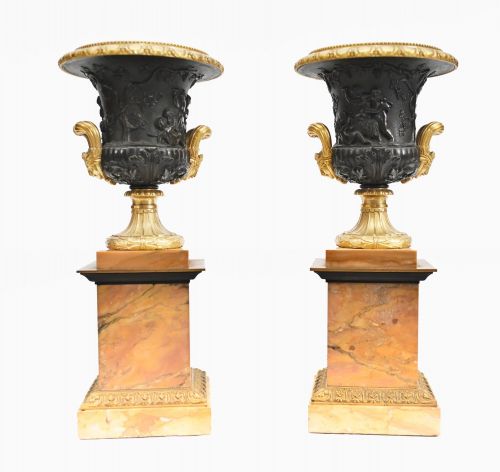
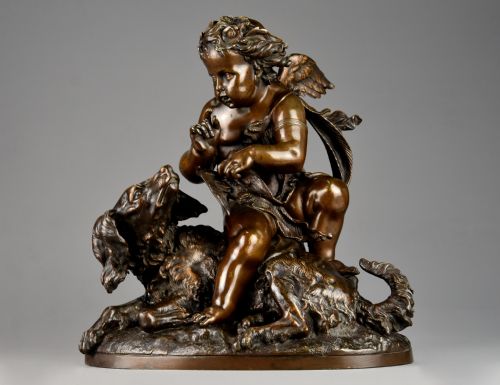


Dark Bronze Cherub
These dark bronze cherub figures and decorative objects bring classical French and Italian charm into a room through finely cast winged motifs.
Dark Bronze Cherub
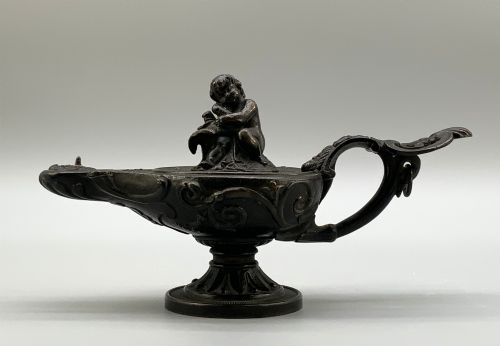
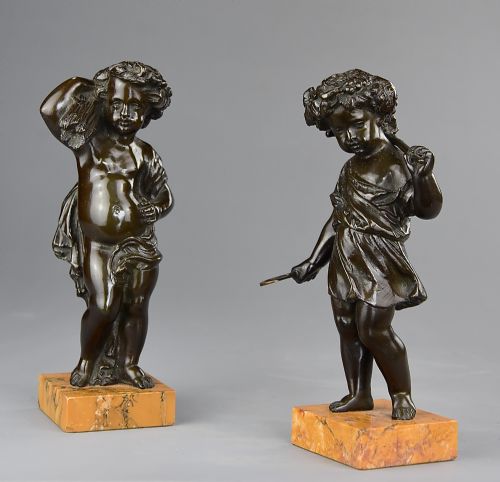
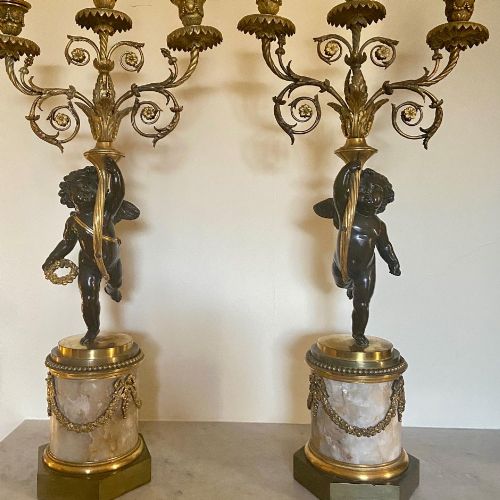
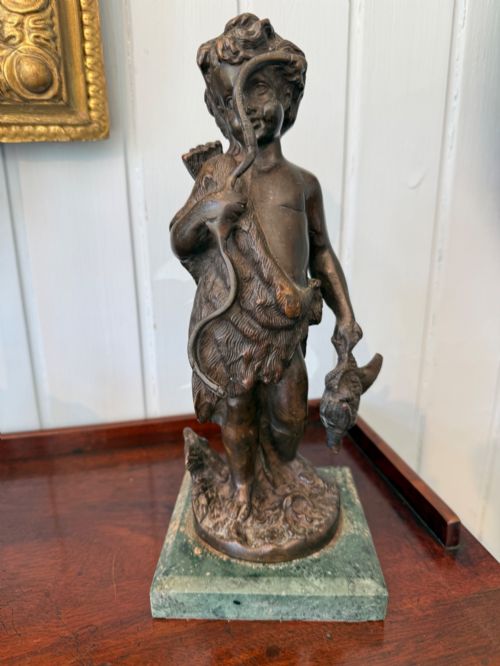
When you search for a dark bronze cherub, you encounter sculptural figures, candelabra, mantel clocks, and lamps depicting winged putti or classical children. The pieces appearing here predominantly date from the nineteenth century, ranging through Victorian, French Empire, and Italian Grand Tour styles.
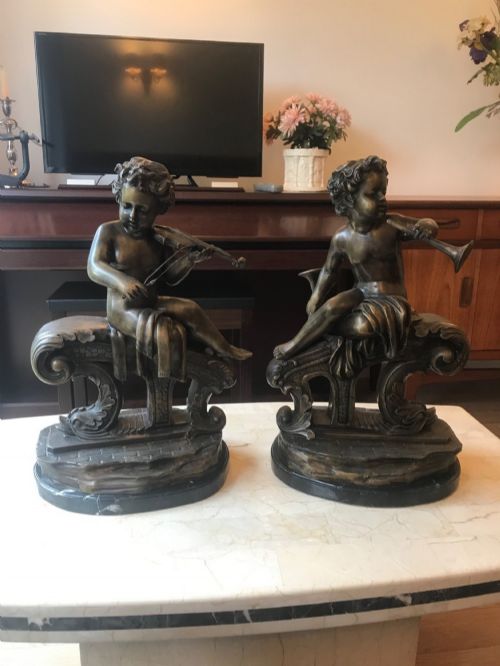
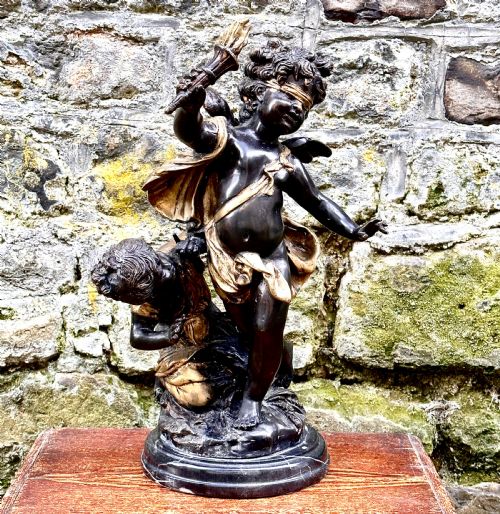
Most examples emerge as pairs of musical or harvesting putti, often mounted on marble bases or integrated into lighting and vessels. Sculptural groups frequently show these figures engaged in classical pursuits such as playing instruments, gathering grapes, or holding torches.
Materials and construction
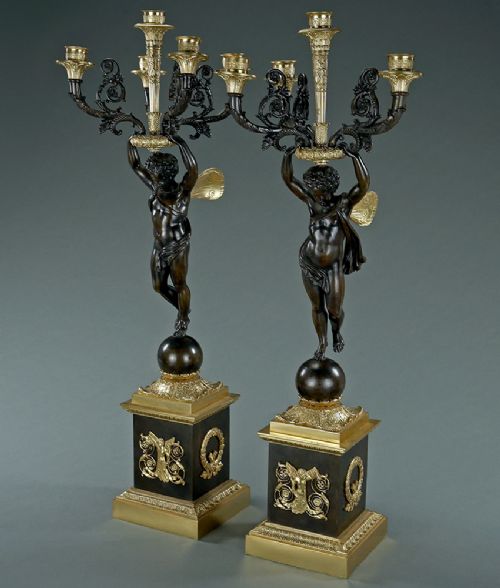
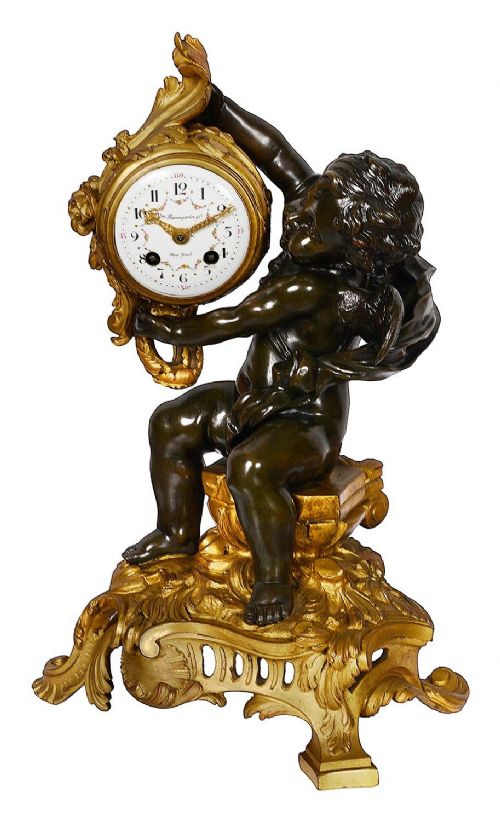
These objects rely primarily on cast bronze, often treated with a dark patinated finish to accentuate the musculature and feather details of the figures. Ormolu, gilt bronze, and marble frequently accompany the main bronze components, particularly in French candelabra and mantel clocks.
Casting methods of the period involved creating intricate moulds derived from classical models, followed by meticulous hand-chasing of the metal surface. Bases incorporate contrasting materials like white or dark marble, occasionally paired with fluorspar or cast iron elements.
Listings feature nineteen-century French and Italian bronze sculptures, candelabra, and clocks incorporating marble and ormolu.
Distinguishing quality in cast figures
The distinction between standard production and superior execution lies in the sharpness of the chiselling and the depth of the dark patination. Finer works display meticulous attention to facial expressions, hair texture, and the delicate feathering of the wings.
Compositional balance and the integration of the figure with its functional mount also dictate distinction. Superior pieces feature fluid modelling that recalls classical sculptors, whereas lesser examples show stiffer posture and simpler base attachments.
Claude Michael Clodion·Francois Redmond·K and O·Louis Auguste Moreau·Dumond
The Dark Bronze Cherub Glossary
- Putto
- A plump, naked child depicted in classical art, often winged. These figures form the primary subject matter of these bronze sculptures.
- Ormolu
- Gilded bronze mounted on decorative objects and furniture. This material provides a bright contrast to the darker patinated bronze cherubs.
- Patinated bronze
- Metal treated with chemical solutions to produce a darkened surface finish. This treatment highlights the contours and modelling of the sculptural forms.
- Grand Tour
- The eighteenth and nineteenth-century custom of travelling through Europe to collect classical antiquities and bronzes. Many pieces reflect Italian craftsmanship associated with this tradition.
- Campana
- A bell-shaped urn or vessel form frequently utilised in classical designs. These vessels often appear alongside cherub figures in table ornaments and planters.
Dark Bronze Cherub: Frequently Asked Questions
How do I date a dark bronze cherub?
Dating relies on examining the casting technique, the style of the base, and the type of patination applied to the metal. Nineteenth-century examples often feature hand-chased details and heavy marble or gilt mounts.
Secondary clues include signature marks, screw types, and stylistic influences ranging from French Empire to Renaissance Revival. Comparing the object to documented nineteenth-century foundry methods clarifies its age.
Were these cherubs meant to be lighting?
Many surviving pieces function as candelabra, torchère lamps, or table lamps alongside purely decorative sculptures. Artisans frequently incorporated winged putti into functional domestic objects during the nineteenth century.
Lighting fixtures were wired or adapted later in their lifespan while retaining their original bronze and marble foundations. Candlesticks and oil lamps represent the most common utilitarian forms.
What is the difference between a cherub and a putto?
Art historical terminology distinguishes the religious cherub from the secular putto, though the terms are often used interchangeably in antique listings. Putti derive from classical mythology, frequently representing attendants to deities like Bacchus or Venus.
In nineteenth-century bronze casting, these winged children usually display playful or allegorical human characteristics rather than strict biblical iconography.
How should I clean a dark bronze cherub?
Maintenance requires only gentle dusting with a soft, dry cloth to prevent the accumulation of dirt within the crevices of the casting. Avoid abrasive cleaners, polishes, or chemical solvents that strip the original dark patinated finish.
Preserving the aged surface protects the integrity of the metal and maintains the subtle variations achieved by the nineteenth-century foundry.