


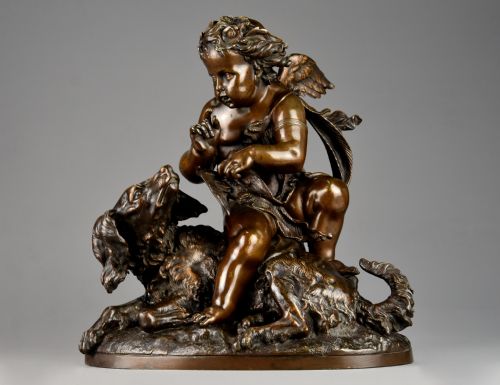


Classical Cherub Sculpture
These pieces of classical cherub sculpture capture the playful mythology of winged infants and putti through enduring metal, stone, and marble forms.
Classical Cherub Sculpture
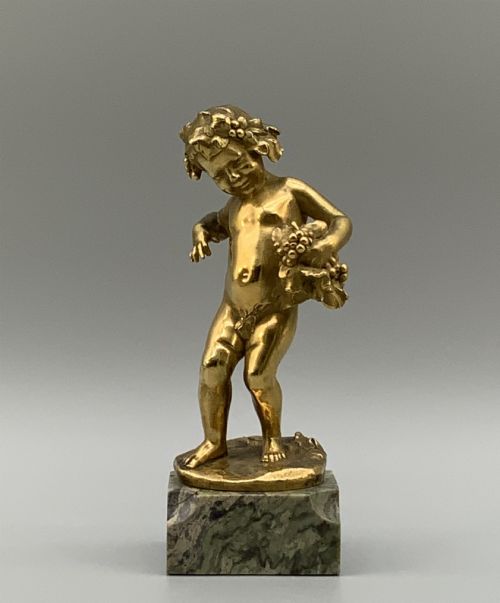
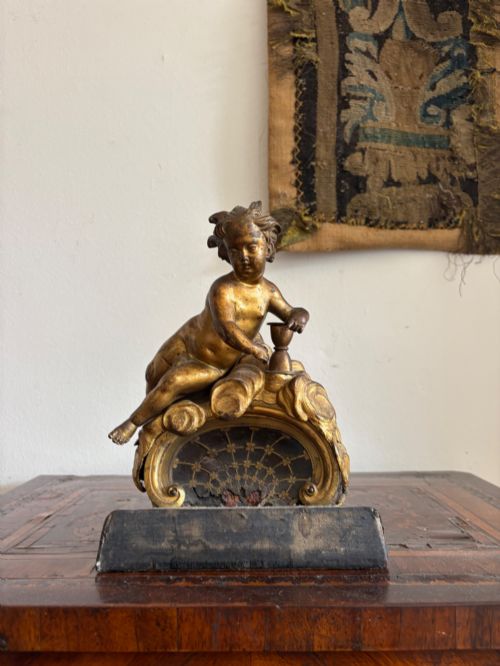
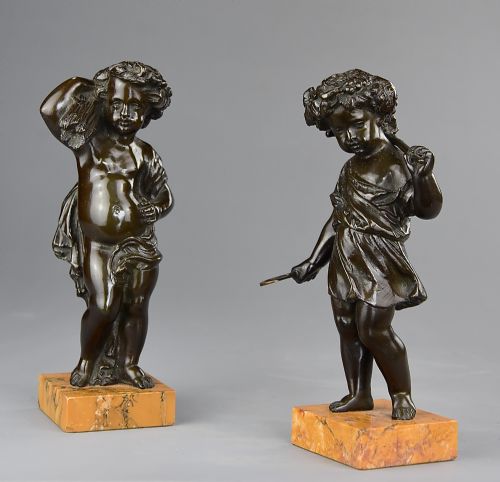
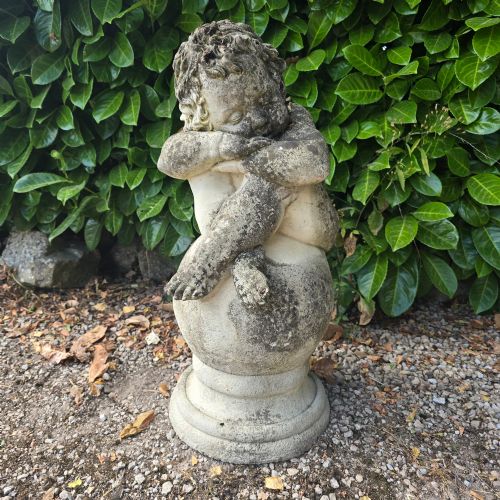
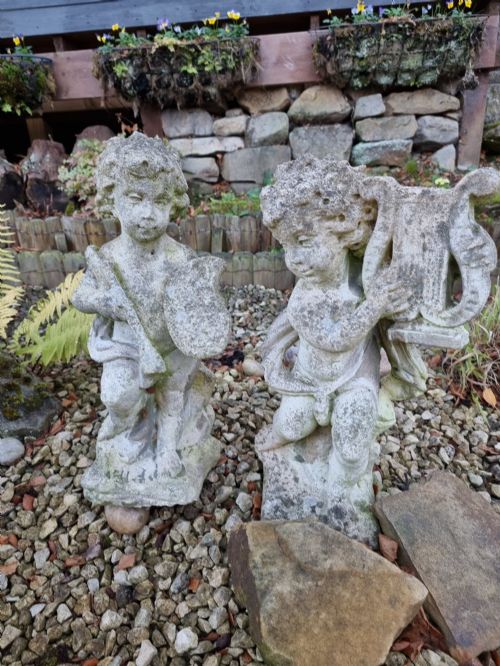
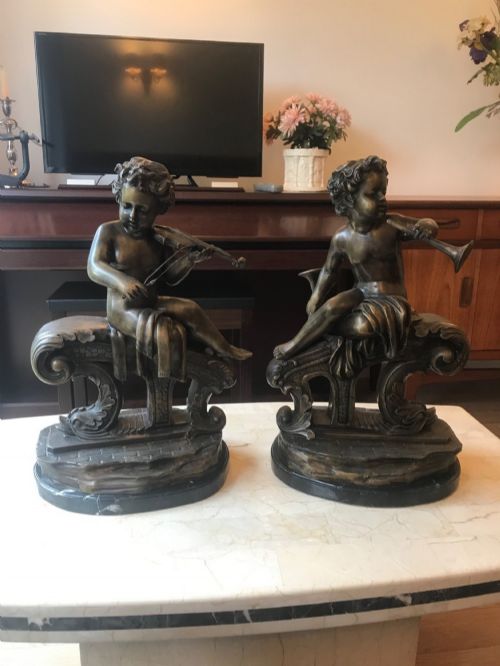
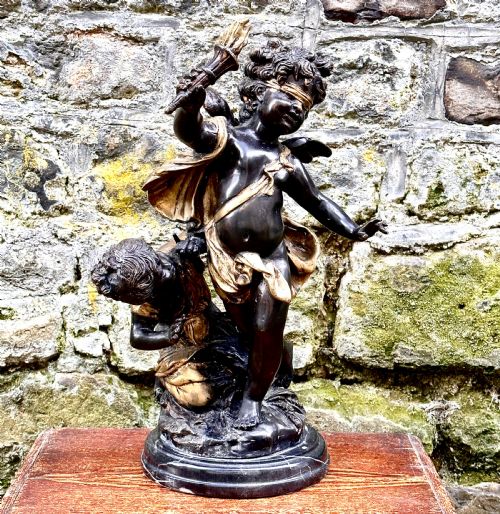
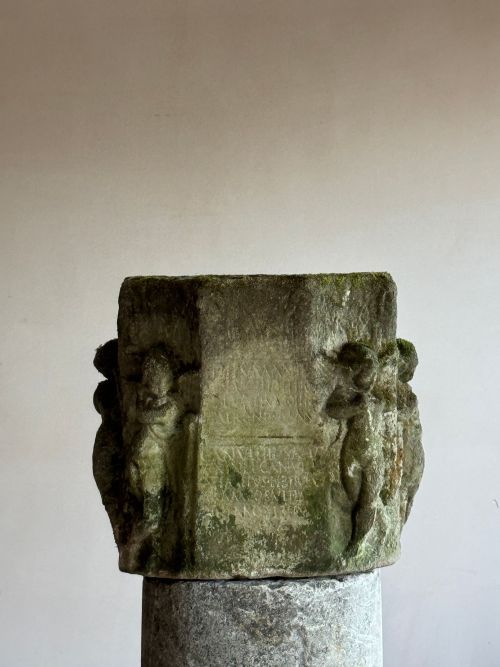
A classical cherub sculpture portrays mythological children, putti, cupids, or infant bacchants engaged in music, harvest, or gentle play. Buyers exploring this page will encounter nineteenth-century French cabinet bronzes, grand tour souvenirs, table lamps, and larger garden statues cast in stone or lead.
The objects span domestic decorative ornaments, bookends, and architectural finial mounts alongside substantial outdoor figures. Neoclassical and French rococo revival styles dominate, reflecting nineteenth-century European admiration for classical antiquity and the graceful compositions of sculptors like Claude Michael Clodion.
Materials and casting methods
Foundry work relies heavily on bronze, utilising both fire-gilt ormolu and dark patination to define the musculature and feathered wings of the figures. Artisans also employed marble, terracotta, lead, and cast stone to suit domestic interiors or weathered garden environments.
Casting techniques range from lost-wax bronze production allowing fine detail in hair and drapery to robust stone moulding for exterior architectural display.
Evaluating sculptural distinction
Distinction rests on the crispness of the chase work in bronze pieces and the fidelity of the modelling in expression and limbs. Finer examples show spirited anatomical movement and sensitive surface finishing rather than routine commercial casting.
Signed foundries and artists elevate a piece, while older patination and integrated marble bases indicate careful period assemblage.
Charles Louis Malric·Susse Frères·Claude Michael Clodion·Antonio Canova·Richard Avrilli·Louis Auguste Moreau·Auguste Moreau·Charles Cumberworth·Carrier
The Classical Cherub Sculpture Glossary
- Putto
- A plump, often winged infant depicted in classical art. These figures appear frequently in Renaissance and nineteenth-century revival sculpture.
- Ormolu
- Finely ground high-carat gold applied to bronze objects using a mercury amalgam technique. This creates a brilliant golden finish seen on French decorative mounts and lamps.
- Grand Tour
- A cultural journey undertaken by nineteenth-century elites collecting small bronzes and antiquities as souvenirs. These reduction casts emulate classical masterworks.
- Patination
- The surface coloration achieved naturally or chemically on metal or stone. It protects the material and adds visual depth to bronzes.
- Finial
- A decorative ornament fixed to the apex of a furniture piece, clock, or architectural structure. Cherub figures often served this decorative mount function.
Classical Cherub Sculpture: Frequently Asked Questions
What is the difference between a putto and a cherub?
Art historical terminology often blurs the two, though putti derive from classical secular mythology representing mischievous child spirits.
Cherubs traditionally belong to celestial angelic hierarchies, yet nineteenth-century decorative sculpture frequently treats both terms interchangeably for winged infants.
Where were these sculptures displayed originally?
Smaller bronze figures adorned nineteenth-century salons, libraries, and studies as mantel ornaments, desk accessories, or paired bookends.
Larger stone, lead, and terracotta examples were designed to ornament formal gardens, courtyards, and architectural terraces.
How do I care for antique bronze sculptures?
Maintain patinated bronze surfaces simply by dusting gently with a soft dry cloth to prevent particulate accumulation.
Avoid abrasive cleaners or chemical polishes that strip away the historic patination accumulated over generations.
Are these pieces solid bronze or hollow?
Most figural bronzes produced in the nineteenth century are hollow casts created using the lost-wax or sand-casting methods to conserve metal and reduce weight.
Heavier bases of marble or slate were frequently added to anchor the compositions securely.