

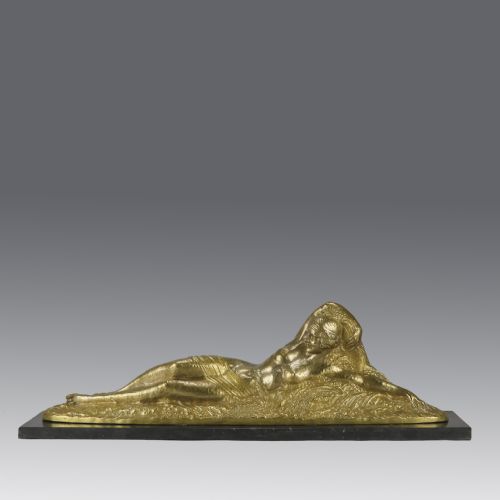


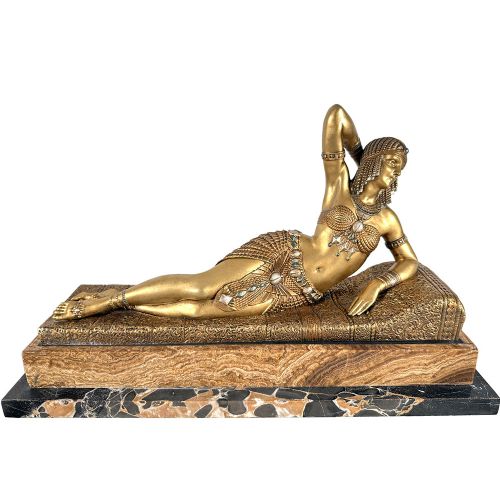


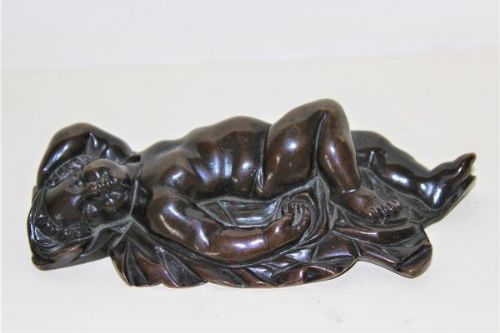


Reclining Bronze Sculpture
These reclining bronze sculpture pieces bring classical figures, animals and art deco forms straight to a desk or mantelpiece.
Reclining Bronze Sculpture
A reclining bronze sculpture presents a figure, animal or classical subject stretched out at length, resting upon surfaces like marble or onyx bases. When buyers search for a reclining bronze sculpture, they find everything from small desk paperweights to substantial gallery figures spanning the sixteenth century to the art deco era.
The most common examples on this page date from the nineteenth century and the art deco period of nineteen thirty. These include French animalier studies of deer and does, neoclassical figures of ladies and panthers, and stylised female nudes created by European masters.
Forms range widely in function as well as style, appearing not only as freestanding sculptures and figurines but also as bookends and scholarly desk accessories. Materials extend beyond pure bronze to incorporate spelter, gilt bronze, cold painted bronze and mixed media mounts.
What separates the finest pieces
The choice of base and the depth of the patina also define the upper tier of works. High quality pieces integrate the bronze figure harmoniously with its marble or onyx mount, showing careful patination that enhances the anatomical forms.
Reclining Bronze Sculpture Retail Price Guide 2026
Typical asking prices for reclining bronze sculpture among the pieces listed under this phrase on Sellingantiques today, from the lower quarter to the upper quarter. They describe what is for sale here now, not the wider market.
Listings feature works spanning from the sixteenth century Ming dynasty to art deco pieces from nineteen thirty, encompassing marble, onyx, slate and multiple bronze variants.
Demetre Chiparus·Josef Lorenzl·Sibylle May·A L Barye·Edmond Leveque·Jennings Brothers·James Pradier·Susse Freres·Ugo Cipriani
The Reclining Bronze Sculpture Glossary
- Animalier
- A nineteenth century artistic movement focused on the realistic depiction of animals, particularly predators, deer and domestic beasts. Sculptors in this tradition studied anatomy closely to capture movement and rest.
- Spelter
- An alloy of zinc and lead often used as a more affordable alternative to bronze during the art deco period. It takes patination and paint well but lacks the heavy density of true bronze.
- Patina
- The surface coloration or film that develops naturally on bronze over time or is applied artificially by an artist using chemical treatments. It protects the metal and defines the visual shadows.
- Cold painted
- A technique where paint is applied to a bronze object after casting without being fired in a kiln. This finish is delicate and common in twentieth century cabinet bronzes and novelty figures.
- Grand Tour
- A traditional trip through Europe undertaken by upper class scholars and collectors in the eighteenth and nineteenth centuries. Travellers acquired small bronzes and classical reproductions as mementos of their journeys.
Reclining Bronze Sculpture: Frequently Asked Questions
How do I clean a bronze sculpture?
Dust the surface gently with a soft, dry brush to remove particles without disturbing the patina. Avoid using water, soap or metal polishes, which can strip the protective finish and damage the metal.
Apply a very thin coat of microcrystalline wax if the metal requires protection against humidity. Buff the surface lightly with a clean cloth after waxing to maintain a soft sheen.
What is the difference between bronze and spelter?
Bronze is a copper and tin alloy prized for its strength, heavy weight and ability to hold fine casting detail. Spelter is a softer, lighter zinc based alloy frequently utilised for art deco figurines.
Tap the metal lightly to test density, or inspect the underside for the greyish colour characteristic of zinc. Bronze feels considerably heavier and colder to the touch than spelter.
How do I identify an art deco figure?
Look for stylised geometric forms, streamlined drapery and subjects such as dancers, nudes and sleek animals. These works often feature materials like patinated bronze paired with contrasting marble or onyx bases.
Check for artist signatures inscribed directly into the bronze base or body. Many twentieth century pieces reflect the modernist aesthetic popular during the nineteen thirties.
Were these sculptures made as bookends?
Some heavy bronze and spelter figures were manufactured as pairs specifically to function as bookends on library shelves. These pieces often feature weighted bases to keep heavy volumes stable.
Examine the flat vertical surfaces of the base to see if it was designed to press against books. Many classical ladies and animal groups served this dual decorative and practical purpose.