



Bronze Putto Figure
A bronze putto figure brings classical winged mythology into interiors through sculptural table lamps, mantel clocks and candelabra.
Bronze Putto Figure
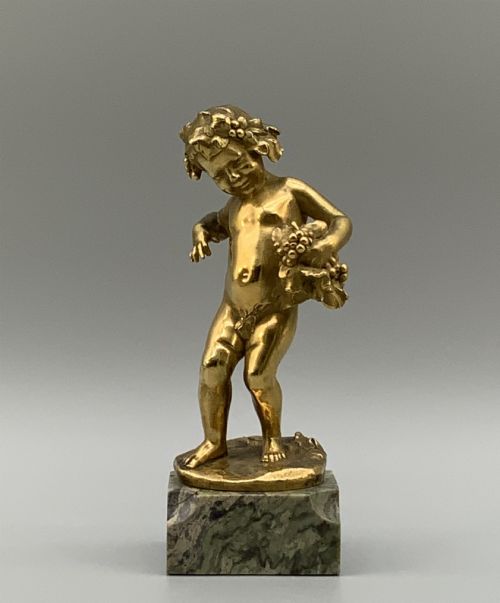
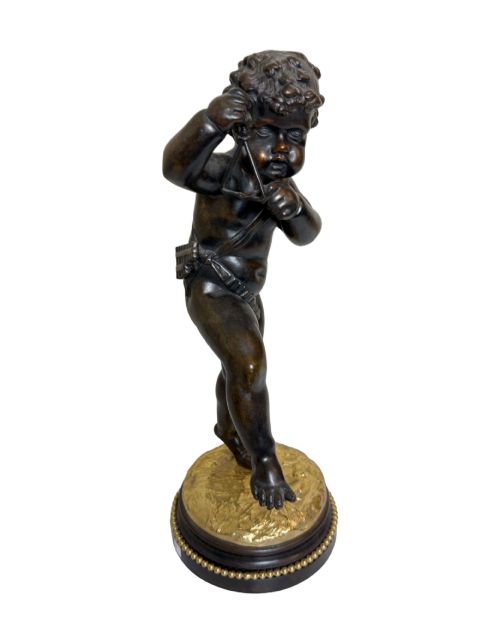
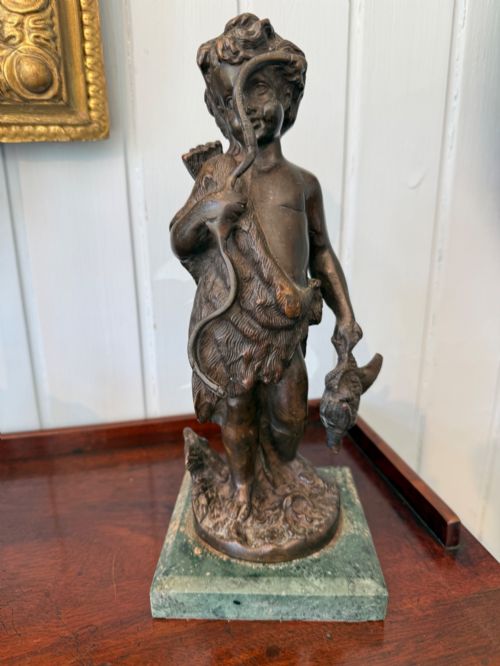
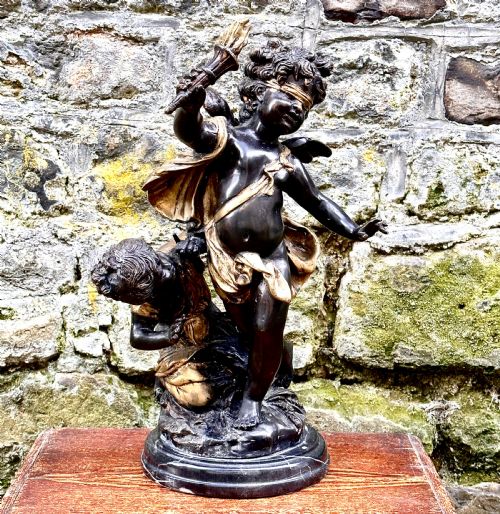
A bronze putto figure depicts a winged infant or cherub, frequently modelled after mythological subjects like Cupid, Bacchus or harvest allegories. These decorative sculptures appear across the nineteenth century in various French and Italian neoclassical or rococo revival styles.
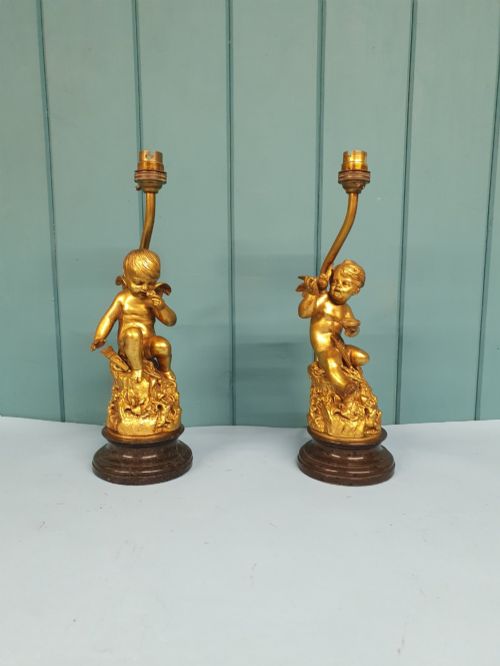
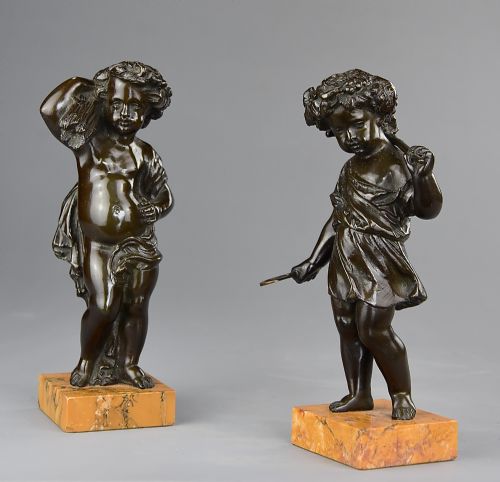
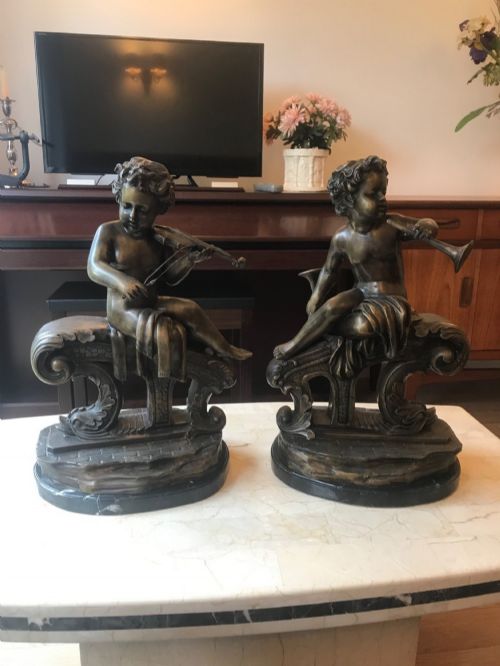
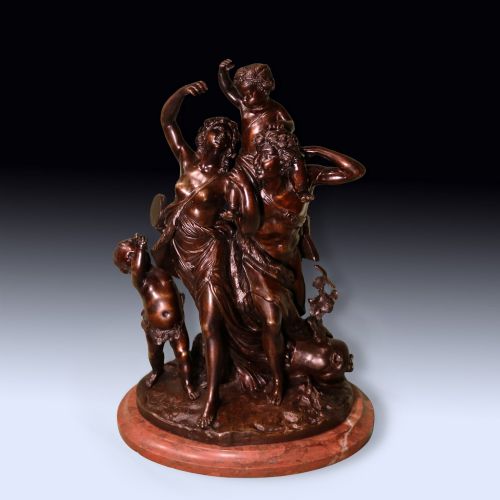
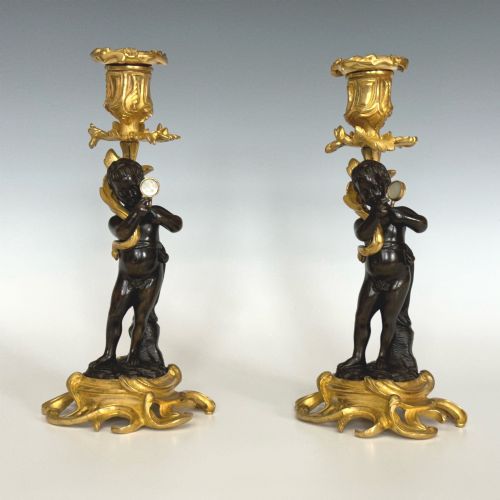
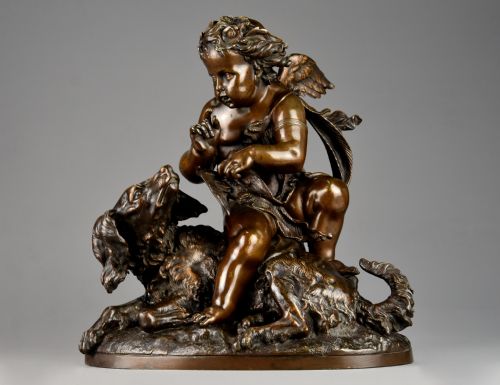
Buyers frequently meet pairs mounted on marble bases, serving as bookends, candelabra or converted table lamps. The physical forms range from single statuettes holding musical instruments to complex figural groups gathering grapes or playing with animals.
The selection reflects both intimate cabinet bronzes and larger decorative works associated with nineteenth century continental ateliers. Figures draw heavily on classical grand tour traditions and famous models by sculptors like Clodion.
Materials and casting methods
Foundry workers utilised traditional lost-wax or sand-casting techniques to shape molten bronze into intricate bodily proportions and feathered wings. Finished casts received either a dark patinated surface, bright ormolu gilding, or silvered treatments.
Many sculptural groups combine cast bronze elements with heavy marble plinths, porcelain bodies or gilt bronze mounts. Accompanying items integrate enamel dials, tole peinte, and detailed brass work into functional objects like clocks and lamps.
Listings feature nineteenth-century French and Italian bronze figures combining marble bases, ormolu mounts and patinated surfaces.
Distinctions in craftsmanship
Quality rests upon the crispness of the chased surface detail, where superior hand-finishing defines hair texture, facial expressions and wing feathering after casting. Softer definition often indicates secondary production or worn nineteenth century moulding.
The weight, density and integration of the bronze elements relative to any marble or ormolu mounts dictate overall solidity. Skilled patination and complex multi-figure grouping separate standard decorative items from superior signed artistic works.
Charles Louis Malric·Susse Freres·Louis Auguste Moreau·Aug. Moreau·Charles Cumberworth
The Bronze Putto Figure Glossary
- Putto
- A plump, naked winged infant figure derived from classical art. Sculptors of the nineteenth century adapted this motif extensively for decorative bronzes.
- Ormolu
- Gilded bronze produced by applying a mercury-gilding paste to cast metal. This technique creates a rich golden finish found on nineteenth century French decorative items.
- Patinated bronze
- Metal treated with chemical solutions to produce a controlled surface colour. This process protects the underlying bronze while creating deep brown or green tones.
- Grand Tour
- Extended continental travel undertaken by nineteenth century Europeans to collect classical antiquities. Figures from this tradition often imitate ancient models.
Bronze Putto Figure: Frequently Asked Questions
What is a putto?
A putto is a representation of a chubby, winged infant derived from classical mythology and Renaissance art. These figures often symbolize love, music or harvest themes.
In nineteenth century bronze sculpture, they appear individually or in groups, frequently interacting with animals, instruments or agricultural produce.
How do I care for bronze?
Bronze requires minimal maintenance beyond gentle dusting with a soft, dry cloth. Avoid chemical cleaners or abrasive materials that can strip patination or gilding.
Keep pieces away from direct moisture and extreme temperature fluctuations to preserve the stability of any integrated marble bases or gilt surfaces.
Are converted lamps original?
Many nineteenth century bronze putto figures and candelabra were adapted into table lamps during subsequent decades. Conversion methods varied from professional wiring to alterations affecting the original metalwork.
Examine the mounting points and internal channels to understand how electrical fittings integrate with the historic bronze structure.
How are periods identified?
Dating relies upon stylistic markers such as neoclassical restraint, rococo revival asymmetry, or Napoleon III decorative motifs. Foundry stamps, artist signatures and casting quality provide further chronological context.
Material composition, including the type of marble used for bases and the character of the bronze patina, also assists in determining age.