




Antique Crystal Rummers
Antique crystal rummers are large, weighty drinking vessels built for hearty toasts, offering a tangible link to Georgian and Victorian social life.
Antique Crystal Rummers
Antique crystal rummers encompass robust drinking glasses designed during the Georgian, Regency, and Victorian periods for substantial portions of ale, wine, or punch. These vessels serve as practical table glassware from an era when social gatherings called for generous capacity and sturdy construction.
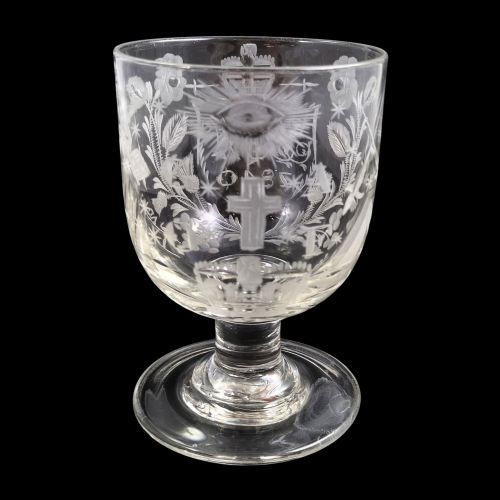
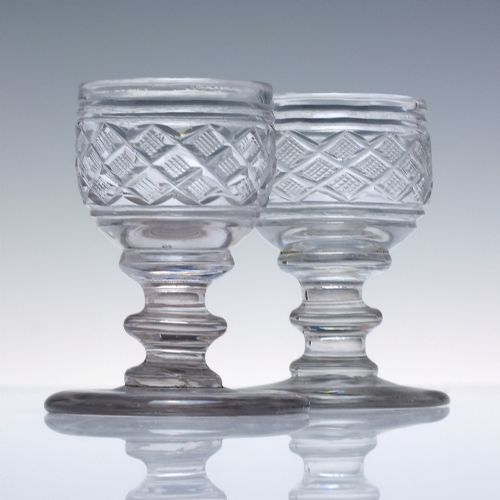
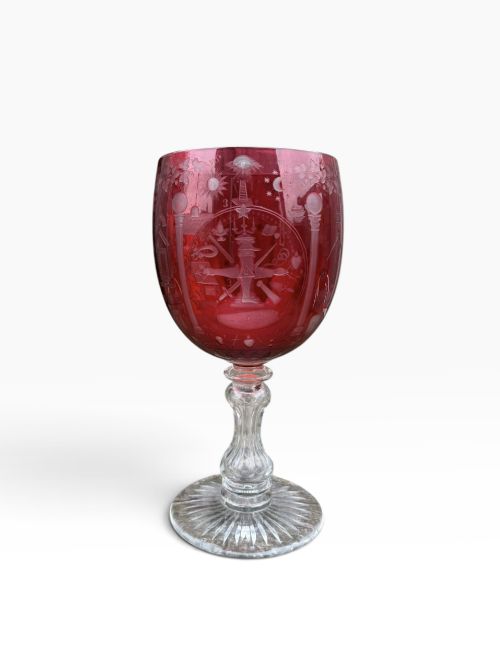
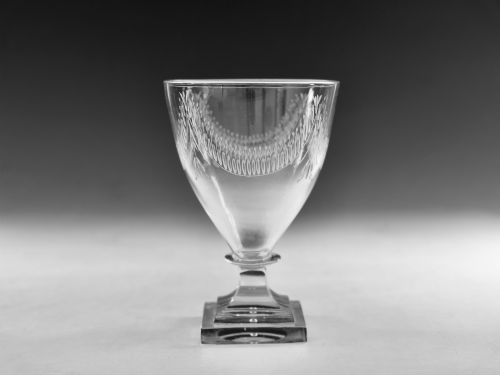
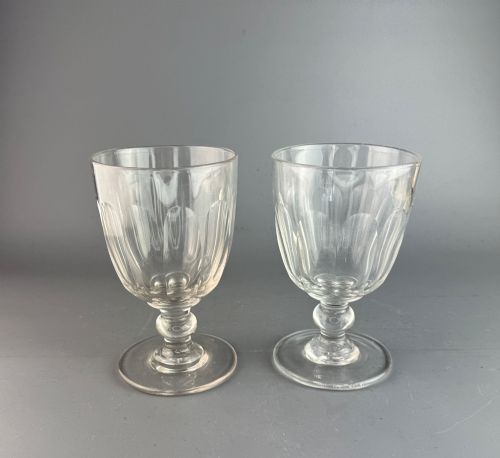
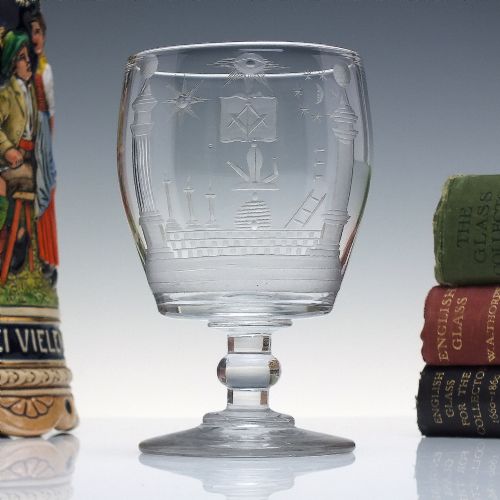
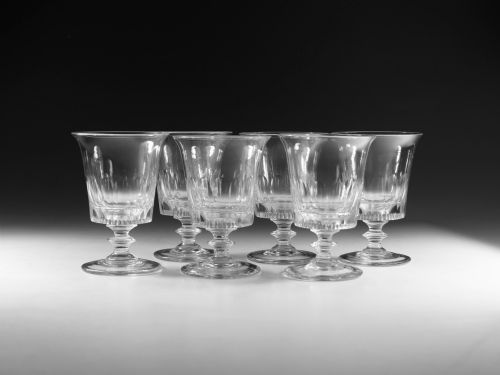
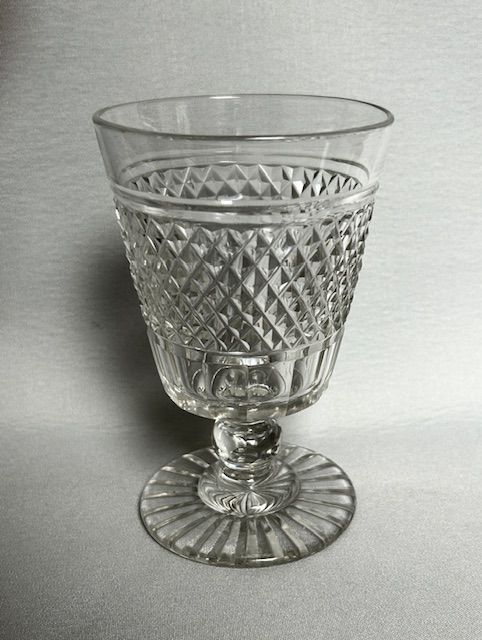
The specimens met on this page range from plain ovoid bowls to heavily cut Anglo-Irish examples and finely engraved commemorative pieces. Collectors encounter both single glasses and matched sets spanning the late eighteenth century through to the Edwardian era.
Materials and production methods
The makers utilised lead glass, flint glass, and clear glass to achieve a high refractive index and heavy feel characteristic of quality rummers. Coloured varieties, such as cranberry and turquoise green glass, appear alongside traditional clear metal.
Craftsmen shaped these drinking vessels using techniques including wheel-cutting, wheel-engraving, and moulding. Bases frequently take square, lemon squeezer, or plain circular forms to support the substantial weight of the bowl.
Early drinkers toasted safely with representations of the Sunderland Bridge, immortalising iron engineering in drinking glass form.
Distinctions in quality
Quality rests upon the crispness of the cutting, the clarity of the metal, and the depth of any wheel-engraved motifs like hops and barley. Finely detailed armorial or shipping engravings executed by skilled hands elevate a piece far above utilitarian work.
Proportion and metal weight dictate the presence of a superior rummer. Pieces with well-balanced baluster stems, heavy square bases, and unblemished surfaces represent the finest output of English and Bohemian workshops.
The Antique Crystal Rummers Glossary
- Rummer
- A large drinking glass used for ale, wine, or punch during the eighteenth and nineteenth centuries. These vessels typically feature a short stem and a capacious bowl.
- Flint glass
- An early British term for heavy, high-clarity lead glass developed to enhance brilliance and light refraction. It provides the resonant ring and substantial weight found in better drinking vessels.
- Lemon squeezer base
- A square, pressed glass base with deep indentations mimicking the sides of a manual citrus juicer. This form provides exceptional stability for heavy Georgian table glass.
- Hobnail cut
- A sharp, faceted geometric surface pattern resembling the iron nails once used in heavy footwear. This technique creates a textured grip and catches candle or gas light.
- Baluster stem
- A thick, turned stem featuring swelling nodes reminiscent of architectural balusters. It supports the heavy bowl of a drinking glass.
Antique Crystal Rummers: Frequently Asked Questions
What were antique rummers used for?
These large vessels were primarily utilised for serving ale, wine, or punch during communal toasts and substantial evening meals. Their generous capacity suited the heavier drinking habits of the Georgian and Victorian eras.
Over time, changing social customs shifted these glasses from daily dining tables into display cabinets, though many collectors still employ them for celebratory toasts.
How do I date an old crystal rummer?
Dating relies on observing stylistic markers such as bowl shape, foot design, and cutting techniques. Georgian examples often display lemon squeezer bases and hand-engraved hop and barley motifs, while later Victorian pieces frequently show heavier moulded forms or etched decoration.
Pontil marks underneath the base also offer clues, as rough pontils generally point towards earlier manufacturing methods before smooth polishing became standard practice.
Can I use antique rummers for everyday dining?
These robust vessels were built for practical use and handle ordinary dining well if treated with proper care. Hand washing in warm water preserves the historic glass metal safely away from modern machine heat.
Careful handling prevents accidental chips to the heavy rims and faceted bowls during dinner parties or celebratory gatherings.
What is the difference between cut and engraved rummers?
Cut rummers feature geometric patterns ground deeply into the glass surface using rotating wheels to create facets that reflect light. Engraved rummers display shallower, more delicate surface designs such as monograms, ships, or botanical motifs.
Some pieces combine both techniques, featuring faceted bowls finished with intricate wheel-engraved commemorative scenes or armorial crests.