
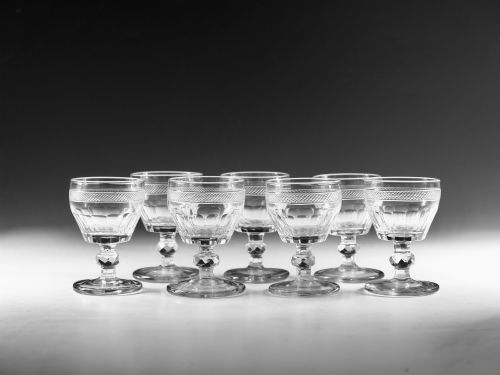


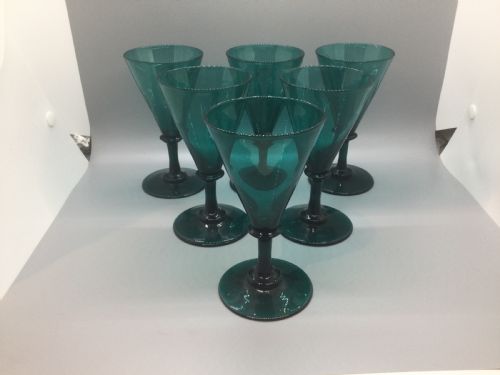
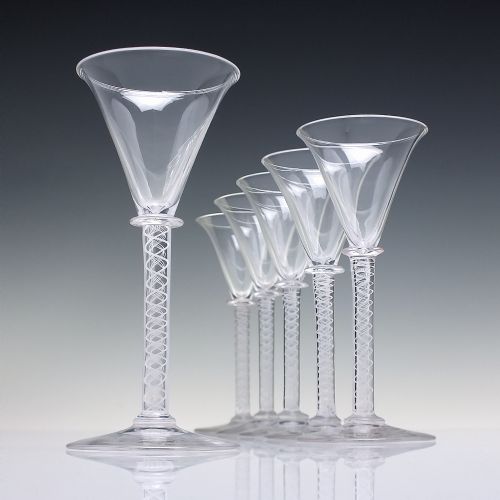

Georgian Glassware Set
These georgian glassware set pieces bring rich colour and heavy lead crystal to the table, offering a tangible link to eighteenth and nineteenth-century dining.
Georgian Glassware Set
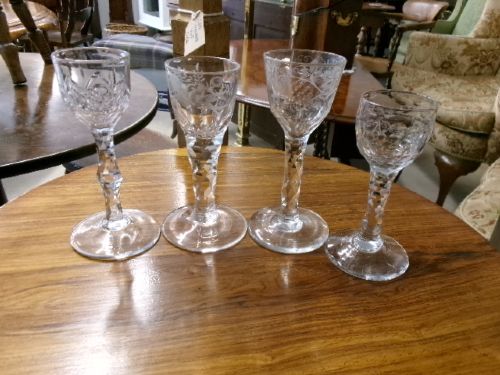
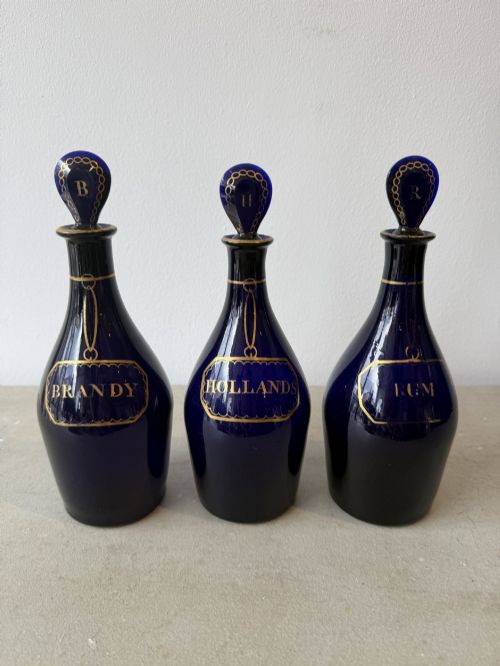
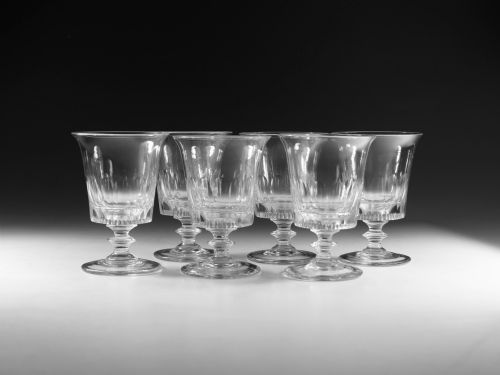
A georgian glassware set comprises functional vessels intended for wine, spirits, water, and desserts, spanning the Georgian, Regency, and early Victorian periods. The listings here include sets of wine glasses, decanters, rummers, port glasses, and finger bowls made across English, Irish, and Scottish origins.
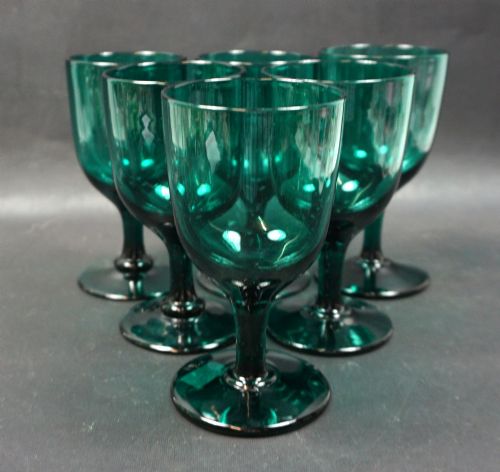
Buyers most frequently encounter matching sets of wine glasses and decanters, often rendered in deep cobalt, peacock, or Bristol green colours. These items reflect the social habits of period dining, where matched suites served specific beverages during formal meals.
How they were made
Glassmakers utilised lead crystal and heavy lead glass, shaping pieces through blowing into moulds or free-blowing by hand. Artisans then applied wheel-cutting techniques to create facets, flutes, and panel cuts that catch the candle or gas light.
Colour was introduced directly into the metal during melting, producing intense shades such as Bristol blue and green. Surface decoration frequently included hand-painted details and occasional applications of gold leaf.
The listings on this page span the Georgian, Regency, and Victorian periods, utilising clear lead crystal alongside coloured glass in blue and green.
What varies in quality
Quality rests upon the weight and clarity of the metal, alongside the crispness of the cutting on stems, bowls, and foot rims. Superior examples display deep, sharp facets and consistent wall thickness across every piece in the set.
Matching sets show uniformity in height, colour depth, and foot diameter, whereas assembled groupings often reveal slight variations in hue and hand-cut patterns. The presence of original pontil marks and undamaged square or wide foot bases further distinguishes finer specimens.
The Georgian Glassware Set Glossary
- Lead glass
- Glass containing lead oxide, which increases weight, brilliance, and softness for cutting. This material gives period drinking vessels their characteristic ring and substantial feel.
- Rummer
- A large, sturdy drinking glass popular in the late eighteenth and nineteenth centuries. These vessels typically feature a short stem and a capacious bowl used for ales, punch, and wines.
- Lemon squeezer foot
- A square, pressed glass base with sloping sides resembling a kitchen lemon squeezer. This form provides exceptional stability to heavy crystal rummers and decanters.
- Pontil mark
- A rough scar on the base of blown glass where the pontil rod was snapped off after shaping. Its presence confirms hand-blown manufacture rather than modern machine production.
- Opaque twist
- A stem formed by drawing out opaque white or coloured glass rods within clear metal into a spiral thread. This technique appears in drinking glasses of the eighteenth and mid-nineteenth centuries.
Georgian Glassware Set: Frequently Asked Questions
Can I use these for dining?
These drinking vessels and decanters remain functional and can be used for special occasions. Hand-washing is essential to protect the soft lead glass and any applied decoration.
Take care with heavy crystal decanters and rummers, ensuring they are placed on stable surfaces away from the edge of the table.
What is lead crystal?
Lead crystal refers to glass containing a significant proportion of lead oxide, which improves the refractive index and makes the material heavier than standard soda-lime glass. This composition allows artisans to cut deep, sharp facets.
The added weight provides better balance in the hand when lifting filled wine glasses or heavy decanters.
How do I date a set?
Dating relies on stylistic markers such as bowl shape, stem construction, and foot design, alongside manufacturing traits like pontil scars and cutting styles. Square lemon squeezer bases and opaque twists point towards specific decades within the Georgian and Victorian eras.
Comparing the rim thickness and colour saturation with documented examples helps narrow down the period of manufacture.