
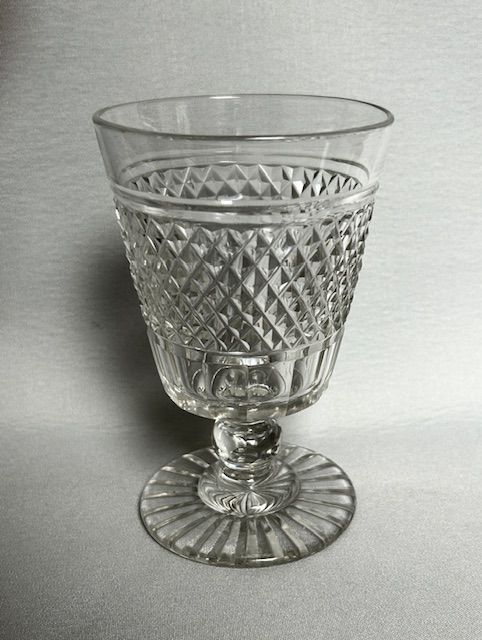


Georgian Cut Crystal Goblets
Georgian cut crystal goblets are substantial drinking vessels in lead crystal and glass, prized for their deep wheel-cut facets and historical charm.
Georgian Cut Crystal Goblets
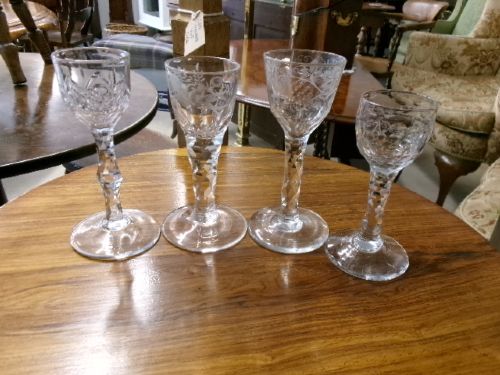
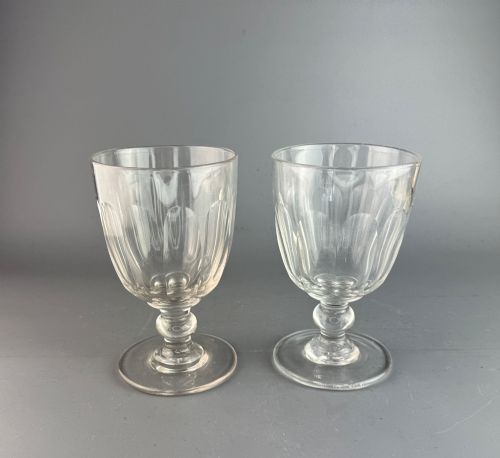
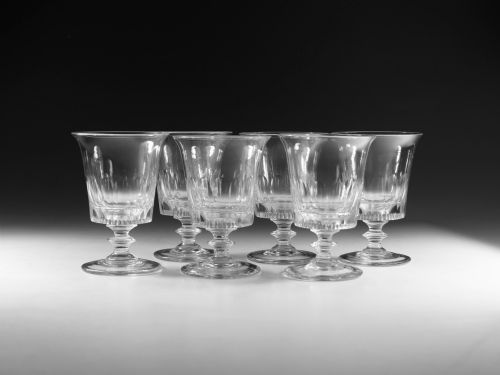
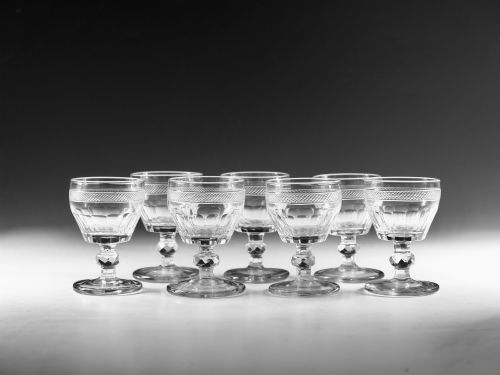
The pieces on this page range from modest facet-stemmed wine glasses to large table rummers with square lemon-squeezer feet. Collectors frequently meet examples with decorated bowls, Jacobite engravings, and hobnail cuts that reflect the shifting aesthetic preferences of the eighteenth and early nineteenth centuries.
Materials and construction
Makers utilised lead crystal, flint glass, and clear glass to achieve the weight and clarity required for deep cutting. The addition of lead oxide increased the refractive index, allowing artisans to cut sharp facets that caught candlelight effectively.
Surface decoration involved wheel-cutting, facet-cutting, and occasional application of gold leaf, as seen on pieces associated with James Giles. Stems were either faceted or left plain, while bases varied from wide footed supports to square lemon-squeezer formations.
Listings feature lead crystal and flint glass across Georgian, Regency, and Victorian periods.
Distinctions in quality
The clarity and weight of the glass establish the baseline of quality, with heavier lead crystal yielding crisper light refraction. Superior examples display precise wheel-cutting with clean edges and symmetrical facets rather than soft or shallow incisions.
Engraved ornamentation further elevates a piece, particularly when executed with fine detail on the bowl. The stability of the foot base and the proportional balance between bowl, stem, and foot dictate the overall execution.
James Giles
The Georgian Cut Crystal Goblets Glossary
- Rummer
- A large, heavy drinking glass popular in the eighteenth and nineteenth centuries, typically used for ale or wine. Rummers often feature robust stems and deep cutting on the lower bowl.
- Lemon-squeezer foot
- A square, pressed glass base with sloping sides resembling the shape of a domestic lemon-squeezer. This form is frequently found on Regency and Georgian table rummers.
- Facet cut
- A decorative technique involving the grinding of flat, polished planes into the surface of the glass. This method enhances light reflection across the body and stem of the vessel.
- Flint glass
- An early term for heavy, brilliant glass containing lead oxide. It provided the ideal material for intricate wheel-cutting and polishing.
- Jacobite engraving
- Decorative motifs such as roses and oak leaves applied to glasses as covert symbols of allegiance to the exiled Stuart dynasty. These historical associations appear on eighteenth-century wine glasses.
Georgian Cut Crystal Goblets: Frequently Asked Questions
What is a rummer glass?
A rummer is a capacious drinking vessel designed for heavy table use during the Georgian and Regency periods. They were traditionally employed for serving ales, wines, or punch.
The form is characterised by a sturdy bowl, a short stem, and a broad foot for stability. Collectors value them for their tactile weight and generous proportions.
How do I date Georgian glassware?
Dating relies on observing changes in glass composition, cutting styles, and form over time. Eighteenth-century pieces often feature facet stems and delicate engraving, whereas Regency examples frequently incorporate heavy hobnail cuts and square feet.
Examining the pontil mark on the underside provides further clues regarding manufacturing techniques. Tool marks and wear patterns also help establish the chronological period.
What are lemon squeezer feet?
Lemon squeezer feet are square, moulded bases found on many rummers and goblets from the late eighteenth and early nineteenth centuries. Their stepped profile resembles contemporary kitchen implements used for extracting citrus juice.
This distinct base shape adds substantial weight to the lower portion of the vessel. It serves as a reliable indicator of Regency and late Georgian manufacturing methods.
Can I use antique goblets daily?
Using antique glass requires care due to the delicate nature of historical lead crystal and thin blown bowls. Hand washing in lukewarm water with mild detergent is essential to preserve the surface.
Sudden temperature changes should be avoided to prevent thermal shock and cracking. Storing them securely away from edge hazards ensures they remain intact for everyday enjoyment.