


Antique Crystal Decanter Jug
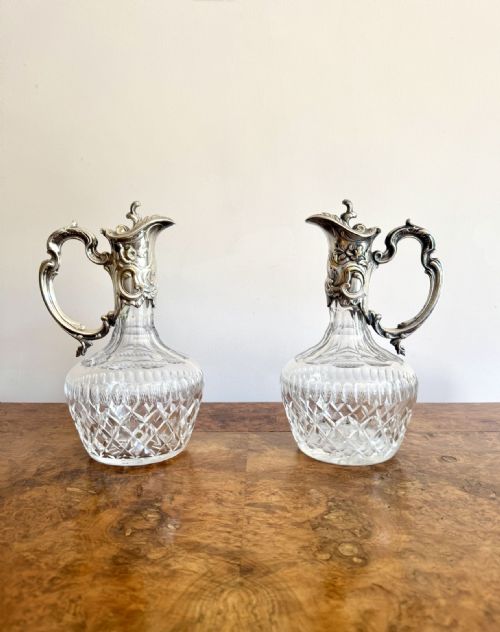
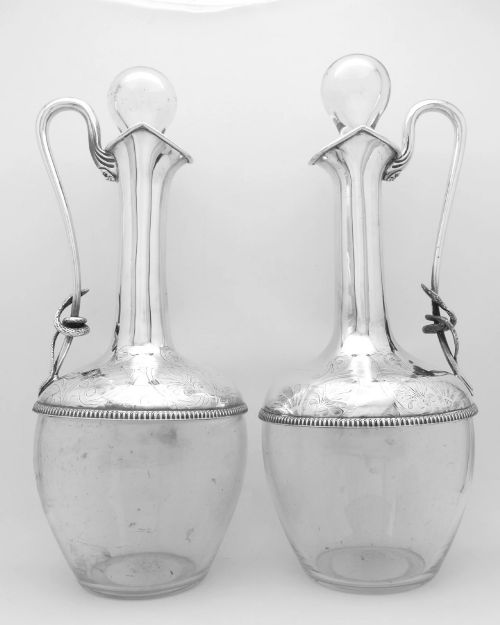
An antique crystal decanter jug brings heavy brilliance to a table, combining moulded or cut glass with gleaming metal mounts.
Antique Crystal Decanter Jug
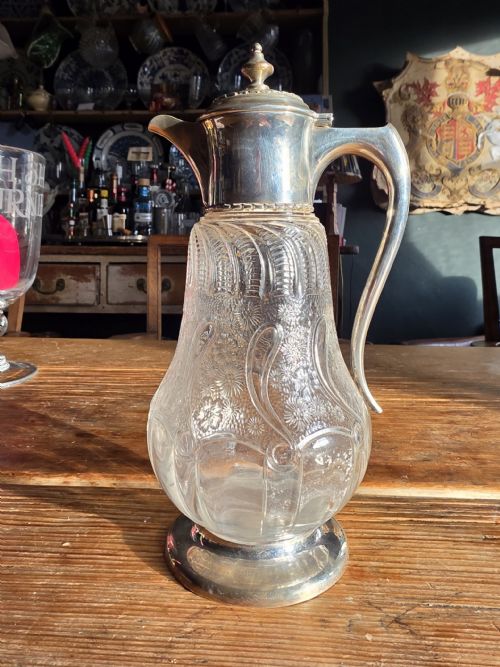
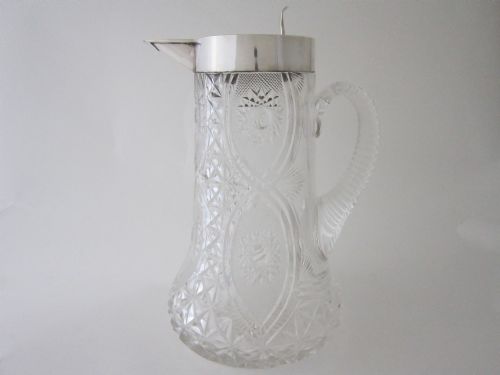
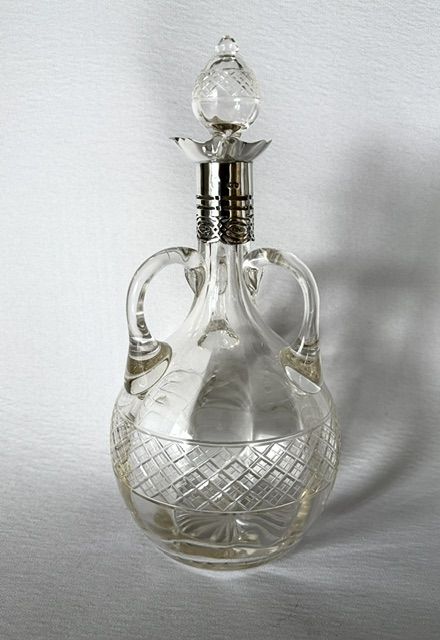
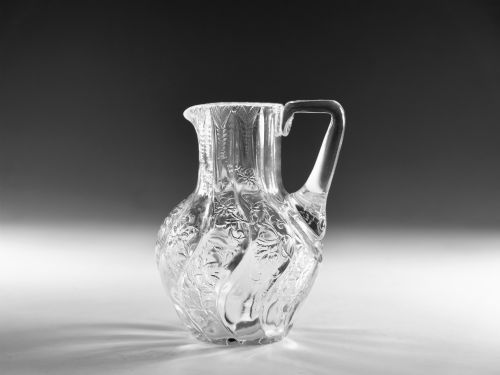
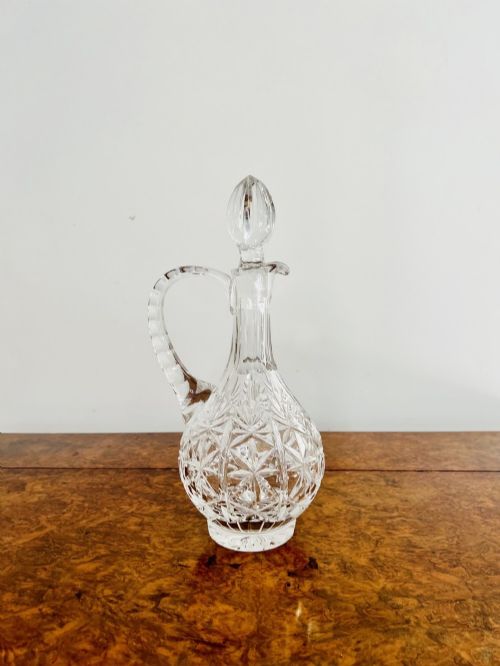
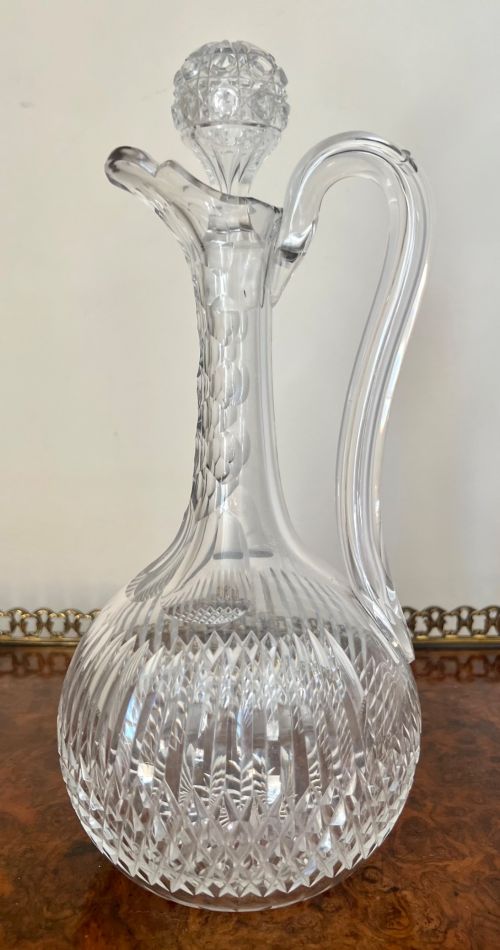
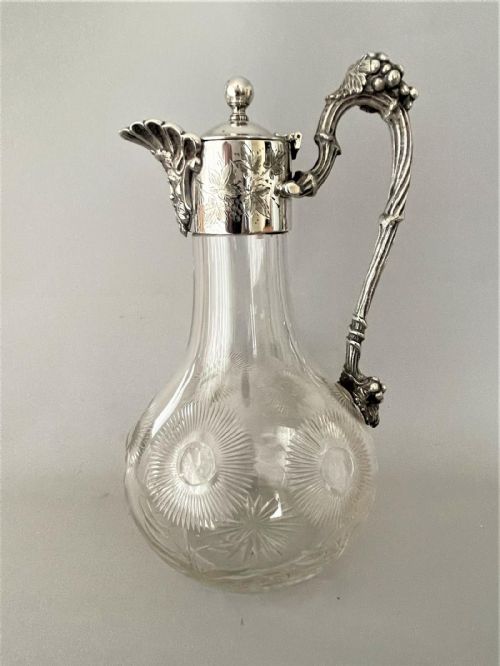
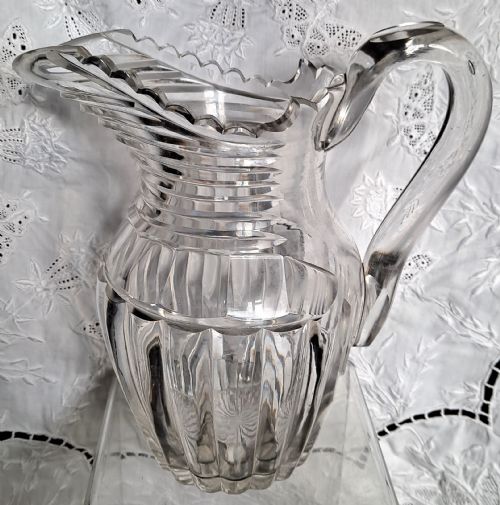
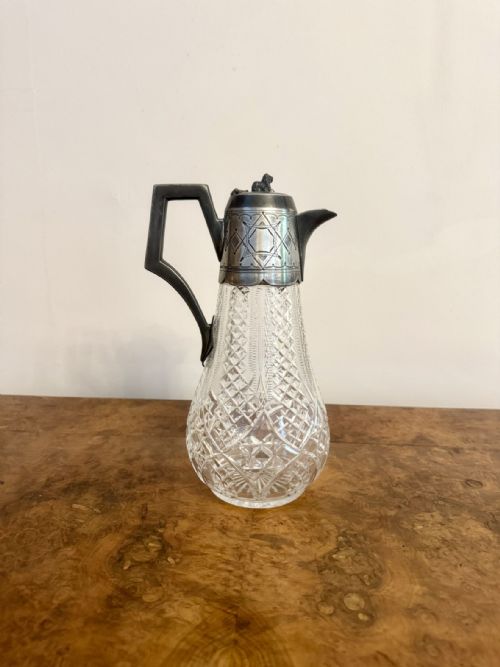
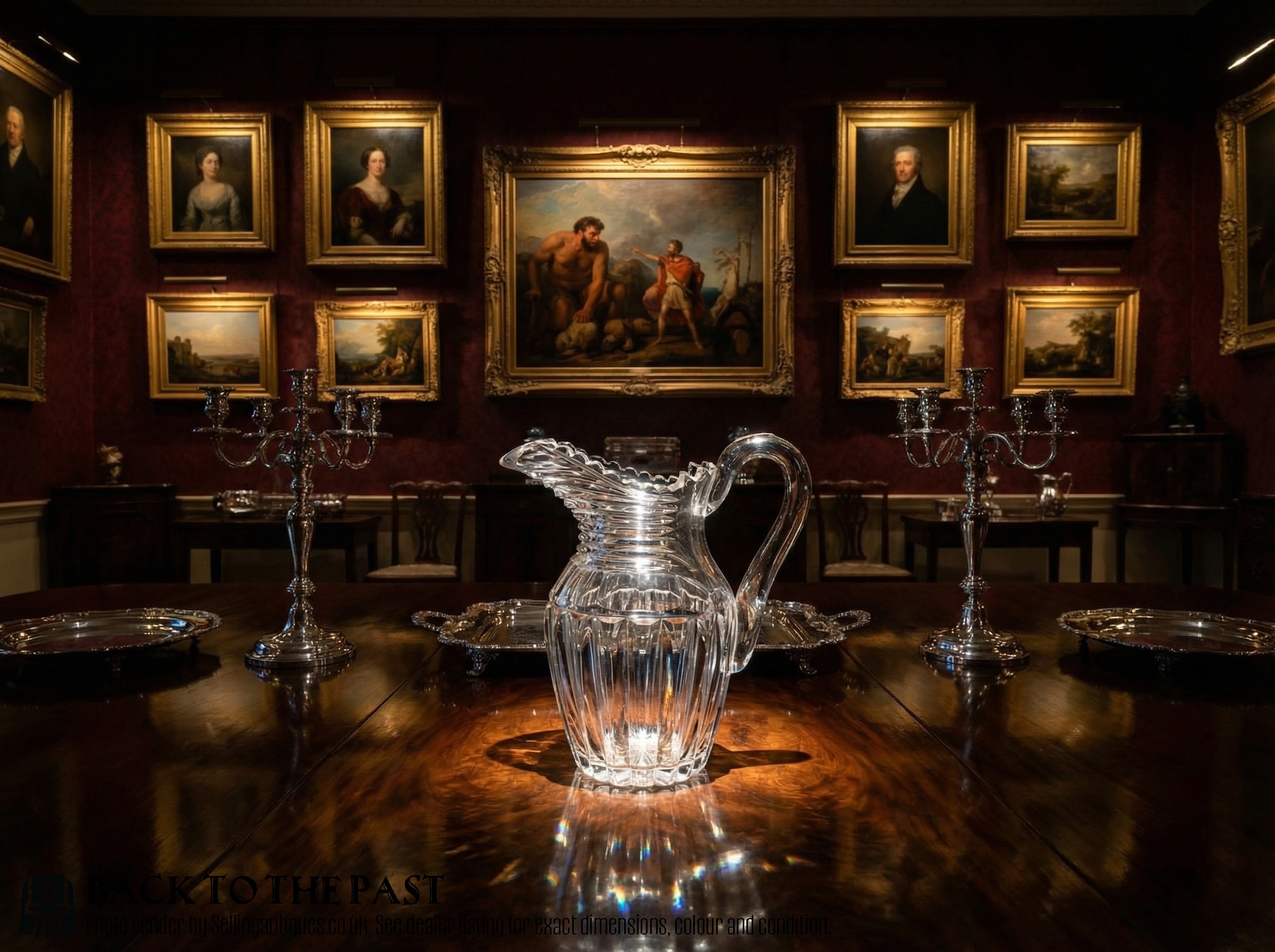
An antique crystal decanter jug takes several distinct shapes across the selection, most frequently appearing as a claret jug, wine jug, water pitcher, or ewer. These vessels serve practical functions for pouring wine, water, or champagne while doubling as decorative table centrepieces.
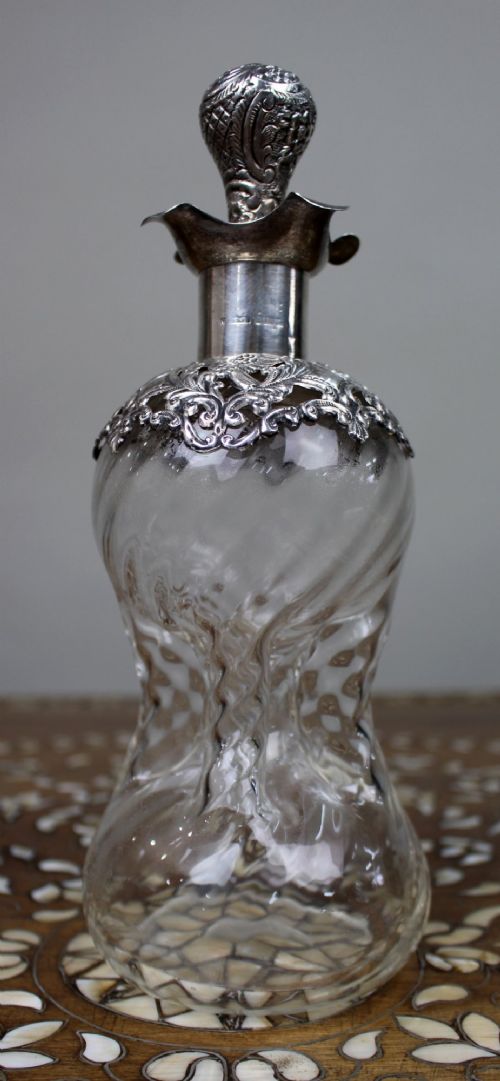
The pieces span various decades, with Victorian, Edwardian, and nineteenth-century examples dominating the selection. Makers from these eras combine clear or coloured glass bodies with handles, lips, and hinged lids fashioned from silver, silver plate, or sterling silver.
Materials and construction
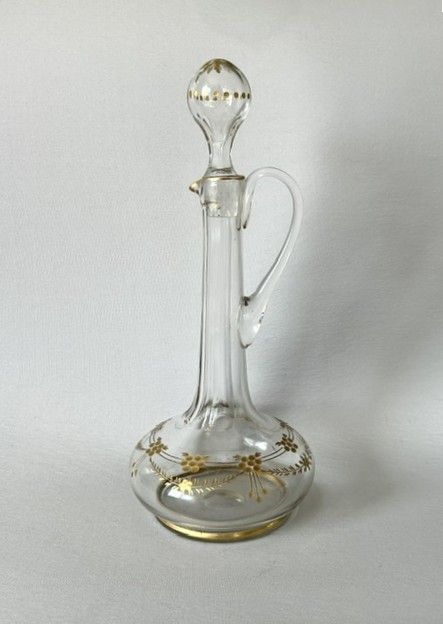
The body of an antique crystal decanter jug utilises lead crystal, cut glass, clear glass, or coloured glass, shaped through blowing and heavy cutting techniques. Artisans decorate the glass surface using pillar and prism cutting, intaglio engraving, or enamel and gilding.
Metal components provide structural support and pouring mechanisms, utilising sterling silver, silver plate, or plain silver mountings. Makers often secure these mounts around the neck and handle, incorporating hinged lids and decorative elements such as masks, serpents, or classical motifs.
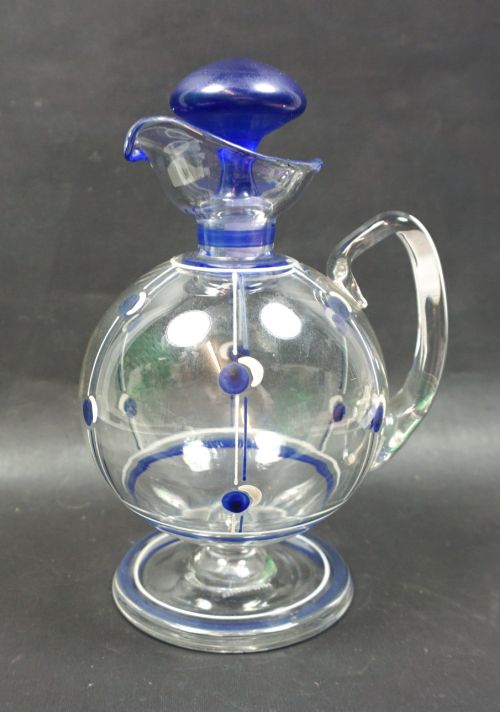
Pieces originating from Czechoslovakia and England demonstrate distinct regional techniques in coloured glass production and metal mounting.
Distinctions in quality
The depth and precision of the glass cutting separate standard vessels from finer specimens, with crisp facets catching the light sharply. Heavy, substantial lead crystal bodies provide a reassuring weight and balance in the hand.
The integration of the metal mount to the glass body dictates the overall standard of manufacture. Well-executed silver or silver-plated mounts fit the contours of the vessel precisely, operating smoothly at the hinge without wobbling.
Asprey and Co. Ltd·Stevens and Williams·Webb Corbett·Richardsons·Tiffany
The Antique Crystal Decanter Jug Glossary
- Claret jug
- A specialised vessel designed specifically for serving red wine, typically fitted with a handle, hinged metal cover, and pouring spout.
- Ewer
- A large jug featuring a wide spout and a curved handle, historically used for water or wine and often richly decorated.
- Lead crystal
- A type of glass containing lead oxide that increases clarity, weight, and the refractive index, making it ideal for deep cutting.
- Intaglio
- A technique where a design is incised beneath the surface of the glass, creating a sunken frosted relief.
- Silver plate
- A base metal coated with a thin layer of silver, frequently utilised for the mounts and handles of nineteenth-century jugs.
Antique Crystal Decanter Jug: Frequently Asked Questions
What is an antique crystal decanter jug used for?
These vessels were originally manufactured to serve wine, claret, water, or champagne at the dining table. The inclusion of a handle and a hinged lid allowed hosts to pour drinks smoothly while keeping the contents covered.
Today, buyers frequently utilise them for entertaining or display purposes, bringing period elegance to modern dining settings.
How do I identify a Victorian piece?
Victorian examples often display heavy cut glass patterns combined with ornate silver-plated or solid silver mounts. Makers during this period favoured naturalistic motifs such as grapes and vines.
Examining the style of the metal mounts and any accompanying hallmarks helps date the vessel to the nineteenth century.
Are these jugs made of crystal or glass?
The selection includes both lead crystal and general cut or clear glass vessels. Lead crystal offers a heavier weight and higher refractive brilliance due to its chemical composition.
Many listings specifically designate lead crystal or rock crystal, while others reference coloured glass, such as red or blue varieties.
How should I care for an antique jug?
Cleaning requires gentle hand washing with warm water and mild detergent, avoiding harsh abrasives that could scratch the delicate glass or wear down silver plating. Wooden or metal drying racks help prevent chipping.
Store the vessel away from direct sunlight and extreme temperature fluctuations to preserve both the glass and the metal mounts.