
Antique Crapaud Chair
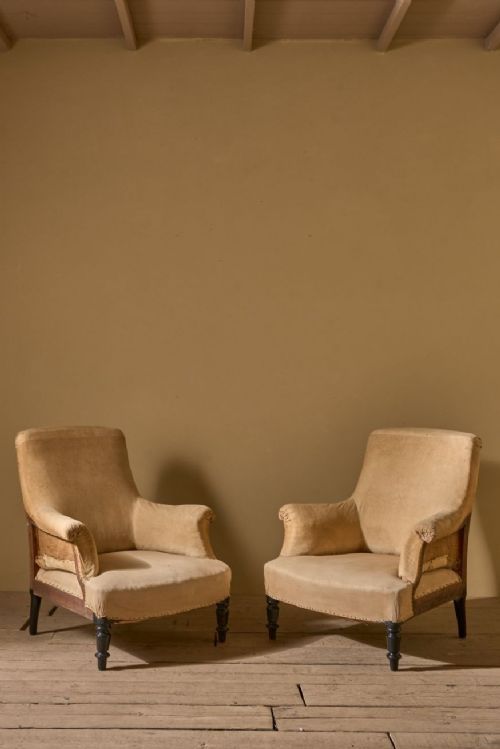
An antique crapaud chair brings low, plump French seating into a room, offering deep comfort and distinctive low-slung proportions.
Antique Crapaud Chair
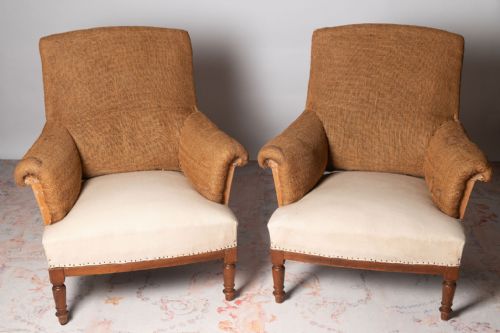
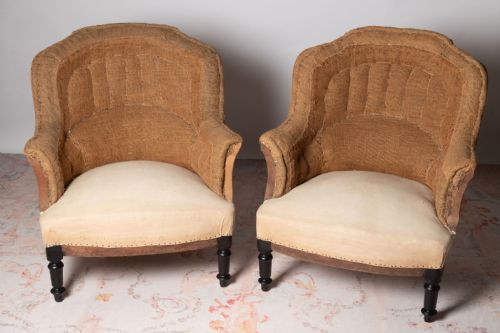
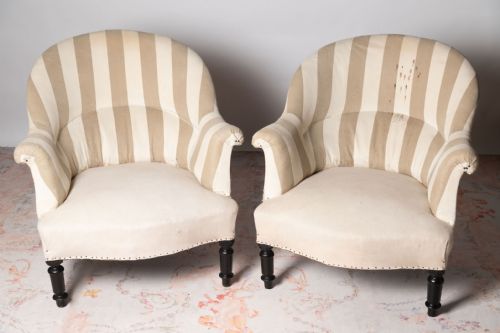
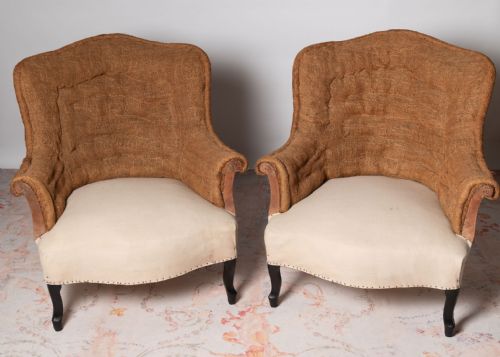
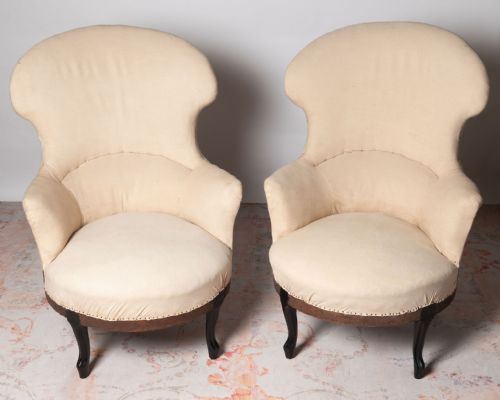
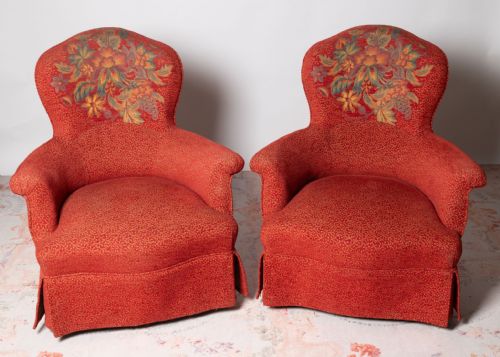
The pieces seen here belong predominantly to the nineteenth century, with French Napoleon III examples forming the core of the selection. Buyers will encounter both finished upholstered pieces and bare frames ready for new fabric.
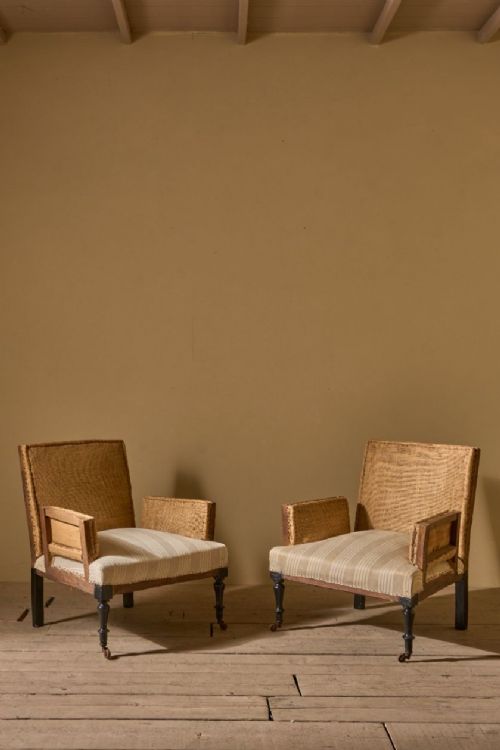
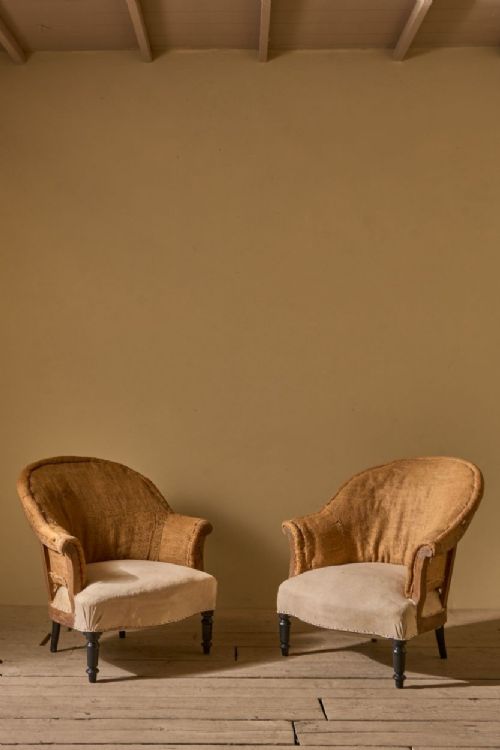
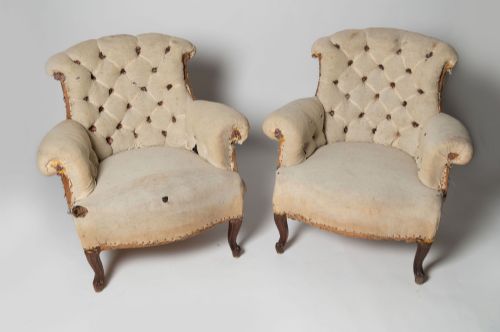
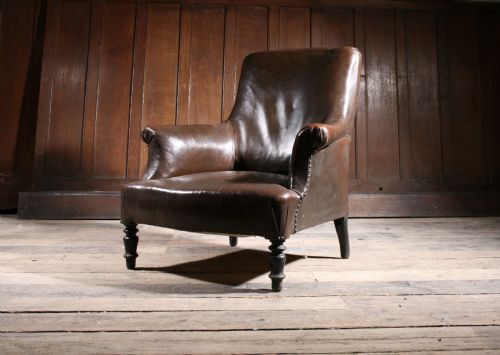
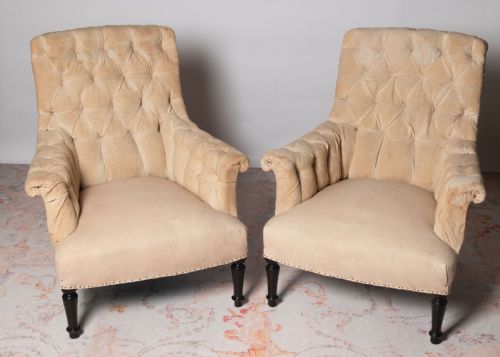
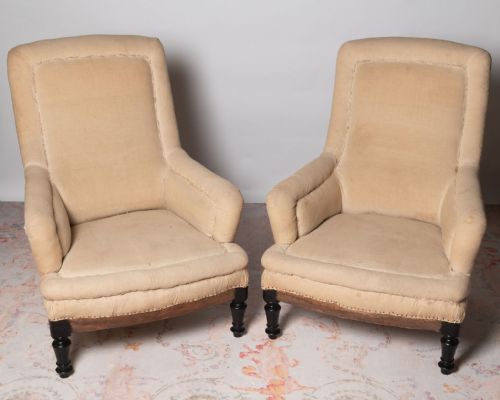
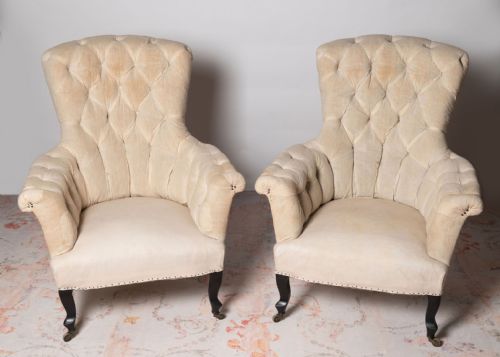
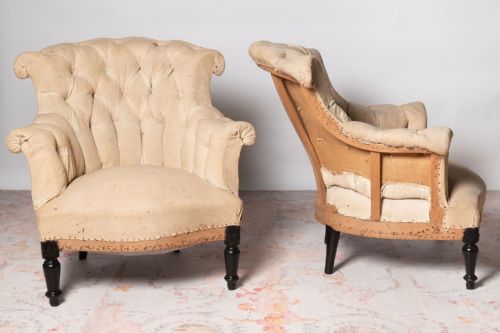
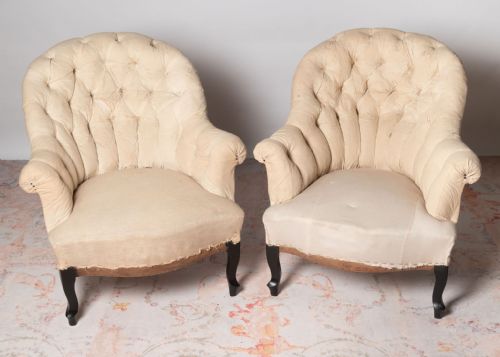
Armchairs dominate the selection, appearing as single seats or in matched pairs. The style spans plain square backs, high buttoned curved backs, and hessian-webbed frames awaiting custom work.
Materials and construction
The internal frames rely on timber such as beech, constructed to support heavy traditional stuffing and springs. Traditional upholstering materials like hessian, calico, linen, and cotton build up the deep, rounded contours.
External finishing details include brass elements and leather, whilst many examples are offered in simple calico or hessian awaiting a final top cover. Wood is largely concealed beneath the upholstery, appearing mainly on feet or exposed structural members.
Materials recorded across the inventory include beech, timber, calico, hessian, linen, cotton, brass, and leather.
Evaluating quality and condition
Quality rests in the integrity of the hidden wooden frame and the firmness of the traditional spring stuffing. A well-built nineteenth-century frame maintains its rigid geometry despite the soft, plump silhouette characteristic of the style.
Condition varies between pieces preserved in period leather or fabric and raw frames sold specifically for upholstery. The distinction lies in whether the foundational webbing and stuffing remain intact or require complete restoration by a specialist.
The Antique Crapaud Chair Glossary
- Crapaud
- A French term meaning toad, applied to low, heavily upholstered armchairs because of their squat, rounded profile. These chairs sit very close to the ground.
- Napoleon III
- A nineteenth-century French design period associated with ornate upholstery, comfort, and eclectic revivals. Pieces from this era often feature deep buttoning and sprung seats.
- Hessian
- A coarse woven fabric made from jute, utilised extensively in traditional upholstery as a foundation layer for supporting stuffing and springs.
- Calico
- A plain-woven cotton fabric used as an interim tight cover over the stuffing of an armchair before the decorative top fabric is applied.
- Tub chair
- An armchair with a continuous curved back and arms forming a single enclosed barrel shape. This form provides an enveloping, supportive sit.
Antique Crapaud Chair: Frequently Asked Questions
What is an antique crapaud chair?
An antique crapaud chair is a low, heavily upholstered French armchair from the nineteenth century. It is characterised by its squat, toad-like proportions and fully padded frame designed for deep comfort.
The style prioritises soft seating over exposed woodwork, often featuring sprung backs and seats hidden beneath fabric layers.
How do I choose between upholstered and un-upholstered chairs?
Choosing an un-upholstered frame allows you to select your own top fabric and leather to match a specific interior scheme. These bare frames show the original hessian and webbing state.
Finished pieces offer an authentic period look immediately, though you must accept the existing fabric or plan for professional recovering.
Where did crapaud chairs originate?
These chairs originate from nineteenth-century France, gaining popularity during the Napoleon III era. French makers focused on creating deeply comfortable, low-slung seating for intimate domestic spaces.
They reflect the period's obsession with lavish upholstery and soft, rounded interior furnishings.
Are these chairs sold as pairs?
Many listings for these chairs appear as matched pairs, particularly within nineteenth-century French examples. Single armchairs are also common.
Pairs provide a balanced look for flanking a fireplace or placing opposite a sofa in a drawing room.