

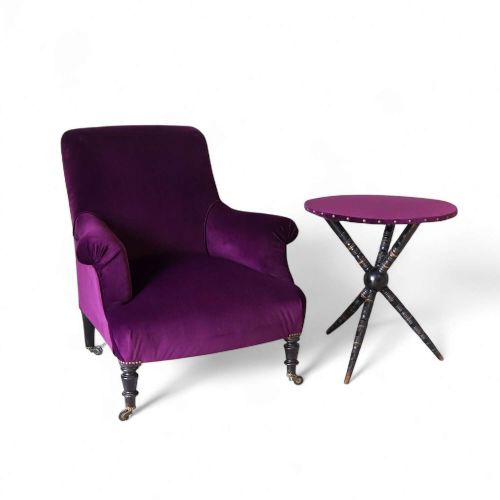
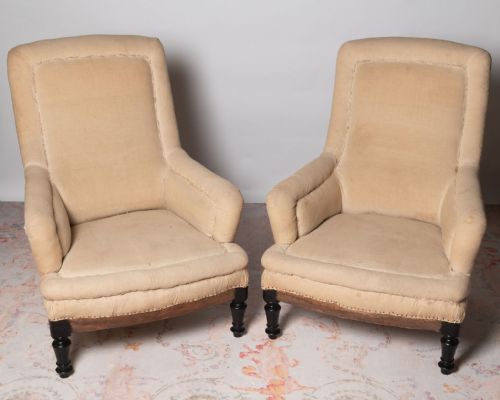
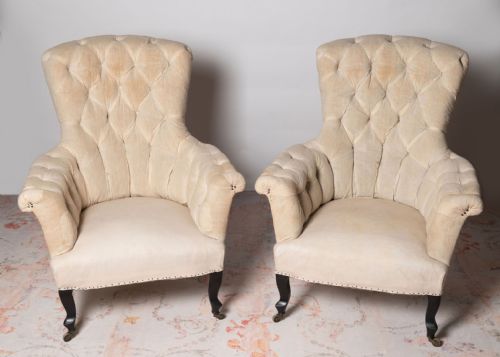
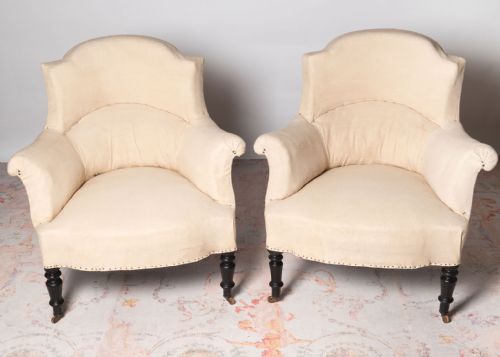
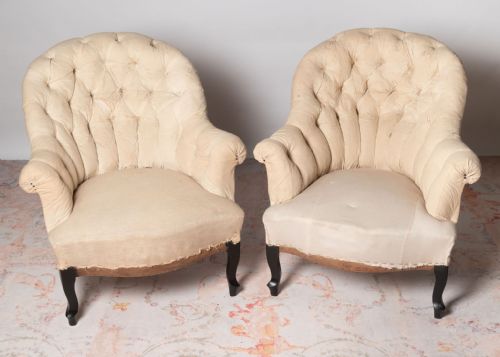
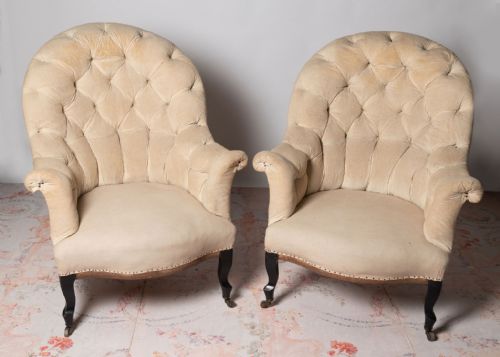
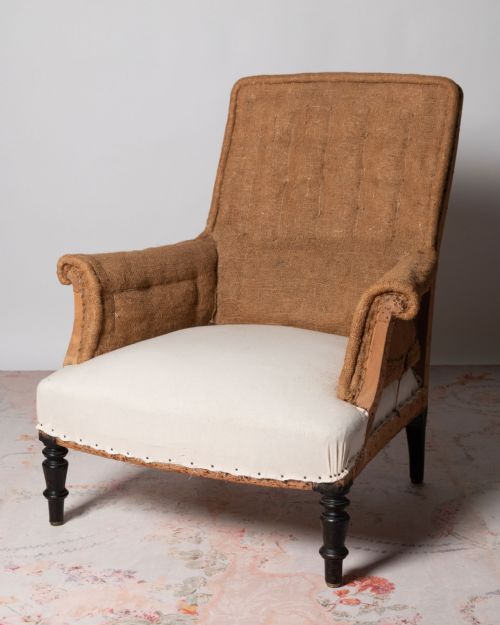
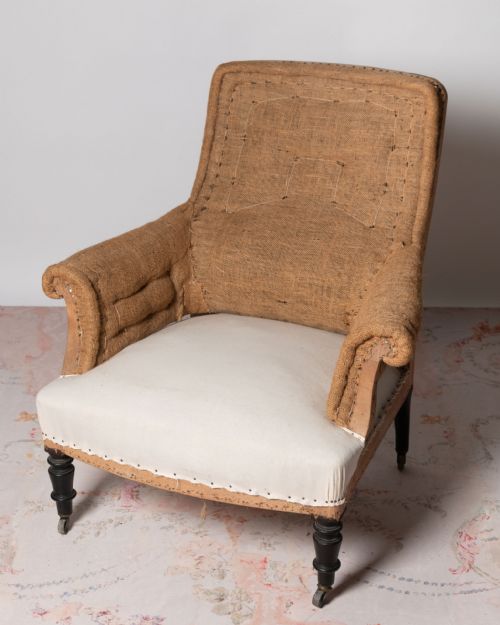


Ebonised French Chair
An ebonised French chair brings dark, polished elegance to a room, offering nineteenth-century seating that combines rich black finishes with classic continental forms.
Ebonised French Chair
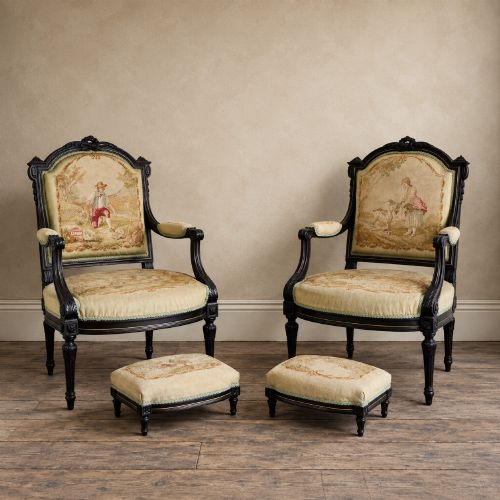
When searching for an ebonised French chair, collectors examine nineteenth-century seating shaped by nineteenth-century, Victorian, Napoleon III, and Louis XVI Revival styles. These pieces range from armchairs and slipper chairs to chaise longues and side chairs, often appearing in pairs or sets.
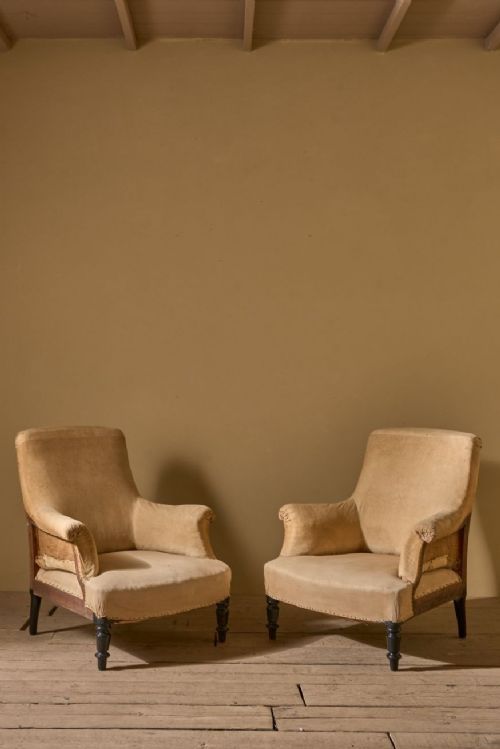
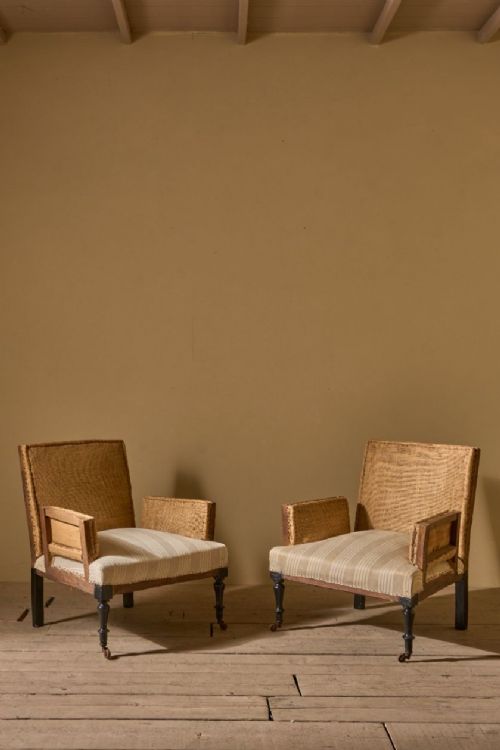
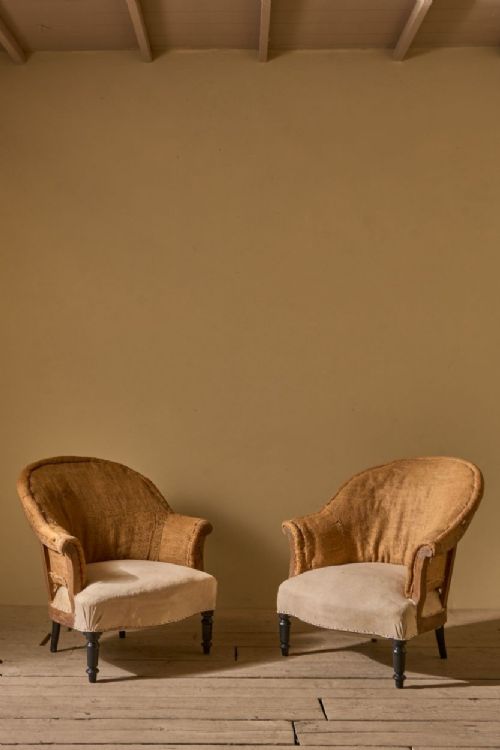
The most common examples on this page date from the nineteenth century and carry distinct continental silhouettes, including tub chairs, buttoned-back designs, and salon armchairs. Beech and general woods form the structural framework beneath dark finishes, frequently upholstered in materials such as calico, velvet, linen, and hessian.
How they were made
Craftsmen built these nineteenth-century seats using beech and other woods, applying an ebonised dark finish to simulate costly ebony. Frames often incorporated turned front legs, carved lion's heads, or brass details.
Upholstery techniques relied on traditional stuffing and webbing covered in fabrics like hessian, calico, cotton, linen, and velvet. Buttoning secured the padding on high curved backs, creating structured support for low nursing chairs and armchairs.
Listings feature nineteenth-century, Victorian, and 1880 periods, alongside Napoleon III and Louis XVI Revival styles using brass, beech, and ebonised wood.
What varies in quality
Quality rests in the crispness of the wood carving, the integrity of the ebonised surface, and the balance of proportions between the frame and upholstery. Pieces with detailed elements such as carved lion's heads or precise turnings show superior craftsmanship.
The preservation of the dark finish and the structural soundness of the beech frame distinguish finer examples from simpler provincial seating. Original fabric coverings or appropriate period upholstery choices elevate the overall integrity of the piece.
The Ebonised French Chair Glossary
- Ebonised wood
- Timber treated with stain or paint to imitate ebony. This dark finish gained popularity during the nineteenth century for formal salon furniture.
- Napoleon III style
- A nineteenth-century French design movement known for eclectic revivals and deep buttoned upholstery. These seats often feature curved backs and dark polished frames.
- Louis XVI Revival
- A nineteenth-century style drawing on eighteenth-century French neoclassical symmetry and restrained ornamentation. Such pieces display refined proportions and classical restraint.
- Slipper chair
- A low-seated chair historically used in bedrooms for dressing. These items sit close to the floor and appear frequently in nineteenth-century French forms.
- Hessian
- A coarse woven fabric used as a traditional foundation layer beneath outer upholstery. It provides internal support for springs and stuffing in antique seating.
Ebonised French Chair: Frequently Asked Questions
How do I identify a Napoleon III chair?
Napoleon III pieces typically date from the mid to late nineteenth century and display French influences like buttoned upholstery and ebonised frames.
They often appear as tub chairs, salon armchairs, or nursing chairs with dark polished wood.
What fabrics are correct for these chairs?
Original and appropriate coverings include velvet, calico, linen, cotton, and hessian.
Many examples retain neutral under-upholstery or historical textiles suited to nineteenth-century drawing rooms.
Are these chairs suitable for daily use?
Nineteenth-century seating functions well in modern interiors when frames remain stable and internal webbing is secure.
Armchairs and side chairs offer sturdy support, though delicate salon pieces suit lighter seating duties.
What is ebonised wood?
Ebonising is a chemical or finishing process that turns light woods like beech into a deep black shade.
This technique mimics expensive ebony wood and defines the aesthetic of nineteenth-century French and Victorian furniture.
How do I tell Victorian from Napoleon III?
Victorian examples originate from British-influenced production periods, while Napoleon III pieces reflect French design aesthetics from the same century.
Both styles frequently utilise ebonised wood finishes and buttoned upholstery.