
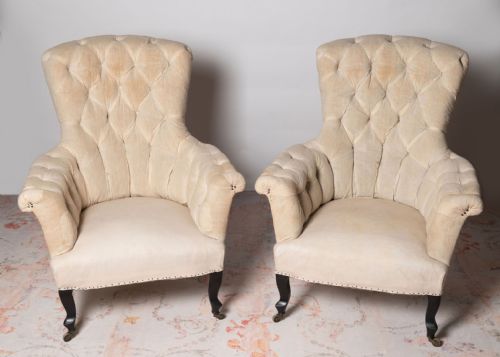
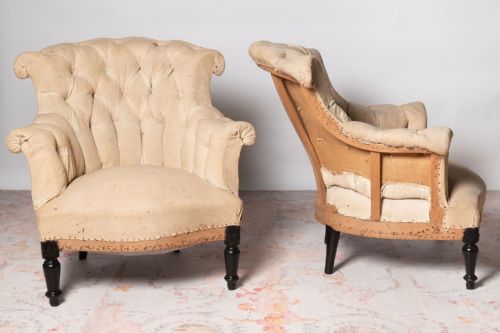
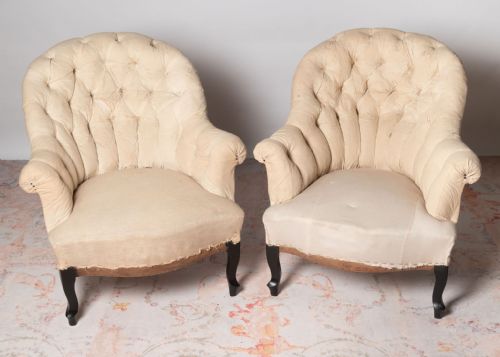
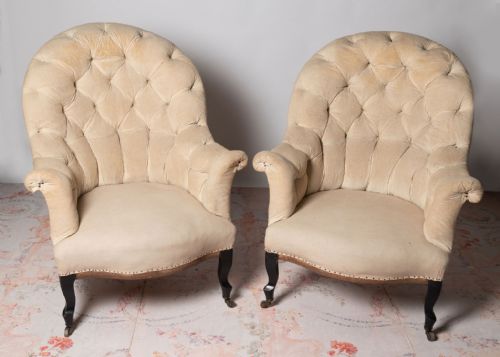
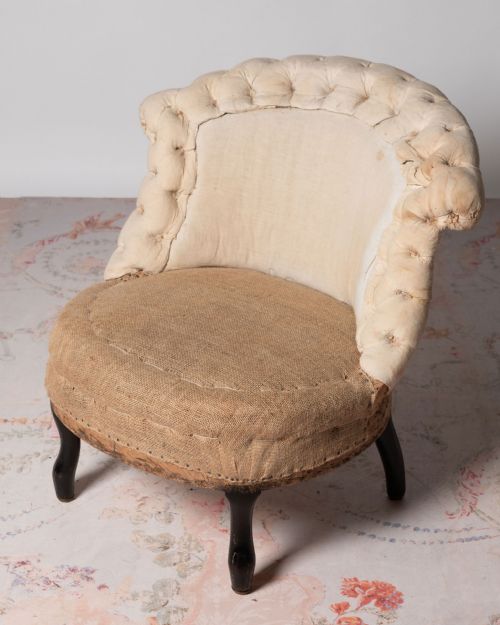

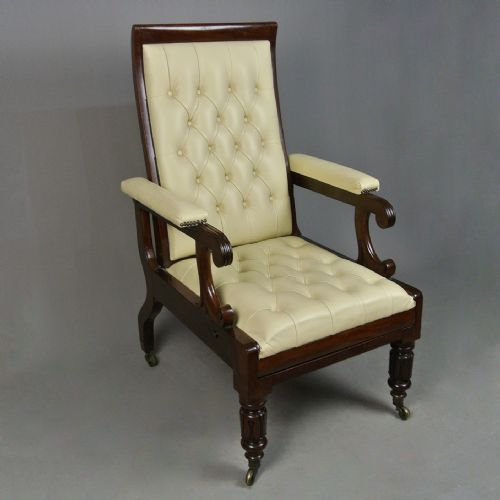

Cream Tufted Armchair
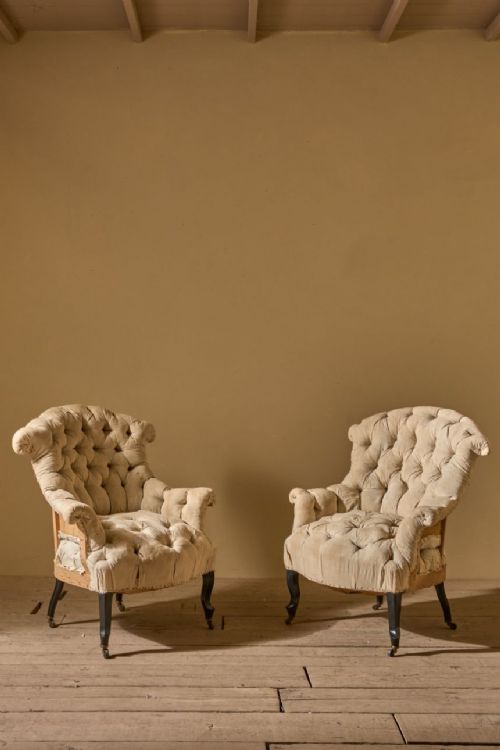
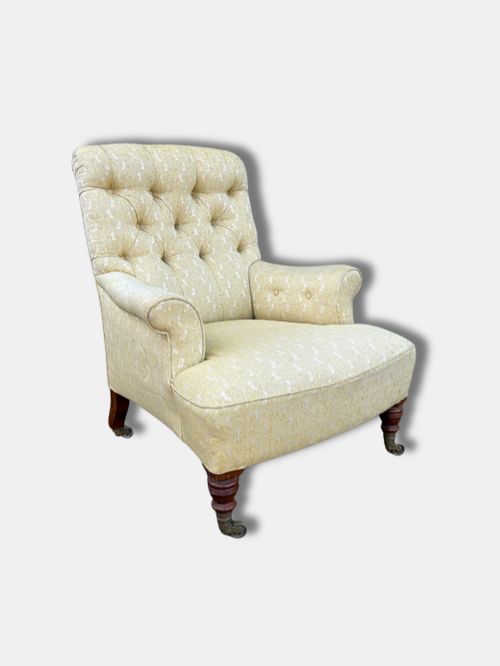
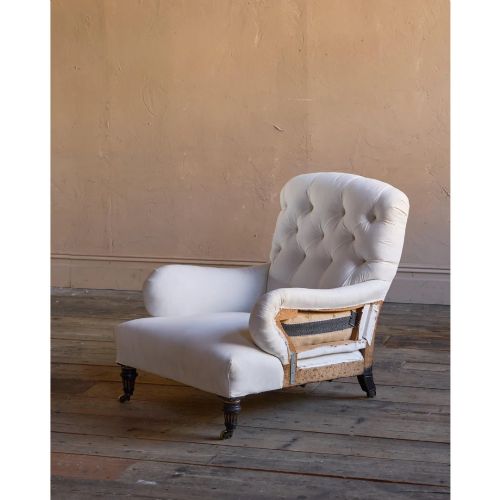
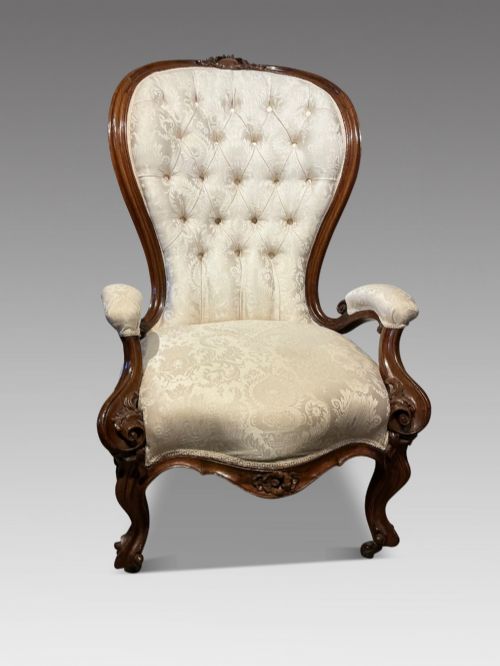
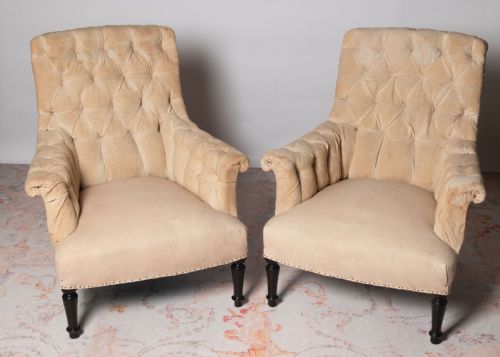
A cream tufted armchair brings deep buttoning and soft upholstery to a room, offering both comfort and strong period character.
Cream Tufted Armchair
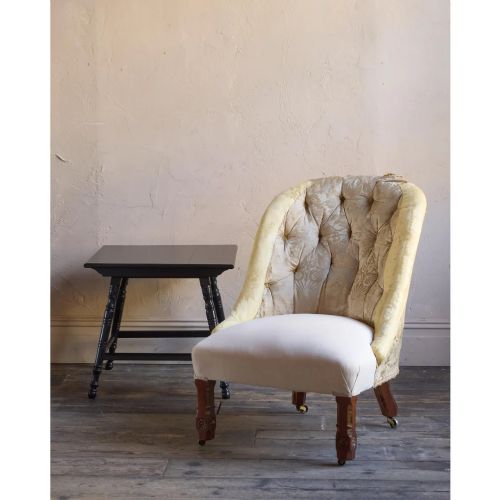
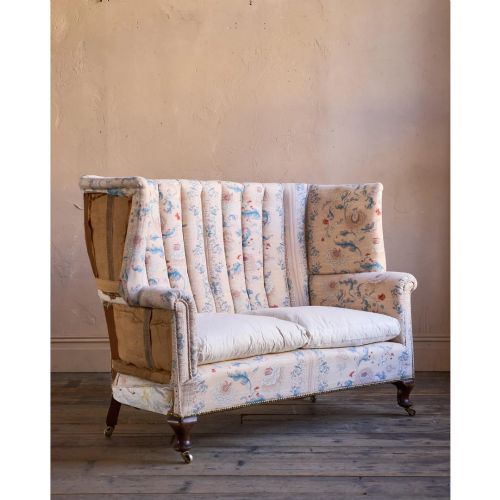
A cream tufted armchair unites deep buttoning with upholstered comfort across a range of nineteenth century periods. These seating pieces span Victorian, Regency, and Napoleon III designs, alongside specific forms such as ladies chairs, wingbacks, and salon suites.
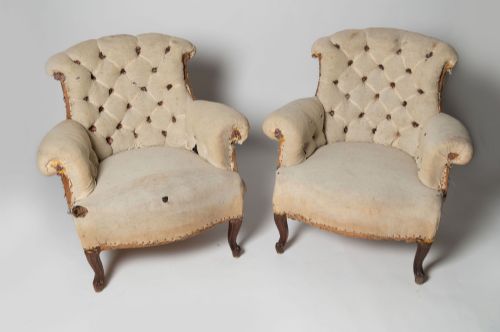
Buyers encounter numerous variations on this page, from French open armchairs with fishtail backs to English armchairs bearing aesthetic movement legs. The selection draws on materials like calico, linen, and fabric to deliver the signature tufted appearance.
How they were made
Makers built the frames of a cream tufted armchair using solid hardwoods such as mahogany, walnut, and timber. These structural woods provided the necessary strength for deep buttoned upholstery and curving forms.
Upholsterers applied fabrics including calico, linen, and fabric over internal padding, securing the signature tufts with careful stitching. Exposed woodwork received polished or ebonised finishes, often complemented by brass castors.
Certain chairs come with matching stools, ensuring nobody ever has to argue over where to put their feet.
What varies in quality
The distinction between standard examples and the finest pieces lies in the precision of the frame carving and the integrity of the joinery. Superior armchairs exhibit crisp detailing on cabriole or ebonised legs and substantial proportions.
Makers like Howard and Sons introduced structural refinements, such as original stamped castors and patent reclining mechanisms. The quality of the upholstery execution and the selection of timber elevate certain works above ordinary production.
Howard and Sons
The Cream Tufted Armchair Glossary
- Buttoning
- A method of upholstery where depressions are pulled into the padding and secured with thread or buttons to create a diamond pattern. This technique provides both visual rhythm and structural support to the fabric.
- Cabriole leg
- A furniture leg that curves outward and then tapers inward, mimicking an animal's leg in motion. It appears frequently on Victorian and later nineteenth century seating.
- Wingback
- An armchair with side panels attached to the back, designed to shield the occupant from draughts. Mid Georgian and nineteenth century examples feature substantial proportions.
- Ebonised
- Wood treated to resemble ebony through staining or painting. This dark finish appears on the legs of several open armchairs in the collection.
- Castor
- A small wheel fitted to the base of furniture legs for ease of movement. Makers sometimes stamped these brass fittings to denote their origin.
Cream Tufted Armchair: Frequently Asked Questions
What defines a cream tufted armchair?
These seating pieces combine deep buttoned upholstery with fabric coverings in pale neutral tones. They span various nineteenth century styles including Victorian and Napoleon III.
Makers employed woods like walnut and mahogany for the frames, creating forms from bedroom chairs to large wingbacks.
How do I identify a Howard and Sons chair?
Makers sometimes stamped their firm name directly into the wooden frame or on the brass castors. Look for characteristic aesthetic movement legs and substantial, comfortable proportions.
Upholstery style and build quality also point toward specific nineteenth century workshops.
Where should I place a salon chair?
These smaller scaled seats suit drawing rooms, bedrooms, or dressing areas where heavy seating feels too imposing. Their decorative wooden frames look best positioned where they remain visible from multiple angles.
Pairing them with matching stools creates a cohesive corner arrangement.
Are these chairs comfortable for daily use?
Nineteenth century upholstered seating was designed for drawing room comfort, featuring sprung seats and padded buttoned backs. The generous proportions of wingback and lounge forms offer substantial support.
Restored pieces maintain their original ergonomic qualities while updating the internal padding.