



Antique Covered Sauce Tureen
An antique covered sauce tureen brings the formal dining table of the eighteenth and nineteenth centuries into focus with generous proportions and hand-finished ceramic or silver bodies.
Antique Covered Sauce Tureen
An antique covered sauce tureen is a small, lidded vessel designed to keep table sauces warm and contained during formal meals. You encounter these serveware pieces primarily in ceramic bodies dating across the Georgian, Regency, and Victorian periods.
The inventory on this page ranges from bone china and pearlware to ironstone and sterling silver. Many examples arrive paired with matching stands or ladles to complete the historic tablescape.
Materials and construction methods
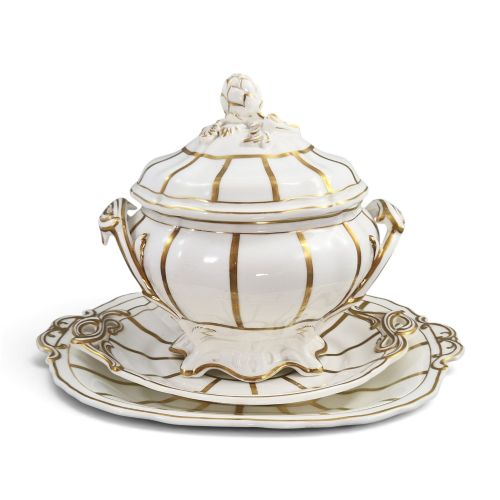
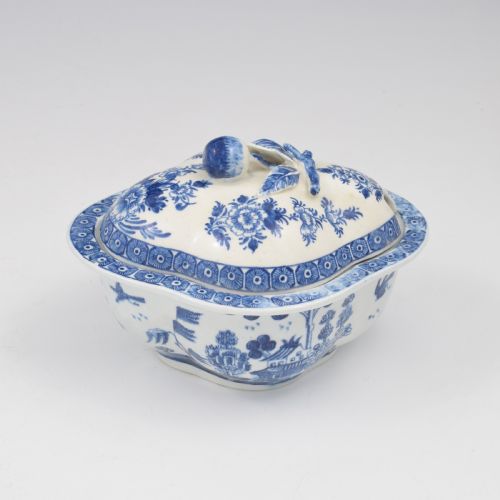
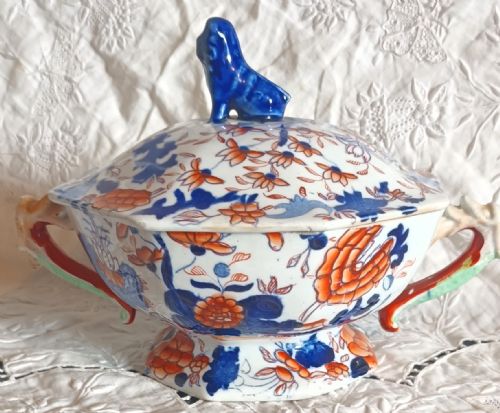
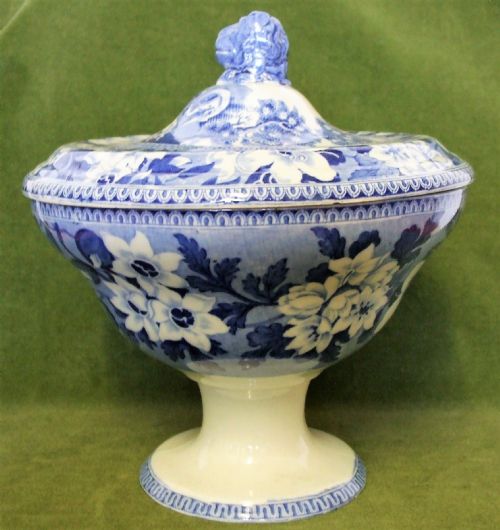
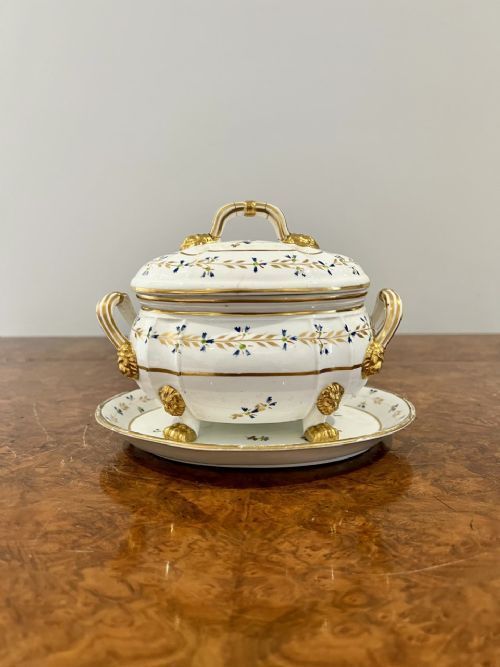
Potters and porcelain manufacturers shaped these vessels using earthenware, ironstone, and fine bone china, often applying cobalt blue transfer prints or polychrome enamel decoration. Gold leaf and gilt highlights frequently accent handles and rims on Regency and Victorian porcelain.
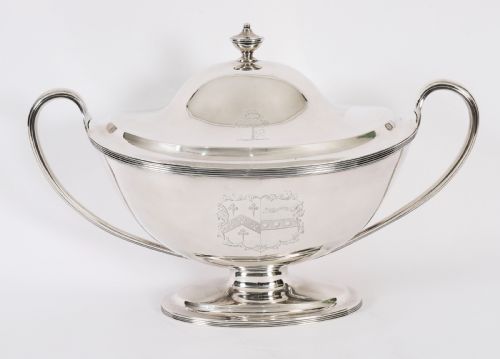
Silversmiths constructed alternative versions from sterling silver or Old Sheffield plate, hammering and casting metal into robust forms with detailed handles.
Several tureens disguise their utilitarian function beneath playful animal forms, featuring sculpted elephant heads and partridge bodies upon the lids.
Assessing quality in sauce tureens
Quality rests on the crispness of the moulding, the clarity of transfer-printed designs, and the precision of hand-painted enamel work. Pieces featuring complete sets with original stands and matching covers demonstrate higher production ambition.
Maker attribution and material weight distinguish standard utility vessels from exhibition-grade porcelain and marked silver works by established makers.
John Rogers and Son·Flight Barr and Barr·William Bennett·Mappin and Webb·William Grundy·Doulton Burslem
The Antique Covered Sauce Tureen Glossary
- Ironstone
- A dense, durable type of earthenware patented in the nineteenth century. It resists chipping and served as a robust base for transfer-printed patterns.
- Pearlware
- A refined earthenware developed in the eighteenth century featuring a subtle blue-tinted glaze that pooled in recesses. It bridges the gap between creamware and true porcelain.
- Transfer print
- A decorative technique where an engraved copper plate transfers a design onto paper, which is then stamped onto the ceramic body before glazing. This method allowed for intricate repeatable patterns like blue and white landscapes.
- Old Sheffield plate
- A composite material made by fusing a thin sheet of silver to a thicker copper base. It provides the appearance of solid silver while utilising a more accessible core metal.
Antique Covered Sauce Tureen: Frequently Asked Questions
How were sauce tureens used at the table?
These vessels sat on dining tables to hold gravies, melted butter, or culinary sauces during multi-course meals. The matching cover kept the contents warm until servers ladled portions onto individual plates.
The inclusion of an attached or separate stand protected fine dining tables from heat and spills. Many period examples stayed in the dining room as part of a larger matching tableware service.
How do I identify a Georgian sauce tureen?
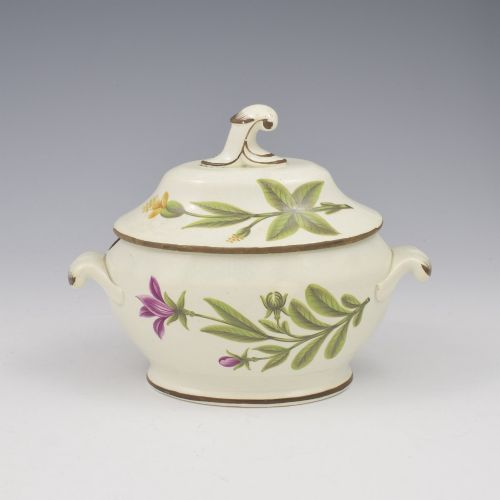
Georgian examples often feature neoclassical silhouettes, pearlware bodies, or hand-painted botanical motifs typical of late eighteenth and early nineteenth-century design. Silver variants from this era emphasise clean classical lines and cast handles.
Looking closely at the paste and glaze helps separate these earlier earthenware pieces from heavier Victorian ironstone productions.
Can I use these antique tureens for serving food today?
Ceramic and silver tureens remain structurally suitable for serving warm sauces during contemporary meals if handled with care. Hand washing protects the delicate nineteenth-century glazes and gilt highlights from modern detergents.
Harsh temperature shocks should be avoided to preserve the historic glaze and prevent crazing.
What is the difference between porcelain and ironstone tureens?
Porcelain offers a translucent body with a smooth, vitreous finish, whereas ironstone is an opaque, heavy earthenware engineered for everyday durability. Ironstone pieces typically display thicker walls and dense bodies designed to withstand heavy domestic use.
Both materials accommodated transfer printing, though fine porcelain often received delicate hand-gilded accents.