
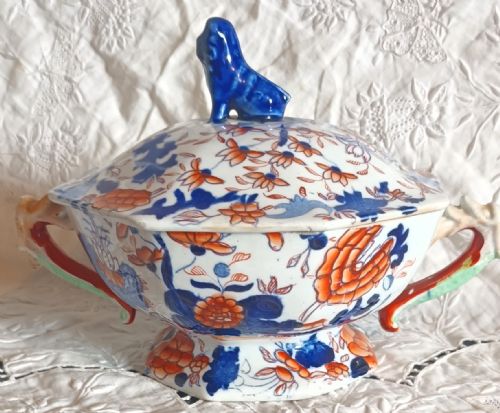


Cobalt Blue Ironstone Tureen
These cobalt blue ironstone tureen pieces are sturdy serving vessels that bring rich nineteenth-century colour and pattern to a dining table.
Cobalt Blue Ironstone Tureen
When you search for a cobalt blue ironstone tureen, you are looking at heavy serving vessels designed for soup, vegetables or sauce at the grand nineteenth-century table. These pieces span soup tureens, vegetable tureens, sauce tureens with ladles, and large covered bowls.
You are most likely to meet pieces from the Georgian, Regency and Victorian periods on this page, alongside English Chinoiserie and Regency Chinoiserie styles. Forms include covered bowls and serving dishes created in sturdy ironstone ceramic and earthenware.
Makers such as Mason's dominate the evidence, offering patterns like bamboo and grasshopper alongside other nineteenth-century English examples. The forms range from sauce tureens to large soup tureens intended for prominent display and practical dining use.
How they were made
These pieces utilise ironstone ceramic and earthenware bodies, glazed and decorated with enamel and cobalt blue pigment. Potters shaped the clay into tureens, covers and bowls designed to withstand regular dining room service.
Decoration includes intricate Chinoiserie patterns, bamboo motifs and grasshopper designs applied beneath or over the glaze. Some examples incorporate gold leaf and gilding to highlight handles, rims and finials.
Grasshoppers unexpectedly hopped onto early nineteenth-century dinner services, leaping across ironstone tureens alongside traditional bamboo stalks.
What varies in quality
The distinction between standard service wares and the finest examples lies in the precision of the cobalt blue transfer printing and hand-painted enamel details. Richness of gilding and the crispness of moulded ironstone elements separate simpler pieces from elaborate creations.
Completeness alters the character of a tureen, particularly whether the original cover and matching ladle survive intact with the main bowl. The complexity of patterns, such as detailed Chinoiserie scenes or specialised motifs, defines the upper tier of the range.
Mason's·Coalbrookdale
The Cobalt Blue Ironstone Tureen Glossary
- Ironstone
- A heavy, durable type of earthenware patented in the nineteenth century to rival porcelain. It provides a robust body for large serving vessels.
- Tureen
- A deep covered bowl designed for serving soup, sauce or vegetables at the table. It usually includes a matching lid and sometimes handles.
- Chinoiserie
- European artistic styles reflecting Chinese motifs and landscapes. This style appears frequently on nineteenth-century ceramic patterns.
- Gilding
- The application of gold leaf or gold powder to ceramic surfaces. It accents the handles, rims and decorative borders of finer pieces.
- Earthenware
- Porous pottery fired at a lower temperature than stoneware or porcelain. It forms the ceramic base for much nineteenth-century tableware.
Cobalt Blue Ironstone Tureen: Frequently Asked Questions
What is a cobalt blue ironstone tureen?
A cobalt blue ironstone tureen is a heavy ceramic serving dish with a cover, manufactured during the nineteenth century. These vessels were used for serving soup, vegetables or sauce at formal dining tables.
They feature deep blue transfer-printed patterns, often incorporating Chinoiserie designs, bamboo or grasshopper motifs upon a sturdy ironstone body.
How were these tureens used?
These tureens served practical functions at the nineteenth-century dining table for containing and retaining the heat of soups and sauces. They sat centrally on the table as functional tableware and decorative centerpieces.
Servants brought them to the table filled with food, and the matching covers kept the contents warm between servings.
How do I live with ironstone?
Living with nineteenth-century ironstone involves appreciating its sturdy nature while treating glazed ceramic surfaces with reasonable care during handling. Many collectors display large soup tureens on sideboards or use vegetable tureens for modern dining.
Hand washing preserves the enamel colours, gold leaf and delicate gilding found on decorated nineteenth-century ceramic pieces.
How can I tell the periods apart?
Georgian and Regency pieces often display distinct Chinoiserie patterns, bamboo motifs or early Mason's marks characteristic of the early nineteenth century. Victorian examples show broader stylistic variation and heavier moulded details from later decades.
Examining the paste, glaze quality and any maker's stamps helps distinguish between an 1813 grasshopper pattern and later nineteenth-century production.