
Antique Cocktail Glass
An antique cocktail glass brings the sharp geometry of the Art Deco era and the heavy sparkle of Victorian cutting straight to the modern bar.
Antique Cocktail Glass
When you search for an antique cocktail glass, you encounter pieces designed for hosting drinks from the Victorian, Edwardian, and Art Deco periods. The selection spans fragile champagne coupes, hollow stem glasses, and heavy crystal bowls meant for serving iced libations.
Many of these vessels date from the 1920s and 1930s, aligning with the rise of cocktail culture and the sleek lines of the Art Deco style. You also discover earlier 19th-century examples featuring detailed wheel cutting or layered coloured crystal.
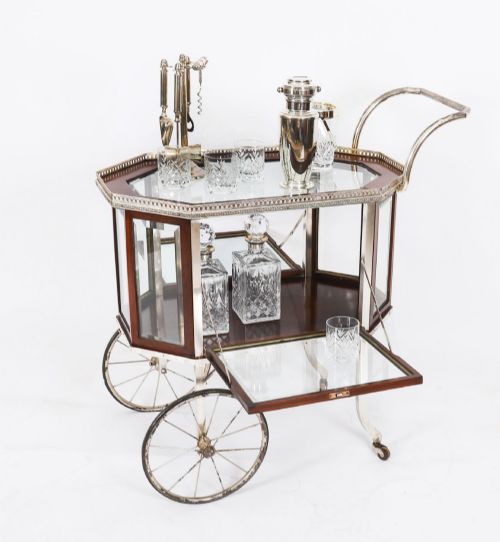
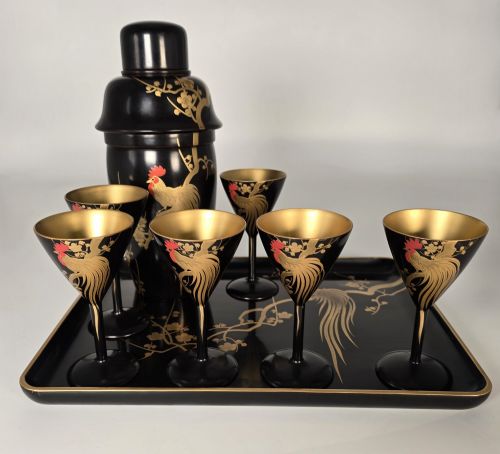
The category extends beyond individual drinking vessels to include matching decanter sets, shaker holders, and silver-topped carafes designed to complement the glasses. These items sit alongside larger barware such as silver-plated jugs and mirrored serving trays.
Materials and construction methods
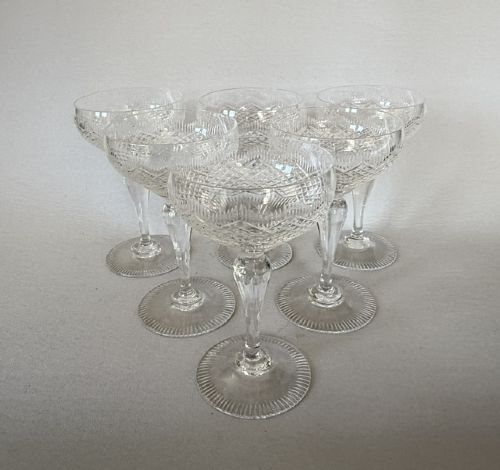
Makers shaped these drinking vessels from clear and coloured glass, frequently utilising cut glass techniques to create faceted stems and patterned bowls. Overlay glass, where a layer of coloured crystal coats a clear body, appears in rich green and red hues.
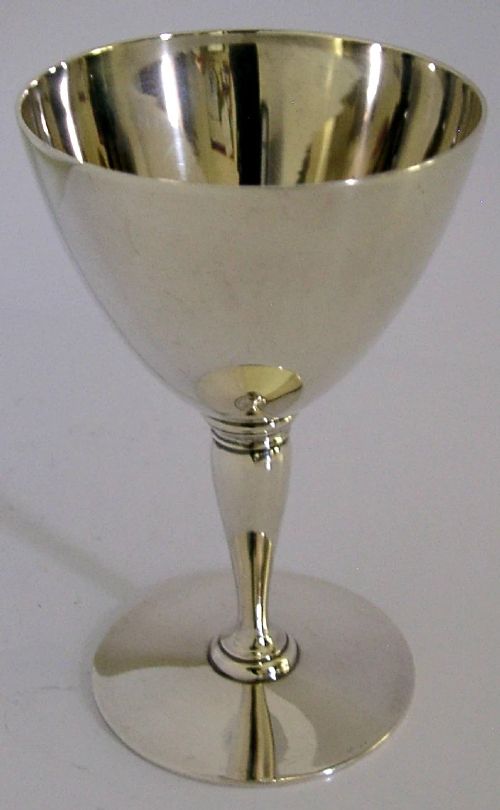
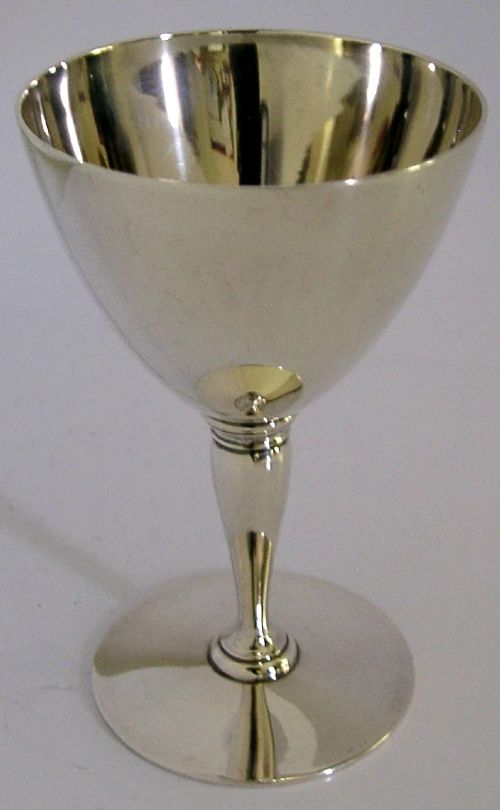
Silversmiths contributed sterling silver and silver-plated mounts, rims, and cocktail sticks, sometimes combining glass with walnut or brass for accompanying bar carts and trays. Etched motifs and hand-painted enamel details finish the decorated surfaces.
Distinctions in craftsmanship
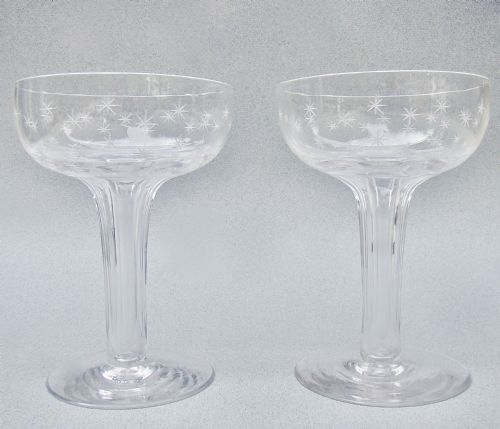
Superior quality rests in the crispness of the glass cutting and the weight of the metal components, such as heavy sterling silver rims or solid bases. Finely etched star patterns or intricate wheel-engraved vines show the hand of a skilled artisan rather than a mould.
The integration of materials also defines the better pieces, where silver collars fit snugly onto cut glass bodies and matching sets retain uniform height and clarity across every single glass.
Tiffany & Co·Fritz Heckert·Hukin & Heath·Elkington & Co·Mappin & Webb
The Antique Cocktail Glass Glossary
- Champagne coupe
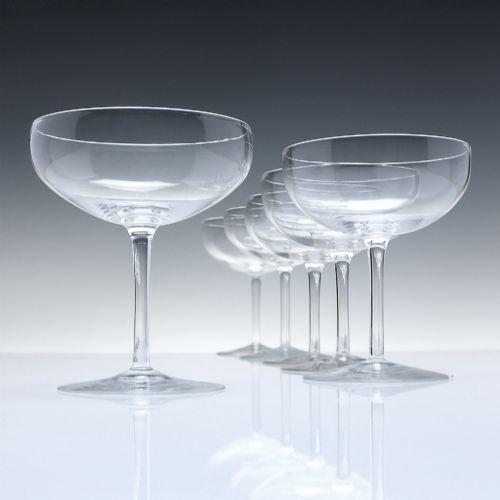
- A broad, shallow bowl on a slender stem originally designed for sparkling wine but widely utilised for serving cocktails. These pieces often feature cut crystal patterns or engraved decoration.
- Hollow stem
- A glass construction where the interior of the stem remains open to the bowl, allowing liquid to flow down inside. This design creates a distinctive silhouette seen in Victorian glassware.
- Overlay glass
- A technique involving two or more fused layers of glass of different colours, where sections of the outer layer are cut away to reveal the contrasting colour beneath.
- Silver plate
- A base metal coated with a thin layer of silver, frequently used for cocktail shakers, trays, and mounting hardware during the late nineteenth and early twentieth centuries.
- Cut glass
- Glass decorated by holding it against a rotating wheel to carve deep geometric patterns into the surface, producing sharp facets that catch the light.
Antique Cocktail Glass: Frequently Asked Questions
How were champagne coupes used for cocktails?
Champagne coupes feature wide bowls that accommodate drinks served up without ice or layered with aromatic ingredients. Their shallow shape became a staple for serving various mixed drinks during the Art Deco cocktail boom.
Guests held them by the stem to prevent the warmth of the hand from altering the temperature of the drink.
How do I care for antique glassware?
Wash antique glasses by hand in lukewarm water using a mild detergent, avoiding sudden temperature changes that can crack old crystal. Place a towel at the bottom of the sink to cushion the delicate bases.
Dry them immediately with a lint-free cloth to maintain the clarity of the cut glass and prevent water spots.
How can I tell the period of a glass?
Dating relies on stylistic clues such as heavy geometric cutting from the Art Deco period, ornate wheel engraving from Victorian times, or simpler Greek key patterns from the Edwardian era.
Examining the weight of the material and any associated silver hallmarks helps confirm the decade of manufacture.