




Gilded Stemware Glass
These gilded stemware glass vessels bring luminous weight to a table, pairing clear or coloured bowls with gleaming metal.
Gilded Stemware Glass
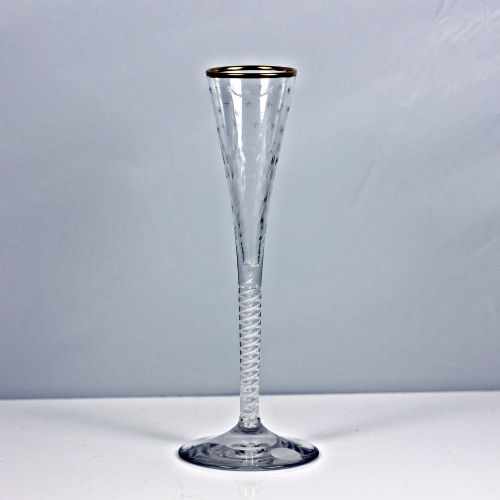
When you search for gilded stemware glass, you encounter drinking vessels and display pieces ranging from eighteenth-century Georgian facet cut wine glasses to Art Deco comports. The selection spans distinct historical periods, featuring Victorian, Edwardian, and twentieth-century European designs.
You meet various forms on this page, including Römer goblets, hock glasses, liqueur glasses, champagne coupes, and tazzas. These items originate from notable European glassmaking centres in Bohemia, Germany, France, and Austria.
The assortment includes both individual statement pieces and matched sets, such as crystal hock glasses and liqueur services. These items serve both functional dining purposes and decorative display.
Materials and construction
Maker workshops utilised lead crystal, standard glass, and coloured crystal as the foundation for these vessels, shaping bowls, stems, and feet through blowing and cutting techniques. The resulting bodies provide a clear or tinted canvas for surface decoration.
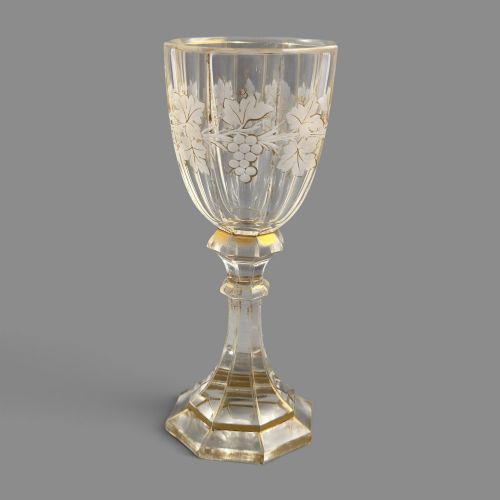
Artisans applied gold leaf, liquid gilding, and parcel gilt accents directly onto the glass surface, frequently combining the metal with polychrome enamel decoration. Engraving and facet cutting further texture the material beneath the gilding.
Gilded Stemware Glass Retail Price Guide 2026
Typical asking prices for gilded stemware glass among the pieces listed under this phrase on Sellingantiques today, from the lower quarter to the upper quarter. They describe what is for sale here now, not the wider market.
The selection covers periods from the eighteenth century through to Art Deco production in nineteen thirty.
Assessing quality
Quality reveals itself in the weight and clarity of the crystal foundation, alongside the precision of any facet cutting or wheel engraving. Superior examples demonstrate crisp definition in the glass and a balanced, stable stem.
The application of the gold and enamel distinguishes exceptional pieces from standard production. Fineness in hand-painted floral or grapevine motifs and the durability of the remaining gilding indicate the level of workshop skill involved.
Moser Bohemian·Theresienthal·Saint Louis·Fritz Heckert·Adelbert Niemeyer
The Gilded Stemware Glass Glossary
- Römer goblet
- A traditional Germanic wine goblet featuring a large bowl on a patterned stem and a conical foot. This form often incorporates heavy green or clear crystal with applied prunts and gilding.
- Hock glass
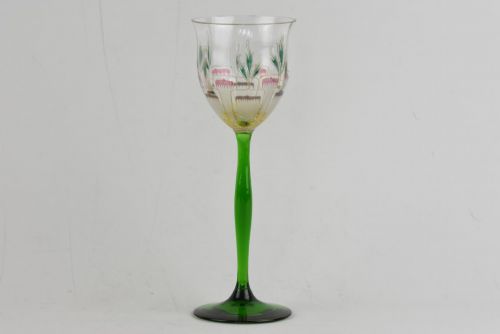
- A tall-stemmed wine glass traditionally used for Rhine wines, frequently characterised by coloured bowls and elaborate enamel or gilt decoration. These pieces often appear in matched sets.
- Parcel gilt
- A decorative technique where specific portions of an object are highlighted with gold leaf or gilding while other areas remain unadorned. This method appears on both glass bodies and silver mounts.
- Tazza
- An ornate shallow bowl or cup elevated on a stem and foot, used for serving fruit or sweets. These display items frequently showcase extensive surface engraving and gilding.
- Jugendstil
- The continental European manifestation of Art Nouveau, prominent around nineteen hundred. This style emphasises organic, flowing lines and natural motifs on glass and metal.
Gilded Stemware Glass: Frequently Asked Questions
What are gilded stemware glass vessels used for?
These pieces serve as functional dining ware for wine, liqueurs, and champagne, as well as decorative display items on tables and sideboards. Many buyers utilise them for special dining occasions or incorporate them into glass collections.
Historically, they were commissioned by affluent households to showcase wealth during formal meals. Today, they function both as usable tableware and as cabinet display pieces.
How do I distinguish eighteenth-century pieces from Victorian ones?
Eighteenth-century examples, such as Georgian facet cut wine glasses, typically feature heavier metal content with distinct hand-cut facets and simpler, classical proportions. Victorian and later nineteenth-century pieces often incorporate more varied colours, denser gilding, and stylistic influences from Historicism.
Examination of the pontil mark on the base also provides clues regarding the period and manufacturing technique. Earlier items display rough snapped pontils, whereas later production often shows polished bases.
What is the difference between crystal and glass?
Crystal contains lead oxide, which adds weight, brilliance, and a resonant sound when struck, allowing for deeper cutting and engraving. Standard glass lacks this lead content, resulting in a lighter vessel with less light dispersion.
Both materials serve as foundations for gilding and enamel work across the periods represented. The presence of lead crystal generally indicates a heavier, higher-status production.
How do I identify Art Nouveau pieces?
Art Nouveau and Jugendstil items, dating from around nineteen hundred, feature asymmetrical organic motifs inspired by nature, such as vines, flowers, and flowing stems. Makers like Fritz Heckert and Adelbert Niemeyer utilised these sinuous lines in their enamelled and gilded designs.
These pieces break away from strict historical revivals, prioritising fluid movement across the surface of the glass. The gilding often follows the natural curves of the plant-based ornamentation.