
Antique Classical Figurine
An antique classical figurine brings mythological heroines, Roman soldiers and Grecian dancers into a room through small-scale bronze, marble and parian study.
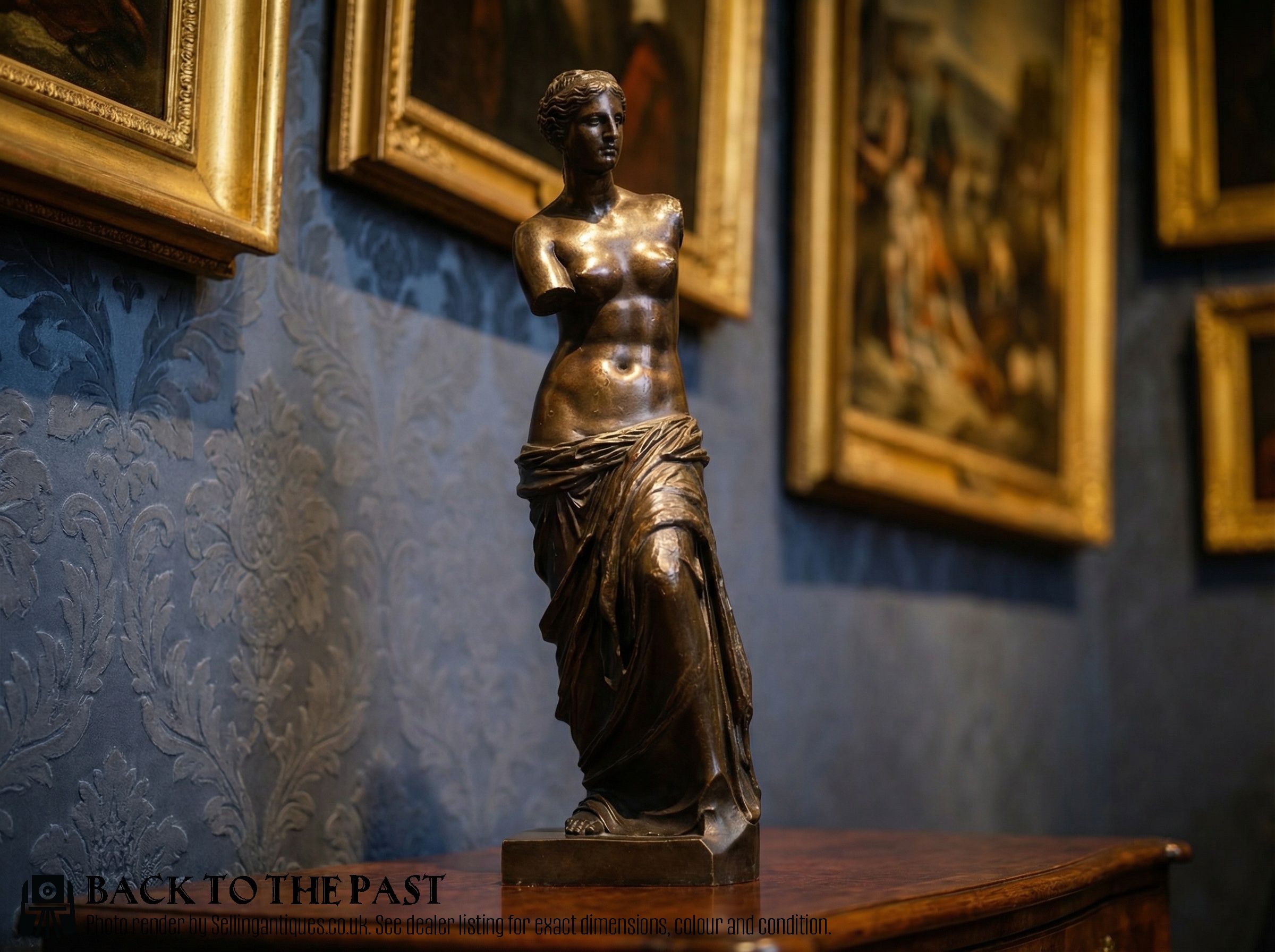
Antique Classical Figurine
An antique classical figurine takes the form of mythological subjects, literary figures and historical personages translated into tabletop sculptures. These works draw directly on ancient Greek and Roman prototypes, often recorded through Grand Tour souvenirs or nineteenth-century French foundry editions.
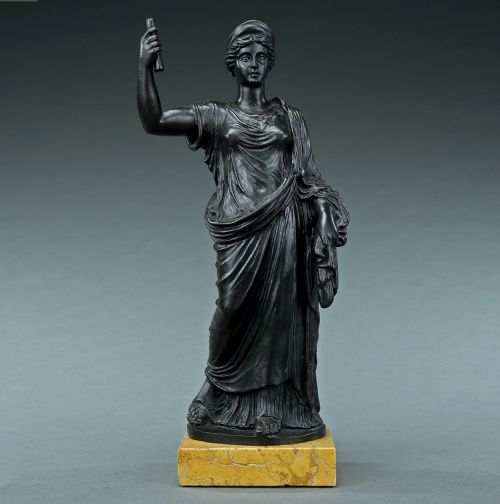
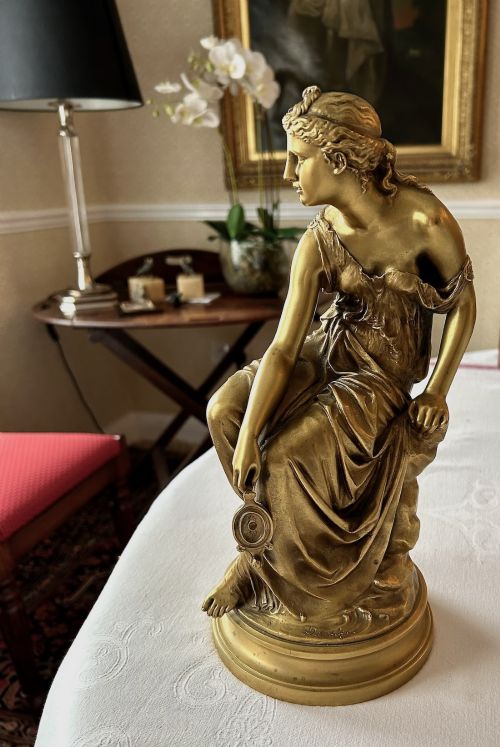
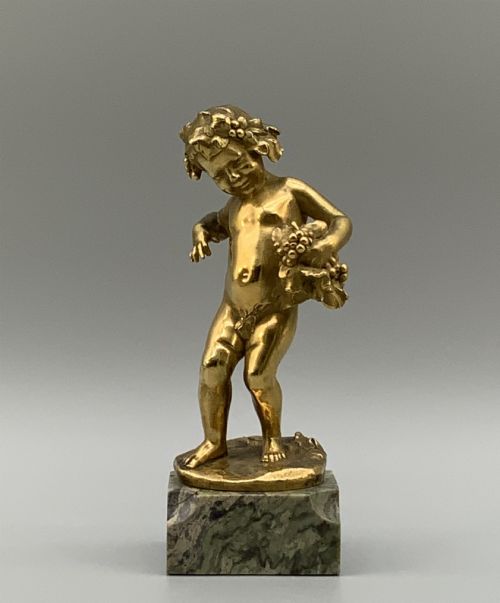
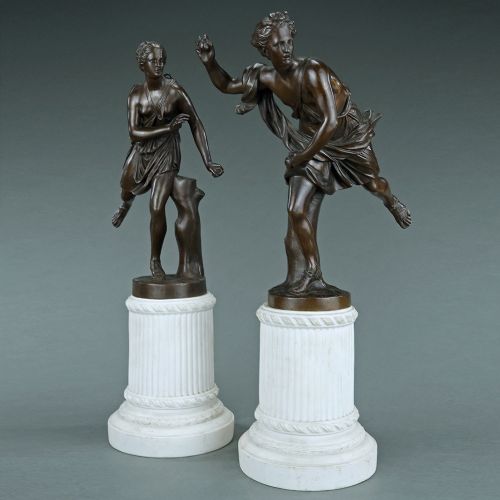
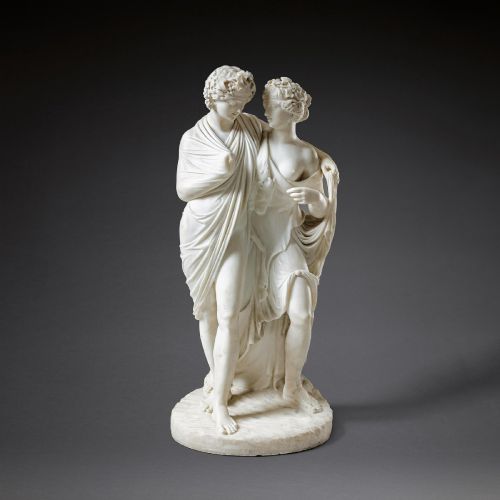
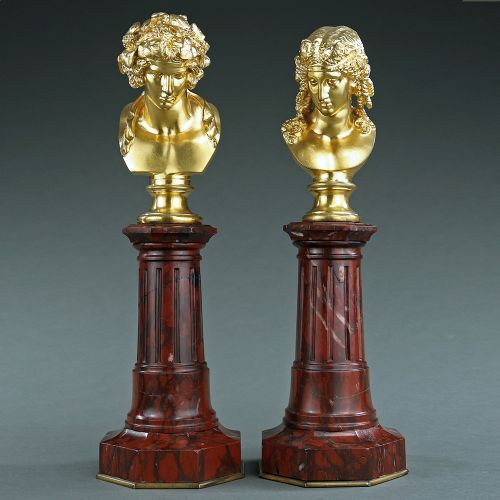
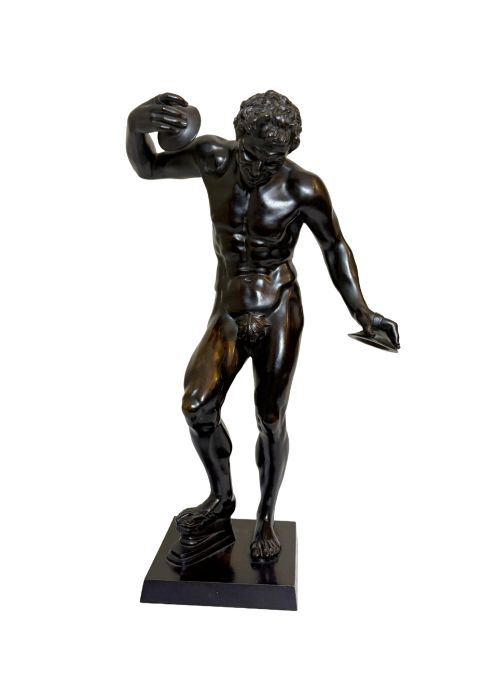
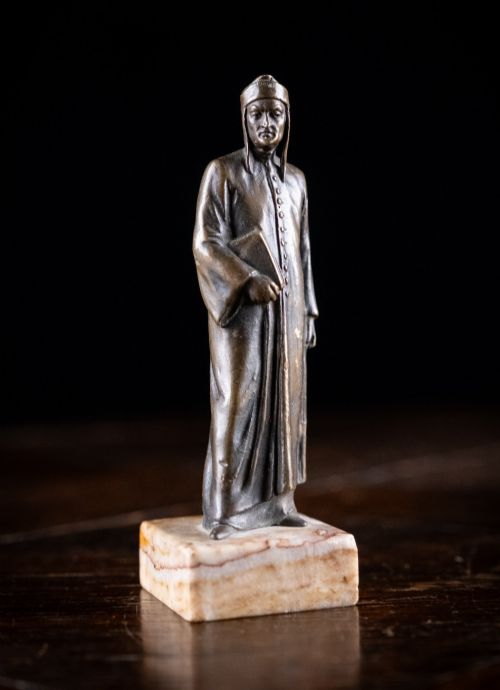
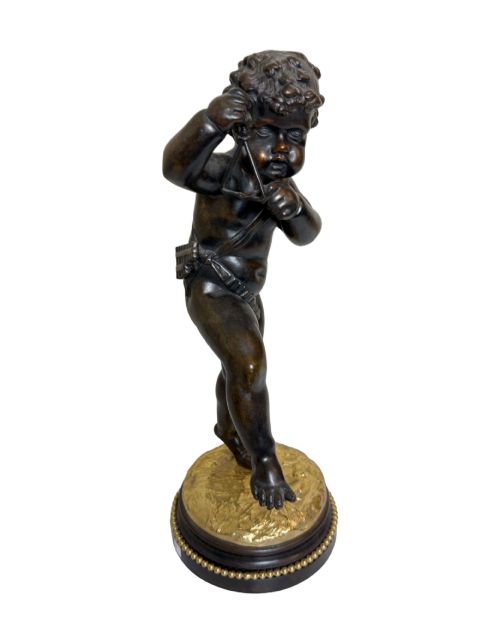
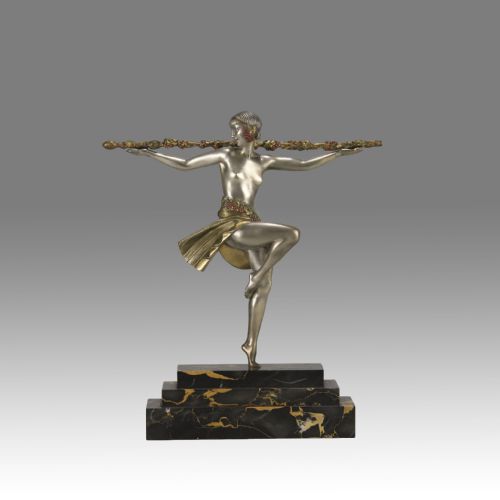
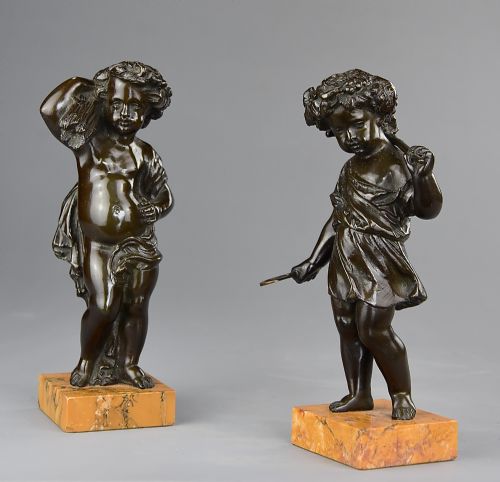
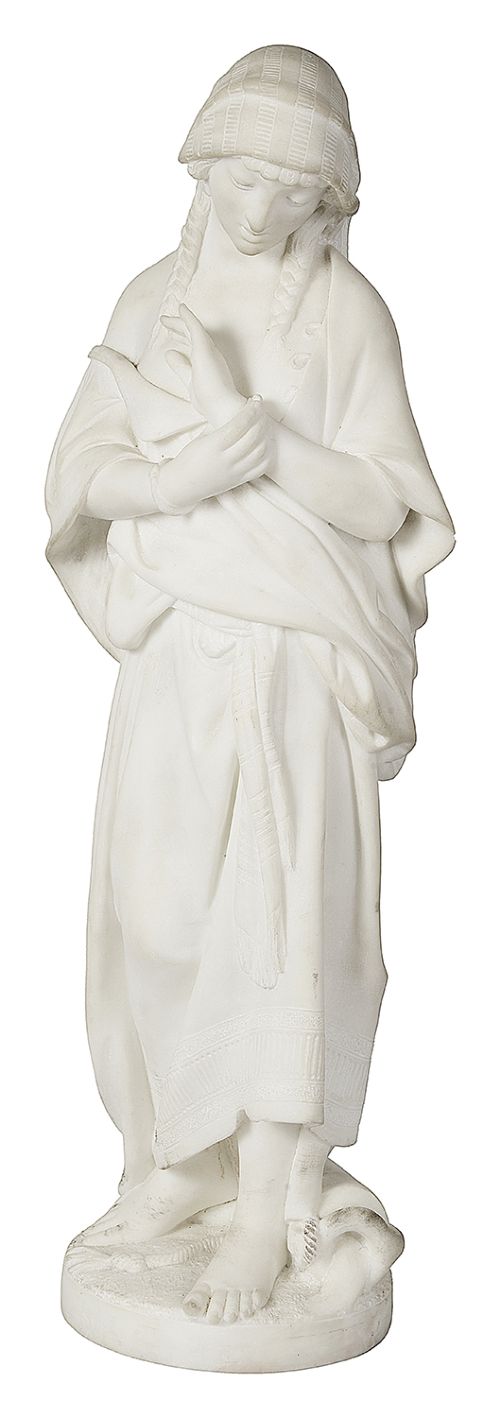
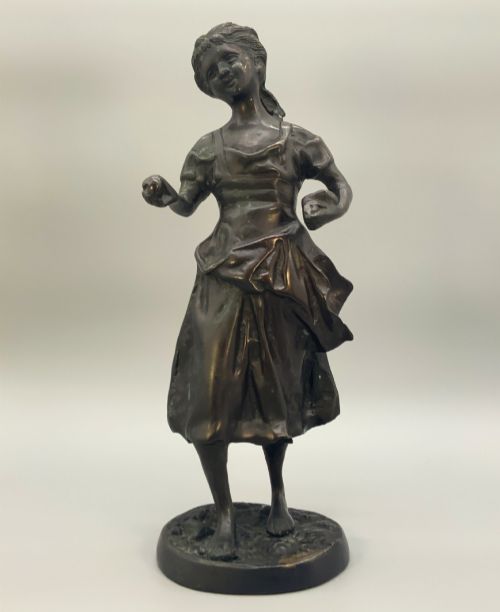
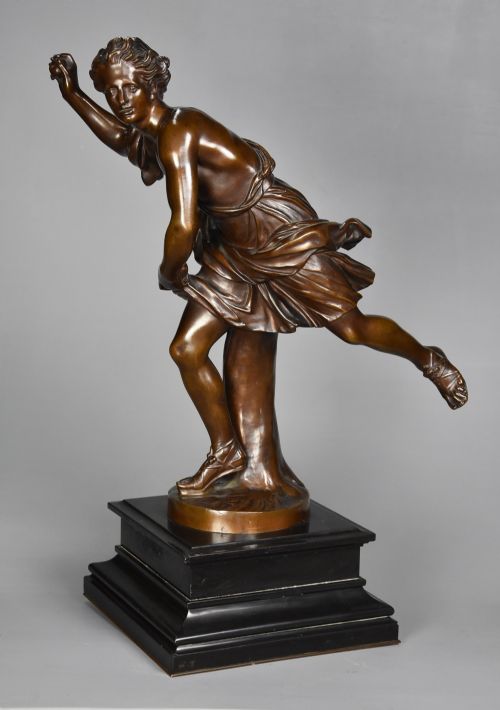
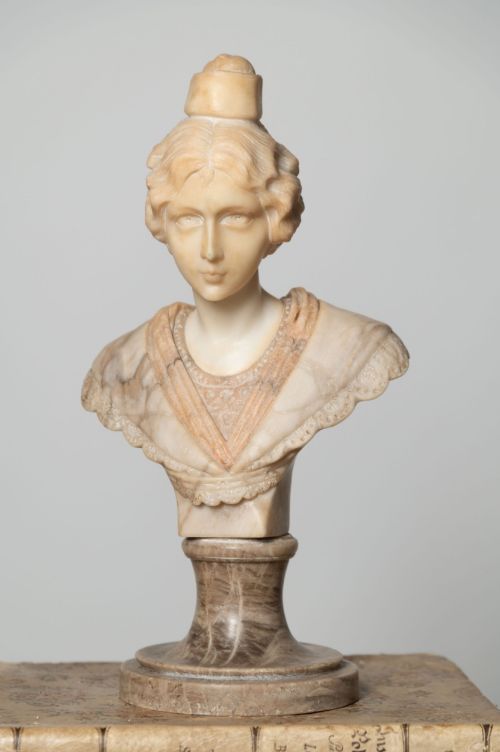
The most common examples on this page are nineteenth-century bronze casts of dancers, satyrs and deities, alongside white marble carvings and parian porcelain reductions after canonical statues. Collectors encounter everything from small cabinet busts to substantial patinated figures mounted on marble plinths.
Materials and casting methods
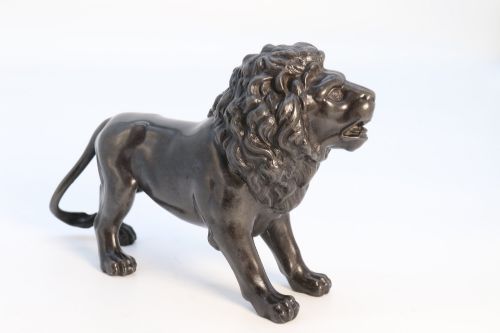
Foundries produced these pieces using traditional lost-wax casting or sand casting in bronze, frequently applying dark patination, verdigris highlights or gilt finishes to accent drapery and musculature. Many figures incorporate contrasting bases of white marble, Siena marble or serpentine.
Even ancient philosophers and tragic heroes occasionally had to hold musical triangles.
Distinctions in workmanship
Quality rests upon the crispness of the chase work and the fidelity of the reduction to the antique original. Finer casts preserve subtle anatomical transitions and sharp detail in hair and fingers where inferior examples appear soft or muddy.
The choice of base materials and the weight of the bronze metal also separate standard production pieces from major foundry editions. Signed pieces bearing foundry marks or well-documented signatures command greater attention from collectors.
Etienne-Henri Dumaige·Susse Freres·Barbedienne·Pierre le Faguays·Mathurin Moreau
The Antique Classical Figurine Glossary
- Grand Tour
- A traditional trip through Italy undertaken by European travellers in the eighteenth and nineteenth centuries. Tourists collected miniature bronzes and marble carvings of classical antiquities as souvenirs.
- Lost-wax casting
- A method of metal casting where a molten metal is poured into a mould that has been created by means of a wax model. This technique allows for intricate detail in sculptural bronzes.
- Parian porcelain
- A fine-grained bisque porcelain developed in the nineteenth century to imitate white marble. It was widely utilised for classical figure groups and literary busts.
- Patination
- The chemical treatment or natural ageing applied to the surface of bronze to alter its colour. Foundry workers used patination to produce deep brown, green or black tones.
Antique Classical Figurine: Frequently Asked Questions
What is a Grand Tour bronze figurine?
A Grand Tour bronze is a small-scale sculpture purchased by travellers visiting classical sites in Italy during the nineteenth century. These pieces reproduced famous ancient statues for domestic display.
They served as portable reminders of classical art and literature, bringing museum subjects into private libraries and drawing rooms.
How do I identify parian porcelain figures?
Parian porcelain resembles unglazed white marble with a smooth, matte texture that absorbs light differently than standard gloss ceramic. Makers used this material specifically to mimic classical marble sculpture.
Pieces from this tradition often depict mythological or literary groups and carry manufacturer stamps or registry marks on the base.
Where should I place a bronze figure at home?
Bronze figures require stable surfaces away from direct moisture and extreme temperature fluctuations to protect their metallic patination and marble plinths. Placing them on desks, mantelpieces or bookcases allows adequate light to reveal the modelled details.
Heavier marble-mounted sculptures need firm support to prevent accidental tipping during dusting.