


Antique Circular Eagle Mirror
An antique circular eagle mirror brings dramatic presence to a room, catching the light in a curved glass plate topped by a carved bird.
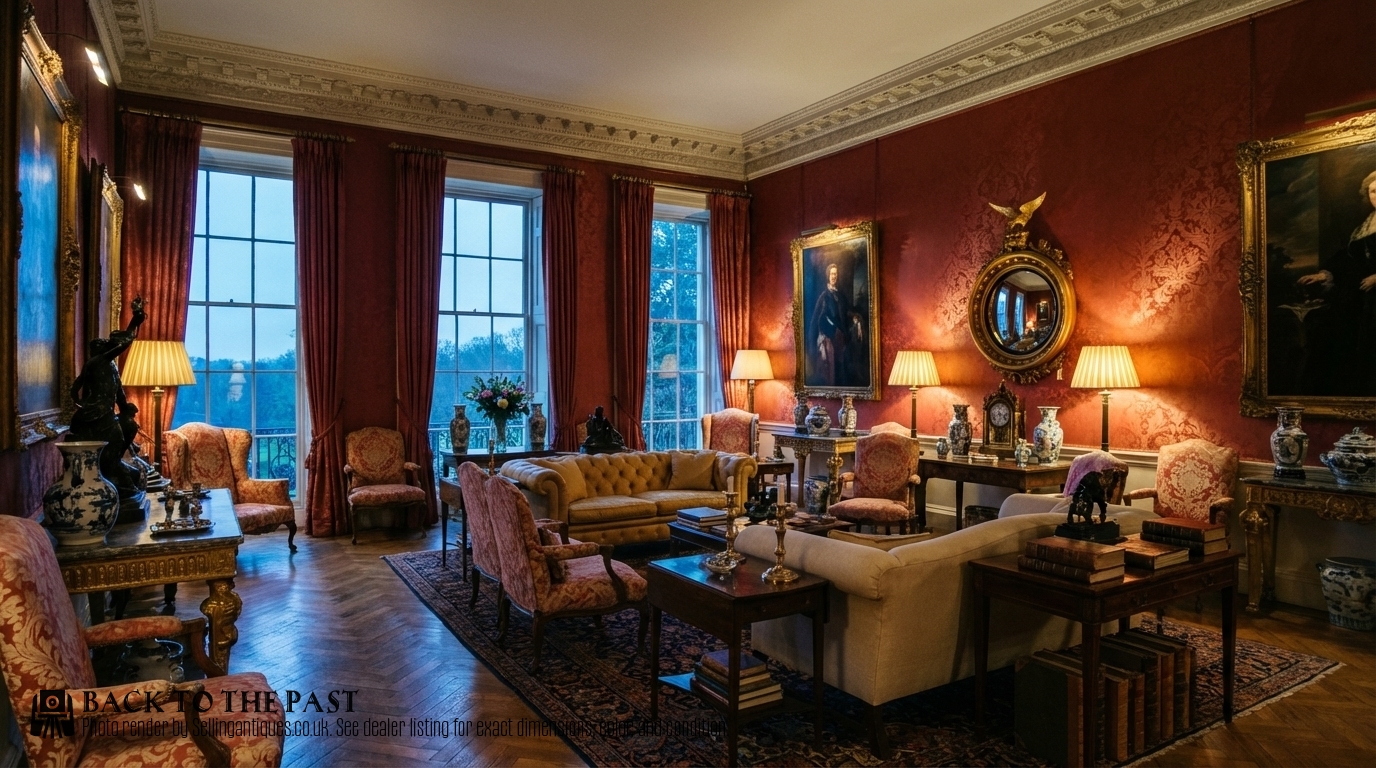
Antique Circular Eagle Mirror
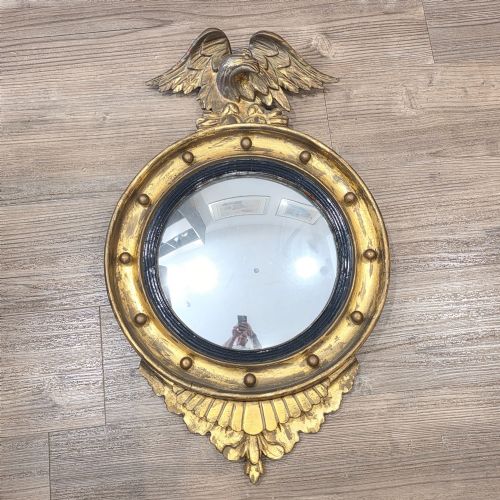
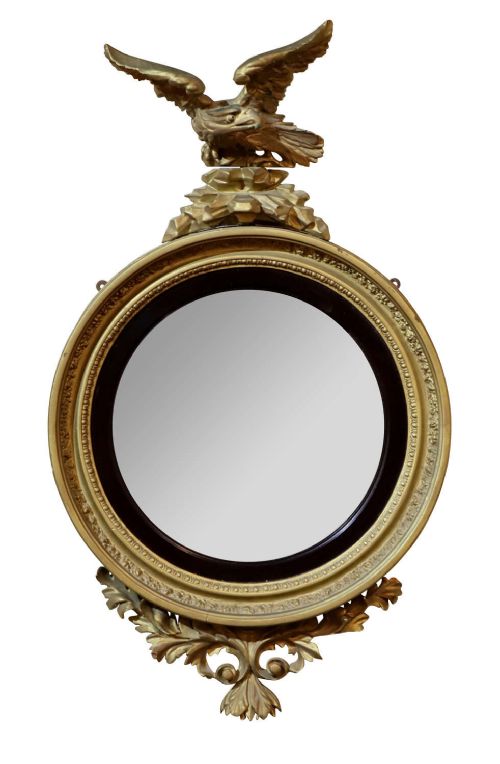
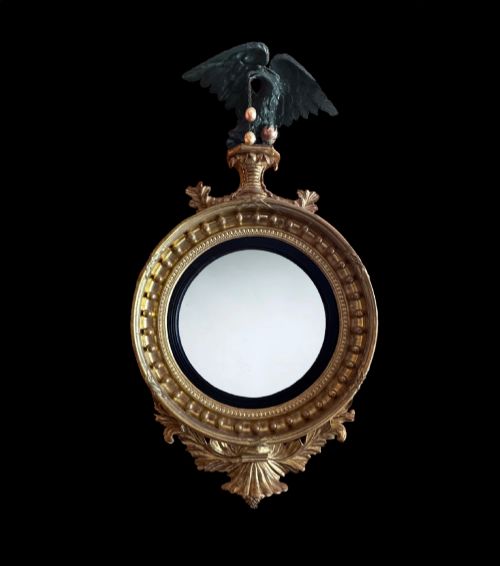
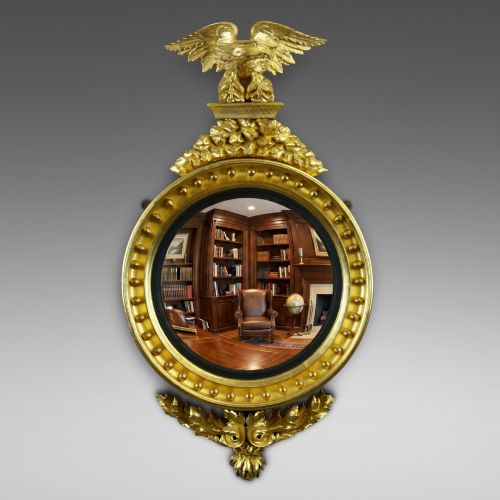
When you search for an antique circular eagle mirror, you find round convex wall pieces dominated by Regency and 19th Century craftsmanship. Most examples on this page hail from the Regency period, featuring deeply curved glass plates that pull the whole room into a single circular frame.
The dominant form pairs a round gilded wooden frame with a prominent spread eagle perched at the top. These pieces function primarily as wall mirrors, serving both decorative and optical purposes in period interiors.
How they were made
Maker's hands shaped these frames from timber and gesso, applying layers of gold leaf to create a brilliant gilded surface. The curved mirror glass sits deep within the moulding, designed to distort reflections slightly across the convex plane.
Carved wooden eagles surmount the circular frames, frequently mounted with detailed wings and foliage. Ebonised wood occasionally provides contrast within the inner mouldings of the giltwood frame.
Listings span the Regency period through to Victorian and 1920s revivals, predominantly utilising giltwood and glass.
What varies in quality
The refinement of the carved eagle surmount separates simpler examples from the finest pieces on the page. Crisp feather detailing and powerful proportions in the carving indicate a higher level of artisan skill.
The quality of the gilding and the depth of the original wood moulding also set pieces apart. Rich, layered giltwood surfaces retain their warmth better than later or over-cleaned replacements.
The Antique Circular Eagle Mirror Glossary
- Convex mirror
- A curved glass plate that reflects a wide, fish-eye view of the surrounding room. It bends light to make compact spaces appear larger.
- Giltwood
- Timber coated with a thin layer of gold leaf or gold paint. This finish creates a bright reflective surface across the frame.
- Gesso
- A plaster-like mixture applied to wood frames to create a smooth base for gilding. Artisans carved fine details directly into this hardened layer.
- Regency
- A design period spanning the early nineteenth century. Pieces from this era often feature classical motifs and bold architectural forms.
Antique Circular Eagle Mirror: Frequently Asked Questions
Where should I hang a convex mirror?
These pieces suit principal reception rooms or hallways where their wide-angle reflection captures natural light from windows and opposite doorways.
Positioning the glass at eye level ensures the curved perspective functions effectively within the room's layout.
How do I clean a giltwood frame?
Dust the carved surfaces gently with a dry, soft brush to protect the delicate gold leaf layer. Avoid using liquid cleaners or abrasive cloths on the gilded wood.
Moisture can damage the underlying gesso and timber beneath the metallic leaf.
Why is the glass curved?
Convex glass was designed in the period to gather light from across an entire interior space into a single focal point. This optical property made smaller rooms feel brighter and more expansive.
The curved plate creates a miniature, panoramic reflection of the viewer's surroundings.
How do I identify a Regency piece?
Regency items often display classical motifs such as reeded ebony inner rings, bold ball mouldings, and naturalistic carved eagles. The proportions lean toward architectural symmetry and strong circular geometry.
Checking the construction methods and materials helps confirm the nineteenth-century origins of the timber and gesso.